
Dog Choking: Signs, Heimlich Maneuver & Emergency First Aid

- Choking vs. Coughing: How to Tell the Difference
- Signs Your Dog Is Choking
- Immediate Signs
- The Tripod Position
- What to Do in the First Minute
- If Your Dog Stops Breathing
- Common Choking Hazards to Watch For
- After the Object Comes Out: Why You Still Need a Vet Visit
- What Happens If a Vet Has to Remove the Object
- Higher-Risk Dogs
- Expert Tips for Handling a Choking Emergency
- Common Mistakes That Make Choking Worse
- Final Thoughts
Note: This article is for informational purposes only and does not replace professional veterinary advice.
Quick Answer
If a dog is choking, check the mouth for a visible object and only remove it if you can clearly see and grasp it. If the object is not reachable, perform the Heimlich maneuver: for small dogs, thrust a fist up and inward just below the ribcage; for large dogs, thrust the heel of your hand up and forward behind the last rib. Head to a vet immediately either way.
A dog that is truly choking cannot bark, whine, or breathe normally, which makes this one of the few emergencies where seconds genuinely matter more than almost anywhere else in pet first aid. The tricky part is that choking is often confused with ordinary coughing or gagging, and reacting the wrong way to either one can waste precious time. This guide covers exactly how to tell choking apart from coughing, the step-by-step Heimlich maneuver for both small and large dogs, the objects most likely to cause it, and why a vet visit still matters even after the object comes out.
Choking vs. Coughing: How to Tell the Difference
Both a choking dog and a coughing dog can look distressed, which is exactly why this distinction gets missed under pressure. The real difference comes down to airflow. A coughing dog is forcefully pushing air out and can still pull air back in between coughs, usually bringing up nothing more than a bit of saliva or mucus that gets swallowed right back down. A choking dog is struggling to get air in at all. The airway is at least partially blocked, so the effort looks frantic and often produces little to no sound, which is the opposite of what most people expect an emergency to sound like.
Timing is another useful clue. A cough triggered by something like kennel cough, allergies, or a scratchy throat tends to happen in repeated fits over minutes, hours, or days, and the dog is otherwise acting normal in between. Choking happens suddenly, often mid-meal or mid-play, and does not let up or improve with a few normal breaths the way a passing cough would. A dog that was completely fine thirty seconds earlier and is now pawing frantically at its mouth is telling a very different story than one that has had an on-and-off cough for a day or two.
Signs Your Dog Is Choking
Immediate Signs
- Pawing frantically at the mouth or face
- Gagging, retching, or repeated swallowing motions
- Heavy drooling as the body tries to lubricate the blocked airway
- Loud, high-pitched, or wheezing breathing sounds, or unusual silence
- Pale, blue, or gray gums from lack of oxygen
The Tripod Position
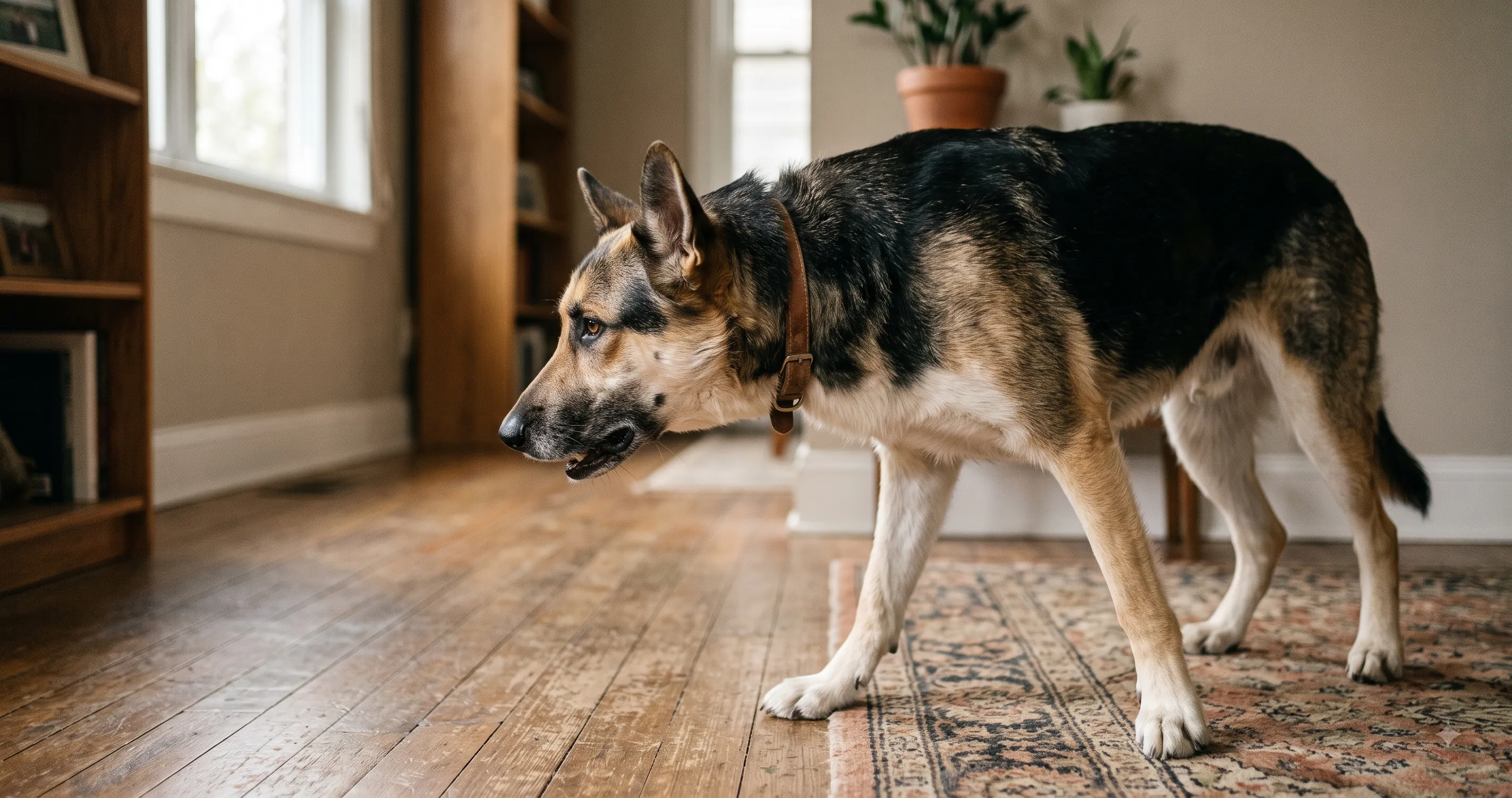
Watch for a dog that stands with its neck stretched forward, elbows spread wide, and head low, straining to open the airway as much as possible. Vets sometimes call this the tripod position, and seeing a dog assume it suddenly, especially right after chewing on something, is one of the clearest visual signs that a true blockage is happening rather than a passing cough.
What to Do in the First Minute
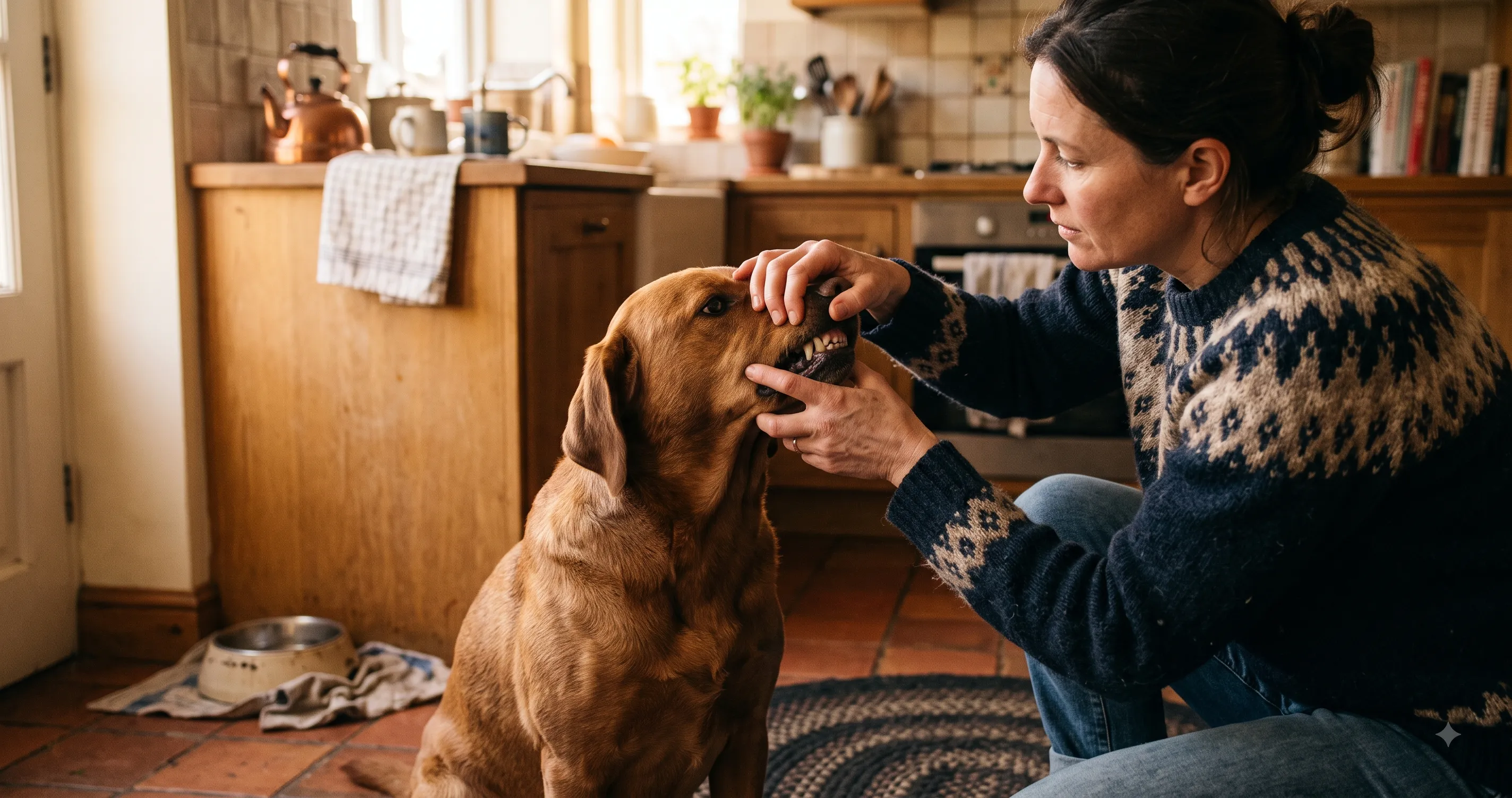
- Stay as calm as you can and check the mouth. Gently open the jaw and look for a visible object. Only try to remove it if you can clearly see and grasp it. Blindly sweeping a finger into the throat can push an unseen object deeper instead of out.
- If the object is not visible or reachable, begin the Heimlich maneuver right away. The technique differs slightly by size, so use the version that matches your dog.
- For small and medium dogs: Hold the dog's back against your body with the head pointing up. Make a fist and place it just below the ribcage. Thrust up and inward two to three times with firm, controlled pressure.
- For large dogs: Have the dog stand or lie on its side and kneel behind the back. Place the heel of your hand just behind the last rib and thrust firmly upward and slightly forward, toward the head, two to three times.
- Check the mouth again after each round of thrusts. The object may have been dislodged into the mouth where it can now be safely removed.
- Head to the vet immediately, even if the object comes out successfully. Thrusts can bruise internal organs and a blocked airway can cause swelling that is not obvious right away.
If Your Dog Stops Breathing
In rare, severe cases a dog can stop breathing entirely before the object is cleared. If this happens, continue attempting to clear the airway while someone else calls the nearest emergency vet, and begin rescue breathing only if you have been trained to do so, since incorrect technique can cause further harm. This is exactly the kind of scenario a dedicated pet first-aid or CPR class prepares an owner for well before it is ever needed, and taking one is genuinely one of the most useful things a dog owner can do in advance.
Common Choking Hazards to Watch For
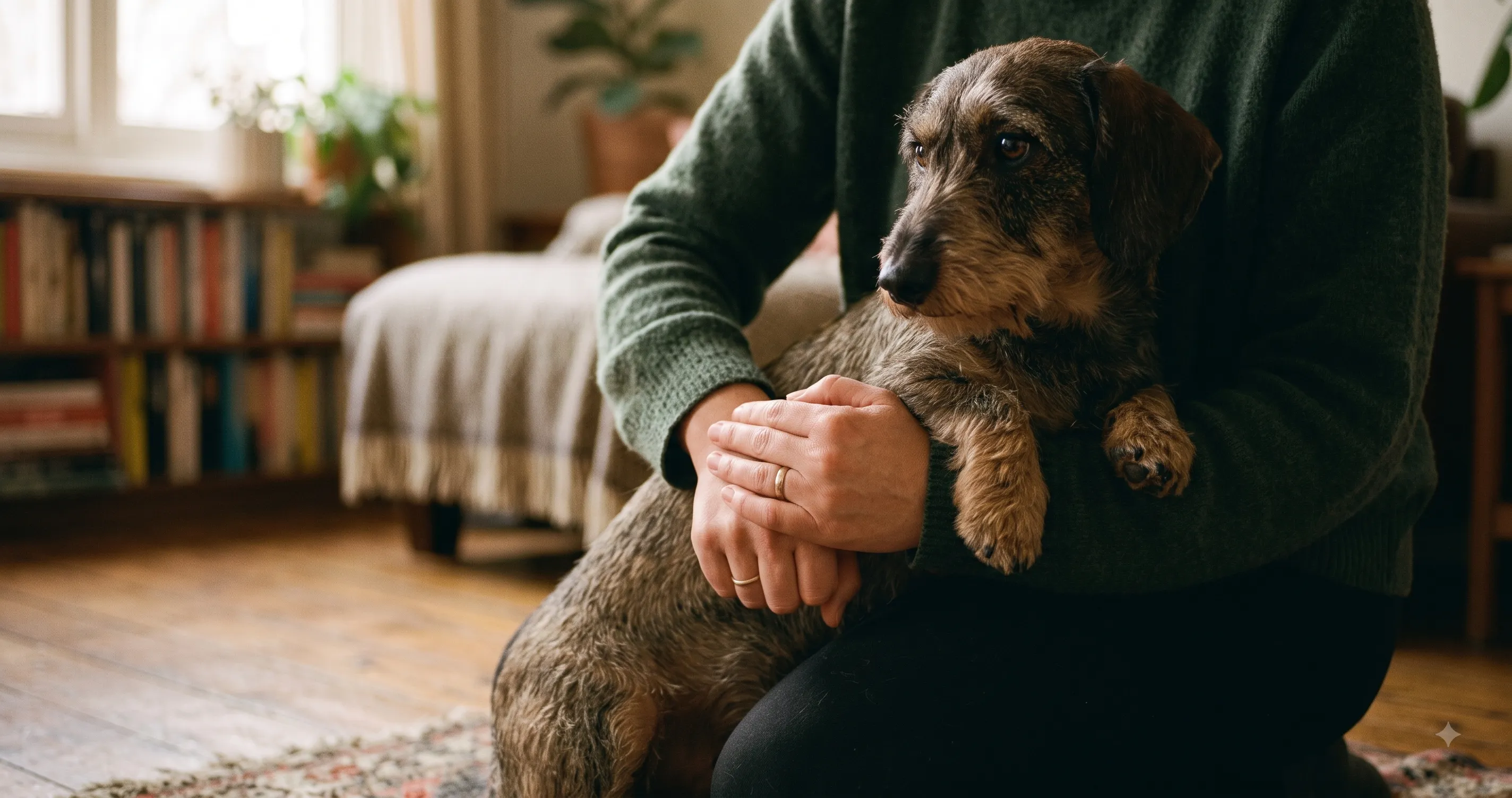
A small number of repeat offenders cause most choking emergencies in dogs. Bones, especially cooked bones that splinter easily, are among the most common, and safe human foods for dogs covers which specific foods and bones are safe to share in more detail. Tennis balls and toys sized too small for a dog's mouth, rawhide chews that soften and become slippery, sticks picked up outdoors, and corn cobs are all frequent culprits. Fast, excited eaters are also more likely to swallow something whole rather than chewing it down first.
Dogs naturally curious enough to investigate objects with their mouth face higher exposure here, and understanding why some dogs lick and chew everything explains why some dogs are far more prone to mouthing and swallowing things they should not. Puppies deserve extra caution too, since the exploratory chewing that comes with teething, similar to the habits covered when crate training a curious puppy, makes random household objects an easy target.
After the Object Comes Out: Why You Still Need a Vet Visit
Even a fully successful Heimlich maneuver is not the end of the emergency. The force needed to dislodge an object can bruise the throat, chest, or internal organs, and a dog that was struggling to breathe for even a short time can develop airway swelling that gets worse over the following hours. A vet exam confirms there is no lingering injury and no fragment left behind, which is easy to miss with a quick visual check at home.
What Happens If a Vet Has to Remove the Object
If home first aid does not clear the airway, a vet has tools an owner does not. Sedation or light anesthesia lets them work calmly without a panicked dog fighting the process, and an endoscope allows a clear look deep into the throat to locate and remove an object precisely rather than guessing. In rare cases where an object has moved further down or caused significant damage, surgery may be needed. None of this should feel like a failure of home first aid. It is simply the next level of care that exists for exactly this situation.
Higher-Risk Dogs
Brachycephalic breeds such as bulldogs, pugs, and boxers have naturally narrower airways, which means even a small blockage causes more distress than it would in a dog with a longer muzzle. Small dogs face higher risk too, simply because their airways are proportionally smaller relative to common household objects. Senior dogs with weaker gag reflexes or dental issues that make chewing less effective round out the group that benefits most from extra supervision during chew time.
Expert Tips for Handling a Choking Emergency
- Learn and practice the hand positioning for the Heimlich maneuver before an emergency happens, not during one, so your hands know what to do under pressure rather than hesitating.
- Keep the Heimlich attempt to a minute or two at most. If it is not working, get to a vet immediately rather than continuing indefinitely on the assumption that one more try will help.
- Do not offer food or water right after an object comes out until you are sure the throat is not injured and swallowing looks normal again.
- Save any dislodged object or fragment to show the vet, since it can help confirm nothing was left behind and inform how the visit is handled.
- If a second person is available, have them call ahead to the emergency vet while you begin first aid so the clinic is ready the moment you arrive.
- Consider taking a dedicated pet first-aid or CPR class if you have not already, since hands-on practice builds the muscle memory that reading alone cannot.
Common Mistakes That Make Choking Worse
- Blindly sweeping a finger deep into the mouth without seeing the object first, which can push it further down the airway
- Continuing the Heimlich maneuver for many minutes instead of heading to the vet if it is not working within a minute or two
- Giving food or water right after an object comes out, before confirming the throat is not injured
- Assuming a dog is "just coughing" when it is actually struggling to inhale, which delays real intervention
- Skipping the vet visit after a successful Heimlich maneuver and missing internal bruising or airway swelling

Final Thoughts
Choking is one of the fastest-moving emergencies a dog owner can face, but knowing the tripod position, the real difference between choking and coughing, and the correct Heimlich technique for your dog's size turns panic into action. A calm, practiced response in that first minute genuinely changes outcomes.
Choosing safer chew toys and supervising playtime goes a long way toward preventing this in the first place, and safer indoor activities for dogs is a good place to find safer ways to keep a dog engaged without relying on hazardous chews.
The fastest way to help a choking dog is checking the mouth first, then performing the size-appropriate Heimlich maneuver without delaying the trip to an emergency vet.
This guide is for general education and is not a substitute for veterinary care. Any dog that has choked, even after a successful Heimlich maneuver, should be examined by a veterinarian right away.
Medical Disclaimer
This content is provided for informational and educational purposes only and should not be considered veterinary, medical, behavioral, or training advice. While we strive for accuracy, we make no guarantees regarding completeness or results. Always consult a licensed veterinarian or qualified pet care professional before making decisions about your pet’s health, diet, or behavior.
AI Illustration Notice
Some images in this article may have been generated or enhanced using artificial intelligence for illustrative purposes.
Frequently Asked Questions
A coughing dog can still pull air back in between coughs and usually brings up only saliva or mucus. A choking dog struggles to inhale at all and the effort often looks frantic with little or no sound. Watching whether your dog can actually get air in is the clearest way to tell the two apart.
The dog stands with its neck stretched forward elbows spread wide and head held low while straining to open the airway. This posture appearing suddenly especially right after chewing on something is one of the clearest visual signs of a true blockage.
Hold the dog's back against your body with the head pointing up. Make a fist and place it just below the ribcage then thrust up and inward two to three times with firm controlled pressure. Check the mouth after each round to see if the object has been dislodged.
Have the dog stand or lie on its side and kneel behind the back. Place the heel of your hand just behind the last rib and thrust firmly upward and slightly forward toward the head two to three times. Check the mouth between each round of thrusts.
Only if you can clearly see the object and reach it safely. Blindly sweeping a finger into the throat when the object is not visible can push it deeper and make the blockage worse rather than better.
Cooked bones that splinter easily tennis balls and toys sized too small rawhide chews that soften and become slippery and sticks picked up outdoors are frequent culprits. Fast excited eaters are also more likely to swallow something whole instead of chewing it properly.
Yes. The force needed to dislodge an object can bruise the throat chest or internal organs and airway swelling can develop over the following hours. A vet exam confirms there is no lingering injury and nothing was left behind.
Yes. Puppies explore the world by mouthing objects especially during teething which makes them more likely to swallow something they should not. Closer supervision around small objects and appropriate chew toys matters even more during this stage.
Do not continue for more than a minute or two. Head to the nearest emergency vet immediately rather than repeating the maneuver indefinitely since professional equipment and airway support may be needed to clear the blockage safely.
Supervise chew time with bones and rawhide rather than leaving a dog unattended and choose toys sized appropriately for your dog's mouth. Breaking large treats into smaller pieces for fast eaters also reduces risk significantly.
Normal vs. Concerning Symptoms
A general guide to help you tell everyday variation apart from something worth a vet visit. This is educational context, not a diagnosis.
| Symptom | What's Normal | When to Be Concerned |
|---|---|---|
| Breathing effort | A cough that pushes air out forcefully with normal inhaling between coughs | Struggling to inhale at all, with little or no air movement |
| Body posture | Normal standing or resting posture | The tripod position: neck extended, elbows spread, head low, straining to breathe |
| Gums | Pink and moist | Pale, blue, or gray from lack of oxygen |
| Sound | A hack or cough that clears the throat | High-pitched wheezing, silent gagging, or no sound at all |
What Should I Do Next?
A general decision guide — always use your own judgement and contact a veterinarian for anything beyond routine care.
- Stay calm and check the mouth Only remove an object if you can clearly see and grasp it; do not blindly finger-sweep.
- Begin the Heimlich maneuver if the object is not reachable Use the technique matched to your dog's size.
- Small and medium dogs Hold the back against your body, head up, and thrust a fist up and inward below the ribcage two to three times.
- Large dogs With the dog on its side, thrust the heel of your hand up and forward behind the last rib two to three times.
- Check the mouth again after each round The object may now be dislodged into the mouth and safely removable.
- Head to the vet immediately either way Bruising and airway swelling are not always visible right after the object is removed.
Common Mistakes
- Blindly sweeping a finger deep into the mouth without seeing the object first, which can push it further down the airway
- Continuing the Heimlich maneuver for many minutes instead of heading to the vet if it is not working within a minute or two
- Giving food or water right after an object comes out, before confirming the throat is not injured
- Assuming a dog is "just coughing" when it is actually struggling to inhale, which delays real intervention
- Skipping the vet visit after a successful Heimlich maneuver and missing internal bruising or airway swelling
Prevention Tips
- Supervise chew time with bones, rawhide, and sticks rather than leaving a dog unattended with them
- Choose toys sized appropriately for your dog's mouth, avoiding anything small enough to be swallowed whole
- Break large treats into smaller pieces before giving them to fast or excited eaters
- Keep trash and countertops free of bones, packaging, and small objects a dog could grab
- Learn the Heimlich maneuver steps before an emergency happens rather than during one
- Watch puppies especially closely since teething makes them more likely to mouth and swallow random objects
Illustrative Example
Picture a dog playing alone in the yard with a small rubber ball. A few minutes later, the owner notices the dog standing strangely still with its neck stretched forward and elbows spread wide, making almost no sound at all. Recognizing the tripod position instead of assuming it is just resting oddly, the owner checks the mouth first but cannot see or reach anything. Following the small-dog Heimlich technique, they hold the dog against their body and give two firm upward thrusts below the ribcage. The ball pops free on the second attempt. Even though the dog seems fine immediately afterward, the owner still heads straight to the emergency vet, where a quick exam confirms no injury from the thrusts and nothing left behind. Recognizing the posture early, rather than waiting for louder or more obvious signs, is what made the fast response possible.
Practical Checklist
- Check the mouth for a visible object before doing anything else
- Only attempt removal if the object can be clearly seen and grasped
- Use the small-dog or large-dog Heimlich technique matched to your dog's size
- Recheck the mouth after each round of thrusts
- Stop after a minute or two and head to the vet if it is not working
- Go to the vet immediately even after a successful removal
Editorial Note
This article is part of PetNurture's educational library.
Topics draw on publicly available educational resources, recognised veterinary organisations, academic publications and established animal welfare references where appropriate.
The specific sources this article draws on are listed in its References section. If you spot an error, please let us know.
References
The information in this article has been reviewed and supported using the following sources.
American Kennel Club
Dog Choking: What to Do & Heimlich Maneuver For Dogs
Confirms the choking-vs-coughing airflow distinction, the tripod position, and the size-specific Heimlich maneuver technique; supports the Signs and First Minute sections of this article.
Accessed Aug 13, 2026
PetMD
How to Perform the Heimlich Maneuver for Dogs if Your Dog Is Choking
Confirms the recommendation to check the vet even after a successful Heimlich maneuver and not to prolong first aid over seeking professional care; supports the After the Object Comes Out section of this article.
Accessed Aug 13, 2026
Pet Emergency Guidance
Every pet is unique. If your pet exhibits severe symptoms, sudden behavioral changes, or a medical emergency, do not rely on online guides — contact a licensed veterinarian or emergency clinic immediately.
About PetNurture
PetNurture is an educational library of pet care guides, interactive tools and practical resources for pet parents. We work continuously to keep our content accurate and up to date. Reader feedback helps us maintain content quality.
Related Articles


Popular Dog Guides


Dog
Dog Calorie Calculator
Find the right daily calorie target for your dog's weight and activity level.