Based on Veterinary Guidelines  ·  Privacy First  ·  Updated for 2026

Guinea Pig Feeding Calculator

Estimate how much hay, pellets, fresh vegetables, and water your guinea pig needs daily — based on weight, age, and group size.

Results are estimates only and should not replace professional veterinary advice. Individual needs may vary.

How It Works

  • Based on weight, age stage, and group size
  • Provides hay, pellet, and vegetable guidance
  • Calculates daily water requirements
  • Includes Vitamin C reminder — essential for guinea pigs

Trusted by PetNurture pet parents

Why Hay Is Critical for Guinea Pigs

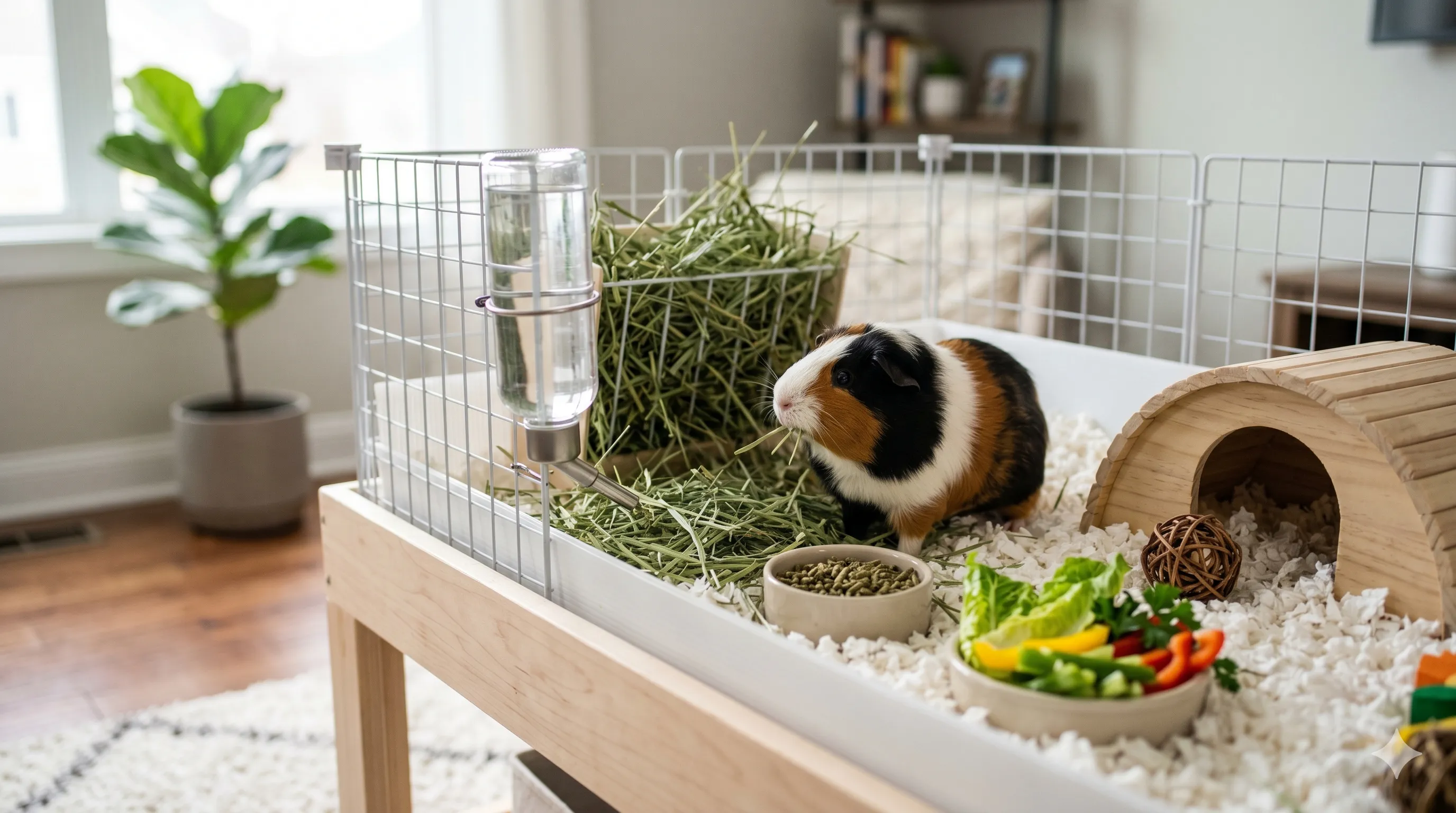
Hay is not a supplement or bedding material — it is the single most important component of a guinea pig's diet and must be available 24 hours a day, 7 days a week.

Dental Health

Guinea pig teeth grow continuously throughout their lives. The constant grinding action of chewing long-strand hay naturally wears teeth down, preventing dangerous overgrowth and painful dental spurs that require veterinary intervention.

Gut Motility

Guinea pigs are hindgut fermenters whose digestive systems require a constant supply of long-strand fibre to keep moving. Without adequate hay, gut motility slows — leading to life-threatening GI stasis, bloat, and loss of appetite.

Obesity Prevention

Hay is low in calories and high in fibre, making it the ideal food for maintaining a healthy weight. Guinea pigs on hay-rich diets are less prone to obesity — a significant health risk that shortens lifespan and causes joint pain.

Best Hay Types

Timothy hay is the gold standard for adult guinea pigs. Orchard and Meadow hay are excellent alternatives for variety. Alfalfa hay is too high in calcium and calories for healthy adults — offer it only to pregnant or nursing sows and young babies under 6 months.

Common Guinea Pig Feeding Mistakes

Even well-intentioned guinea pig owners make feeding errors that can seriously impact their pet's health and lifespan. Here are the most common mistakes to avoid:

  • Too Many Pellets: Pellets are a concentrated supplement — not a staple food. Overfeeding leads to obesity, calcium-related urinary problems, and hay refusal.
  • Too Much Fruit: Fruit is high in sugar. Daily fruit feeding disrupts gut bacteria, causes weight gain, and can lead to diarrhoea. Limit to 1–2 times per week.
  • Not Enough Hay: This is the most damaging mistake. A guinea pig without constant hay access will develop dental disease and digestive problems in weeks.
  • Ignoring Vitamin C: Unlike most animals, guinea pigs cannot synthesise Vitamin C. Deficiency causes scurvy within weeks — include bell peppers or cilantro every single day.
  • Feeding Muesli Mixes: Colourful commercial mixes allow guinea pigs to selectively eat the sweet pieces and leave the healthy pellets. Always use plain, uniform pellets.
  • No Rotation of Greens: Feeding the same vegetable every day creates nutritional imbalances and oxalate build-up. Rotate 3–4 different safe greens daily.

🐹 Daily Portion Reference (per guinea pig)

🌾
Hay — Unlimited
80% of diet. Always available, replenished daily. Timothy or Meadow hay for adults.
🥣
Pellets — 1/8 cup per guinea pig
Plain guinea pig pellets only. No seeds, dried fruit, or coloured pieces.
🥬
Vegetables — ~1 cup per guinea pig
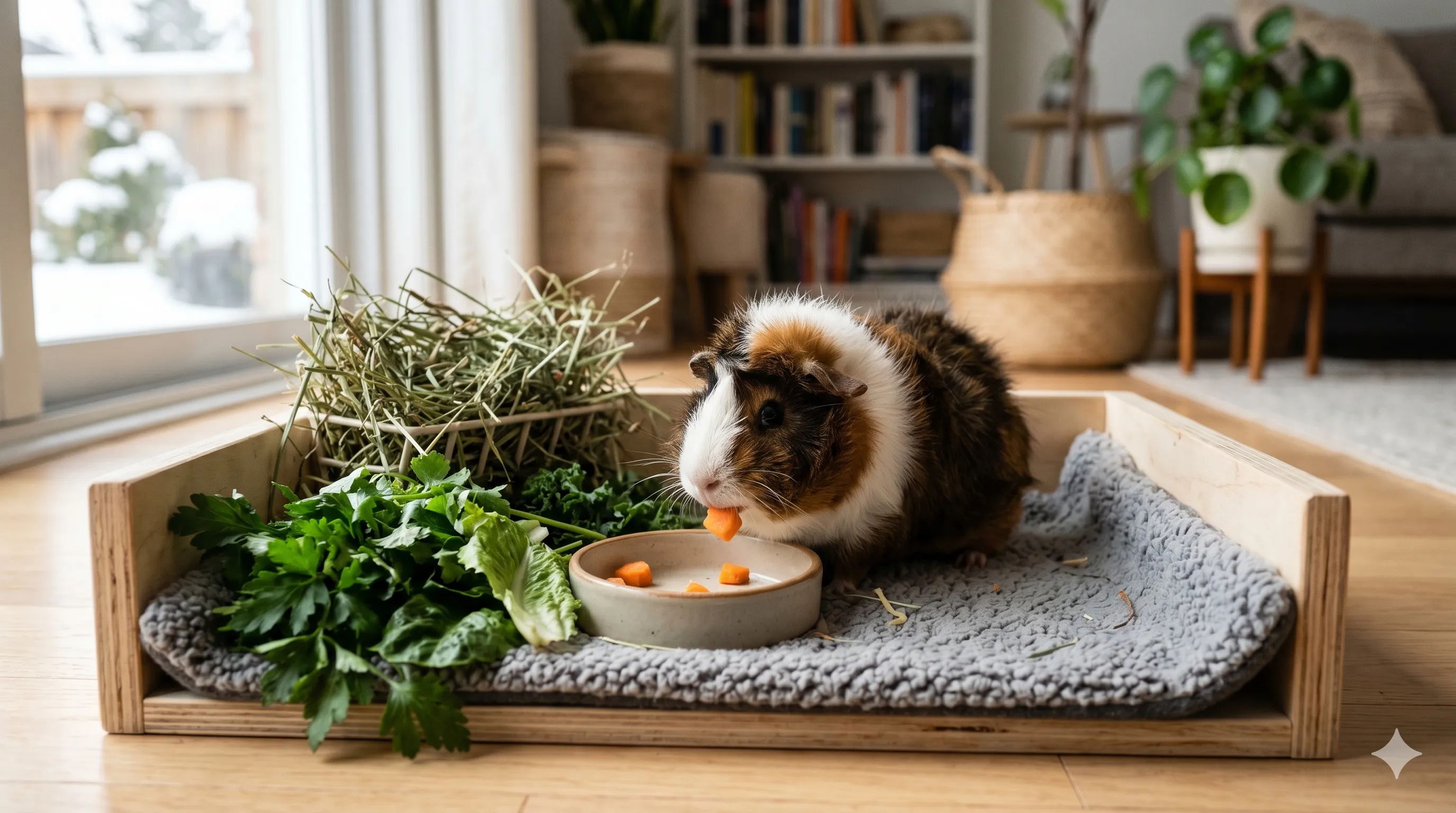
Mix of 3+ safe leafy greens daily. Include bell pepper for Vitamin C every day.
💧
Water — 80–120 ml per kg
Always fresh. Heavy ceramic bowl preferred. Change water daily.
🍊
Vitamin C — Essential daily
Bell peppers, cilantro, parsley, or rosehips. Cannot be skipped.

Guinea Pigs & Vitamin C

Guinea pigs are one of the few mammals — alongside humans and primates — that cannot synthesise their own Vitamin C. This makes daily dietary intake not optional, but life-critical.

Bell Peppers

Red and yellow bell peppers are the single best Vitamin C food for guinea pigs, containing significantly more per gram than most fruits. A few thin strips daily makes a dramatic difference to their health.

Cilantro & Parsley

Fresh cilantro (coriander) and parsley are excellent Vitamin C sources that most guinea pigs love enthusiastically. Both are safe for daily feeding and provide a reliable nutritional baseline.

Rosehips

Dried rosehips are one of the most concentrated natural sources of Vitamin C available and are a popular supplement in guinea pig communities. Source from reputable, pesticide-free suppliers.

Signs of Vitamin C Deficiency (Scurvy)

A deficiency develops within 2–4 weeks without adequate intake. Early recognition is critical:

  • Lethargy and reluctance to move
  • Rough, dull coat
  • Swollen, painful joints
  • Bleeding gums or poor wound healing
  • Loss of appetite and weight loss

If you notice these symptoms, consult an exotic animal veterinarian promptly. This content is for educational awareness only.

Frequently Asked Questions

Answers to common questions about guinea pig feeding and nutrition.

A healthy guinea pig's daily diet consists of three core components: unlimited hay (the most important — always available, making up around 80% of intake), approximately 1 cup of fresh leafy vegetables per guinea pig per day, and roughly 1/8 cup of plain pellets per guinea pig. Fresh water must always be available. The exact amounts vary slightly by weight, age, and health status, but hay should always be the dominant food by volume.

Yes, absolutely. Hay must be available 24 hours a day in unlimited quantities — it is the single most important component of a guinea pig's diet. Long-strand fibre from hay keeps their continuously growing teeth worn down naturally and maintains healthy gut motility. A guinea pig without constant hay access will develop serious dental disease and digestive problems within weeks. Timothy hay is the gold standard for adults; Alfalfa is appropriate only for babies under 6 months, or pregnant and nursing sows.

Adult guinea pigs should receive approximately 1/8 cup (about 30g) of plain, uniform pellets per guinea pig per day. This is much less than many owners assume. Pellets are nutritionally concentrated and overfeeding them causes obesity, calcium-related urinary problems, and — critically — hay refusal. A guinea pig full of palatable pellets will eat less hay, quickly leading to dental and digestive issues. Baby guinea pigs (under 6 months) can have slightly more — up to 1/4 cup — as they need the extra nutrition for growth. Always choose plain pellets with no seeds, dried fruit, or coloured pieces.

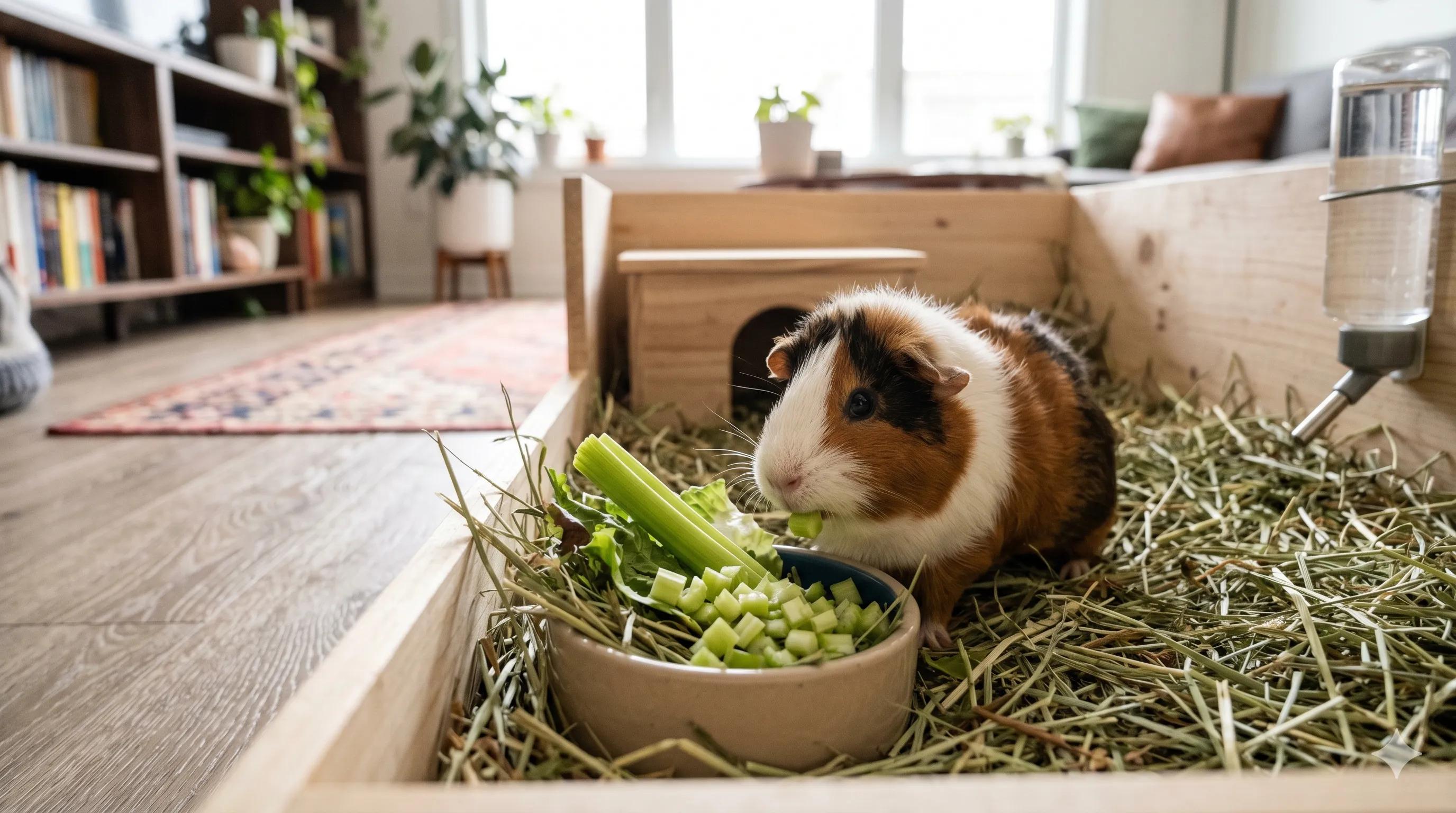
Yes — fresh vegetables should be offered every single day as an essential part of a balanced guinea pig diet. Aim for approximately 1 cup of varied leafy greens per guinea pig daily. Rotate between at least 3–4 different safe greens to provide nutritional variety and prevent oxalate build-up from any single vegetable. Safe daily options include romaine lettuce, green leaf lettuce, endive, arugula, cilantro, and butterhead lettuce. Cruciferous vegetables like broccoli, cabbage, and kale should be offered more sparingly due to their calcium content and gas-producing potential.

Guinea pigs typically drink approximately 80–120 ml of water per kilogram of body weight per day. For a typical 1 kg guinea pig, this means roughly 80–120 ml daily, though actual consumption varies with diet (guinea pigs eating lots of watery vegetables like cucumber may drink less). Always provide fresh, clean water changed daily. A heavy ceramic bowl is preferred over a drip bottle — guinea pigs drink more naturally and comfortably from bowls, ensuring better hydration. In warm weather, water consumption will increase.

Guinea pigs are one of the few mammals that cannot synthesise their own Vitamin C (ascorbic acid), making daily dietary intake absolutely critical. Without it, they develop scurvy within 2–4 weeks, causing lethargy, joint pain, rough coat, and bleeding gums. The best way to meet their daily needs is through food: red and yellow bell peppers are outstanding sources, as are cilantro, parsley, and rosehips. Vitamin C added to water is not recommended as it degrades rapidly with light and oxygen exposure. If concerned about intake, speak to an exotic animal veterinarian about direct supplementation methods.

No — fruit should be offered as an occasional treat only, not as a daily food. Despite containing useful Vitamin C, fruits are high in natural sugars that can disrupt the gut flora of sensitive guinea pigs, promote weight gain, and contribute to dental problems. Safe fruits including strawberries, blueberries, and apple slices (seeds removed) can be offered 1–2 times per week in small amounts. Do not rely on fruit for daily Vitamin C — fresh bell peppers and cilantro are far superior sources with far less sugar.

Several common foods are dangerous or fatal to guinea pigs: Allium family (onions, garlic, chives, leeks) — cause haemolytic anaemia. Rhubarb — extremely high oxalic acid causes kidney failure. Avocado — contains persin, causing respiratory distress and cardiac failure. Chocolate and caffeine — cardiac toxins that guinea pigs cannot metabolise. Potato leaves and tomato leaves/stems — nightshade plants containing solanine. Iceberg lettuce — causes severe diarrhoea; always use Romaine instead. Nuts and seeds — too high in fat, causing digestive and liver stress. Mushrooms, alcohol, and tea — all toxic. If your guinea pig has eaten a potentially toxic food, contact a veterinarian immediately.

How Portions Are Calculated

The portion estimates provided by this calculator are based on established guinea pig husbandry guidance that is widely referenced in exotic animal veterinary care resources and recognised by animal welfare organisations.

  • Hay recommendations (unlimited, ~80% of diet) are a consensus position across exotic mammal veterinary nutrition literature, reflecting the critical role of long-strand fibre in dental and digestive health.
  • Pellet portion guidance (1/8 cup per adult guinea pig per day) is consistent with mainstream guinea pig husbandry guidance from exotic pet welfare organisations and small mammal care resources.
  • Vegetable portions (~1 cup per guinea pig per day) and water estimates (80–120 ml per kg) reflect widely published guinea pig care standards referenced in exotic animal practice.

Important: This tool provides educational estimates only. Guinea pigs with specific health conditions, pregnancy, or unusual weight profiles may have significantly different needs. Always consult a qualified exotic animal or small mammal veterinarian for personalised dietary guidance.

More Guinea Pig & Pet Tools

Explore our free tools to keep your guinea pig healthy, happy, and well-fed.

Educational Use Notice

Last updated: May 2026

The information provided by this tool is for general educational and informational purposes only. Results are estimates and may vary based on your pet's breed, age, health conditions, activity level, diet, and individual factors.

PetNurture does not provide veterinary, medical, or emergency care advice. Always consult a licensed veterinarian or qualified pet care professional regarding your pet's specific health, nutrition, or medical needs.

While we strive to keep calculations accurate and up to date, PetNurture makes no guarantees regarding completeness, reliability, or accuracy. Use this tool at your own discretion.

How we calculate results: This tool uses commonly referenced veterinary formulas, feeding guidelines, and breed-size estimates to provide general educational guidance. Individual pets may have different nutritional, behavioral, or medical needs that are not captured by any generalized formula.