Guinea Pig Weight Chart: Healthy Weight by Age, Sex & Breed
A guinea pig's weight is one of the clearest windows into her overall health, since guinea pigs are prey animals that in…
Educational calculators, feeding guides, cage planning tools, and nutrition resources designed to help guinea pig owners make informed decisions. All tools are free, instant, and require no account.
Search our database of 75+ vegetables, fruits, and herbs to find out instantly whether a food is safe, occasional, or toxic for your guinea pig.
Estimate the ideal daily amounts of hay, fresh vegetables, pellets, and water for your guinea pig based on their weight and life stage.
Find the minimum, recommended, and premium floor space for your guinea pig group. Includes C&C cage grid suggestions and activity ratings.
Instantly check whether any vegetable, fruit, herb, or plant is safe, limited, or toxic for guinea pigs. Database of 75+ commonly asked foods.
Estimate daily hay, vegetable, pellet, and water needs by weight and life stage. Includes portion guidance and dietary balance tips.
Estimate your guinea pig's daily Vitamin C needs by body weight, age group, and life stage - including higher needs for pregnant and nursing sows.
Check whether your guinea pig's weight falls within typical healthy ranges for their sex and age group. Includes a visual 4-zone weight scale.
Calculate the minimum, recommended, and premium floor space for 1-6+ guinea pigs. Get C&C grid layout suggestions based on your group.
Estimate the expected birth window from a breeding or conception date. Tracks pregnancy progress across 4 developmental milestones with a visual timeline.
Convert your guinea pig's age to human-equivalent years and discover their current life stage — Baby, Young, Adult, Senior, or Elderly.
Guinea pigs have specific care requirements that differ significantly from dogs, cats, and even rabbits. Getting the details right matters - and these tools are designed to help.
Guinea pigs need unlimited hay, a cup of fresh vegetables daily, measured pellets, and constant water. The exact balance depends on weight and age. Getting the ratio wrong leads to dental disease, obesity, or nutritional deficiencies.
Most commercial cages are too small for guinea pigs. Inadequate space contributes to stress, obesity, and social problems, particularly in male groups. The cage size calculator helps owners plan the right enclosure from the start.
Weekly weighing is one of the most effective ways to catch illness early in guinea pigs - they hide symptoms well. A sudden weight drop of 50-100g can indicate a health problem before any other signs appear.
Guinea pigs cannot synthesise their own Vitamin C, making dietary intake essential. Deficiency leads to scurvy - a painful and preventable condition. The Vitamin C calculator helps owners ensure adequate daily intake through food.
Not every vegetable, herb, or fruit is safe for guinea pigs. Some foods - like onions, garlic, avocado, and iceberg lettuce - can cause harm. The food checker removes the guesswork from introducing new foods.
Guinea pig pregnancies last 59-72 days and require specific preparation including male separation, dietary changes, and birthing environment setup. The pregnancy calculator helps owners track progress and prepare well in advance.
A well-cared-for guinea pig needs attention across six key areas. PetNurture's tools support each one.
Hay-first diet with daily fresh vegetables and measured pellets.
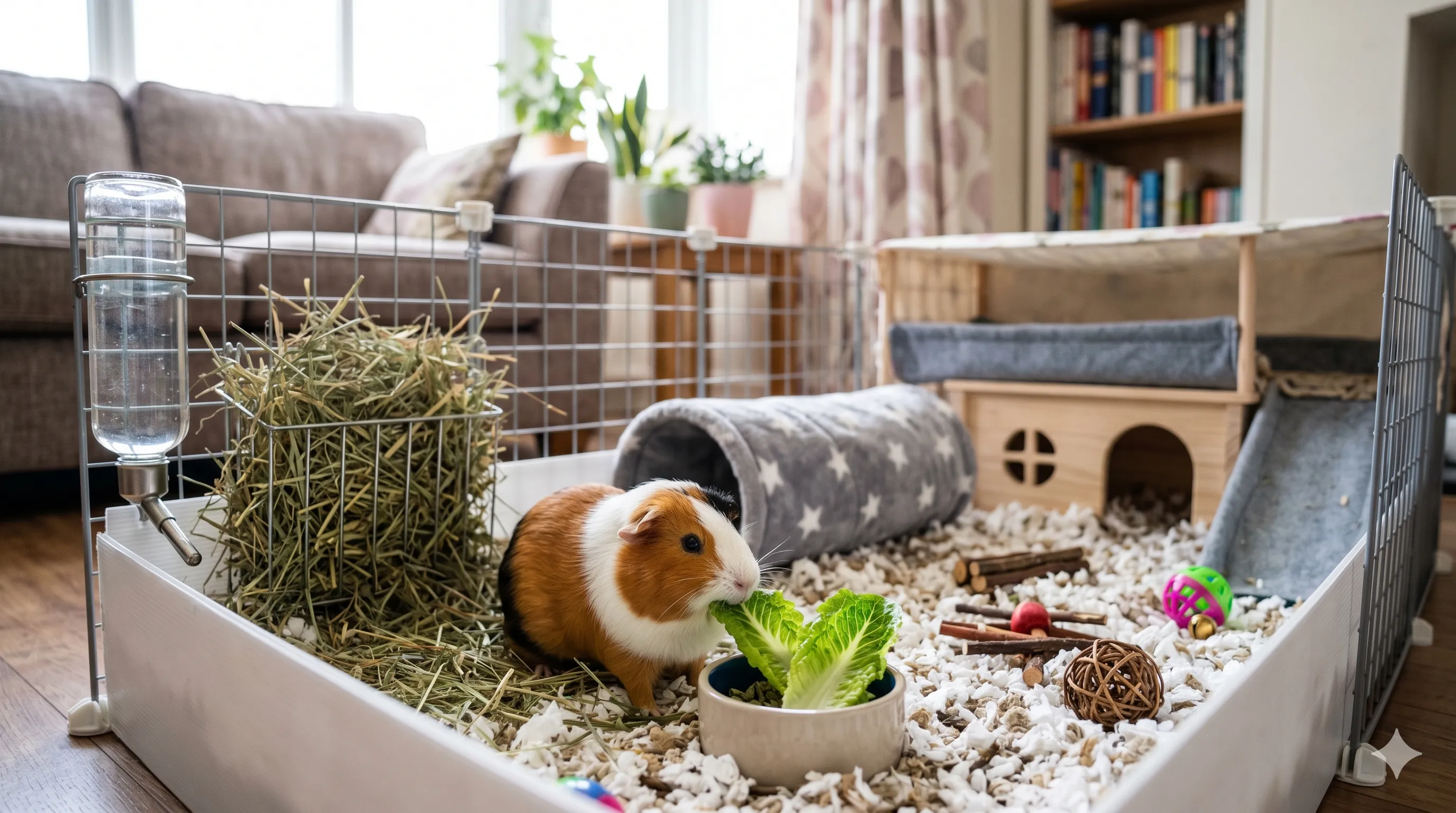
Spacious, enriched enclosures with hides, ramps, and foraging areas.
Daily floor time in a safe area to run, explore, and socialise.
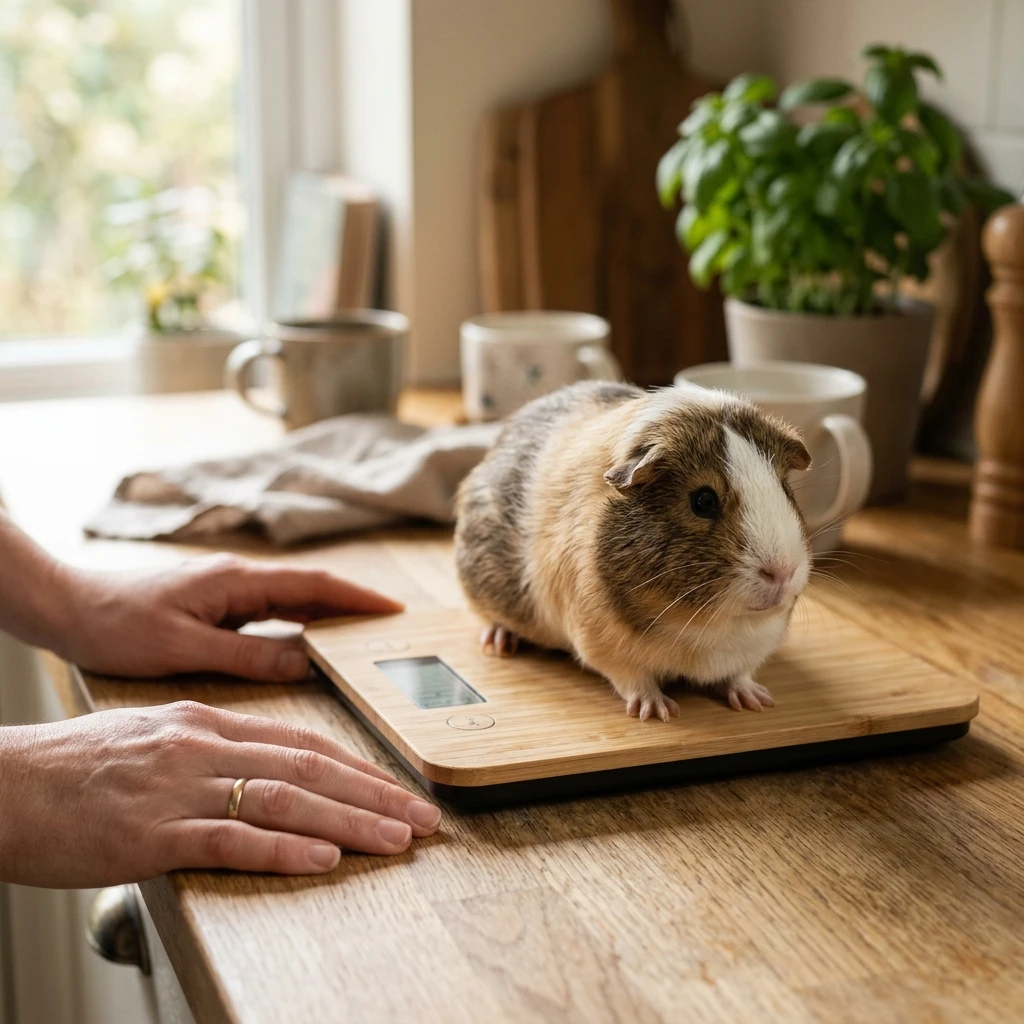
Weekly weigh-ins using a kitchen scale to detect illness early.
Daily dietary Vitamin C through vegetables - guinea pigs cannot synthesise it.
Understanding gestation, separation, and pup care from day one.
These are the questions that bring most new owners here. Each answer below links to the relevant tool for more detail.
A guinea pig's daily diet should be based on unlimited Timothy hay (the single most important component), approximately 1 cup of fresh leafy vegetables per pig per day, and around 1/8 cup of plain pellets. Fresh water must always be available. The Feeding Calculator provides weight-adjusted portion estimates.
A single guinea pig needs a minimum of 7.5 sq ft of floor space - but the recommended standard for a pair is at least 10.5 sq ft. Most commercial cages fall below these thresholds. C&C (Coroplast and grid) cages are the most recommended solution for adequate housing. Use the Cage Size Calculator for your specific group.
Guinea pigs cannot synthesise Vitamin C and must obtain it entirely through diet. Bell peppers, parsley, and kale are excellent natural sources. Supplements added to water bottles are often unreliable due to light and air degradation - fresh food sources are preferred. The Vitamin C Calculator estimates daily needs by weight and life stage.
Once a week using a digital kitchen scale is the standard recommendation for healthy adults. A weight loss of 50g or more over one week without a dietary explanation warrants a veterinary check. Weight tracking is one of the most reliable early-warning tools for illness in guinea pigs, which typically conceal symptoms until serious. Use the Weight Checker to interpret results.
These tools work best alongside our guinea pig care guides. Explore articles on housing setup, diet planning, safe vegetable lists, and breed-specific care.
Common questions about guinea pig care tools, calculators, and resources on PetNurture.
The estimates and guidance used across PetNurture's guinea pig calculators are derived from widely published guinea pig husbandry references, small-mammal nutrition guidelines, and exotic animal care resources - not invented by PetNurture.
PetNurture does not claim authorship of any veterinary standard or care guideline. These tools present educational reference data. They do not diagnose conditions, prescribe treatments, or replace professional veterinary advice.
PetNurture's free tools cover multiple pet types. Browse dog, cat, and rabbit calculators.
Age conversion, calorie calculator, chocolate toxicity checker, weight checker, and breed selector quiz.
Cat age in human years, daily calorie needs, and feline care guides for indoor and senior cats.
Rabbit feeding calculator and safe food database - covering vegetables, fruits, and herbs.
Direct links to every guinea pig calculator and related rabbit nutrition tool.
The information provided by this tool is for general educational and informational purposes only. Results are estimates, not a diagnosis, and may vary based on your pet's breed, age, health conditions, activity level, diet, and individual factors.
PetNurture does not provide veterinary, medical, or emergency care advice. Always consult a licensed veterinarian or qualified pet care professional regarding your pet's specific health, nutrition, or medical needs.
While we strive to keep calculations accurate and up to date, PetNurture makes no guarantees regarding completeness, reliability, or accuracy. Use this tool at your own discretion.
How we calculate results: This tool uses commonly referenced veterinary formulas, feeding guidelines, and breed-size estimates to provide general educational guidance. Individual pets may have different nutritional, behavioral, or medical needs that are not captured by any generalized formula.
Join our newsletter for simple care guides, feeding charts, and trusted product recommendations.