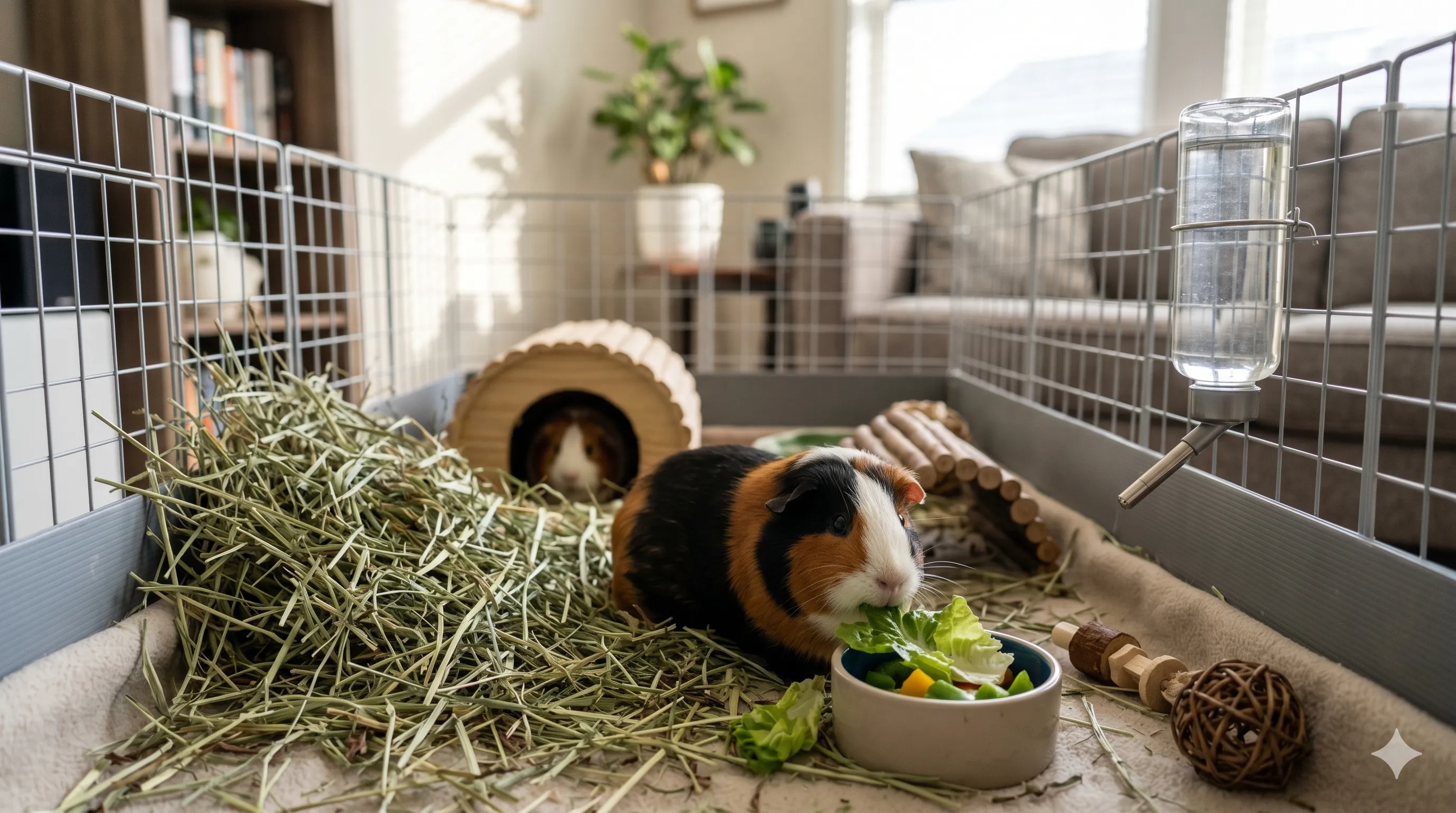
Best Guinea Pig Breeds for Beginners (Friendly & Easy-to-Care Options)
- What Actually Makes a Breed Beginner-Friendly
- Top Beginner-Friendly Breeds
- American
- Teddy
- Rex
- A Good Middle-Ground Option
- Abyssinian
- Breeds to Approach with More Experience
- Peruvian
- Silkie
- Choosing Beyond Coat Type
- Time for Grooming
- Household Energy Level
- Getting a Pair
- Ongoing Cost
- Boar or Sow? Choosing Before You Choose a Breed
- Where to Get Your Guinea Pigs
- Expert Tips for First-Time Breed Selection
- Common Mistakes to Avoid
- Final Thoughts
Note: This article is for informational purposes only and does not replace professional veterinary advice.
The three easiest guinea pig breeds for a first-time owner are the American, the Teddy, and the Rex, all short or bristle-coated breeds that need only a weekly brush and pair an easygoing temperament with low grooming demands. The breeds to hold off on until you have more experience are the long-haired types like the Peruvian and Silkie, which need daily brushing and regular trims to stay tangle-free. This guide compares the beginner-friendly breeds, explains what actually makes a breed easy or hard to start with, and covers a few breeds worth considering once you've got a season of guinea pig care under your belt.
What Actually Makes a Breed Beginner-Friendly
Three factors decide how demanding a breed is day to day: coat length, coat texture, and temperament. Coat length is the biggest one by far, a short or bristly coat needs a weekly brush while a long, flowing coat needs daily attention plus regular trims to prevent matting. Temperament matters too since a calmer, more predictable breed makes early handling less stressful for a new owner still learning the basics.
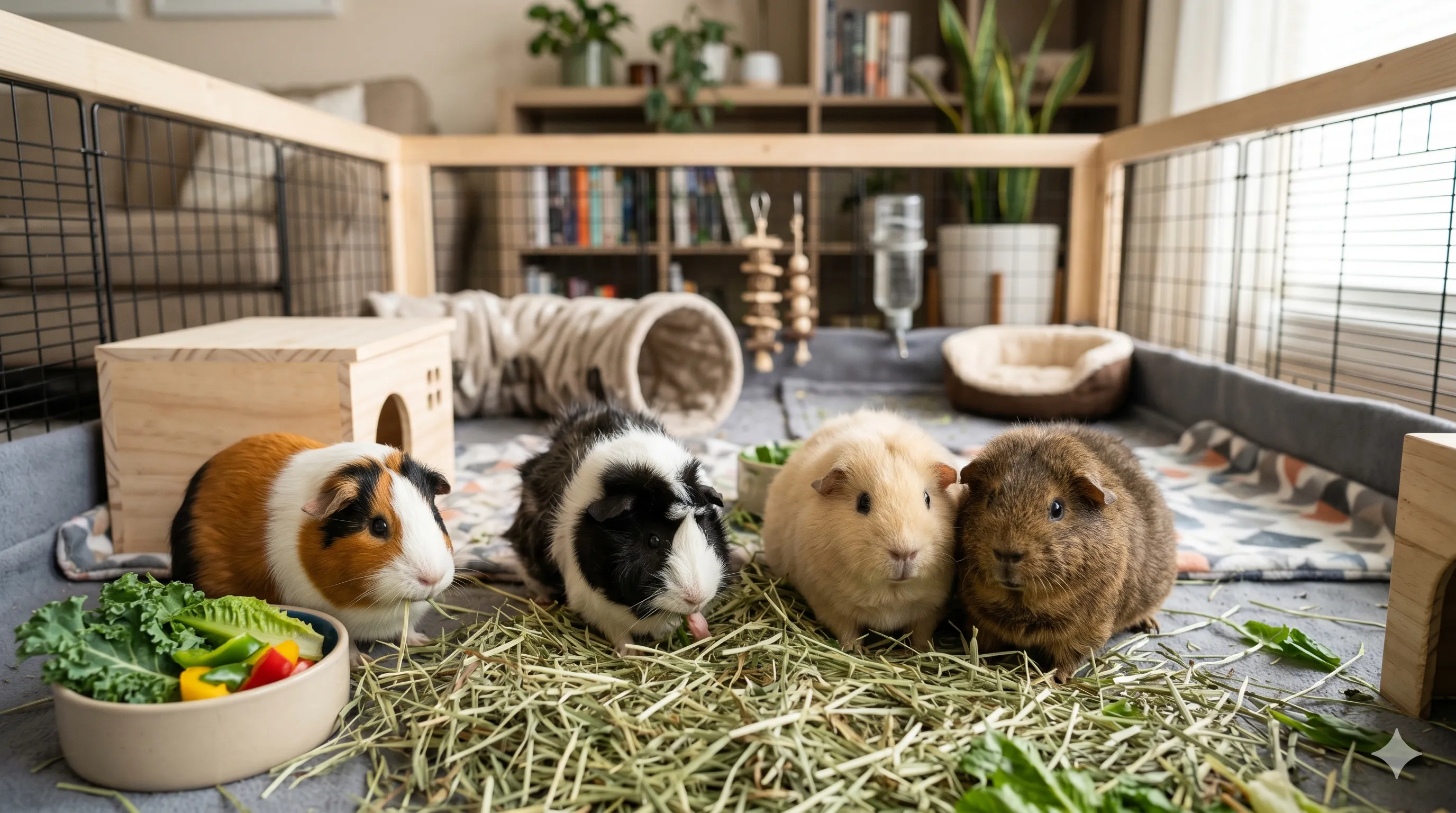
None of this changes the core requirements every guinea pig has regardless of breed: proper cage size, a hay-based diet, and a companion pig. Breed choice affects grooming time and personality, not the fundamentals of care. Our cage setup guide is a good place to start on the setup side before the breed conversation even comes up.
Top Beginner-Friendly Breeds
American
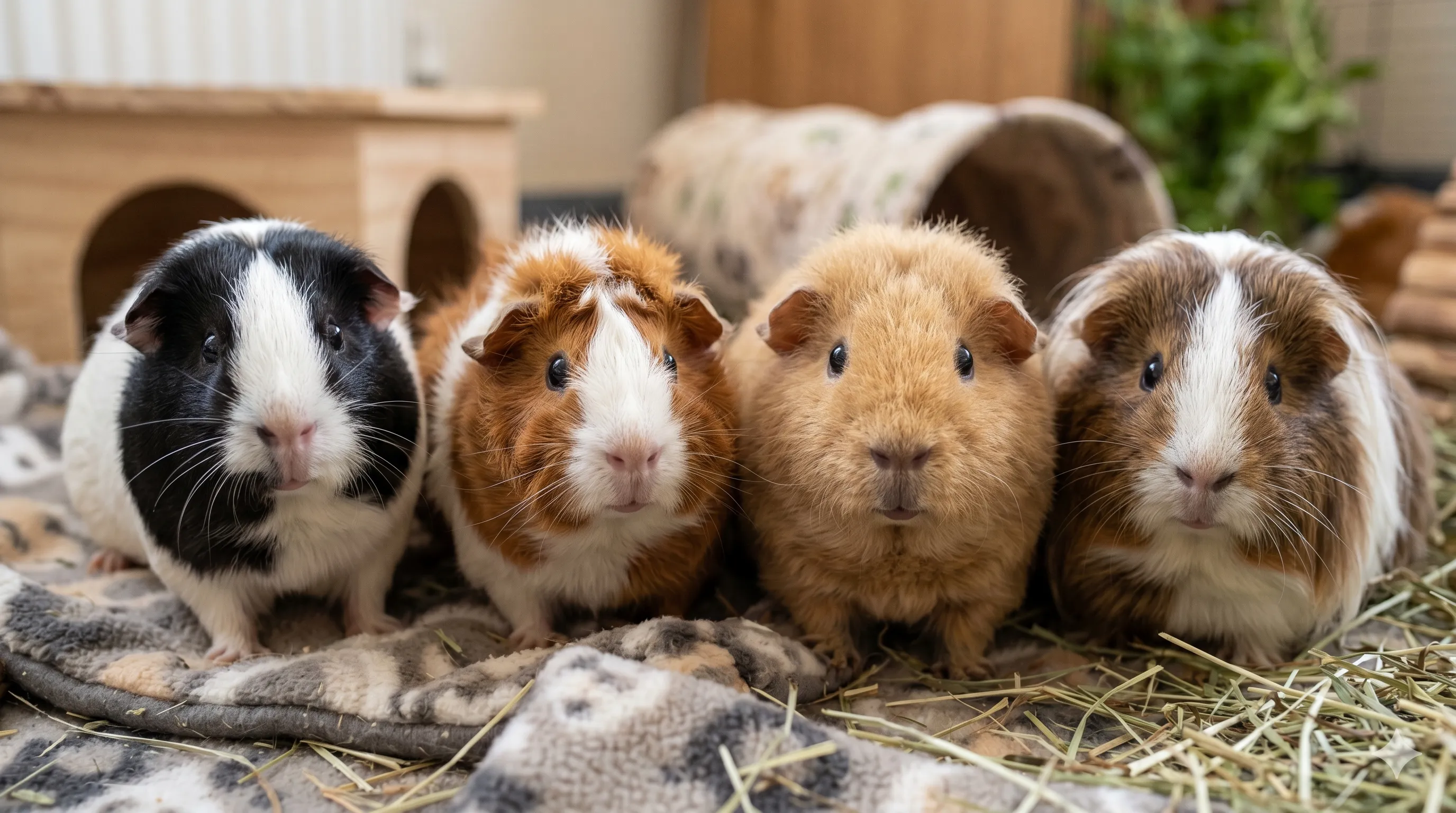
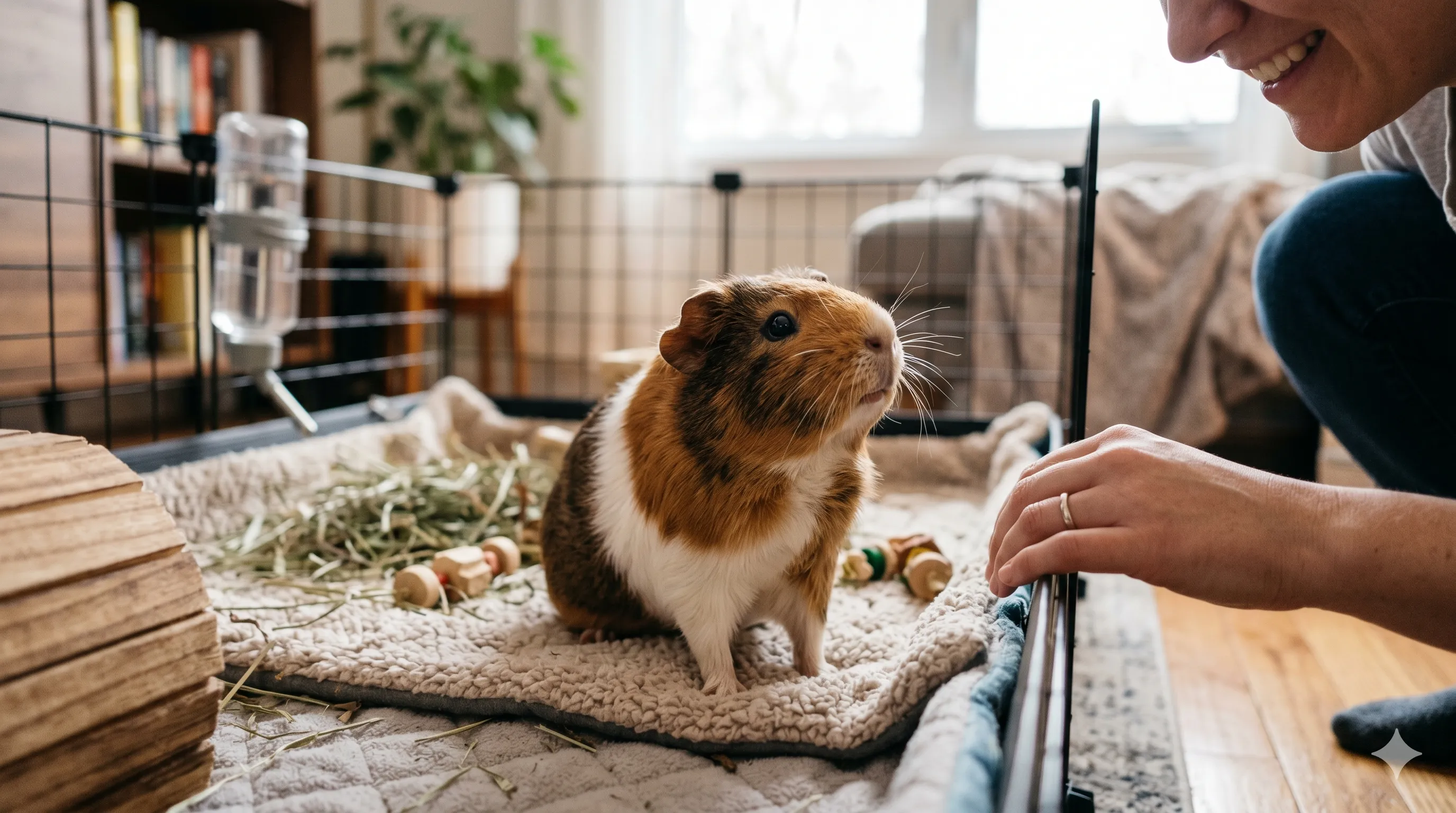
The American has a short, smooth coat that needs just a weekly brush, plus a calm, social temperament that makes handling easy from the start. It's the most common breed at shelters and pet stores, so it's usually the easiest to find locally too.
Teddy
The Teddy has a dense, springy coat that stands up rather than lying flat, giving it a plush, rounded look. Despite the textured appearance, a weekly brush keeps it looking healthy, and the breed is generally hardy and friendly.
Rex
The Rex has a coarse, wiry coat similar in upkeep to the Teddy, needing only a weekly brush to stay shiny. Rex fur grows toward the back and springs upright when brushed forward, giving it a distinct texture from the Teddy's front-growing coat.
A Good Middle-Ground Option
Abyssinian
The Abyssinian's whorled rosette coat looks like it would need constant care, but grooming is genuinely manageable at every two to three days rather than daily. The tradeoff isn't the coat so much as the temperament, Abyssinians tend to be bolder and more vocal than the calmer beginner breeds, quick to popcorn and eager for floor time, which some new owners love and others find more energy than they expected. It's a reasonable pick for a beginner who wants a bit more personality and doesn't mind slightly more frequent brushing.
Breeds to Approach with More Experience
Peruvian
The Peruvian's long, flowing coat can trail on the ground and needs daily brushing plus regular trims to stay manageable. Most breed guides recommend holding off on this one until you've handled the basics of guinea pig care for a while.
Silkie
The Silkie's coat is similarly long and prone to tangles, requiring daily brushing to prevent mats from forming close to the skin. Like the Peruvian, it's a rewarding breed for an owner who already has a grooming routine down, just not usually the easiest starting point.
Choosing Beyond Coat Type
Time for Grooming
Be honest about how much time grooming will realistically get each week before choosing a breed based on looks alone. A five-minute weekly brush is a very different commitment than a daily fifteen-minute session.
Household Energy Level
A more energetic breed like the Abyssinian fits a household with plenty of floor-time hours better than a busier household with less daily interaction time. Our indoor guinea pig care guide is worth a look for households weighing an energetic breed against how much indoor space is realistically available.
Getting a Pair
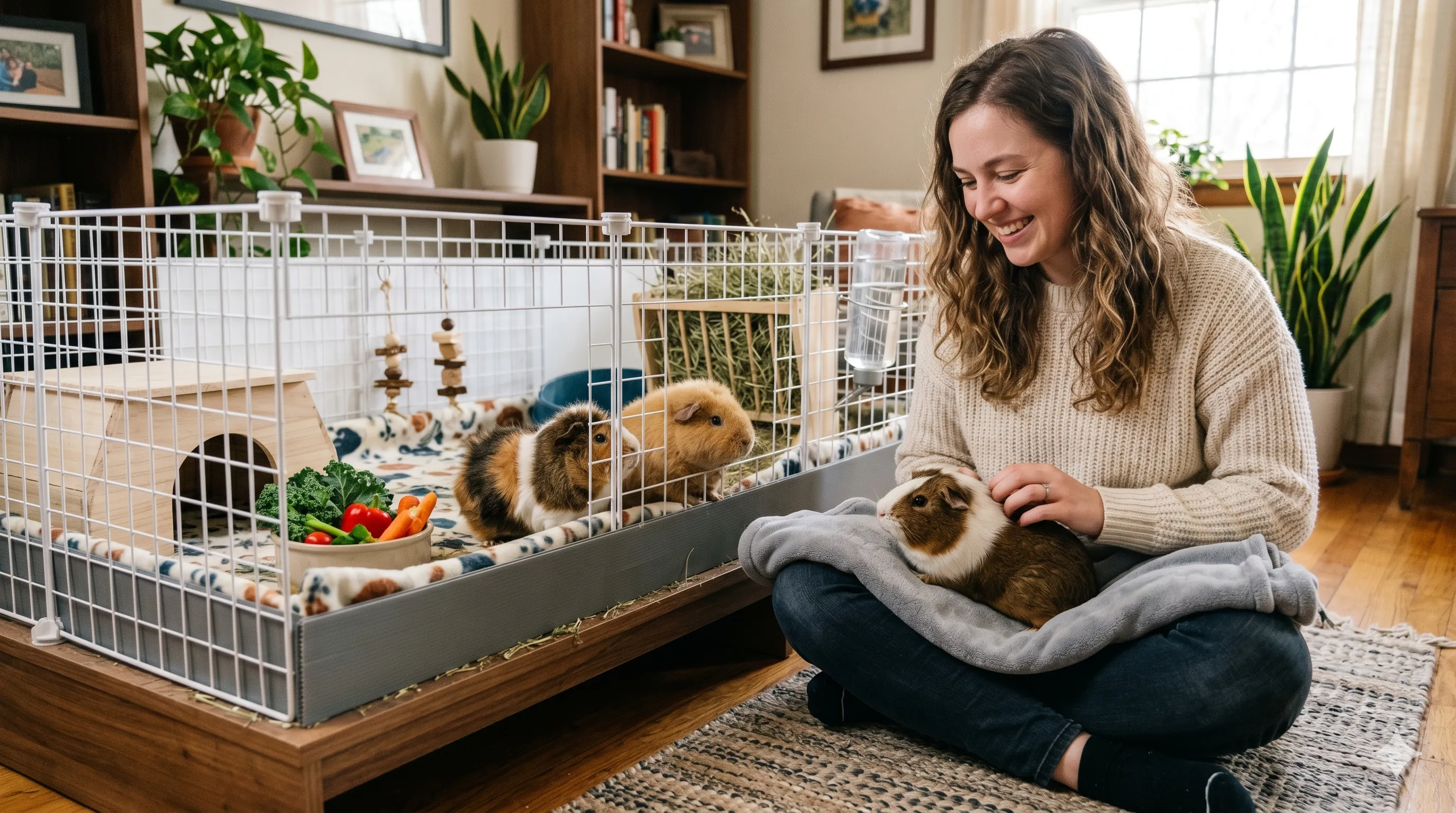
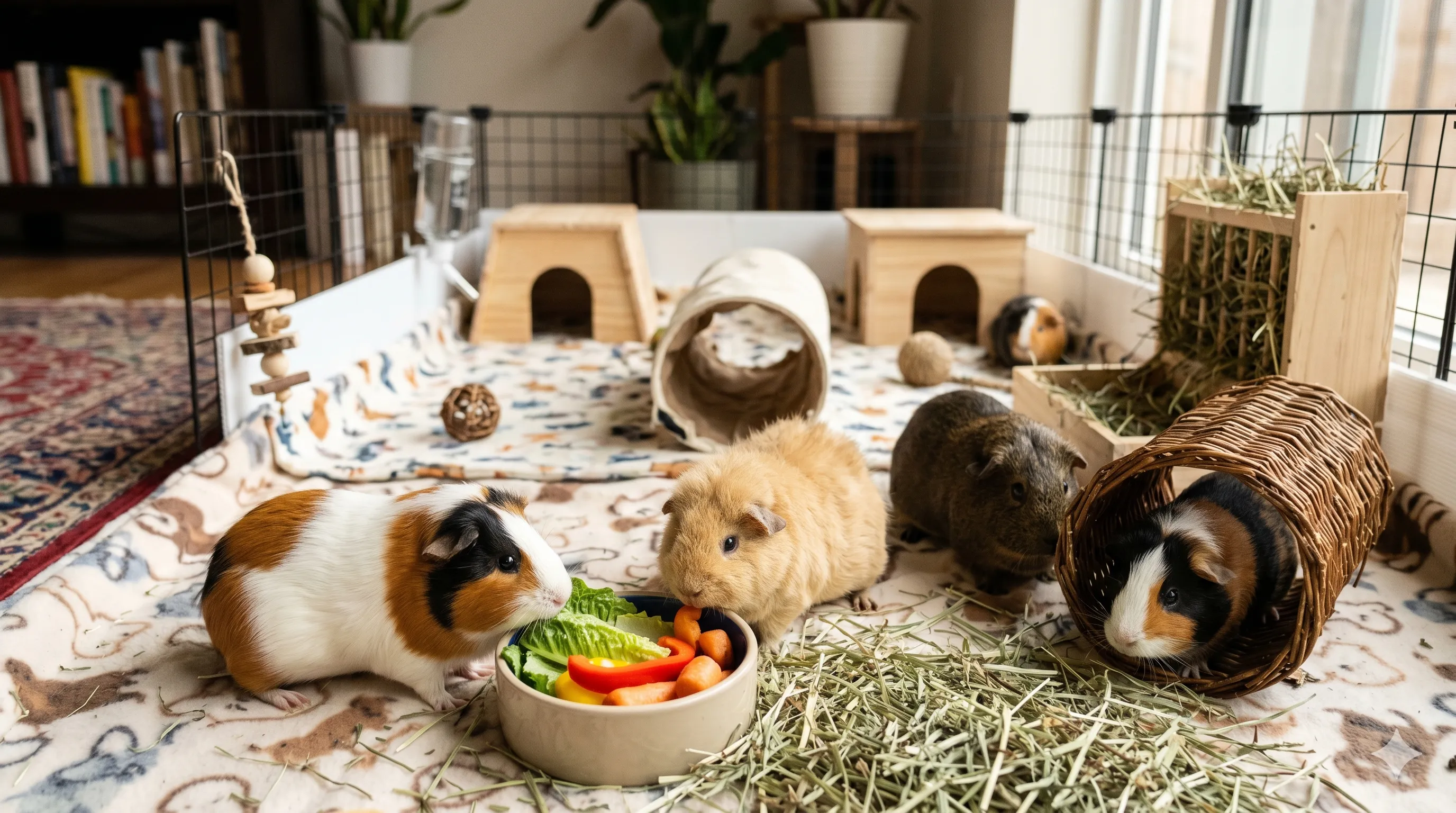
Whichever breed you choose, plan for at least two guinea pigs rather than one, since they're a herd species that does best with company. Two Americans or an American paired with a Teddy both work well as beginner-friendly combinations, and pairs from calmer breeds tend to lick their owner's hand readily once they've bonded with an owner.
Ongoing Cost
Coat type has a small effect on cost too, short-haired breeds need little beyond a basic brush while long-haired breeds add regular grooming supplies and occasional professional trims to the usual hay, pellets, and vet care every guinea pig needs.
Boar or Sow? Choosing Before You Choose a Breed
Sex affects daily life with your guinea pigs at least as much as coat type does. Two sows are the most common beginner pairing, because females housed together usually settle into a stable, quiet routine. Two boars can also live together, but they are more likely to squabble over rank, particularly when they are introduced as adults, and some pairs never fully settle.
A boar and a sow should only share a cage if the male has been neutered by an exotic-animal veterinarian, because guinea pigs breed readily and a pregnancy brings real health risks for the sow. When you buy or adopt, ask how the animals were sexed and by whom, since mistakes are common in young pigs and a pair sold as two females is sometimes a mixed pair.
Where to Get Your Guinea Pigs
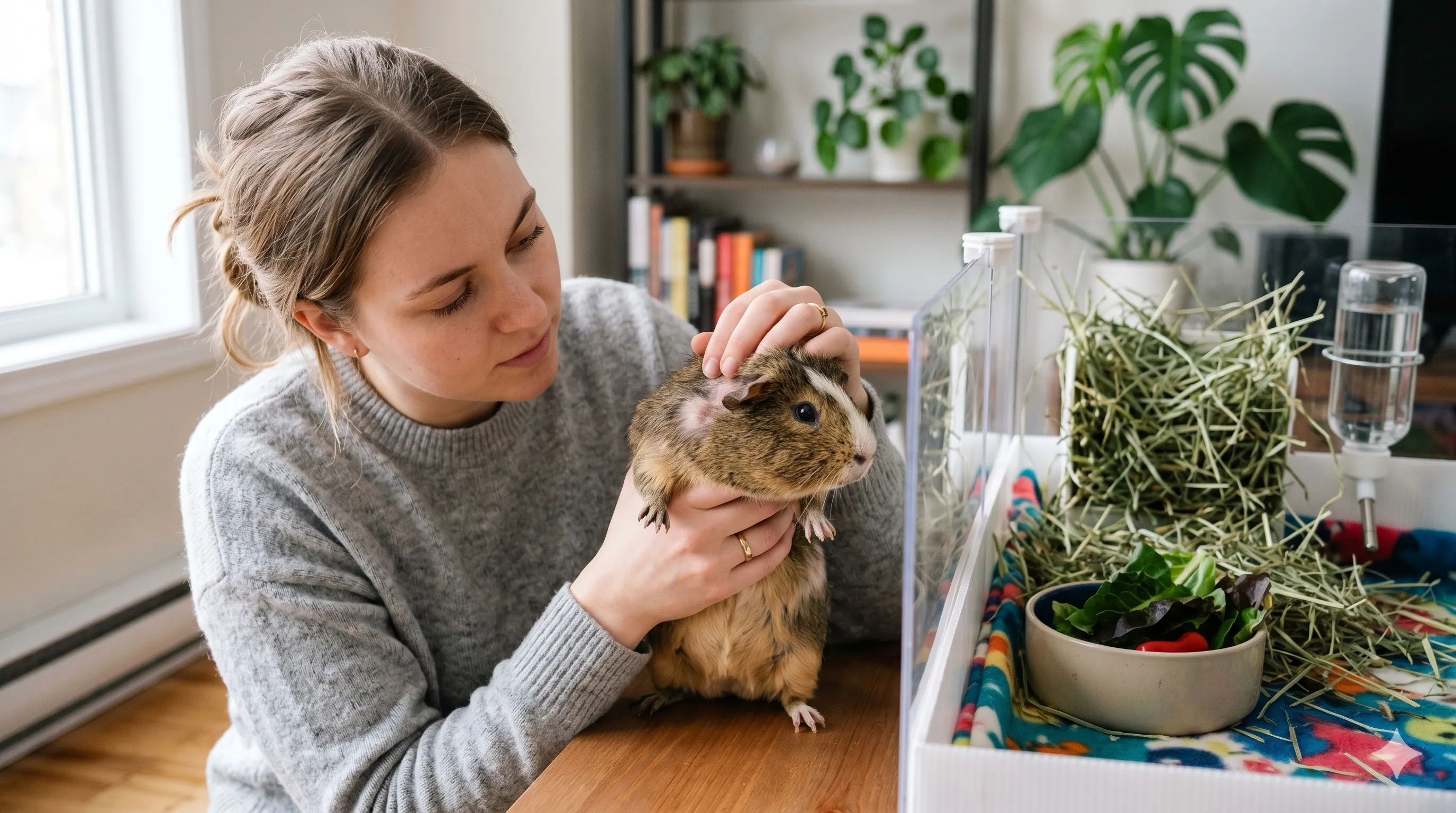
Rescues and small breeders usually know the individual animals' temperaments and ages, which is far more useful than a breed label. Pet stores can also be a good source, but ask how old the pigs are and how long they have been there. Whoever you buy from, a quick health check before you commit tells you a lot.
- Eyes and nose: bright, clear eyes and a clean, dry nose, with no sneezing or crusting
- Coat and skin: a clean, even coat with no bald patches, scabs, or constant scratching
- Weight and body: a firm, rounded body rather than a bony spine, and a pig that is eating hay readily
- Rear end: clean fur and no staining or wetness around the bottom
- Behavior: alert, curious, and moving normally, rather than hunched in a corner
Plan a first checkup with an exotic-animal veterinarian within the first couple of weeks, since not every vet treats guinea pigs and it is easier to find one before you need one.
Expert Tips for First-Time Breed Selection
- Visit a rescue or breeder in person when possible, meeting a pig's actual temperament tells you more than a breed description alone.
- Use the weekly brushing session as a chance to run through dental health checks too, since a calm routine makes health checks easier regardless of breed.
- Start with a short or bristle-coated breed for the first pig even if a long-haired breed catches your eye, you can always add one later once the basics feel routine.
- Ask a rescue about a specific pig's personality rather than relying on breed generalizations alone, individual temperament varies within every breed.
Common Mistakes to Avoid
- Choosing a long-haired breed for its looks without researching the daily grooming commitment first.
- Assuming all short-haired breeds have identical temperaments, personality still varies between American, Teddy, and Rex pigs.
- Getting a single guinea pig instead of a pair, regardless of how easy the chosen breed is to groom.
- Picking a breed based only on online photos without confirming grooming needs match your actual weekly schedule.
Final Thoughts
The American, Teddy, and Rex all deliver friendly, low-maintenance ownership that suits a first guinea pig well, while the Abyssinian offers a bit more personality for a beginner willing to brush slightly more often.
Long-haired breeds like the Peruvian and Silkie are worth waiting for until you've built confidence with the basics. Whichever breed you choose, our full care guide covers the daily and weekly care routine that applies no matter which one ends up in your home.
For a look at ownership trends and breed popularity nationwide, see guinea pig ownership and breed data.
Coat type decides grooming time, not whether a breed can be a great first guinea pig.
This content is written to provide general educational guidance for guinea pig owners and pet families and is not a substitute for professional veterinary advice.
Medical Disclaimer
This content is provided for informational and educational purposes only and should not be considered veterinary, medical, behavioral, or training advice. While we strive for accuracy, we make no guarantees regarding completeness or results. Always consult a licensed veterinarian or qualified pet care professional before making decisions about your pet’s health, diet, or behavior.
AI Illustration Notice
Some images in this article may have been generated or enhanced using artificial intelligence for illustrative purposes.
Frequently Asked Questions
The American is generally considered the easiest thanks to its short coat and calm temperament. Teddy and Rex guinea pigs are close runners up with similarly low grooming needs.
They can work well for a beginner who wants more personality and doesn't mind brushing every two to three days. The coat is manageable but the temperament runs more energetic than calmer breeds.
Long-haired breeds like the Peruvian and Silkie need daily grooming and regular trims which can be a lot for someone still learning basic care. They're better suited to an owner with some prior guinea pig experience.
No, a weekly brush keeps both breeds looking healthy despite their textured coats. Their upkeep is close to the American's despite looking quite different.
Two is strongly recommended regardless of breed since guinea pigs are a herd species. A single guinea pig can become lonely and stressed without a companion.
No, cage size requirements are based on the number of guinea pigs rather than breed. A more energetic breed simply makes good use of extra floor space.
Yes, many owners start with a short-haired breed and add a long-haired one later once daily grooming feels manageable. There's no rule against it beyond a steeper learning curve starting out.
Editorial Note
This article is part of PetNurture's educational library.
Topics draw on publicly available educational resources, recognised veterinary organisations, academic publications and established animal welfare references where appropriate.
The specific sources this article draws on are listed in its References section. If you spot an error, please let us know.
References
The information in this article has been reviewed and supported using the following sources.
RSPCA
How Should I Groom My Guinea Pigs?
The RSPCA recommends daily brushing for long-haired guinea pig breeds using a small, stiff brush and a metal comb, brushing in the direction the hair grows, and combing out mats every day.
Accessed Aug 6, 2026
VCA Animal Hospitals
VCA Animal Hospitals notes that guinea pigs are highly social animals that thrive in pairs or groups, and recommends keeping at least two guinea pigs together.
Accessed Aug 6, 2026
Pet Emergency Guidance
Every pet is unique. If your pet exhibits severe symptoms, sudden behavioral changes, or a medical emergency, do not rely on online guides — contact a licensed veterinarian or emergency clinic immediately.
About PetNurture
PetNurture is an educational library of pet care guides, interactive tools and practical resources for pet parents. We work continuously to keep our content accurate and up to date. Reader feedback helps us maintain content quality.
Related Articles
Popular Guinea Pig Guides
Guinea Pig
Guinea Pig Feeding Calculator
Calculate daily food portions for your guinea pig by weight.
Guinea Pig
Guinea Pig Cage Size Calculator
Find the minimum recommended cage size for your guinea pigs.