Why Is My Guinea Pig Not Eating? Causes & Emergency Signs
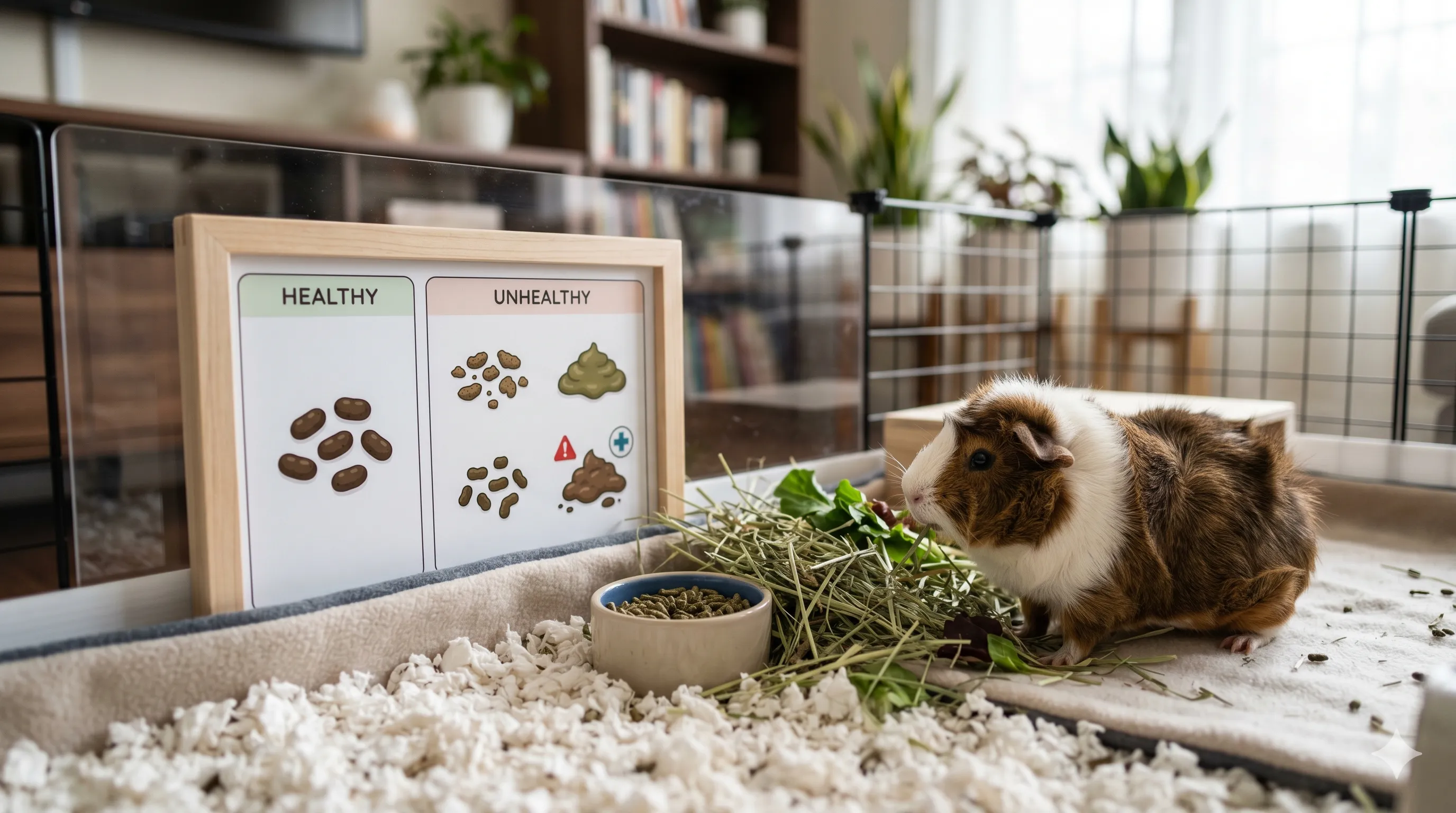
If your guinea pig suddenly stops eating, it should always be taken seriously. Guinea pigs have sensitive digestive syst…
Trusted by PetNurture pet parents
A healthy guinea pig's weight depends on both sex and age: adult females typically weigh 700-1,100g, while adult males (who run larger) typically weigh 900-1,400g — this tool compares your guinea pig's weight against the expected range for their specific sex and age bracket, rather than a single number.
Enter your guinea pig's weight, sex, and age bracket to see how it compares to typical ranges.
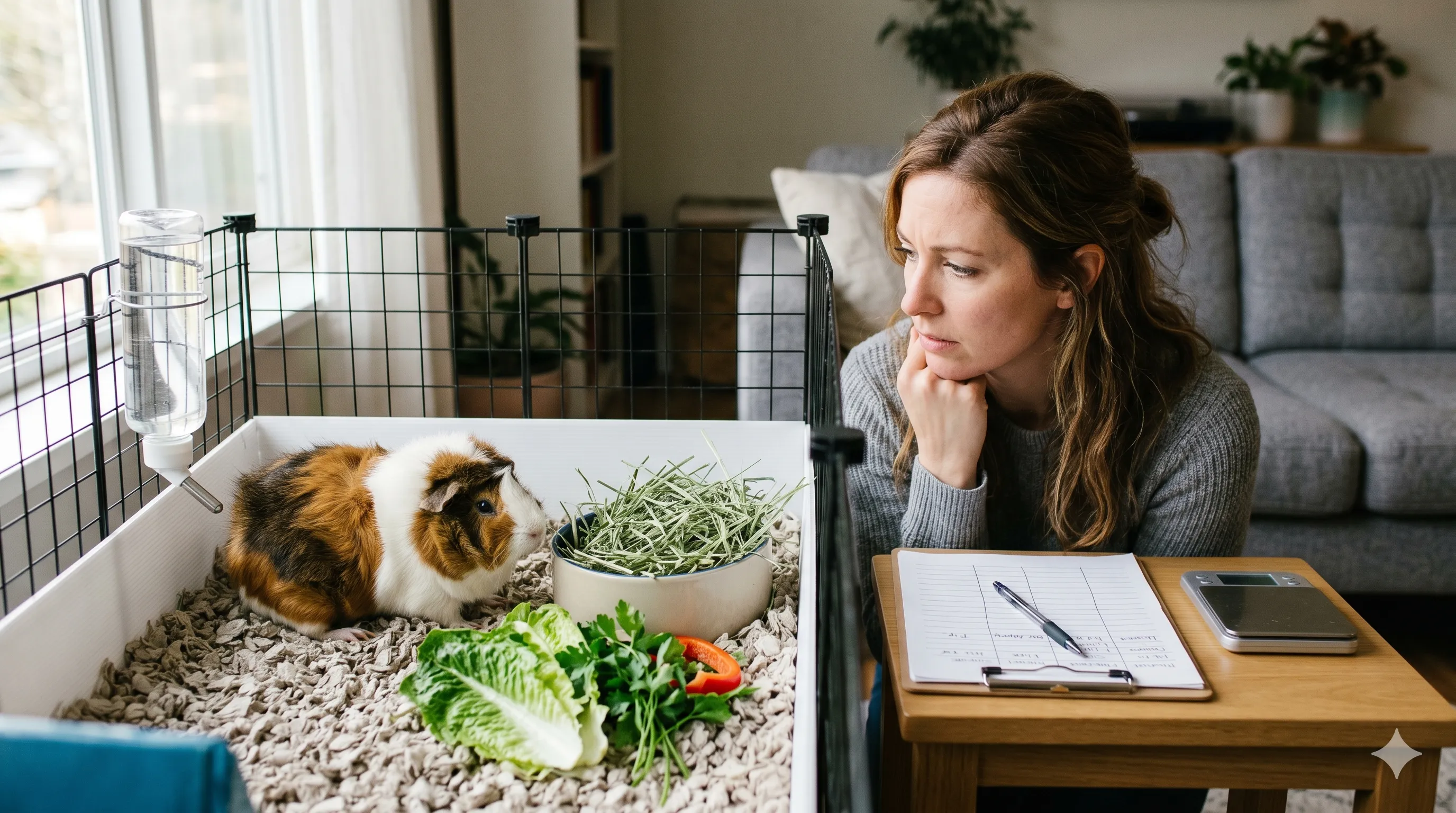
A digital kitchen scale and two minutes per week can make a significant difference to your guinea pig's health outcomes. Here's why regular weighing is one of the most valuable habits a guinea pig owner can build.
Guinea pigs are prey animals that instinctively mask signs of illness until a condition has become serious. Unexplained weight loss - even 50g in a week - is often the first detectable signal that something is wrong. Weekly weighing gives you a data point that visible observation cannot reliably provide.
Weight is a direct reflection of food intake over time. A guinea pig that is secretly eating less - due to dental problems, social competition at food sources, or reduced appetite from illness - will show it in the scale reading before any other observable sign appears.
For baby and young adult guinea pigs, regular weigh-ins confirm that growth is on track. Baby guinea pigs typically double their weight in the first few weeks of life, and a growth plateau can indicate inadequate nutrition, parasite burden, or an underlying health concern that needs vet investigation.
Senior guinea pigs (5+ years) are at increased risk of dental disease, tumours, kidney decline, and heart conditions - all of which cause weight loss as an early symptom. For seniors, bi-weekly or even weekly weighing combined with regular exotic vet check-ups is considered a gold standard of care.
Weight loss in guinea pigs can have many causes, most of which respond well to early intervention. The following are among the most frequently seen in practice. This list is educational only - never use it to self-diagnose your guinea pig.
Weight loss in guinea pigs always warrants monitoring and often warrants veterinary attention. Seek a vet promptly if:
This tool is for educational monitoring only and does not replace veterinary diagnosis.
Obesity is an underappreciated welfare issue in pet guinea pigs. These are the most common contributing factors - and the good news is that most are straightforward to address with dietary and environmental adjustments.
Many owners overfeed commercial pellets, which are calorie-dense. The typical recommendation for adult guinea pigs is around 1/8 cup of plain pellets per pig per day. Free-feeding pellets is a leading cause of obesity. See the Feeding Calculator for guidance.
Fruit, root vegetables (carrots), and commercial treats are high in sugar and should be given very sparingly - a small piece of fruit no more than 1-2 times per week. Daily treat feeding rapidly increases caloric intake beyond what exercise can offset.
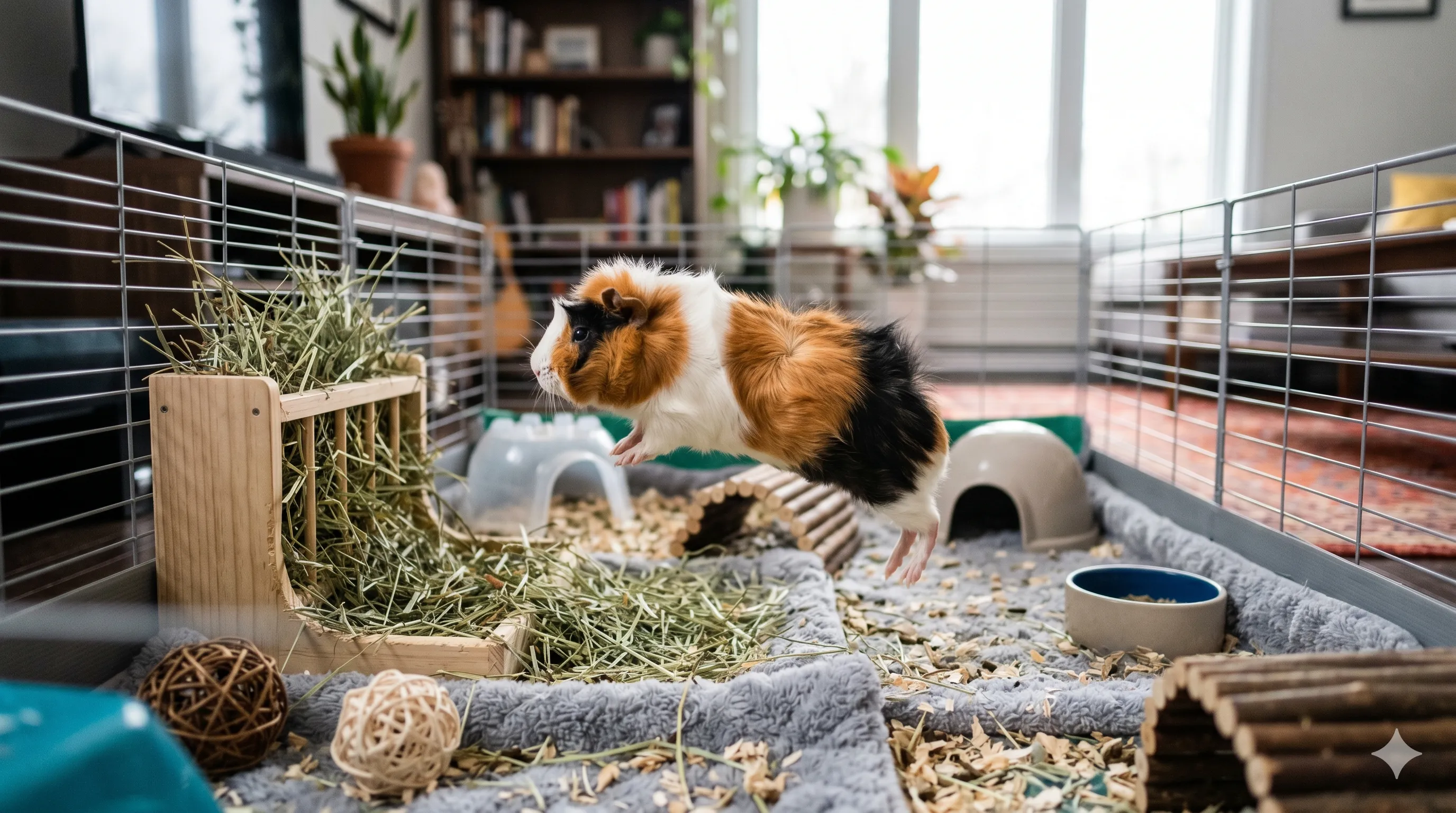
A sedentary guinea pig in a small enclosure will gain weight even on a seemingly reasonable diet. Guinea pigs are naturally active animals that need to run, forage, and explore to burn calories. Daily floor time in addition to a spacious cage supports healthy weight management.
Guinea pigs in cages below the recommended size have limited opportunity for movement throughout the day. A cage that meets the recommended floor space allows them to run, sprint, and express natural active behaviour - a critical factor in weight management.
Accurate, consistent weight data is only useful if your weighing technique is reliable. Follow these steps to get readings you can trust.
Example data only - not a real guinea pig record. Use this format as a template.
| Week | Date | Weight | Change | Notes |
|---|---|---|---|---|
| Week 1 | 01 Jun | 920g | - baseline | Eating well, active |
| Week 2 | 08 Jun | 927g | +7g ↑ | Normal behaviour |
| Week 3 | 15 Jun | 909g | −18g ↓ | Monitor closely |
| Week 4 | 22 Jun | 922g | +13g ↑ | Appetite returned |
| Week 5 | 29 Jun | 931g | +9g ↑ | Stable, healthy trend |
Tip: A one-off dip (like Week 3 above) is common and not necessarily alarming. It's when the downward trend continues over 2-3 consecutive weeks that you should contact your vet.
Unlike the Body Condition Score-based weight checkers for dogs, cats, and rabbits on this site, guinea pig weight status is estimated by comparing your guinea pig's weight directly against published gram ranges for their sex and age bracket, since guinea pigs don't vary by breed size the way dogs and cats do.
These ranges are general population references, not breed-specific or individualized measurements — some healthy guinea pigs fall outside them.
This tool provides an estimate, not a diagnosis. Keep these limitations in mind when reading your result:
How a 950g adult female guinea pig's weight status is assessed.
Continue your guinea pig care research with these free educational tools.
General public resources referenced while researching this tool's topic.
This tool is part of PetNurture's educational library. Its formulas and guidance are researched using publicly available educational resources, recognised veterinary organisations, and established animal welfare references where appropriate — see the References section below for the specific sources used on this page.
It is reviewed by the PetNurture editorial team for clarity and accuracy, but it is not a substitute for advice, diagnosis, or treatment from a qualified veterinarian. Content reviewed: August 2026.
The information provided by this tool is for general educational and informational purposes only. Results are estimates, not a diagnosis, and may vary based on your pet's breed, age, health conditions, activity level, diet, and individual factors.
PetNurture does not provide veterinary, medical, or emergency care advice. Always consult a licensed veterinarian or qualified pet care professional regarding your pet's specific health, nutrition, or medical needs.
While we strive to keep calculations accurate and up to date, PetNurture makes no guarantees regarding completeness, reliability, or accuracy. Use this tool at your own discretion.
How we calculate results: This tool uses commonly referenced veterinary formulas, feeding guidelines, and breed-size estimates to provide general educational guidance. Individual pets may have different nutritional, behavioral, or medical needs that are not captured by any generalized formula.
Join our newsletter for simple care guides, feeding charts, and trusted product recommendations.