Can Rabbits Eat Apples? Seeds, Skin, Benefits & Safe Portions Explained
Apples are one of the most common fruits found in homes, so it's natural for rabbit owners to wonder "can rabbits eat ap…
Search our database of 100+ foods to instantly find out what's safe, toxic, or an occasional treat.
Whether a food is safe for rabbits depends entirely on the specific food — this tool searches a database of nearly 100 foods and plants, each labeled Safe, Occasionally, or Unsafe. Rabbits have a highly specialized fiber-based digestive system, so even "safe" fruits and vegetables should stay occasional treats, not daily staples.
Search or filter by category to look up a specific food or plant and see its safety status.
A rabbit's digestive system is incredibly specialized and fragile. They are obligate herbivores designed to constantly graze on tough, fibrous plant matter.
Never feed your rabbit the following items; many are highly toxic or cause lethal blockages:
Unlike the feeding calculator elsewhere on this site, this tool doesn't compute a formula — each food's status comes from a maintained reference database, informed by commonly cited rabbit-nutrition and toxicology guidance.
Even foods rated Safe or Occasionally should be introduced gradually, since rabbits are especially prone to digestive upset from sudden dietary changes.
This tool provides an estimate, not a diagnosis. Keep these limitations in mind when reading your result:
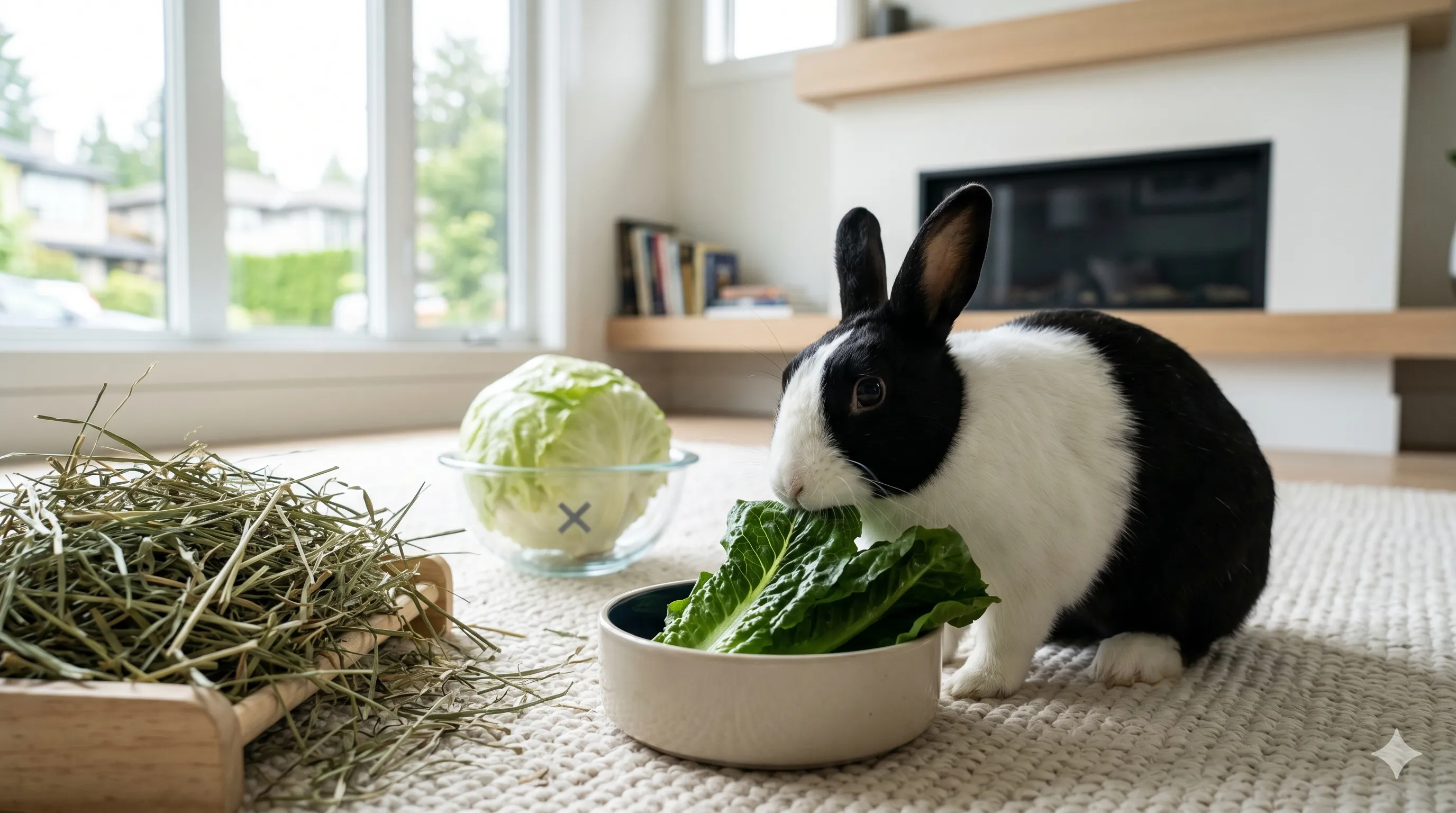
How a search for "iceberg lettuce" resolves to an Unsafe result.
General public resources referenced while researching this tool's topic.
This tool is part of PetNurture's educational library. Its formulas and guidance draw on publicly available educational resources, recognised veterinary organisations, and established animal welfare references where appropriate — see the References section below for the specific sources used on this page.
It is provided for general educational purposes and is not a substitute for advice, diagnosis, or treatment from a qualified veterinarian.
This tool is intended for educational purposes only and should not be used as a substitute for emergency veterinary advice, diagnosis, or treatment.
If your pet may have consumed toxic foods, chocolate, medications, chemicals, or other dangerous substances, seek immediate help from a licensed veterinarian or emergency animal service in your area. Do not delay professional care based on calculator or search results alone.
US pet poison hotlines (24/7):
ASPCA Animal Poison Control Center: (888) 426-4435
·
Pet Poison Helpline: (855) 764-7661
A consultation fee may apply to both services. Outside the US, use local emergency veterinary directories.
How we calculate results: This tool uses commonly referenced veterinary toxicity thresholds and food safety guidelines. Actual toxicity can vary based on your pet's size, health status, and exact substance consumed. These results are estimates only and do not replace a veterinary assessment.


Join our newsletter for simple care guides, feeding charts, and trusted product recommendations.