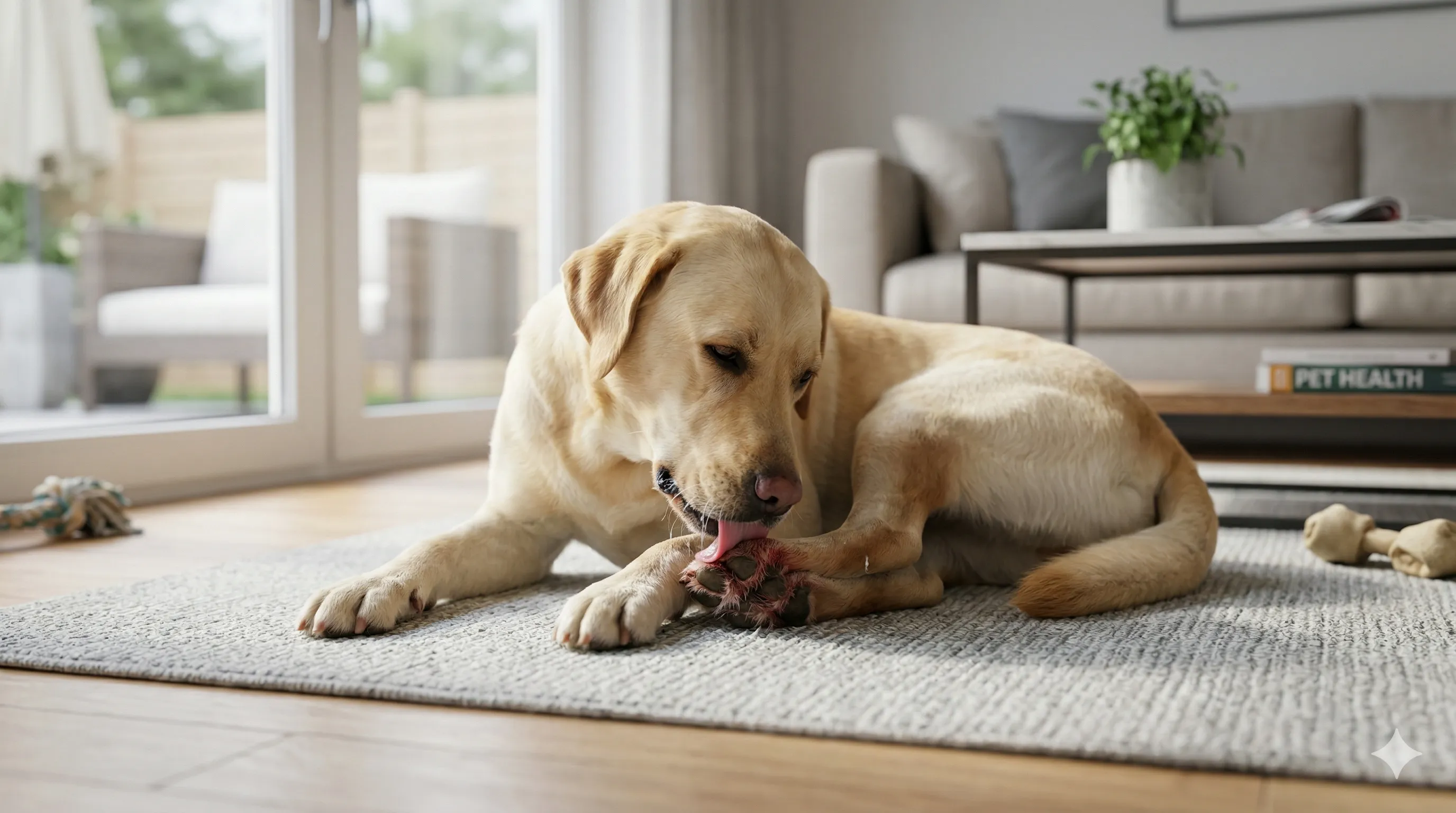
Why Does My Dog Lick Everything? Real Reasons, Meaning & When to Worry
Dogs experience the world very differently from humans. While people rely heavily on vision, dogs depend far more on sce…
Enter your puppy's current age and weight to calculate their estimated adult size based on veterinary growth curves.
A puppy's adult weight can be roughly estimated from their current weight-for-age growth rate: the calculator divides current weight by current age in weeks, then multiplies by a breed-size curve factor (about 40 for toy/small breeds up to 70 for giant breeds) — for example, a 12-week-old medium-breed puppy weighing 12 lbs projects to roughly 52 lbs as an adult.
Enter your puppy's current age, current weight, and expected adult breed-size category.
Puppy growth isn't linear. They undergo massive growth spurts early on, and their rate of growth slows down significantly as they approach their adult weight.
While humans take 18 years to finish growing, a dog does it in just 1 to 2 years. Most puppies experience a period of rapid skeletal growth between 2 and 6 months of age. After 6 months, their bones stop growing as fast, and they begin "filling out" - adding muscle and chest girth.
The time it takes to reach adult weight depends entirely on the breed's final size:
| Breed Size | Fully Grown Age |
|---|---|
| Toy / Small (e.g., Pug) | 9 - 12 Months |
| Medium (e.g., Beagle) | 12 - 15 Months |
| Large (e.g., Labrador) | 15 - 18 Months |
| Giant (e.g., Great Dane) | 18 - 24 Months |
The prediction extrapolates a puppy's current weight-per-week growth rate forward using a breed-size curve factor, since different breed sizes grow at very different paces and for different lengths of time.
This is a simplified rule-of-thumb, not a breed-specific growth chart — individual growth curves vary, especially for mixed-breed puppies.
This tool provides an estimate, not a diagnosis. Keep these limitations in mind when reading your result:
How a 12-week-old, 12 lb medium-breed puppy's adult weight is estimated.
General public resources referenced while researching this tool's topic.
This tool is part of PetNurture's educational library. Its formulas and guidance draw on publicly available educational resources, recognised veterinary organisations, and established animal welfare references where appropriate — see the References section below for the specific sources used on this page.
It is provided for general educational purposes and is not a substitute for advice, diagnosis, or treatment from a qualified veterinarian.
The information provided by this tool is for general educational and informational purposes only. Results are estimates, not a diagnosis, and may vary based on your pet's breed, age, health conditions, activity level, diet, and individual factors.
PetNurture does not provide veterinary, medical, or emergency care advice. Always consult a licensed veterinarian or qualified pet care professional regarding your pet's specific health, nutrition, or medical needs.
While we strive to keep calculations accurate and up to date, PetNurture makes no guarantees regarding completeness, reliability, or accuracy. Use this tool at your own discretion.
How we calculate results: This tool uses commonly referenced veterinary formulas, feeding guidelines, and breed-size estimates to provide general educational guidance. Individual pets may have different nutritional, behavioral, or medical needs that are not captured by any generalized formula.


Join our newsletter for simple care guides, feeding charts, and trusted product recommendations.