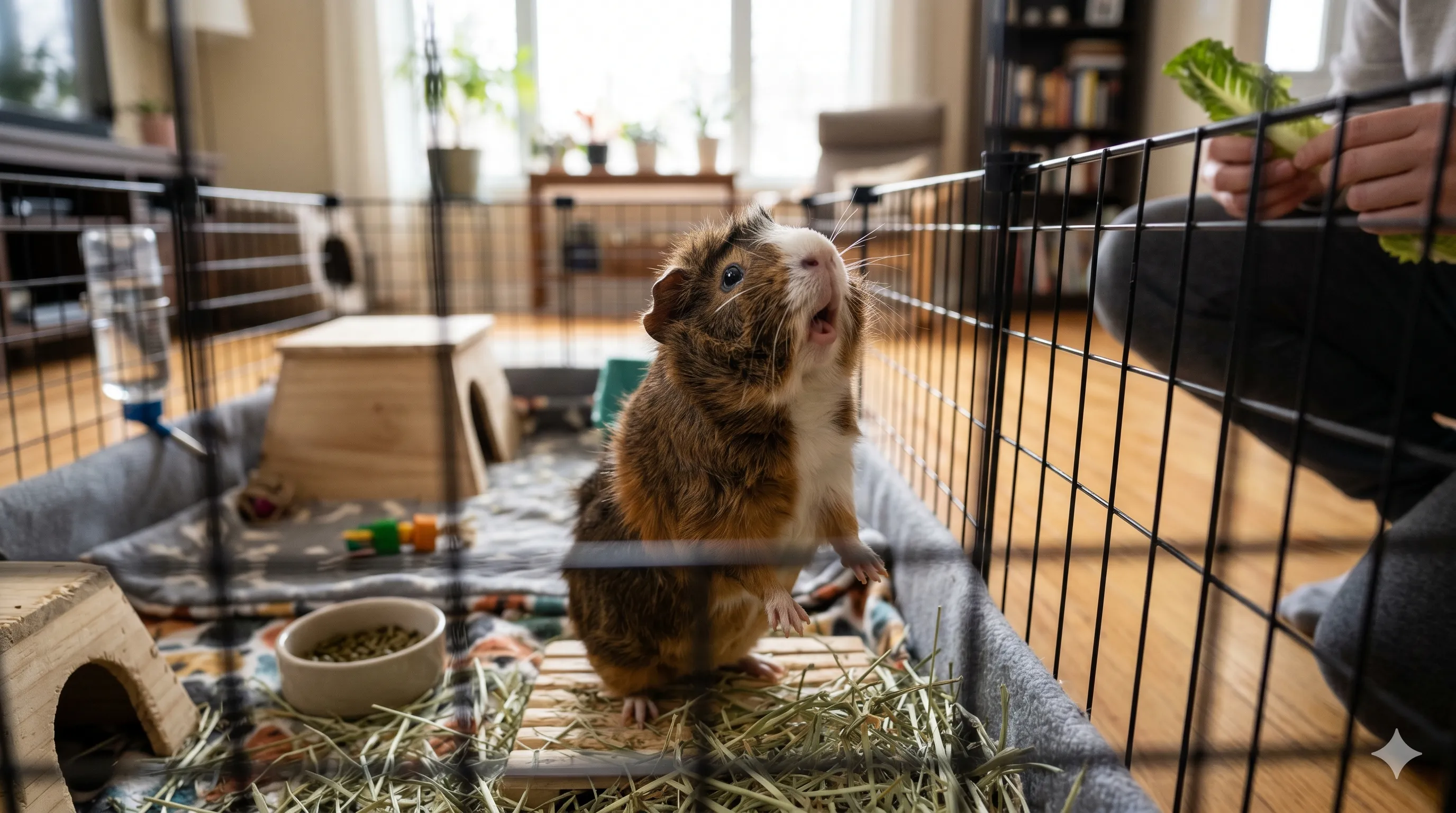
Why Does My Guinea Pig Lick Me? Affection, Trust, Salt Attraction & What It Really Means
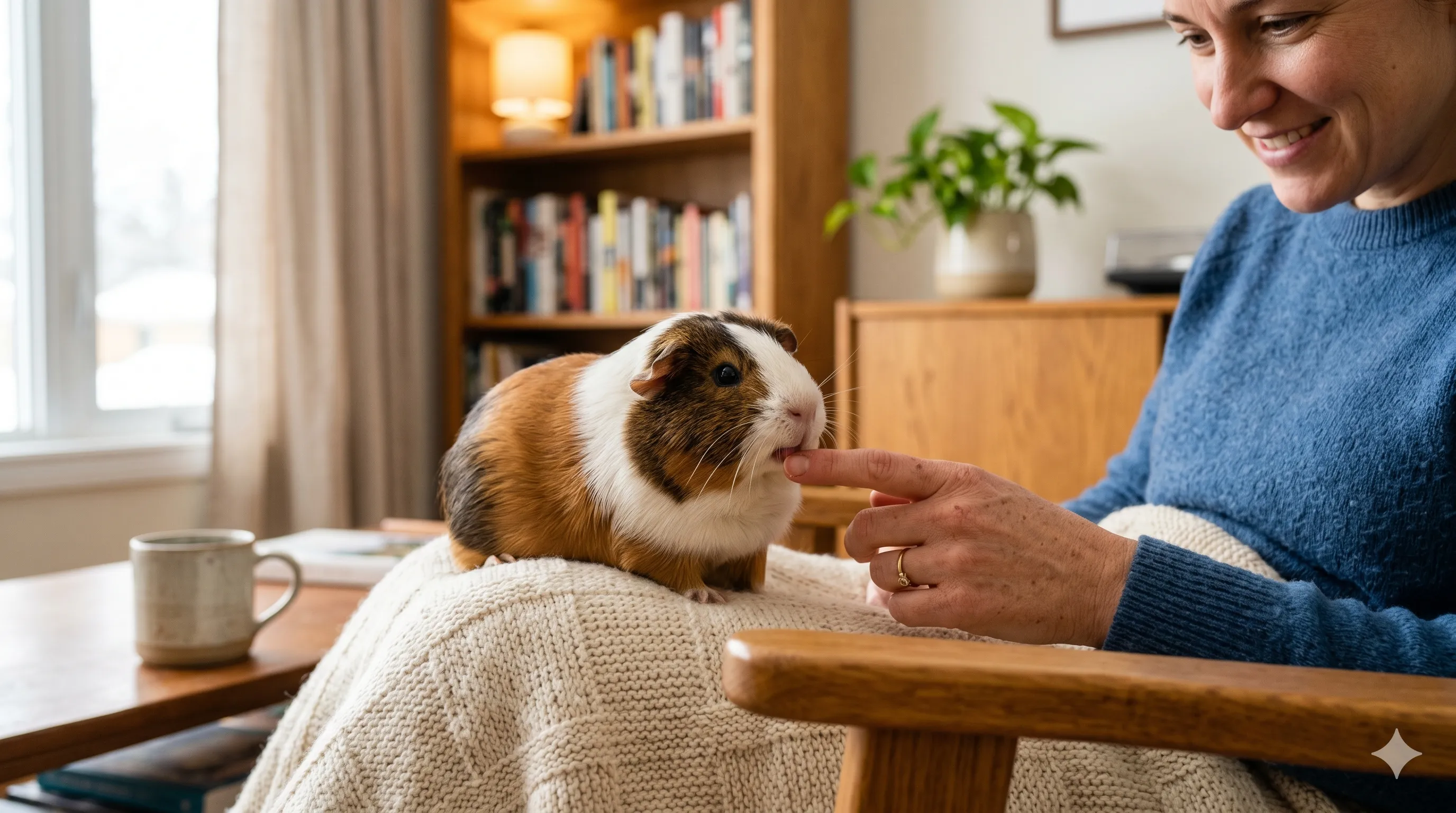
- Why Does My Guinea Pig Lick Me? (Quick Answer)
- What Does Licking Mean in Guinea Pig Communication?
- Do Guinea Pigs Lick to Show Affection?
- 7 Common Reasons Your Guinea Pig Licks You
- 1. Your Guinea Pig Trusts You
- 2. They're Curious About You
- 3. They Like the Taste of Salt
- 4. Natural Grooming Instincts
- 5. They Want Your Attention
- 6. They're Feeling Comfortable During Lap Time
- 7. They Are Exploring Food Scents
- Licking vs Nibbling vs Biting: What's the Difference?
- How to Tell if Your Guinea Pig Truly Trusts You
- When Licking May Not Be About Affection
- Can Excessive Licking Be a Problem?
- How to Strengthen Your Bond With Your Guinea Pig
- Create Positive Daily Interactions
- Provide a Comfortable Living Environment
- Respect Individual Personality Differences
- Common Myths About Guinea Pig Licking
- Final Thoughts
Note: This article is for informational purposes only and does not replace professional veterinary advice.
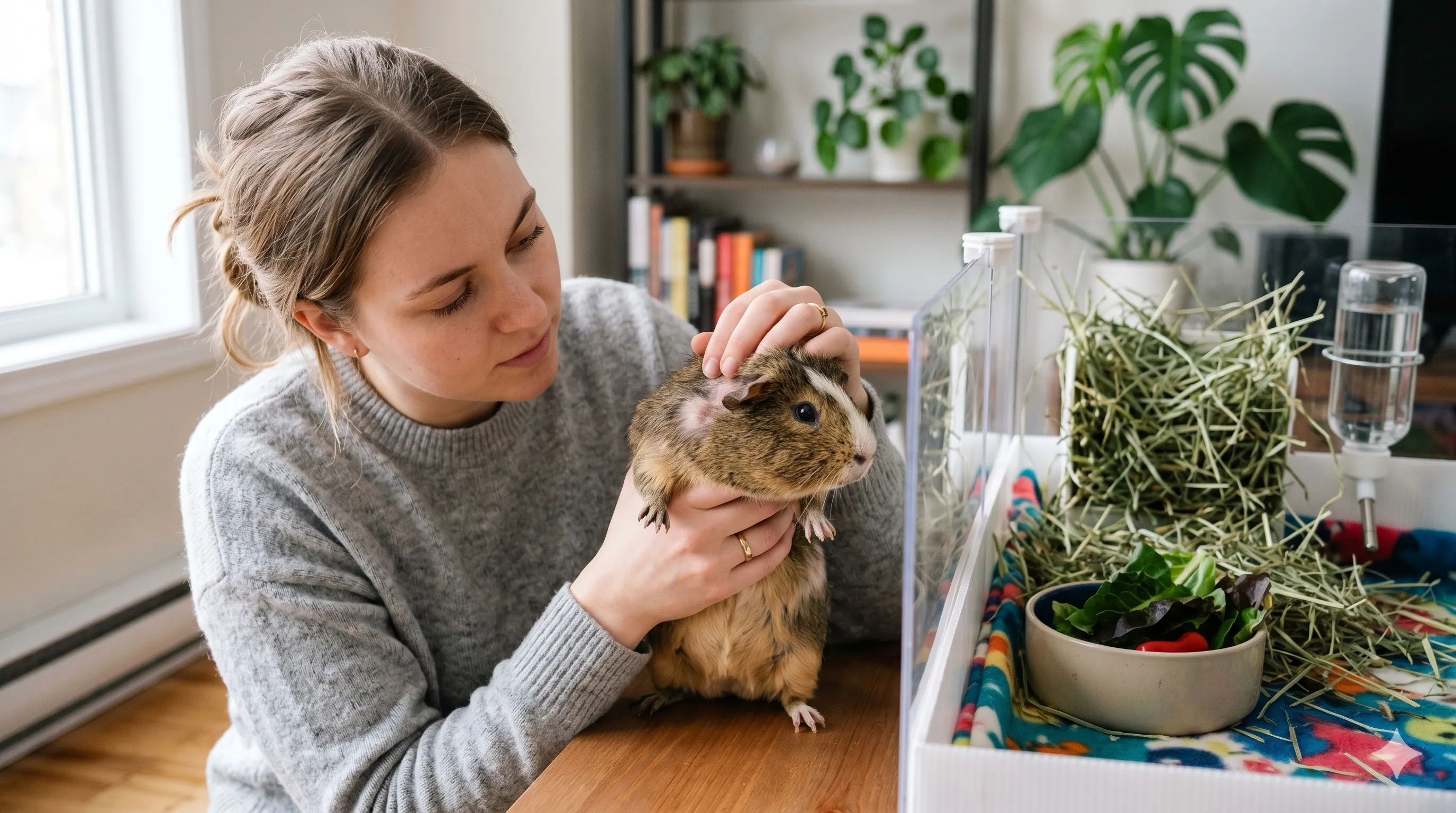
If you've ever felt tiny guinea pig kisses on your fingers, hands, or arms, you've probably wondered whether your furry companion is showing affection or simply tasting something interesting. One of the most common questions guinea pig owners ask is: why does my guinea pig lick me?
The answer isn't always straightforward. Guinea pigs may lick for several reasons, including trust, social bonding, grooming instincts, curiosity, attention-seeking, and even attraction to the natural salt found on human skin. In many cases, licking is a positive behavior that suggests your guinea pig feels comfortable around you.
Understanding the meaning behind licking can help you build a stronger relationship with your pet and better interpret other forms of guinea pig communication.
Why Does My Guinea Pig Lick Me? (Quick Answer)
Guinea pigs lick people for a combination of reasons including affection, trust, social grooming, curiosity, and attraction to salty skin. In most situations, licking is harmless and often indicates that your guinea pig feels safe enough to interact closely with you.
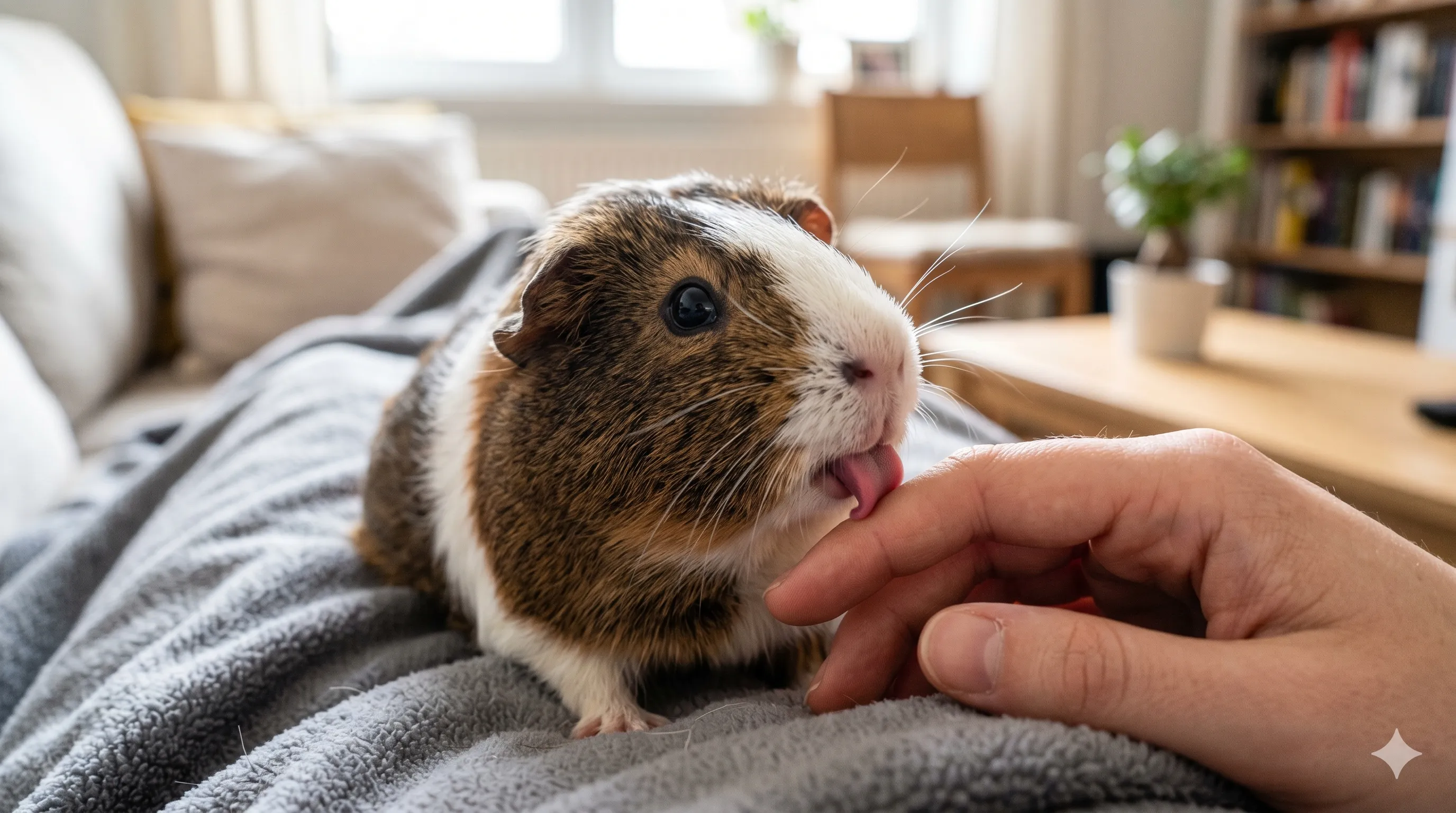
What Does Licking Mean in Guinea Pig Communication?
Guinea pigs communicate through body language, vocalizations, scent, and social interactions. Unlike dogs and cats, guinea pigs don't typically use licking as their primary form of communication, which is why many owners are surprised when it happens.
When a guinea pig licks you, it is usually part of a larger interaction rather than a standalone behavior.
To understand the true meaning, pay attention to:
- Body posture
- Facial expressions
- Vocalizations
- Activity level
- The timing of the licking
For example, a relaxed guinea pig that licks while sitting calmly in your lap communicates something very different from a nervous guinea pig trying to escape handling.
Do Guinea Pigs Lick to Show Affection?
Yes, many guinea pigs lick as a sign of affection and trust.
In social groups, guinea pigs often groom one another. Grooming strengthens bonds and reinforces feelings of safety within the herd. When your guinea pig licks you, it may be treating you as part of its trusted social circle.
Signs that licking is affection-related include:
- Relaxed body posture
- Remaining close to you voluntarily
- Calm breathing
- Soft vocalizations
- No attempts to run away
Affectionate licking is especially common in guinea pigs that have spent months developing trust with their owners.
why your guinea pig stares at you7 Common Reasons Your Guinea Pig Licks You
1. Your Guinea Pig Trusts You
Trust is one of the strongest explanations for licking behavior.
As prey animals, guinea pigs are naturally cautious. They do not willingly engage in close physical interaction unless they feel safe.
When a guinea pig chooses to stay near you and lick your hand, it often indicates a growing level of comfort and trust.
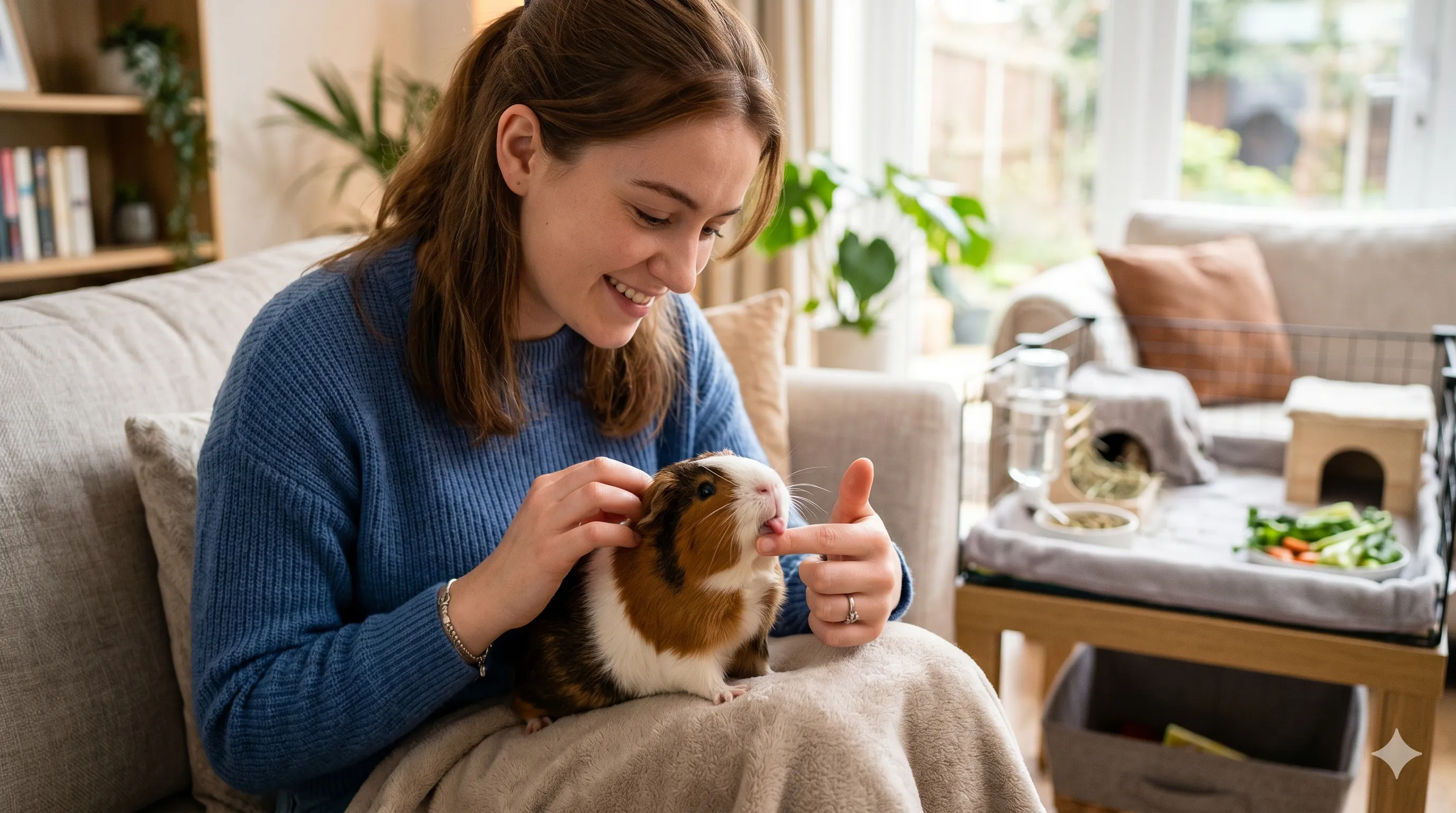
2. They're Curious About You
Guinea pigs investigate the world using their noses, whiskers, and mouths.
Your pet may simply be gathering information about unfamiliar scents, lotions, foods, or textures on your skin.
Curiosity-based licking is often brief and exploratory.
3. They Like the Taste of Salt
Human skin naturally contains traces of salt from sweat.
Many guinea pig owners notice increased licking after:
- Exercise
- Hot weather
- Outdoor activities
- Handling food
This doesn't mean your guinea pig is lacking nutrients. It simply finds the salty taste interesting.
4. Natural Grooming Instincts
Social grooming is a normal behavior among bonded guinea pigs.
Your guinea pig may occasionally groom your skin the same way it would groom a trusted cage mate.
This behavior often appears calm, gentle, and repetitive.
5. They Want Your Attention
Guinea pigs are intelligent enough to learn behavioral patterns.
If licking consistently results in petting, treats, or interaction, your guinea pig may repeat the behavior because it has learned that licking gets results.
understanding guinea pig popcorning behavior6. They're Feeling Comfortable During Lap Time
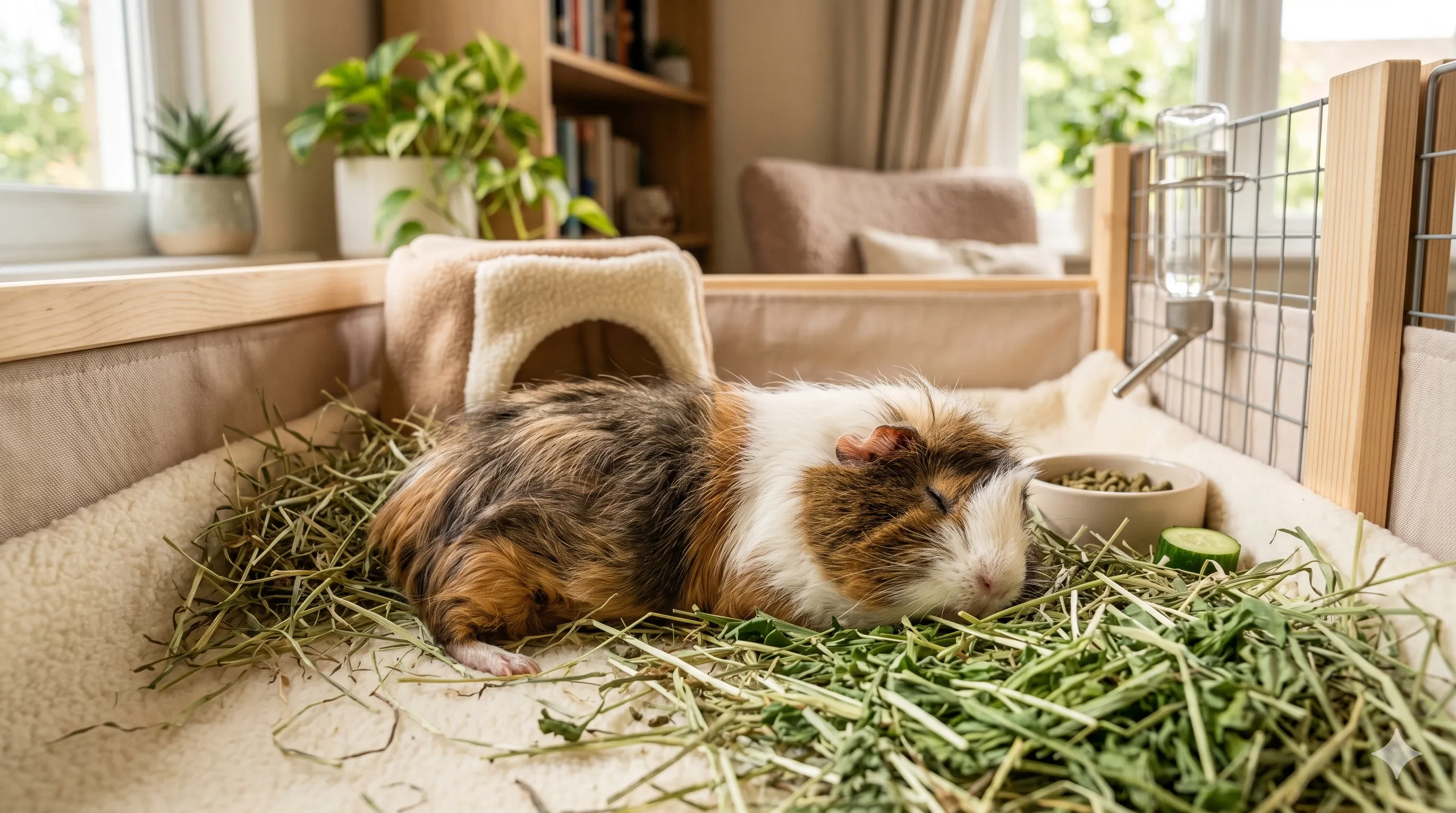
Some guinea pigs lick while relaxing during cuddle sessions.
This type of licking often appears alongside:
- Stretching out comfortably
- Remaining still
- Soft wheeks
- Relaxed eyes
7. They Are Exploring Food Scents
If you've recently handled vegetables, fruits, or treats, your guinea pig may be investigating lingering food smells on your hands.
Fresh produce scents are especially attractive to curious guinea pigs.
Licking vs Nibbling vs Biting: What's the Difference?
| Behavior | Typical Meaning | Cause for Concern? |
|---|---|---|
| Licking | Trust curiosity grooming affection | No |
| Gentle Nibbling | Exploration communication | Usually No |
| Hard Biting | Fear pain stress aggression | Yes |
Many owners confuse gentle exploratory nibbling with aggression. Understanding the difference can prevent unnecessary concern.
How to Tell if Your Guinea Pig Truly Trusts You
Licking is only one trust signal.
Other signs include:
- Approaching you voluntarily
- Accepting food from your hand
- Relaxing during handling
- Reduced hiding behavior
- Resting nearby
- Happy vocalizations
If your guinea pig displays several of these behaviors together, trust is likely developing successfully.
guinea pig squeaking meanings explainedWhen Licking May Not Be About Affection
Although licking is usually positive, it doesn't automatically mean love.
Sometimes licking occurs because:
- Your skin tastes salty
- Your guinea pig is investigating a scent
- Food residue is present
- Your pet is seeking attention
This is why context matters more than the licking itself.
Can Excessive Licking Be a Problem?
Occasional licking is completely normal.
However, sudden excessive licking combined with behavioral changes may indicate:
- Stress
- Boredom
- Environmental frustration
- Lack of enrichment
- Anxiety
If you notice other unusual symptoms, evaluate your guinea pig's environment and consult an experienced exotic veterinarian when necessary.
why guinea pigs hide and what it meansHow to Strengthen Your Bond With Your Guinea Pig
Create Positive Daily Interactions
Small daily interactions often build trust more effectively than occasional long handling sessions.
- Offer vegetables by hand
- Speak calmly
- Provide floor time
- Allow voluntary interaction
Provide a Comfortable Living Environment
Guinea pigs that feel secure are more likely to show social behaviors such as licking and grooming.
A comfortable setup should include:
- Adequate cage space
- Hideouts
- Fresh hay
- Exercise opportunities
- Mental enrichment
Respect Individual Personality Differences
Every guinea pig has a unique personality.
Some become extremely affectionate and interactive, while others prefer showing trust through proximity rather than physical contact.
A guinea pig that never licks can still be deeply bonded to its owner.
Common Myths About Guinea Pig Licking
- Licking does not always mean hunger.
- Not all guinea pigs lick people.
- Licking is usually not aggressive.
- Salt attraction and affection can occur simultaneously.
- A guinea pig that doesn't lick can still trust you.
Final Thoughts
If your guinea pig licks you, it's usually a positive sign. Whether motivated by trust, affection, curiosity, grooming instincts, attention-seeking, or attraction to salty skin, licking often indicates that your pet feels comfortable enough to interact closely with you.
The best way to interpret licking behavior is to view it alongside your guinea pig's overall body language and daily interactions.
With gentle handling, proper care, enrichment, and patience, many guinea pigs become increasingly social and trusting over time, creating stronger bonds with their owners.
This article is intended for educational purposes only and should not replace professional veterinary advice. If your guinea pig develops sudden behavioral changes, appetite loss, lethargy, or signs of illness, consult a qualified exotic animal veterinarian.
Medical Disclaimer
This content is provided for informational and educational purposes only and should not be considered veterinary, medical, behavioral, or training advice. While we strive for accuracy, we make no guarantees regarding completeness or results. Always consult a licensed veterinarian or qualified pet care professional before making decisions about your pet’s health, diet, or behavior.
AI Illustration Notice
Some images in this article may have been generated or enhanced using artificial intelligence for illustrative purposes.
Frequently Asked Questions
Guinea pigs may lick hands because of affection curiosity grooming instincts or attraction to salty skin.
Licking can be a positive sign of trust comfort and social bonding but should be interpreted alongside body language.
Some guinea pigs lick before gentle exploratory nibbling which is usually communication rather than aggression.
Yes, many guinea pigs are attracted to the salty taste left on human skin after sweating.
Occasional licking is normal and commonly observed in social and comfortable guinea pigs.
Trust signs include relaxed posture approaching voluntarily taking treats calmly and reduced hiding.
Repeated licking combined with stress behaviors may indicate boredom anxiety or environmental discomfort.
No, some guinea pigs rarely lick people and instead show affection through other behaviors such as following squeaking or relaxing nearby.
Editorial Note
This article is part of PetNurture's educational library.
Topics draw on publicly available educational resources, recognised veterinary organisations, academic publications and established animal welfare references where appropriate.
The specific sources this article draws on are listed in its References section. If you spot an error, please let us know.
References
The information in this article has been reviewed and supported using the following sources.
VCA Animal Hospitals
Confirms guinea pigs are affectionate, socially interactive animals, supporting the framing of licking as a bonding behavior in this article.
Accessed Aug 6, 2026
RSPCA
Supports monitoring for stress-related behavior changes referenced in the 'Can Excessive Licking Be a Problem' section of this article.
Accessed Aug 6, 2026
Pet Emergency Guidance
Every pet is unique. If your pet exhibits severe symptoms, sudden behavioral changes, or a medical emergency, do not rely on online guides — contact a licensed veterinarian or emergency clinic immediately.
About PetNurture
PetNurture is an educational library of pet care guides, interactive tools and practical resources for pet parents. We work continuously to keep our content accurate and up to date. Reader feedback helps us maintain content quality.
Related Articles
Popular Guinea Pig Guides
Guinea Pig
Guinea Pig Feeding Calculator
Calculate daily food portions for your guinea pig by weight.
Guinea Pig
Guinea Pig Cage Size Calculator
Find the minimum recommended cage size for your guinea pigs.