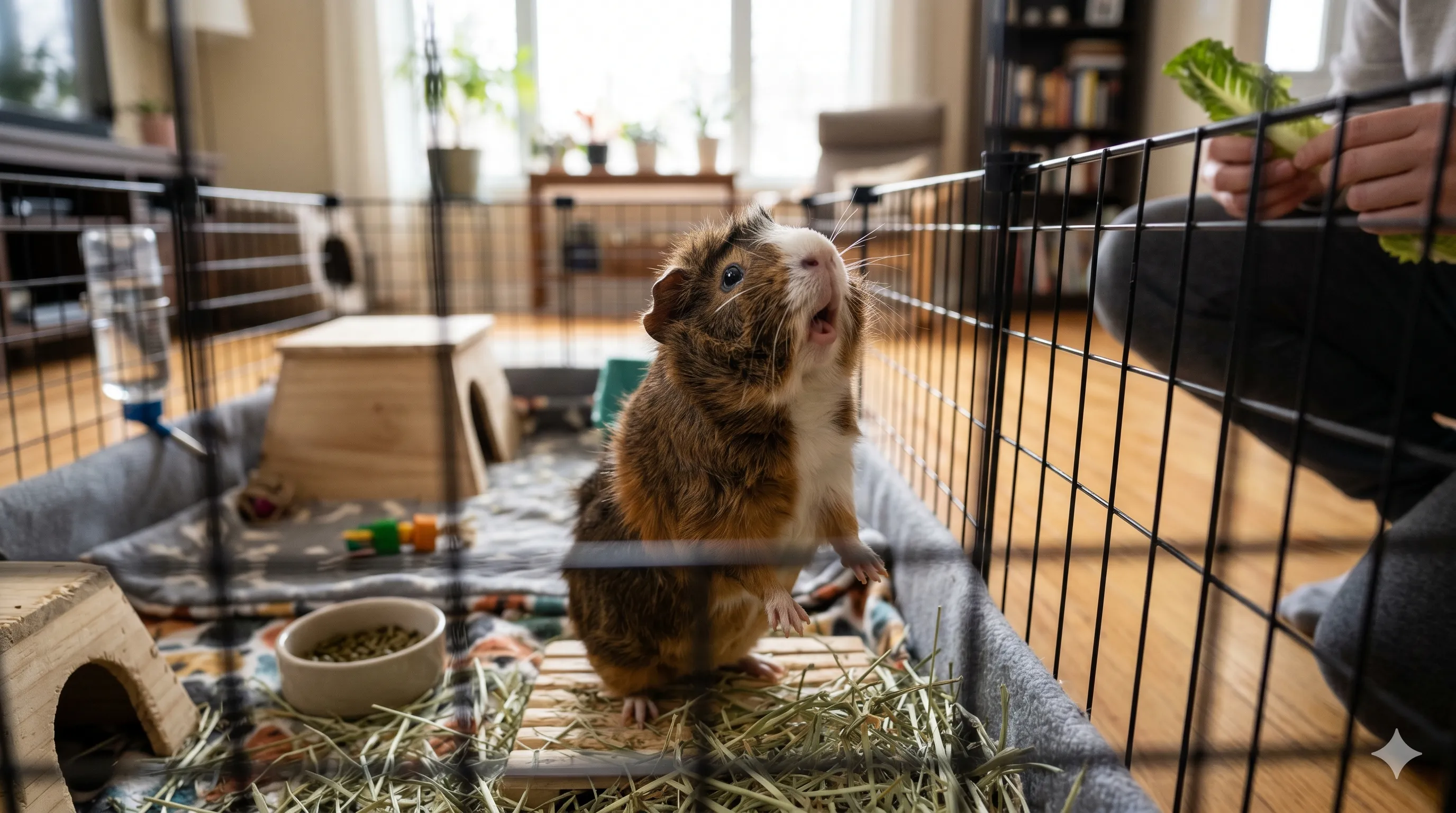
Why Is My Guinea Pig Shaking? Fear, Cold or Illness Explained
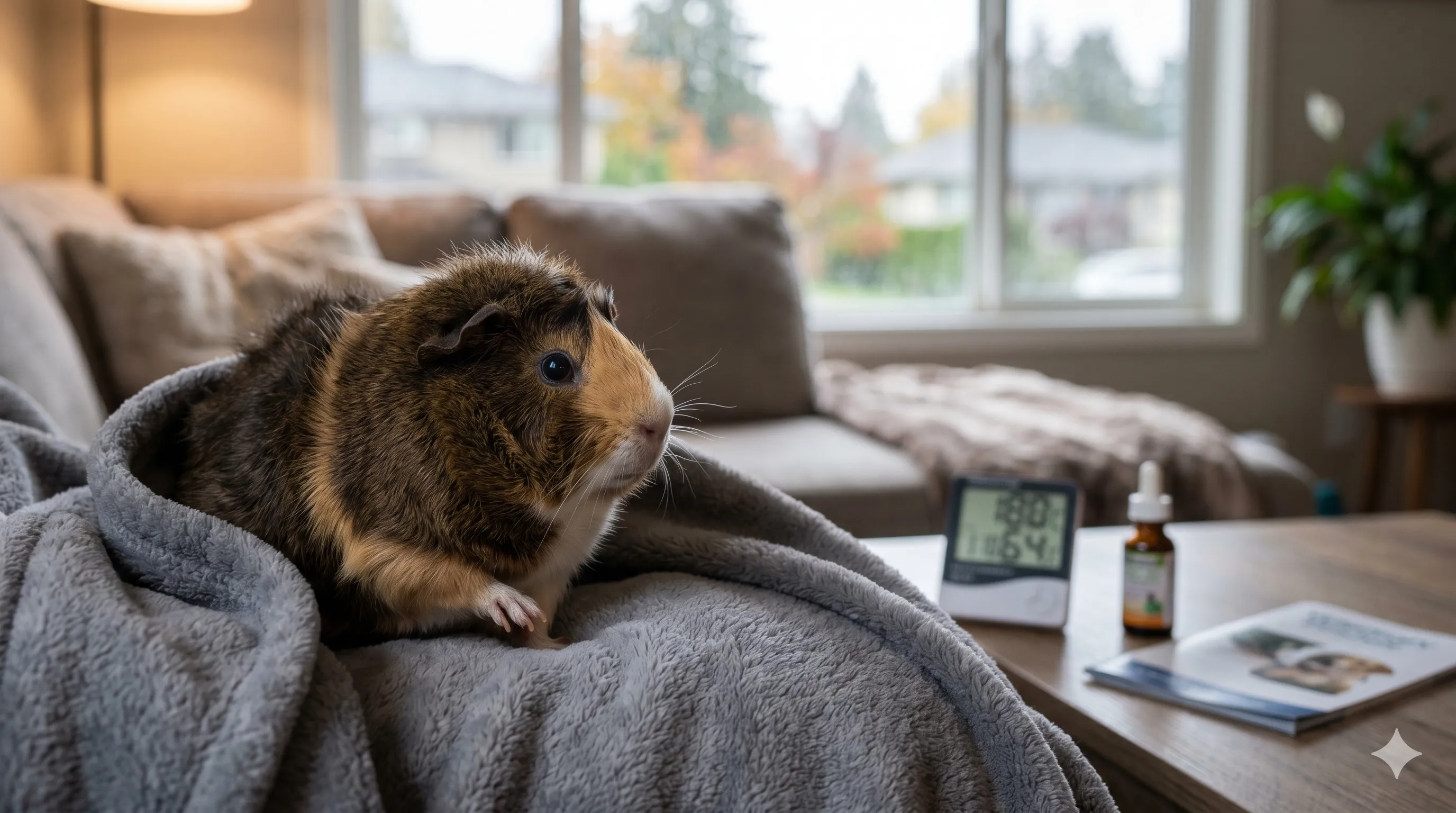
- Why Is My Guinea Pig Shaking? (Quick Answer)
- Common Reasons Guinea Pigs Shake at a Glance
- Is Shaking Normal in Guinea Pigs?
- Why Is My Guinea Pig Shaking but Acting Normal?
- Most Common Reasons Guinea Pigs Shake
- 1. Fear and Stress
- 2. Cold Temperatures or Overheating
- 3. Pain or Discomfort
- 4. Respiratory Infections
- 5. Weakness and Nutritional Deficiencies
- 6. Severe Illness or Shock
- How to Tell Fear Shaking vs Illness Shaking
- When Can You Monitor at Home vs Contact a Veterinarian?
- When Should You Worry About a Shaking Guinea Pig?
- What Should You Do If Your Guinea Pig Is Shaking?
- Move Them to a Calm Environment
- Check the Temperature
- Monitor Food and Water Intake
- Watch for Additional Symptoms
- Why Is My Guinea Pig Shaking After Being Picked Up?
- How to Help Prevent Stress-Related Shaking
- Provide Safe Hiding Areas
- Maintain a Consistent Routine
- Handle Gently
- Maintain Proper Nutrition
- Keep the Environment Stable
- Expert Tips for a Shaking Guinea Pig
- Common Mistakes Owners Make
- Common Myths About Guinea Pig Shaking
- Myth: Shaking Always Means Illness
- Myth: Guinea Pigs Don't Feel Cold Indoors
- Myth: If They Are Eating, They Cannot Be Sick
- Myth: Shaking Is Just a Personality Trait
- Final Thoughts
Note: This article is for informational purposes only and does not replace professional veterinary advice.
Seeing your guinea pig shake, tremble, or shiver can be worrying, especially if the behavior appears suddenly. If you've been asking why is my guinea pig shaking, the answer can range from a completely normal response to fear all the way to a serious medical emergency that requires immediate veterinary care.
Guinea pigs are sensitive prey animals that react strongly to changes in their environment. Loud noises, unfamiliar situations, rough handling, cold temperatures, and stressful events can sometimes trigger temporary trembling. In many cases, the shaking stops once the guinea pig feels safe and comfortable again.
However, shaking should never be dismissed automatically. Guinea pigs are known for hiding signs of illness until they become quite sick. Because of this natural survival instinct, persistent trembling accompanied by other symptoms can indicate pain, respiratory disease, weakness, nutritional deficiencies, or other health problems.
The key is understanding the context. A guinea pig that shakes briefly during a stressful situation is very different from a guinea pig that trembles continuously while refusing food and showing signs of lethargy.
This guide explains the most common reasons guinea pigs shake, how to identify warning signs, and what steps owners should take when trembling occurs.
Why Is My Guinea Pig Shaking? (Quick Answer)
Guinea pigs may shake because of fear, stress, cold temperatures, illness, pain, weakness, injury, or environmental discomfort. Temporary trembling caused by stress or handling may be harmless, but persistent shaking combined with appetite loss, breathing difficulties, lethargy, or weakness should be treated as a potential medical concern.
Common Reasons Guinea Pigs Shake at a Glance
- Fear or stress: usually not serious
- Cold temperatures: can be, depending on the cause
- Pain or discomfort: often serious
- Respiratory infection: requires veterinary care
- Nutritional deficiency: needs attention
- Shock or severe illness: emergency
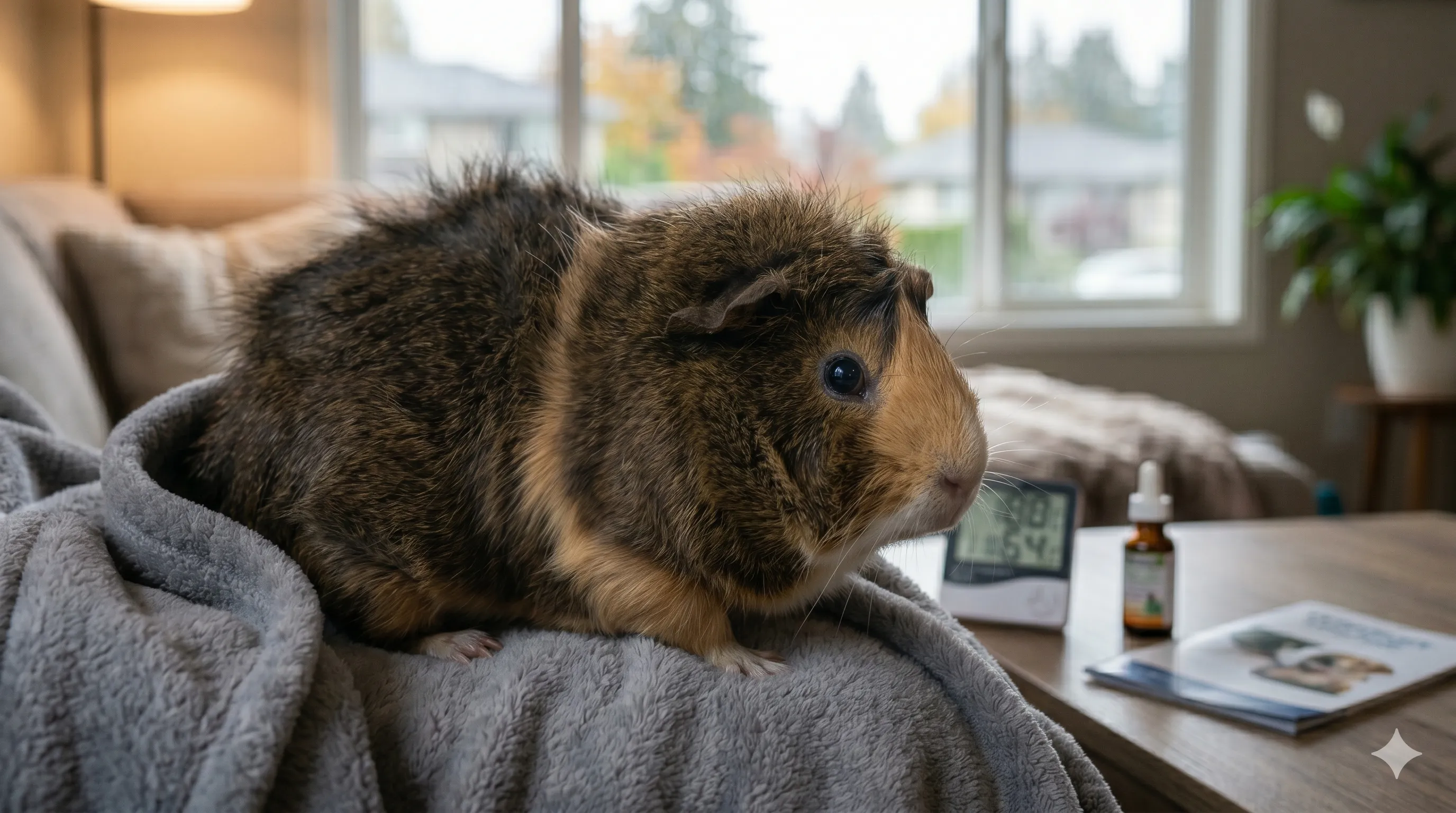
Is Shaking Normal in Guinea Pigs?
Sometimes, yes.
Brief episodes of trembling can occur when a guinea pig experiences:
- Fear
- Stress
- Cold temperatures
- Travel
- Veterinary visits
- Unexpected noises
- Sudden environmental changes
In these situations, shaking is often a temporary response to discomfort or anxiety. Once the situation improves, the trembling usually stops.
What matters most is how long the shaking lasts and whether other symptoms appear alongside it.
A guinea pig that quickly returns to eating, moving normally, and interacting with its surroundings is generally less concerning than one that continues trembling while appearing weak, withdrawn, or unwilling to eat. Looking at the complete picture is more helpful than judging the shaking alone.
Why Is My Guinea Pig Shaking but Acting Normal?
If your guinea pig is eating well, drinking normally, remaining active, and producing healthy droppings, brief shaking may simply be a temporary response to fear, excitement, handling, or a cool environment. Some guinea pigs also vibrate or shake gently when they feel calm and content, a behavior some owners describe as purring, which is a sign of contentment rather than a warning sign. Continue monitoring for changes, but remember that persistent trembling or additional symptoms deserve closer attention.
Most Common Reasons Guinea Pigs Shake
1. Fear and Stress
Fear is one of the most common causes of shaking in guinea pigs.
As prey animals, guinea pigs are naturally cautious. When they feel threatened, their bodies may react by trembling.
Common stress triggers include:
- Loud noises
- Fireworks
- Thunderstorms
- Rough handling
- Predator scents
- New environments
- Travel
- Household disruptions
A frightened guinea pig may also display:
- Freezing
- Hiding
- Wide eyes
- Rapid breathing
- Reduced movement
If the shaking improves once the stressful event passes, fear is often the most likely explanation.
why guinea pigs hide and what it means2. Cold Temperatures or Overheating
Guinea pigs are sensitive to temperature extremes and can shiver when they become too cold.
Possible causes include:
- Cold rooms
- Drafty windows
- Air conditioning vents
- Damp bedding
- Being wet after bathing
- Sudden temperature drops
Most guinea pigs are comfortable in stable indoor temperatures and may become stressed when temperatures fluctuate significantly. Guinea pigs also tolerate high temperatures poorly and can tremble or breathe rapidly when they become too warm rather than too cold, so watch for reduced activity or stretching out more than usual as possible signs of overheating.
Signs that cold may be contributing include:
- Cold ears
- Cold feet
- Curling up tightly
- Reduced activity
- Seeking warmer areas
3. Pain or Discomfort
Guinea pigs experiencing pain sometimes tremble or shake.
Pain-related causes can include:
- Injuries
- Dental disease or abscesses
- Digestive problems
- Arthritis
- Urinary tract infections
- Post-surgical discomfort
Because guinea pigs instinctively hide weakness, pain can be difficult to recognize.
Additional signs may include:
- Reduced appetite
- Hunched posture
- Less movement
- Withdrawal from companions
- Unusual vocalizations
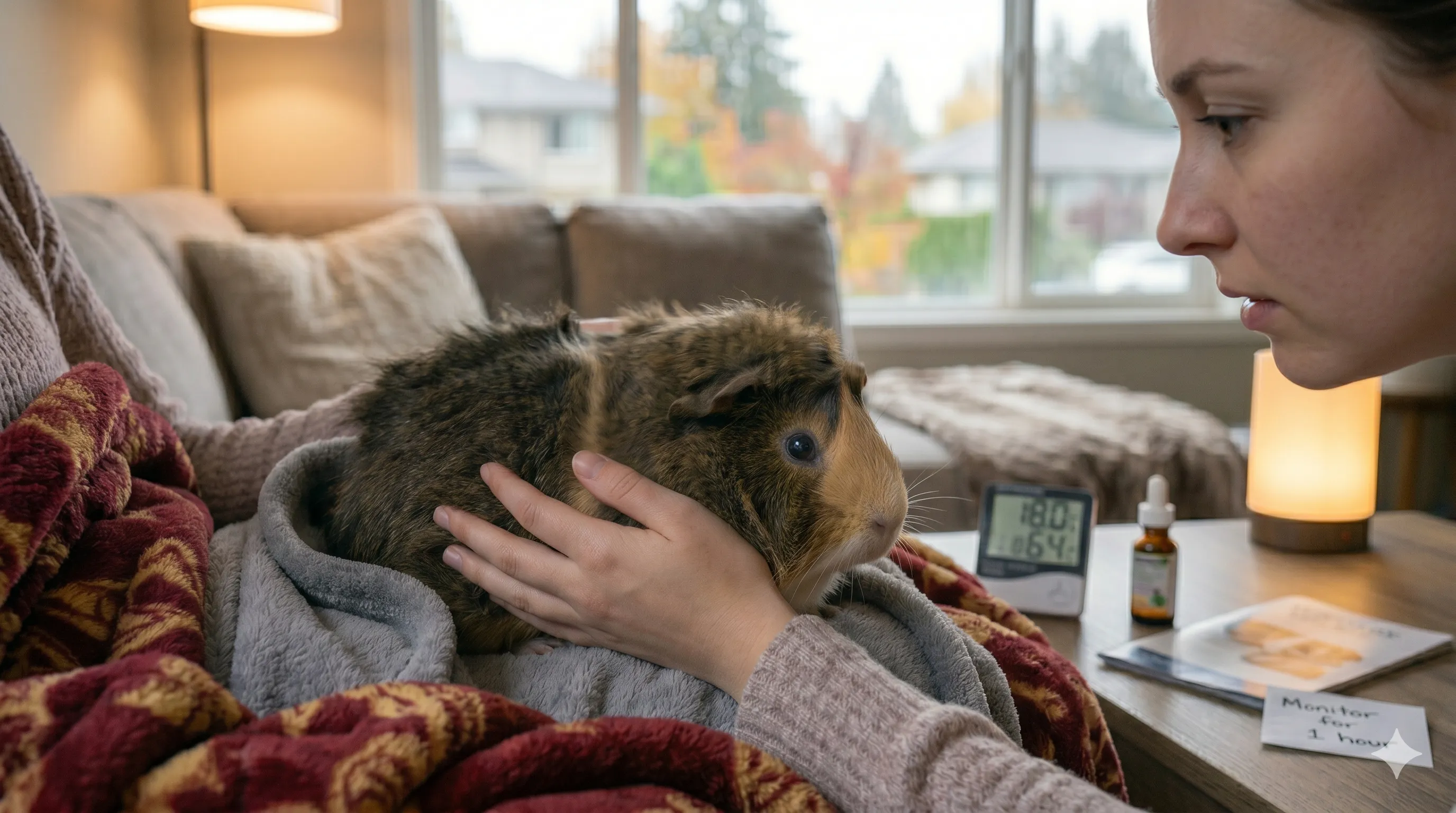
4. Respiratory Infections
Respiratory disease is one of the most serious health problems affecting guinea pigs.
Infections can progress quickly and become life-threatening if not treated promptly.
Symptoms may include:
- Shaking or trembling
- Sneezing
- Nasal discharge
- Crusty eyes
- Breathing difficulties
- Reduced appetite
- Lethargy
If your guinea pig is shaking and struggling to breathe, veterinary care should be sought immediately.
common causes of guinea pig sneezing5. Weakness and Nutritional Deficiencies
Guinea pigs have unique nutritional requirements, particularly regarding vitamin C.
Unlike many animals, guinea pigs cannot produce vitamin C naturally and must obtain it through their diet.
Deficiencies may contribute to:
- Weakness
- Joint discomfort
- Poor mobility
- Lethargy
- Reduced appetite
This combination of signs is often referred to as scurvy, a well-documented result of prolonged vitamin C deficiency in guinea pigs. A veterinarian can confirm the diagnosis and recommend the right dietary correction for your individual guinea pig.
A balanced diet containing hay, fresh vegetables, quality pellets, and adequate vitamin C is essential for long-term health.
6. Severe Illness or Shock
In serious cases, shaking may indicate a medical emergency, and a sudden fever can itself cause trembling in an otherwise ill guinea pig.
Emergency warning signs include:
- Collapse
- Unresponsiveness
- Labored breathing
- Cold body temperature
- Extreme weakness
- Pale gums
- Severe lethargy
These symptoms require immediate veterinary attention.
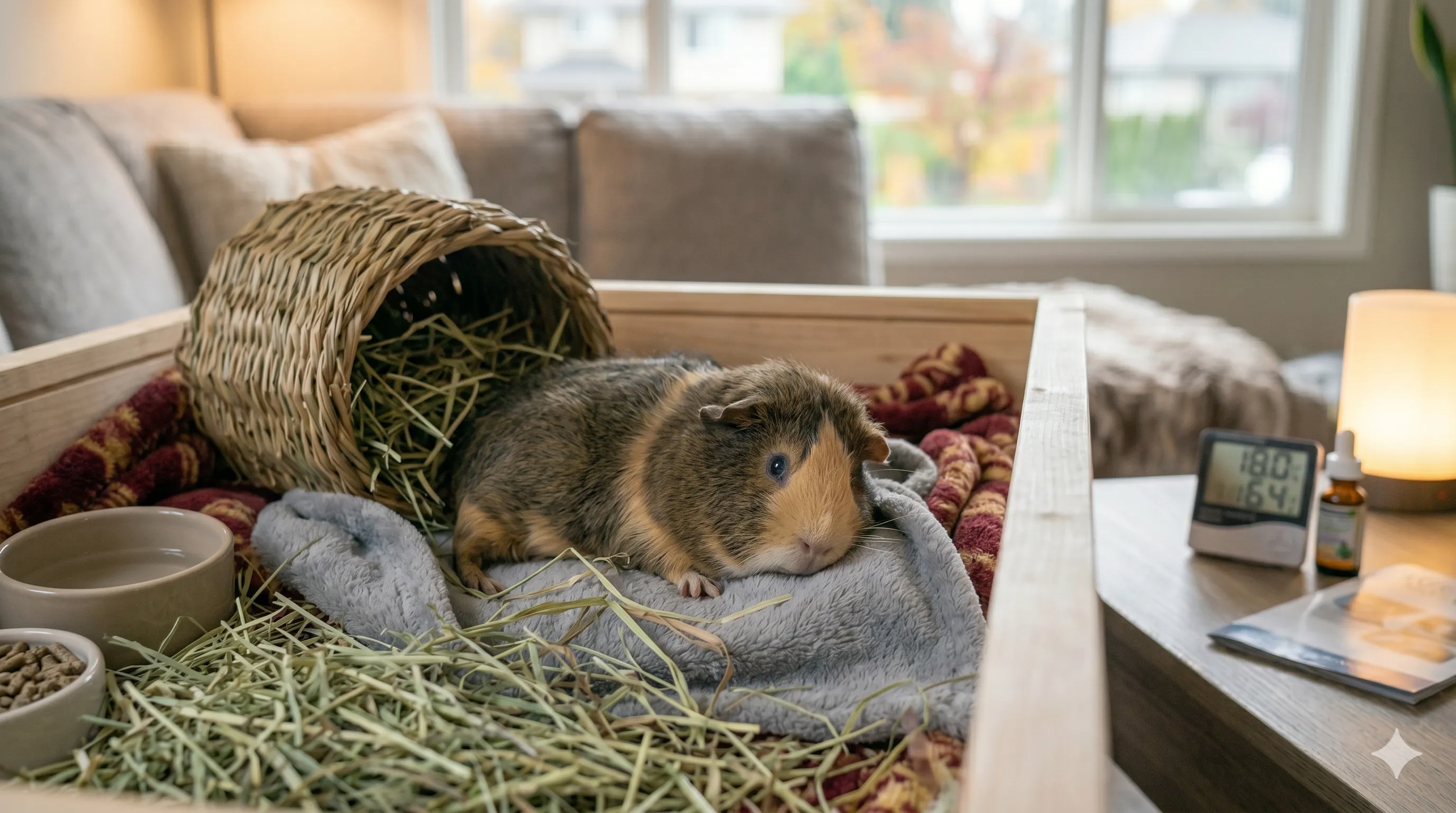
How to Tell Fear Shaking vs Illness Shaking
- Shaking during handling: fear or nervousness
- Trembling after loud noises: stress response
- Shaking with hiding behavior: anxiety or fear
- Shaking with appetite loss: possible illness
- Shaking with lethargy: medical concern
- Continuous severe trembling: requires urgent evaluation
When evaluating shaking, always consider your guinea pig's overall condition rather than focusing on the trembling alone.
When Can You Monitor at Home vs Contact a Veterinarian?
- Brief shaking after a loud noise: monitor closely
- Shaking after handling that quickly stops: observe and reduce stress
- Shaking with normal eating and activity: continue monitoring
- Shaking with appetite loss or breathing problems: contact a veterinarian promptly
- Collapse, weakness, or severe lethargy: seek emergency veterinary care
When Should You Worry About a Shaking Guinea Pig?
Contact a qualified exotic veterinarian if shaking occurs alongside:
- Refusal to eat
- Weight loss
- Lethargy
- Breathing problems
- Diarrhea
- Weakness
- Loss of coordination
- Unresponsiveness
Guinea pigs can deteriorate rapidly once illness develops, making early intervention extremely important.
why guinea pigs stop eatingWhat Should You Do If Your Guinea Pig Is Shaking?
Move Them to a Calm Environment
Reduce potential stressors immediately.
Try to eliminate:
- Loud noises
- Excessive activity
- Bright lights
- Frequent handling
A quiet environment often helps nervous guinea pigs relax.
Check the Temperature
Ensure the enclosure is neither too cold nor too hot.
Inspect for:
- Drafts
- Wet bedding
- Cold surfaces
- Temperature fluctuations
Our complete guinea pig care guide covers indoor temperature, drafts, and enclosure setup in more detail.
Monitor Food and Water Intake
Observe whether your guinea pig continues to:
- Eat hay
- Drink water
- Consume vegetables
- Produce normal droppings
Loss of appetite is often one of the earliest indicators of illness in guinea pigs. If your guinea pig refuses hay, stops drinking, or produces noticeably fewer droppings, do not continue monitoring at home for long. These changes, especially when combined with persistent shaking, should prompt veterinary advice as soon as possible because guinea pigs can deteriorate quickly once they stop eating.
Watch for Additional Symptoms
Pay attention to:
- Breathing changes
- Eye discharge
- Nasal discharge
- Lethargy
- Weight changes
- Mobility issues
Why Is My Guinea Pig Shaking After Being Picked Up?
Some guinea pigs tremble briefly after being picked up because they feel nervous or insecure. Guinea pigs are prey animals and many prefer to keep all four feet on the ground. If the shaking stops shortly after they are returned to a familiar environment and they continue eating and behaving normally, temporary handling stress is often the most likely explanation.
However, persistent shaking after handling or trembling accompanied by other unusual symptoms should not be ignored.
How to Help Prevent Stress-Related Shaking
While not all causes of trembling can be prevented, owners can reduce many common triggers.
Provide Safe Hiding Areas
Hideouts help guinea pigs feel secure when they become nervous.
Maintain a Consistent Routine
Predictable feeding and cleaning schedules help reduce anxiety.
Handle Gently
Slow, calm handling builds trust and reduces fear.
Maintain Proper Nutrition
A healthy diet supports overall wellbeing and immune function.
Keep the Environment Stable
Minimize sudden changes in temperature, cage setup, and daily routine whenever possible.
Expert Tips for a Shaking Guinea Pig
- Time the shaking with a phone stopwatch so you can tell your vet exactly how long episodes last
- Keep the enclosure away from drafts, vents, and windows since guinea pigs react to temperature swings more than owners expect
- Weigh your guinea pig weekly since unexplained weight loss alongside shaking is one of the clearest signals to see a vet sooner
- Choose an exotic-experienced veterinarian ahead of time so you are not searching for one during an emergency
Common Mistakes Owners Make
- Assuming all shaking is just nerves and never reassessing if it continues
- Waiting to see if appetite loss "resolves on its own" before calling a vet
- Handling a stressed guinea pig more to try to calm it down instead of giving it space
- Overlooking cold drafts or damp bedding as a simple, fixable cause
Common Myths About Guinea Pig Shaking
Myth: Shaking Always Means Illness
Temporary trembling can occur during stressful situations without indicating disease.
Myth: Guinea Pigs Don't Feel Cold Indoors
Indoor guinea pigs can still become chilled if exposed to drafts or damp conditions.
Myth: If They Are Eating, They Cannot Be Sick
Some guinea pigs continue eating during the early stages of illness.
Myth: Shaking Is Just a Personality Trait
Persistent trembling should always be investigated rather than assumed to be normal behavior.
Final Thoughts
If your guinea pig is shaking, the first step is to evaluate the situation calmly and look for additional clues. Temporary trembling caused by fear, stress, handling, or cold temperatures is relatively common and often resolves quickly once the guinea pig feels safe.
However, ongoing shaking combined with appetite loss, lethargy, breathing difficulties, weakness, or other unusual symptoms should never be ignored. Because guinea pigs naturally hide illness, persistent trembling can sometimes be one of the earliest signs that something is wrong.
Careful observation, a stable environment, proper nutrition, and prompt veterinary care when needed are the best ways to protect your guinea pig's health and wellbeing. For broader day-to-day care that helps prevent stress and health problems before they start, our indoor guinea pig care essentials covers feeding, housing, and health monitoring in one place.
Every guinea pig reacts differently to stressful situations, so the same shaking behavior can have different meanings depending on the circumstances. Looking at your guinea pig's appetite, activity level, breathing, posture, and daily routine together will usually provide the clearest indication of whether the trembling is temporary or needs prompt veterinary attention.
This article is intended for educational purposes only and should not replace professional veterinary advice. If your guinea pig develops persistent shaking, breathing difficulties, appetite loss, weakness, or signs of illness, contact a qualified exotic animal veterinarian immediately.
Medical Disclaimer
This content is provided for informational and educational purposes only and should not be considered veterinary, medical, behavioral, or training advice. While we strive for accuracy, we make no guarantees regarding completeness or results. Always consult a licensed veterinarian or qualified pet care professional before making decisions about your pet’s health, diet, or behavior.
AI Illustration Notice
Some images in this article may have been generated or enhanced using artificial intelligence for illustrative purposes.
Frequently Asked Questions
Guinea pigs may tremble due to fear or stress or cold temperatures. Trembling can also result from illness or pain or weakness or general environmental discomfort.
Brief shaking during stressful situations can be normal but persistent trembling should be monitored carefully.
Yes. Guinea pigs commonly shake when they feel frightened or nervous or overwhelmed or exposed to unfamiliar or stressful situations. The trembling often improves once they feel safe again but persistent shaking should always be monitored carefully.
Shaking together with a loss of appetite is more concerning than shaking alone. Because guinea pigs naturally hide signs of illness refusing food while trembling should not be ignored. Seek veterinary advice promptly if your guinea pig also becomes lethargic or has breathing changes or produces fewer droppings.
Yes. Guinea pigs are sensitive to cold temperatures and drafts and damp conditions. Keeping their enclosure in a stable indoor environment helps reduce the risk of cold-related stress and shivering.
Seek veterinary advice promptly if shaking occurs alongside lethargy or breathing problems or appetite loss or weakness or weight loss or other unusual changes in behavior. Guinea pigs often hide signs of illness so persistent trembling should never be ignored.
Emergency signs include collapse or severe lethargy or breathing difficulties or unresponsiveness or weakness and a refusal to eat.
If your guinea pig is eating and drinking and moving normally and producing healthy droppings then temporary shaking may simply be related to fear or handling or excitement or a cool environment. Some guinea pigs also vibrate gently when they feel calm and content which is sometimes called purring and is a happy sound rather than a warning sign. Continue monitoring for any additional symptoms.
Some guinea pigs shake briefly after handling because they feel nervous or insecure. Handling stress is often the most likely cause if the trembling stops quickly and your guinea pig otherwise behaves normally.
Sometimes. Because guinea pigs often hide signs of illness persistent shaking without an obvious cause should still be monitored carefully and discussed with a veterinarian if it continues.
Fear-related shaking often improves once the stressful situation ends. Veterinary advice is recommended if trembling continues or becomes more severe or occurs alongside appetite loss or lethargy or breathing problems.
Rapid breathing combined with shaking may occur during severe stress or overheating or respiratory illness or other medical problems. Veterinary care should be sought promptly if your guinea pig continues breathing rapidly or develops additional symptoms such as lethargy or appetite loss.
Editorial Note
This article is part of PetNurture's educational library.
Topics are researched using publicly available educational resources, recognised veterinary organisations, academic publications and established animal welfare references where appropriate.
Every article is reviewed by the PetNurture editorial team for clarity, structure, readability and consistency before publication.
References
The information in this article has been reviewed and supported using the following sources.
VCA Animal Hospitals
Health Problems in Guinea Pigs
Confirms pneumonia/respiratory infection and scurvy from vitamin C deficiency as documented guinea pig health conditions; supports the 'Respiratory Infections' and 'Weakness and Nutritional Deficiencies' sections of this article.
Accessed Aug 6, 2026
RSPCA
Confirms that guinea pigs hide pain as prey animals and may show subtle signs like hunched posture and reluctance to move; supports the emphasis on watching for illness signs alongside shaking in this article.
Accessed Aug 6, 2026
Pet Emergency Guidance
Every pet is unique. If your pet exhibits severe symptoms, sudden behavioral changes, or a medical emergency, do not rely on online guides — contact a licensed veterinarian or emergency clinic immediately.
About PetNurture
PetNurture is an educational library of pet care guides, interactive tools and practical resources for pet parents. We work continuously to keep our content accurate and up to date. Reader feedback helps us maintain content quality.
Related Articles
Popular Guinea Pig Guides
Guinea Pig
Guinea Pig Vitamin C Calculator
Calculate how much vitamin C your guinea pig needs each day.
Guinea Pig
Guinea Pig Feeding Calculator
Calculate daily food portions for your guinea pig by weight.
Guinea Pig
Guinea Pig Pregnancy Calculator
Estimate your guinea pig's due date and track pregnancy milestones.