Indoor Rabbit Care Guide: Everything First-Time Bunny Owners Should Know
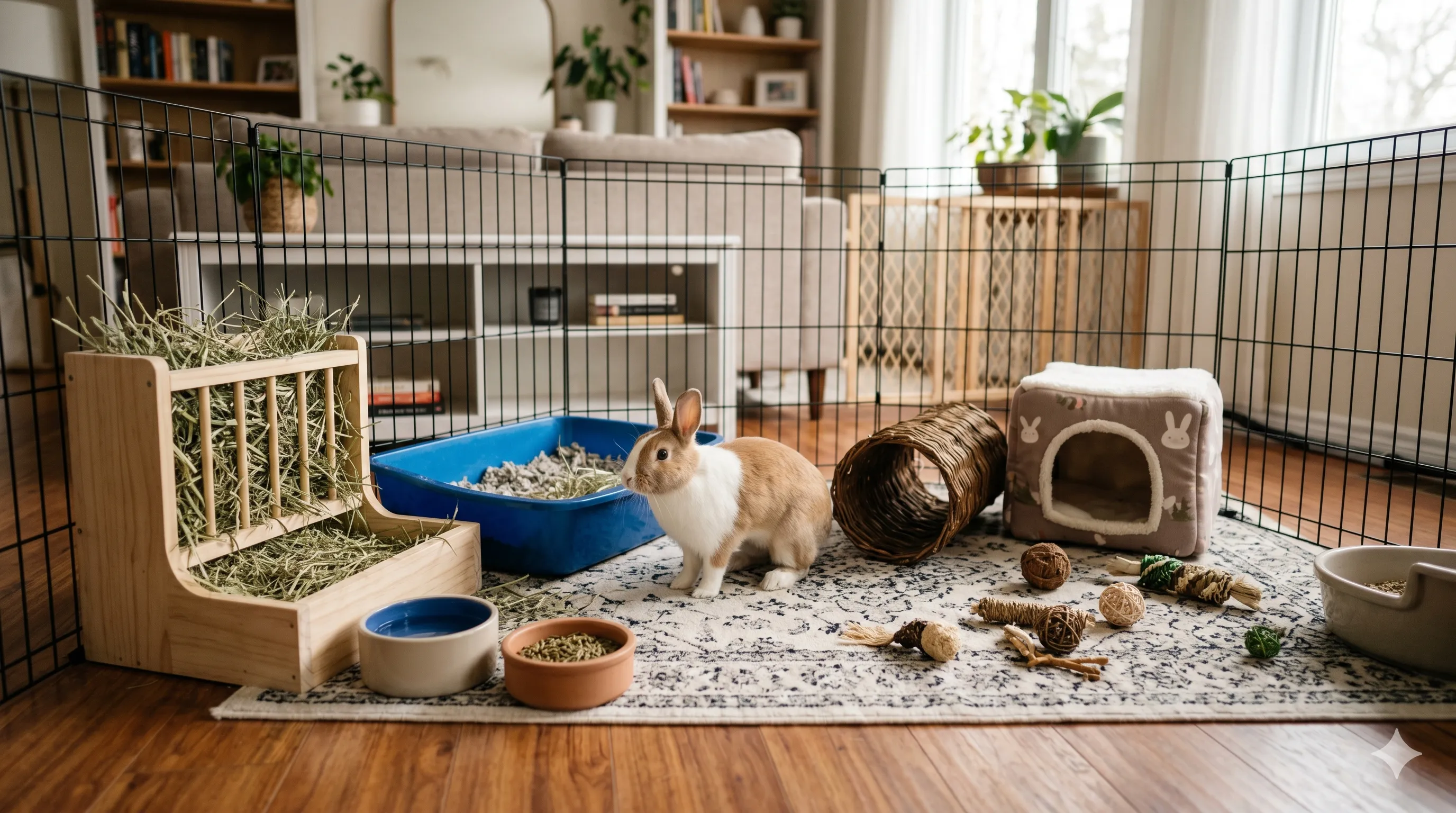
- Indoor Rabbit Care Guide (Quick Beginner Overview)
- Why Indoor Rabbits Usually Live Happier and Safer Lives
- Best Indoor Rabbit Housing Setup
- Avoid Small Permanent Cages
- Exercise Pens Work Well
- Flooring Matters
- How to Rabbit-Proof Your Home
- What Should Indoor Rabbits Eat?
- Unlimited Hay
- Fresh Greens
- Controlled Pellets
- Fresh Water
- Indoor Rabbit Litter Training
- Why Indoor Rabbits Need Daily Exercise
- Best Indoor Rabbit Enrichment Ideas
- Indoor Rabbit Grooming Basics
- Regular Brushing
- Nail Trimming
- Never Give Full Baths Normally
- Indoor Rabbit Health Care Tips
- Find a Rabbit-Savvy Veterinarian
- Monitor Appetite and Droppings Daily
- Spaying and Neutering
- How to Bond With an Indoor Rabbit
- Daily Indoor Rabbit Care Checklist
- Common Indoor Rabbit Care Mistakes
- Signs of a Happy Indoor Rabbit
- Example Scenario
- Final Thoughts
Note: This article is for informational purposes only and does not replace professional veterinary advice.
Indoor rabbits have become increasingly popular pets because they are intelligent, social, clean, and capable of forming strong bonds with their owners. If you're searching for an indoor rabbit care guide, understanding how to properly set up your home and care routine is essential for keeping your bunny healthy and happy.
Unlike outdoor rabbits that face weather extremes and predator risks, indoor rabbits often enjoy safer, more interactive lives when cared for correctly. However, indoor rabbits still require far more care than many people expect.
Rabbits need proper nutrition, exercise, rabbit-proofed living spaces, enrichment, litter training, grooming, and regular health monitoring.
Because rabbits are prey animals that hide illness extremely well, responsible indoor care involves careful observation and consistent daily routines.
In this complete beginner's guide, you'll learn everything first-time owners should know about indoor rabbit care, including housing setup, diet, exercise, litter training, grooming, safety, bonding, and common mistakes to avoid.
Indoor Rabbit Care Guide (Quick Beginner Overview)
Indoor rabbit care involves providing unlimited hay, fresh water, safe housing, daily exercise, rabbit-proofed environments, enrichment activities, litter training, grooming, and regular veterinary care. Indoor rabbits thrive best in spacious, calm environments with stable routines and daily social interaction. Our free rabbit feeding calculator estimates daily hay, pellet, and vegetable amounts by weight and age.
Healthy indoor rabbits can live 8-12 years or even longer with proper care.
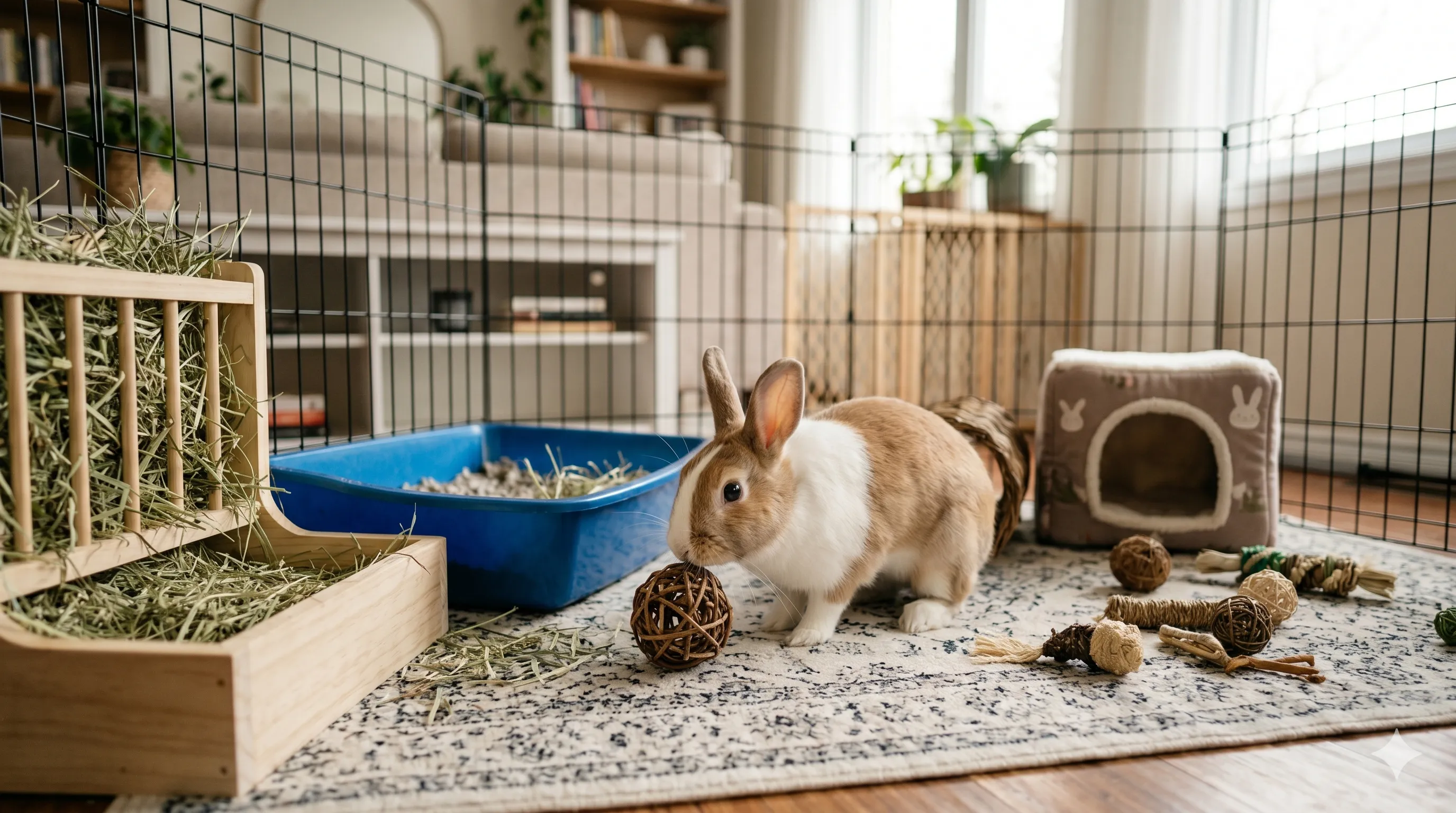
Why Indoor Rabbits Usually Live Happier and Safer Lives
Indoor housing offers several advantages compared to outdoor rabbit keeping.
Indoor rabbits are generally better protected from:
- Extreme heat and cold
- Predators
- Parasites
- Weather stress
- Isolation
- Dangerous outdoor diseases
Indoor rabbits also receive more daily interaction and health monitoring from owners.
Early illness detection becomes much easier when rabbits live indoors.
Best Indoor Rabbit Housing Setup
Avoid Small Permanent Cages
One of the biggest mistakes beginners make is keeping rabbits in tiny cages full-time.
Rabbits need room to:
- Hop
- Stretch fully
- Stand upright
- Run
- Explore
- Play naturally
Small cages may contribute to:
- Obesity
- Boredom
- Stress
- Muscle weakness
- Behavior problems
Exercise Pens Work Well
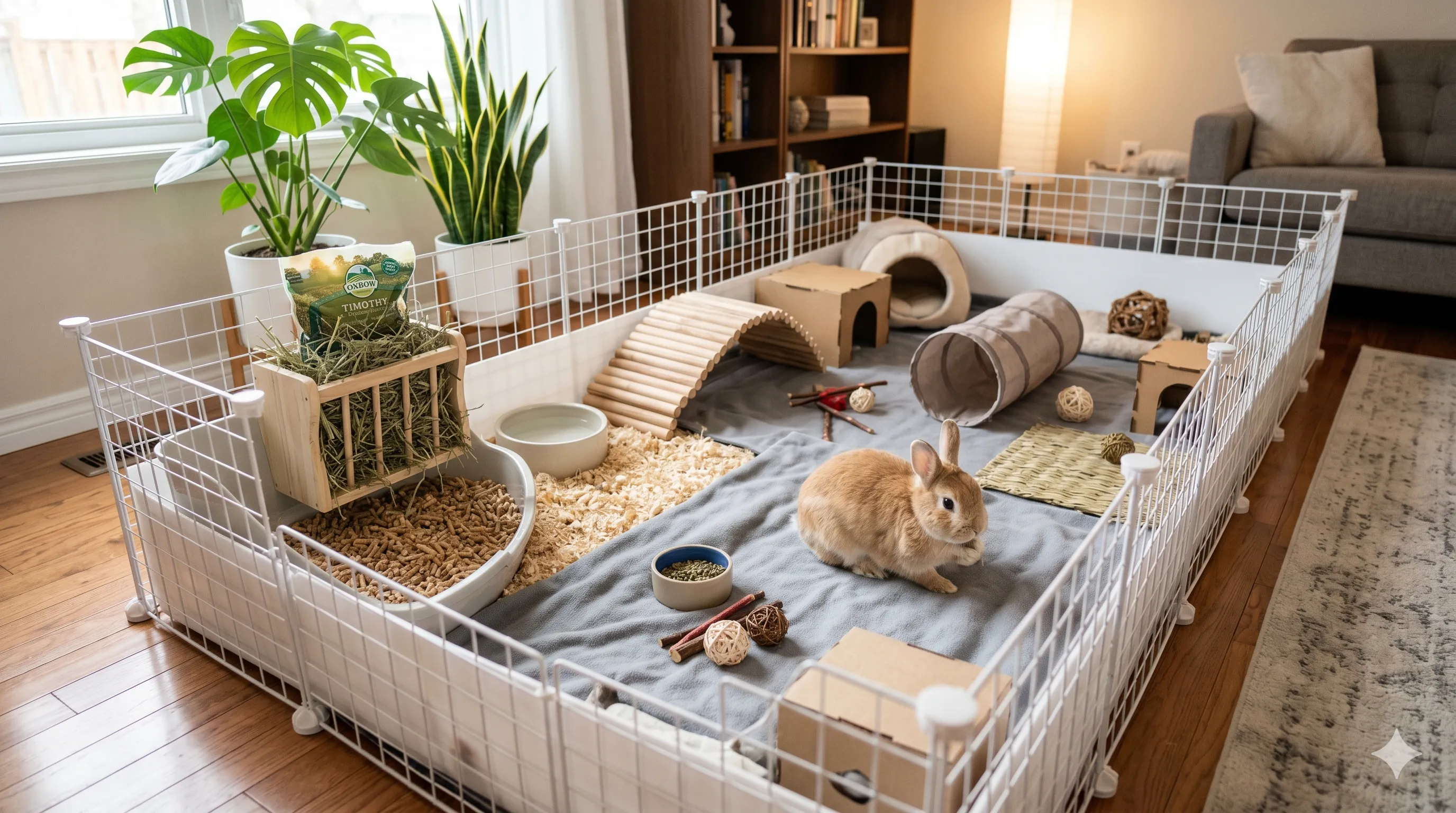
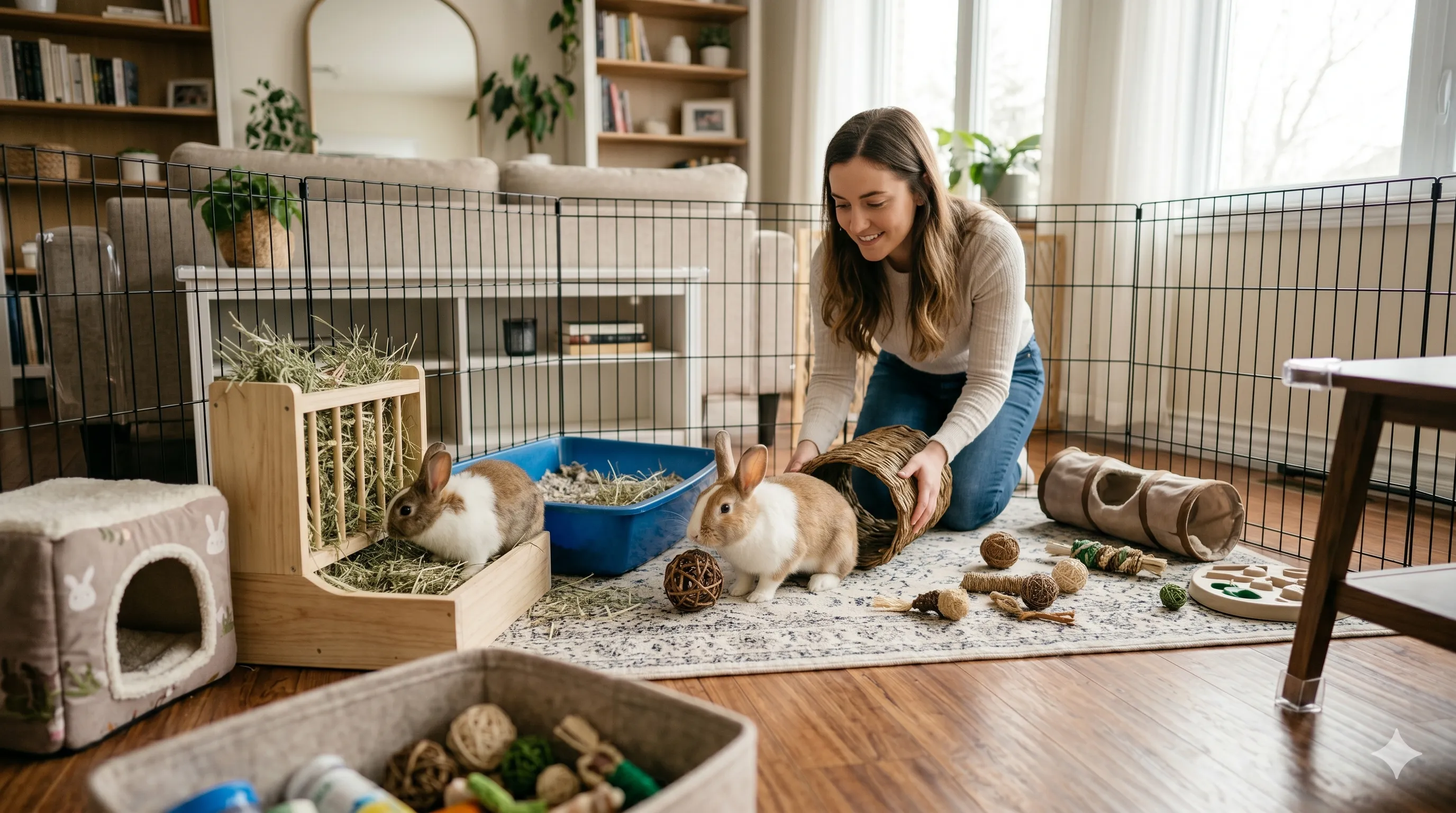
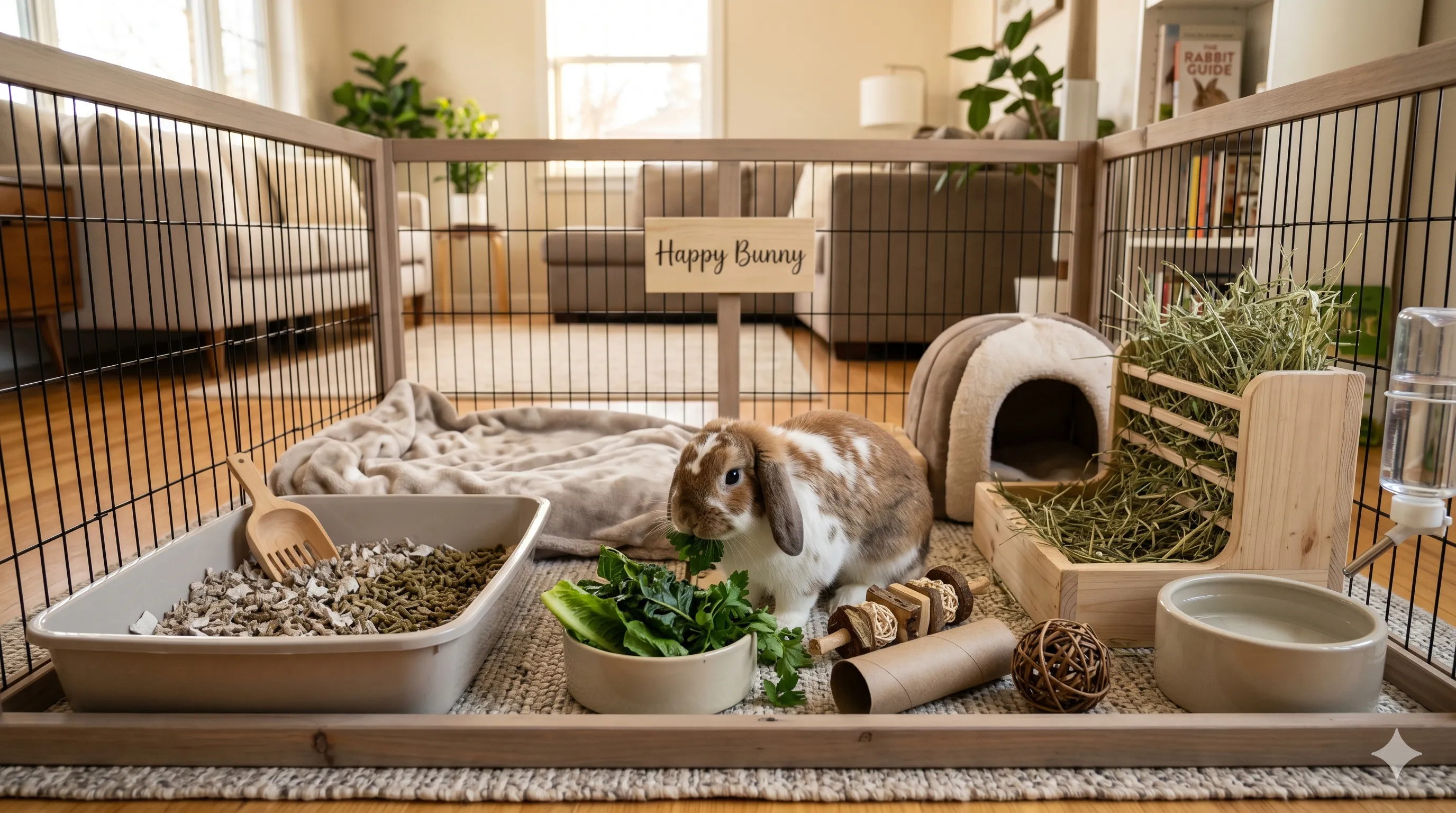
Many rabbit owners use exercise pens (x-pens) or rabbit-proofed rooms instead of small cages.
Good indoor setups often include:
- Litter box area
- Hay feeding station
- Water bowl
- Hiding spaces
- Soft flooring
- Toys and enrichment
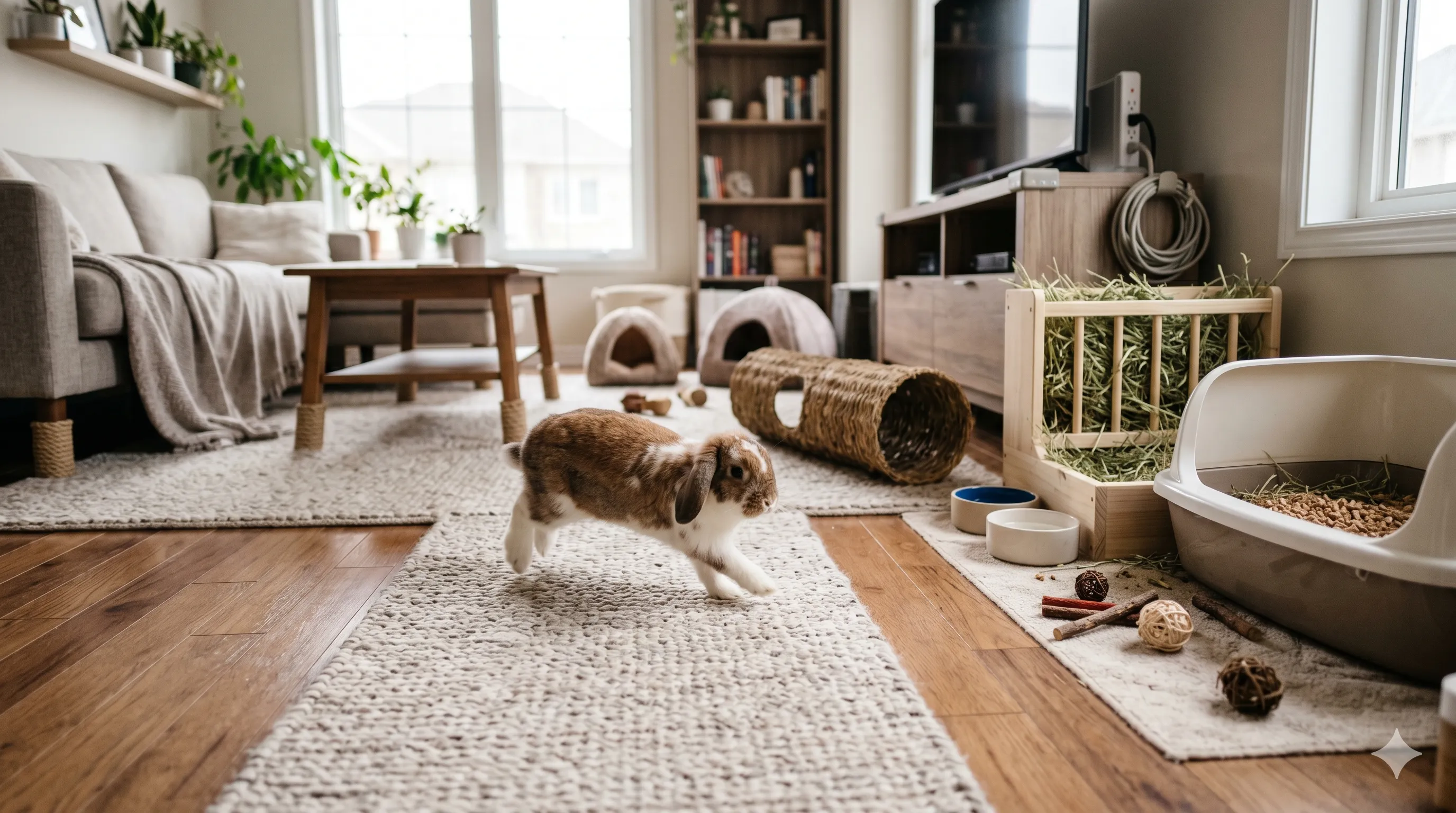
Many rabbits thrive with supervised free-roam time combined with a secure home base area.
Flooring Matters
Slippery floors may cause stress and joint strain for rabbits.
Helpful flooring options include:
- Rugs
- Foam mats
- Carpet squares
- Blankets
Secure footing helps rabbits feel more confident and active.
How to Rabbit-Proof Your Home
Rabbits naturally chew and explore constantly.
Rabbit-proofing is essential for safety.
Important rabbit-proofing steps include:
- Cover electrical cords
- Remove toxic plants
- Block unsafe gaps
- Protect furniture edges
- Store chemicals safely
- Keep medications out of reach
- Prevent access behind appliances
- Remove small swallowable objects
Chewing is normal rabbit behavior because rabbit teeth grow continuously.
how to litter train a rabbitWhat Should Indoor Rabbits Eat?
Unlimited Hay
Hay is the most important food in a rabbit's diet.
Hay supports:
- Healthy digestion
- Proper tooth wear
- Gut movement
- Healthy droppings
- Prevention of GI stasis
Timothy hay is one of the best choices for adult rabbits.
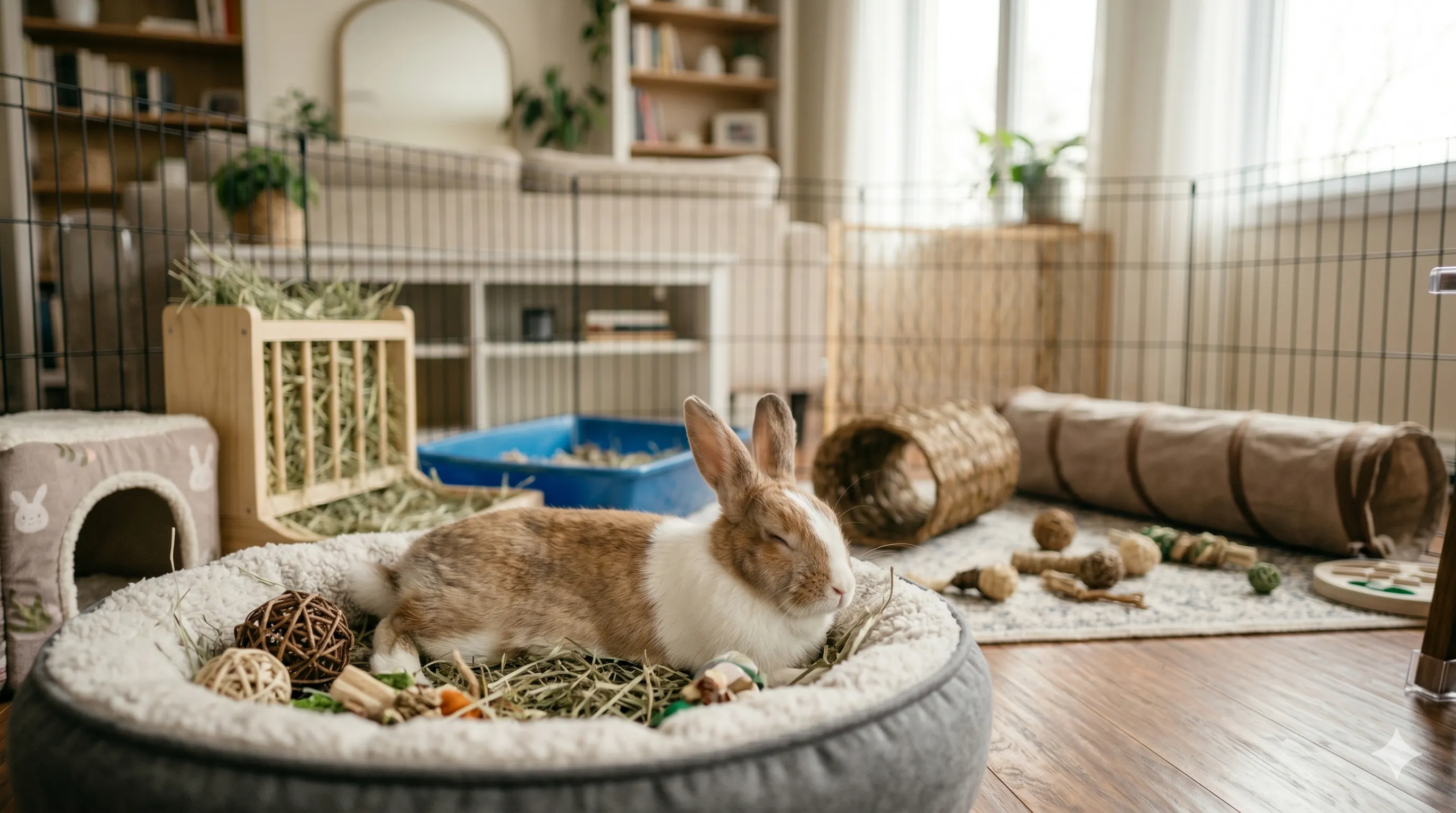
Fresh Greens
Healthy rabbit-safe greens may include:
- Romaine lettuce
- Cilantro
- Parsley
- Bok choy
- Arugula
Balanced vegetable rotation helps support nutrition and enrichment.
complete rabbit care guideControlled Pellets
Pellets should remain limited.
Too many pellets may contribute to:
- Obesity
- Picky eating
- Reduced hay intake
- Digestive imbalance
Fresh Water
Fresh clean water should always remain available.
Many rabbits prefer bowls over bottles because bowls allow more natural drinking behavior.
Indoor Rabbit Litter Training
Rabbits can usually learn litter habits surprisingly well.
Helpful litter training tips include:
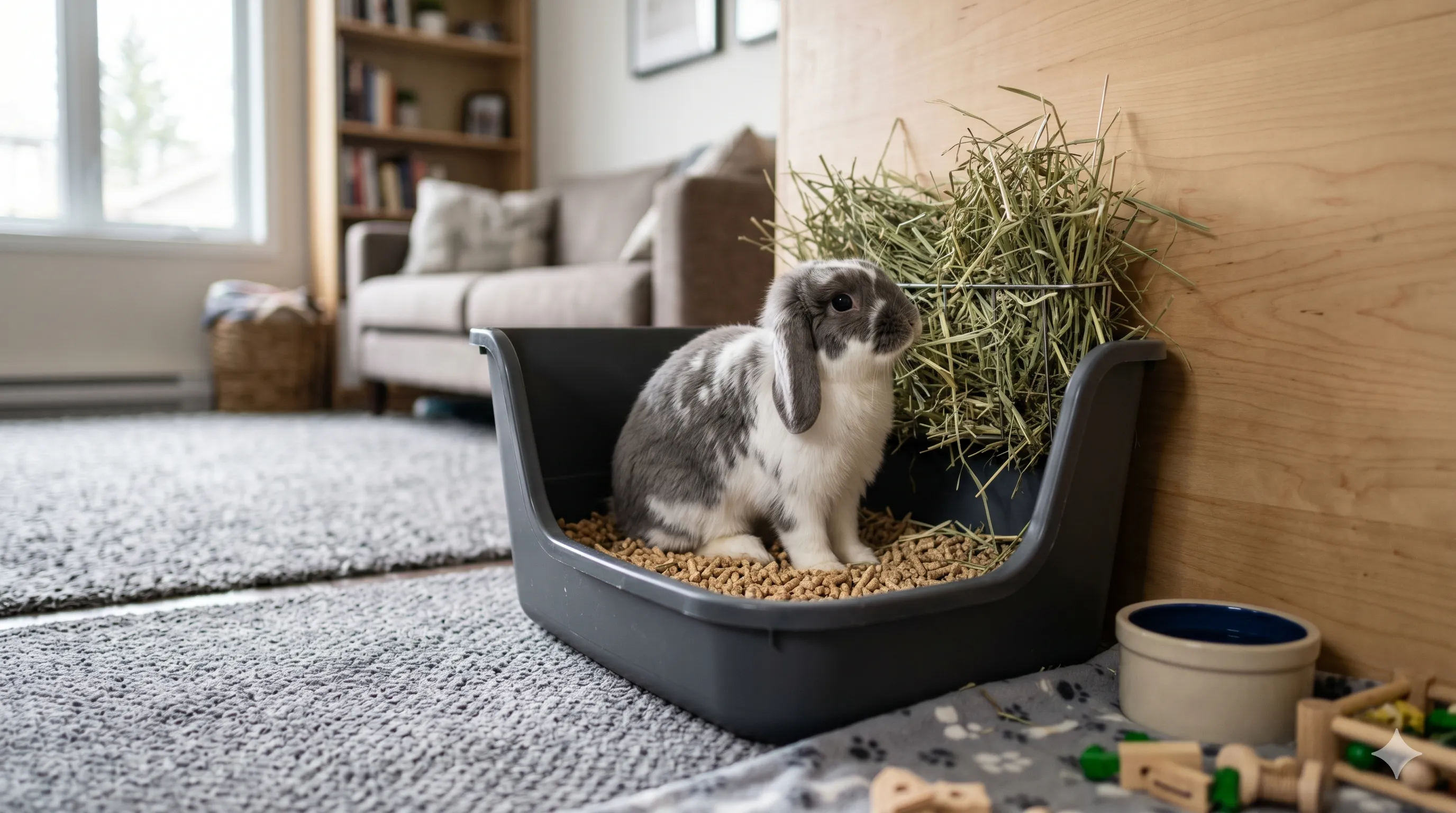
- Place litter boxes in corners rabbits already use
- Add hay near the litter area
- Use rabbit-safe litter
- Reward good habits
- Stay patient and consistent
- Clean accidents thoroughly
Spayed and neutered rabbits often litter train more easily.
rabbit appetite warning signsWhy Indoor Rabbits Need Daily Exercise
Daily movement is extremely important for rabbit health.
Exercise supports:
- Healthy digestion
- Muscle strength
- Mental stimulation
- Weight control
- Joint health
Without enough exercise, rabbits may become:
- Overweight
- Bored
- Destructive
- Depressed
- Frustrated
Most rabbits benefit from several hours of supervised activity daily.
Best Indoor Rabbit Enrichment Ideas
Rabbits are intelligent animals that need mental stimulation.
Popular enrichment ideas include:
- Tunnels
- Cardboard castles
- Digging boxes
- Puzzle feeders
- Treat games
- Chew toys
- Hideouts
- Foraging activities
Enrichment helps reduce boredom-related behaviors and improves emotional wellbeing.
healthy rabbit poop meaning chartIndoor Rabbit Grooming Basics
Regular Brushing
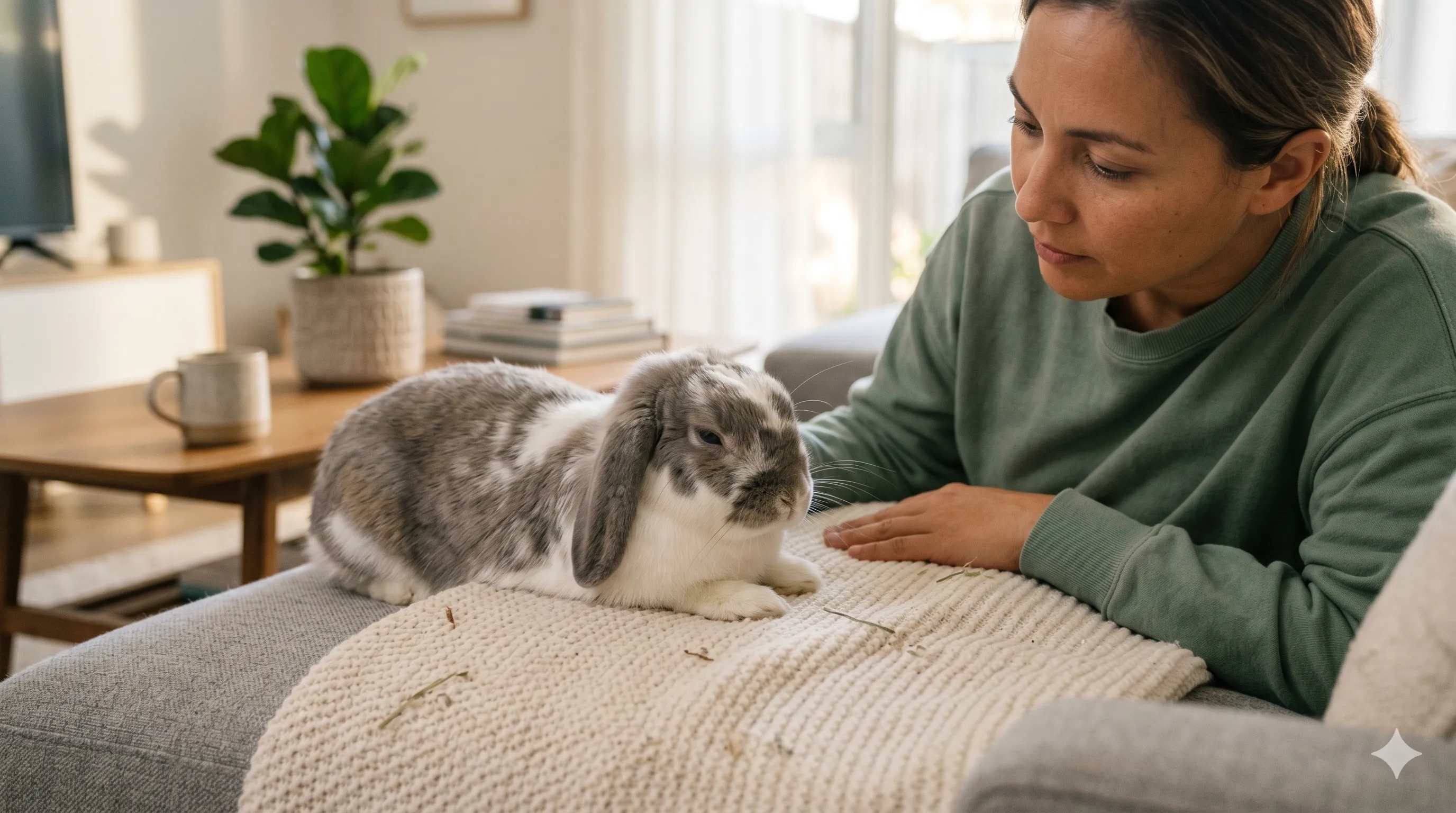
Rabbits naturally shed several times yearly.
Brushing helps reduce swallowed fur and lowers GI stasis risk.
Nail Trimming
Rabbit nails grow continuously and require regular trimming.
Overgrown nails may cause discomfort and mobility problems.
Never Give Full Baths Normally
Water baths are stressful and potentially dangerous for rabbits.
Spot cleaning is usually much safer when needed.
Indoor Rabbit Health Care Tips
Find a Rabbit-Savvy Veterinarian
Not all veterinarians specialize in rabbits.
Rabbit-experienced vets better understand rabbit digestion, anesthesia, and emergency treatment.
rabbit molting and fur loss guideMonitor Appetite and Droppings Daily
Changes in appetite or poop habits are often the first signs of illness.
Seek veterinary care immediately if your rabbit:
- Stops eating
- Stops pooping
- Becomes lethargic
- Develops bloating
- Shows breathing problems
- Acts unusually withdrawn
Rabbits can deteriorate quickly once digestive problems begin.
Spaying and Neutering
Spaying and neutering often improve:
- Litter habits
- Hormonal behavior
- Territorial aggression
- Long-term health
Spaying female rabbits greatly lowers uterine cancer risk.
How to Bond With an Indoor Rabbit
Building trust takes patience.
Helpful bonding tips include:
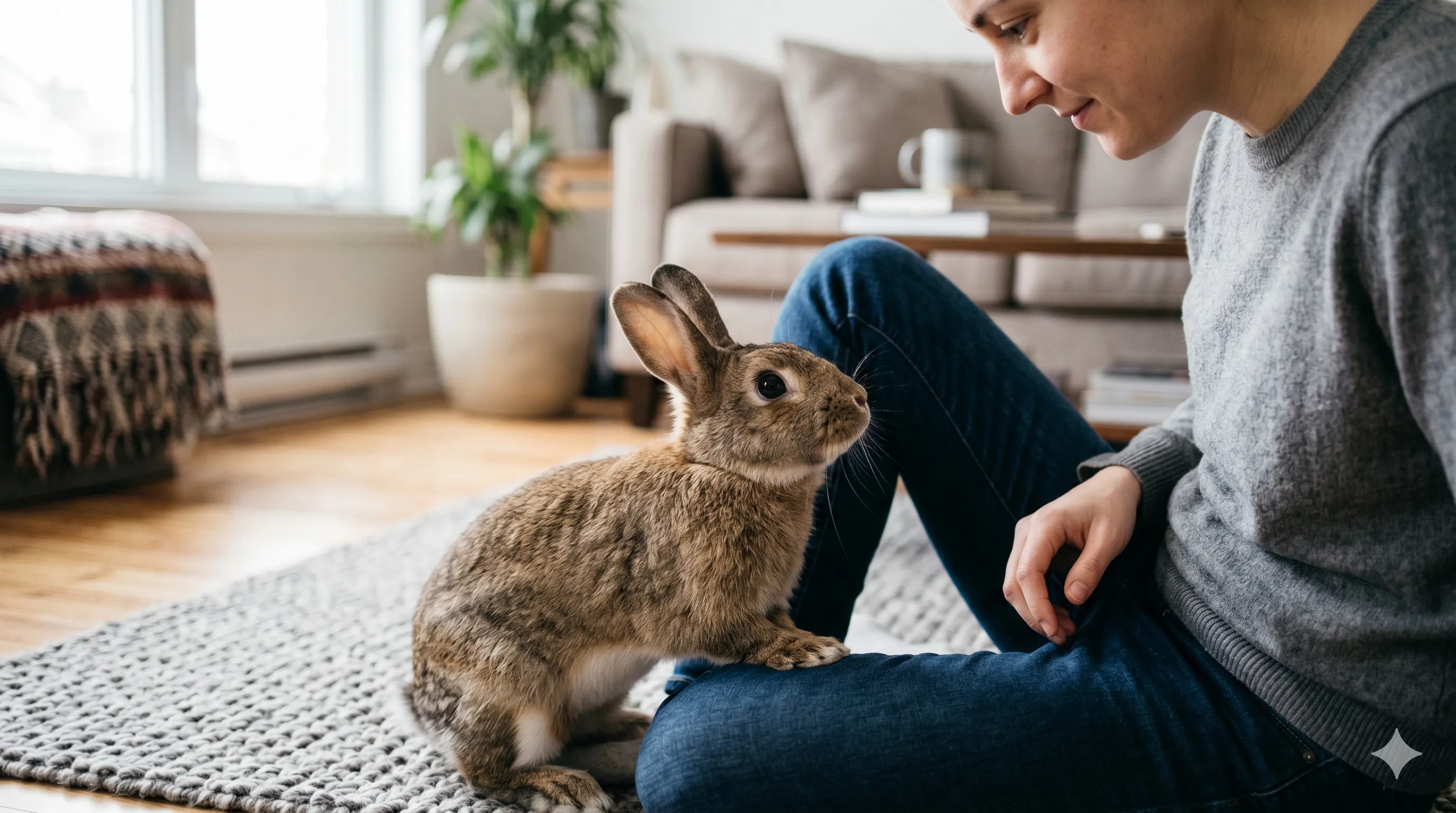
- Sit quietly on the floor
- Allow the rabbit to approach voluntarily
- Use calm voices
- Avoid forced handling
- Offer occasional treats
- Respect hiding time
- Maintain consistent routines
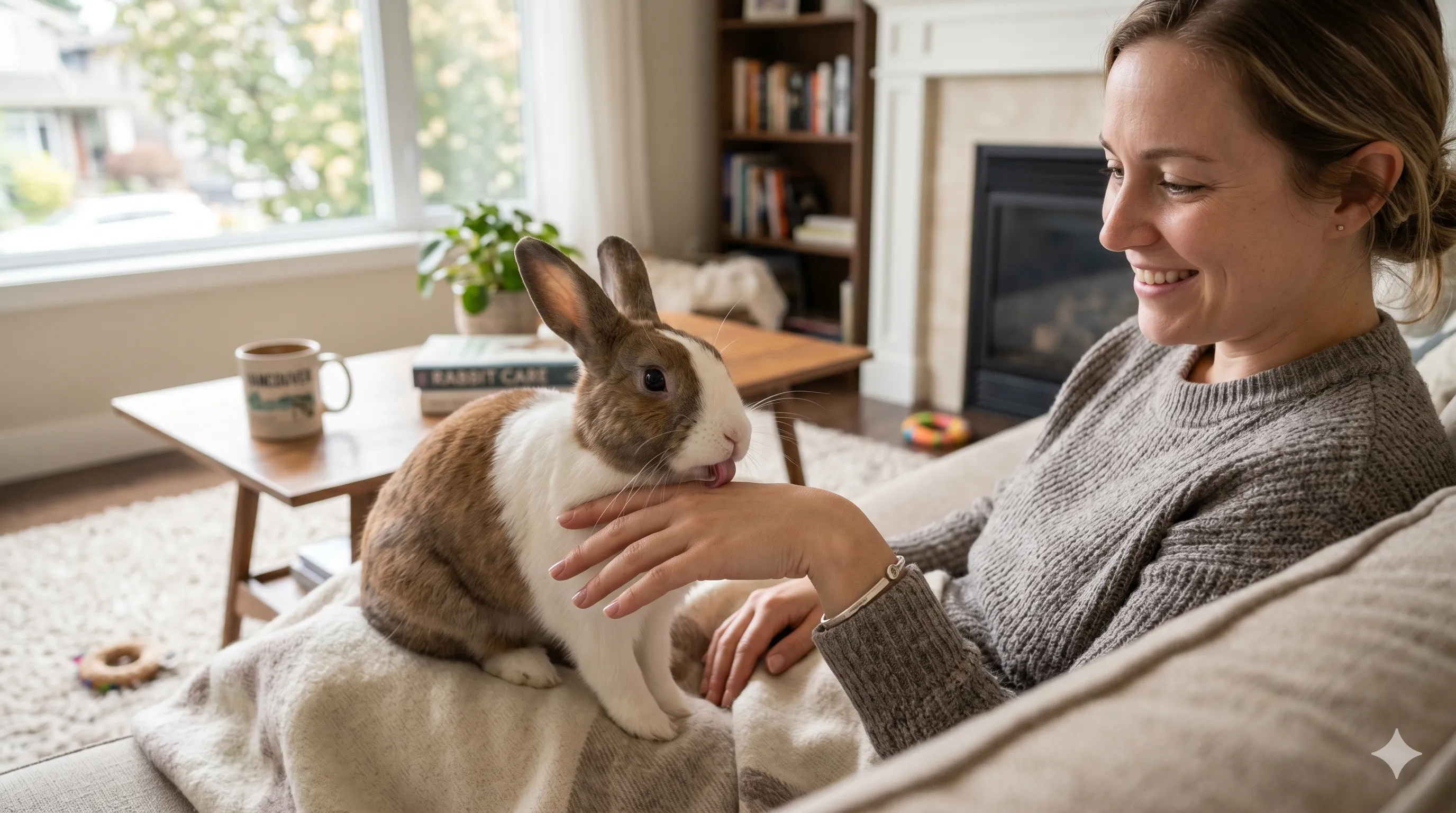
Many indoor rabbits become highly affectionate once trust develops.
Daily Indoor Rabbit Care Checklist
- Provide unlimited fresh hay
- Refresh water daily
- Clean litter areas
- Observe appetite and droppings
- Provide exercise and enrichment
- Inspect the environment for hazards
- Spend social time together
- Monitor behavior changes
Consistent daily routines help rabbits feel safe and secure.
Common Indoor Rabbit Care Mistakes
- Keeping rabbits in tiny cages permanently
- Not rabbit-proofing cords
- Feeding too many sugary treats
- Providing insufficient hay
- Ignoring subtle illness signs
- Not allowing enough exercise
- Using unsafe litter materials
- Bathing rabbits improperly
- Skipping regular grooming
Most rabbit care problems are preventable with proper education and setup.
Signs of a Happy Indoor Rabbit
Healthy happy rabbits commonly show:
- Binkies and zoomies
- Curiosity
- Strong appetite
- Frequent droppings
- Relaxed posture
- Grooming behavior
- Playfulness
- Comfortable exploration
Understanding rabbit body language helps owners recognize stress and illness early.
Example Scenario
The scenario below is an illustrative example of how this situation can play out, not a documented case study.
One first-time rabbit owner initially kept their bunny in a small pet store cage. After upgrading to a larger indoor exercise pen with free-roam time, litter training, tunnels, and enrichment toys, the rabbit became significantly more active, social, and confident.
Another owner discovered the importance of rabbit-proofing after their bunny chewed exposed charging cables. After fully rabbit-proofing the room, both safety and stress improved dramatically.
Small environmental improvements often create huge differences in rabbit wellbeing.
Final Thoughts
Indoor rabbits can become incredibly rewarding companions when cared for properly.
Successful indoor rabbit care focuses on space, hay-based nutrition, enrichment, safety, gentle handling, exercise, and consistent health monitoring.
Because rabbits are intelligent and emotionally sensitive animals, they thrive best in calm, enriching environments where they feel secure and engaged.
With patience, proper education, and daily attention, indoor rabbits can form strong lifelong bonds with their owners while living happy, healthy lives.
This article is intended for educational purposes and should not replace professional veterinary care. Always consult a rabbit-experienced veterinarian for medical concerns, emergencies, or personalized rabbit health advice.
Medical Disclaimer
This content is provided for informational and educational purposes only and should not be considered veterinary, medical, behavioral, or training advice. While we strive for accuracy, we make no guarantees regarding completeness or results. Always consult a licensed veterinarian or qualified pet care professional before making decisions about your pet’s health, diet, or behavior.
AI Illustration Notice
Some images in this article may have been generated or enhanced using artificial intelligence for illustrative purposes.
Frequently Asked Questions
Indoor rabbits are often safer and easier to monitor but they still require daily exercise enrichment and proper care.
Yes, many rabbits thrive as full-time indoor pets when given enough space enrichment and social interaction.
Indoor rabbits need unlimited hay safe housing exercise rabbit-proofing social interaction and daily health monitoring.
Most rabbits benefit from several hours of supervised exercise and exploration daily.
Yes, rabbits are often surprisingly easy to litter train with consistency and proper setup.
Rabbits naturally chew cords furniture and household items so rabbit-proofing helps prevent injuries and accidents.
With proper care many indoor rabbits live around 8–12 years or longer.
Many rabbits benefit greatly from companionship social interaction and daily bonding with owners or compatible rabbits.
Editorial Note
This article is part of PetNurture's educational library.
Topics draw on publicly available educational resources, recognised veterinary organisations, academic publications and established animal welfare references where appropriate.
The specific sources this article draws on are listed in its References section. If you spot an error, please let us know.
References
The information in this article has been reviewed and supported using the following sources.
House Rabbit Society
House Rabbit Society emphasizes that rabbits need large-scale exercise access for four or more hours daily, since a cage alone is not a home but functions more like a bedroom.
Accessed Aug 6, 2026
PetMD
PetMD recommends providing soft, nonabrasive flooring in rabbit enclosures to help prevent pododermatitis, a painful foot condition linked to hard or wire flooring.
Accessed Aug 6, 2026
Pet Emergency Guidance
Every pet is unique. If your pet exhibits severe symptoms, sudden behavioral changes, or a medical emergency, do not rely on online guides — contact a licensed veterinarian or emergency clinic immediately.
About PetNurture
PetNurture is an educational library of pet care guides, interactive tools and practical resources for pet parents. We work continuously to keep our content accurate and up to date. Reader feedback helps us maintain content quality.
Related Articles
Popular Rabbit Guides