How to Litter Train a Rabbit: Step-by-Step Bunny Training Guide
- How to Litter Train a Rabbit (Quick Overview)
- Can Rabbits Really Be Litter Trained?
- Best Age to Litter Train a Rabbit
- Best Rabbit Litter Box Setup
- Choose a Large Litter Box
- Use Rabbit-Safe Litter
- Place Hay Near the Litter Box
- Start With a Smaller Space First
- Step-by-Step Rabbit Litter Training Guide
- Step 1: Observe Bathroom Habits
- Step 2: Add Hay to Encourage Use
- Step 3: Move Droppings Into the Box
- Step 4: Reward Correct Behavior
- Step 5: Stay Consistent
- How to Stop Rabbit Accidents
- Clean Accidents Properly
- Add Multiple Litter Boxes
- Reduce Territory Stress
- Spay or Neuter Your Rabbit
- Why Does My Rabbit Still Poop Outside the Litter Box?
- How Often Should You Clean a Rabbit Litter Box?
- Can Free-Roam Rabbits Stay Litter Trained?
- Common Rabbit Litter Training Mistakes
- Signs Your Rabbit Is Becoming Successfully Litter Trained
- Example Scenario
- Final Thoughts
Note: This article is for informational purposes only and does not replace professional veterinary advice.
Many people are surprised to learn that rabbits can actually be litter trained very successfully. If you're searching for how to litter train a rabbit, the good news is that rabbits naturally prefer using bathroom corners, which makes litter training easier than many beginners expect.
With the right setup, patience, and consistency, most rabbits can develop excellent litter box habits, especially indoor rabbits living in stable environments.
Litter training not only keeps your home cleaner, but it also improves your rabbit's freedom, safety, hygiene, and overall quality of life.
However, successful rabbit litter training depends heavily on proper enclosure setup, rabbit-safe litter choices, spaying or neutering, and understanding natural rabbit behavior.
In this complete step-by-step guide, you'll learn how to litter train your rabbit properly, fix common litter problems, choose the best setup, and help your bunny develop reliable bathroom habits.
How to Litter Train a Rabbit (Quick Overview)
To litter train a rabbit, place a large litter box in your rabbit's preferred bathroom corner, add rabbit-safe litter and fresh hay nearby, reward correct litter use, and clean accidents consistently without punishment. Most rabbits learn litter habits gradually through repetition, scent association, and routine.
Spayed and neutered rabbits are usually much easier to litter train successfully.
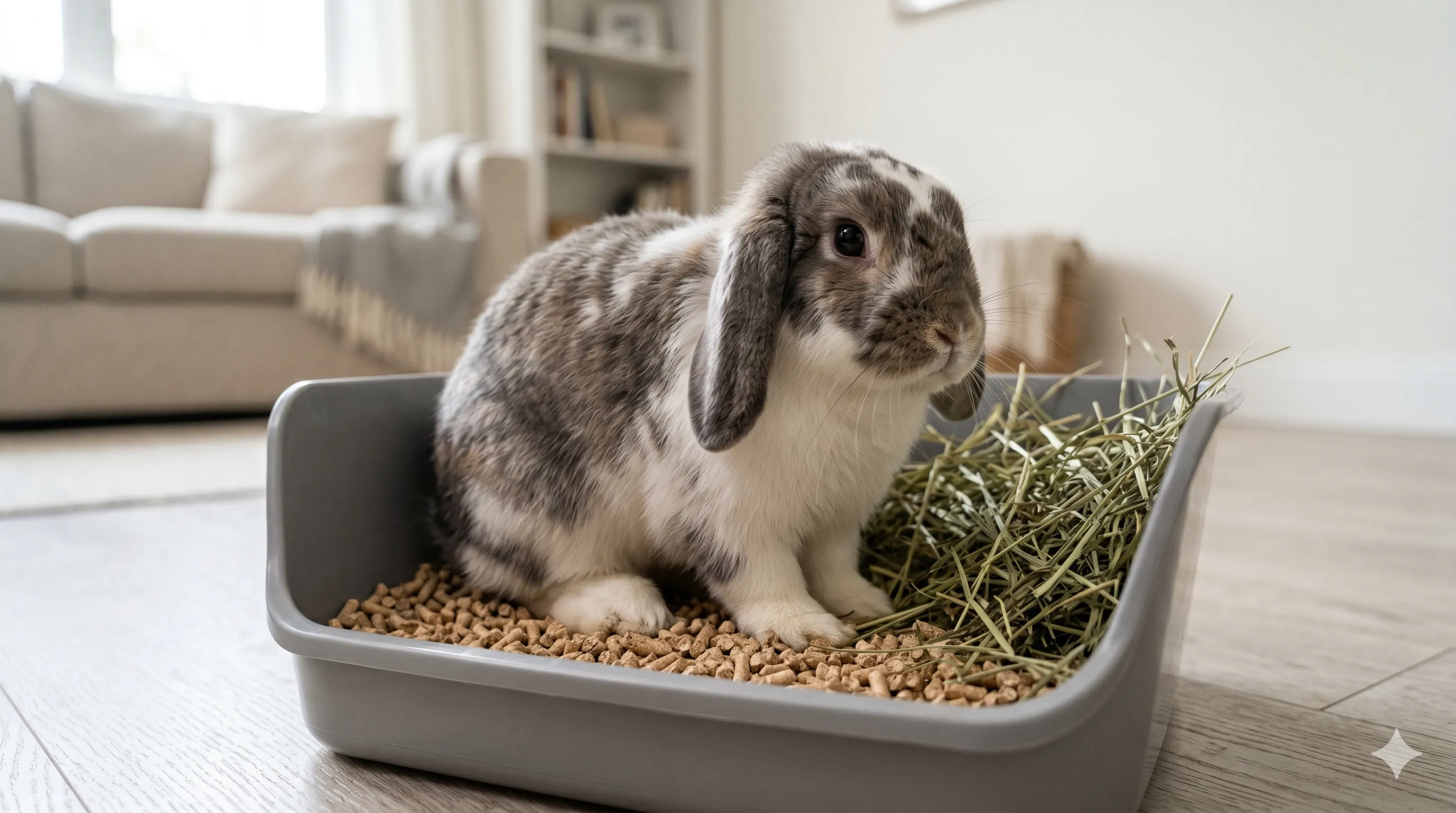
Can Rabbits Really Be Litter Trained?
Yes, many rabbits can become very reliable with litter box habits.
Rabbits naturally tend to:
- Choose bathroom corners
- Return to familiar spots
- Prefer consistent routines
- Use the bathroom while eating hay
This natural behavior makes litter training surprisingly effective for many indoor rabbits.
However, occasional accidents still happen sometimes, especially during early training stages.
Best Age to Litter Train a Rabbit
Young rabbits can begin learning litter habits early, but training often becomes easier after spaying or neutering.
Hormonal rabbits may:
- Spray urine
- Mark territory
- Scatter droppings
- Become less consistent
Spaying and neutering frequently improve litter reliability significantly.
free roam rabbit setup guideBest Rabbit Litter Box Setup
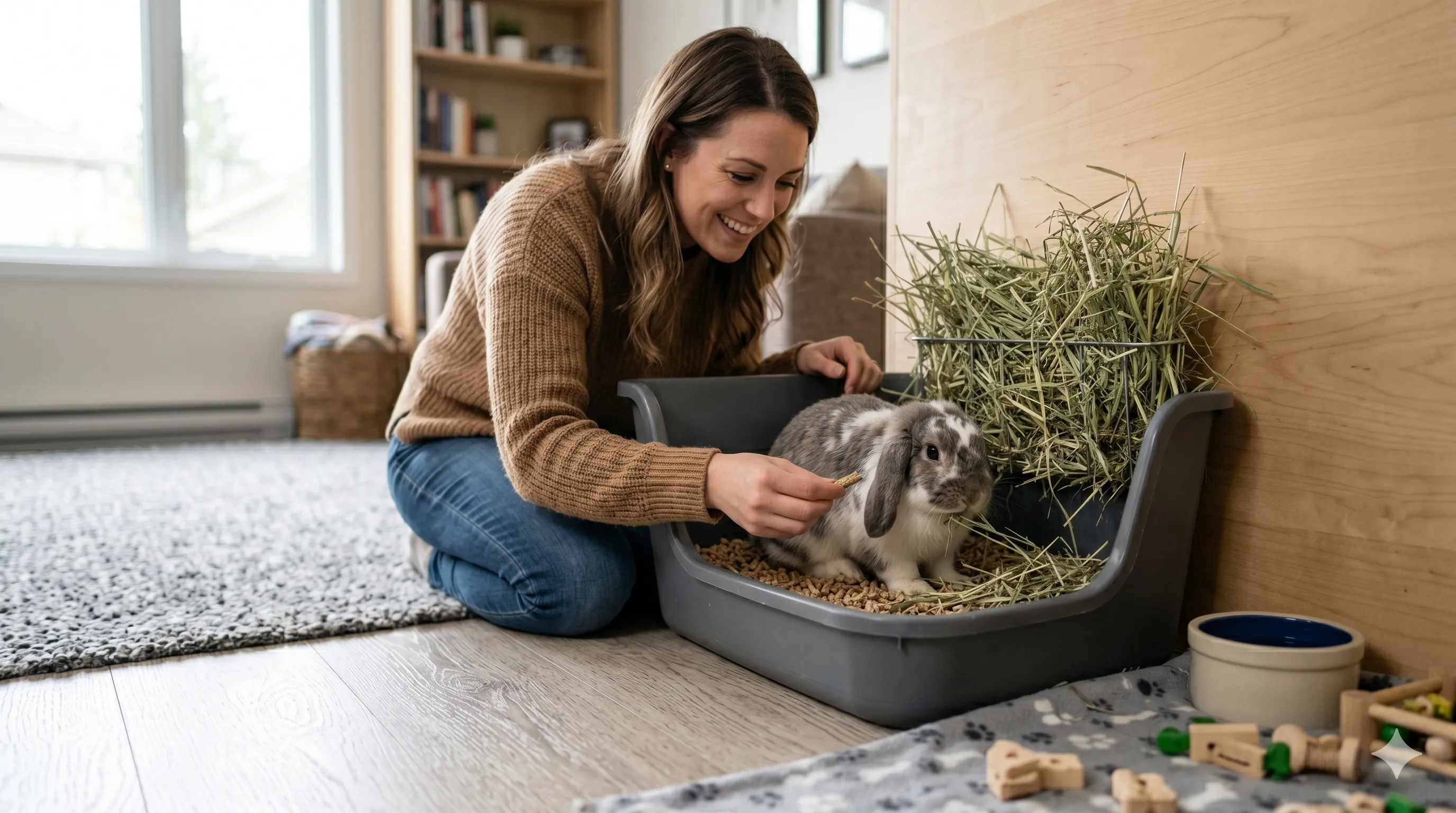
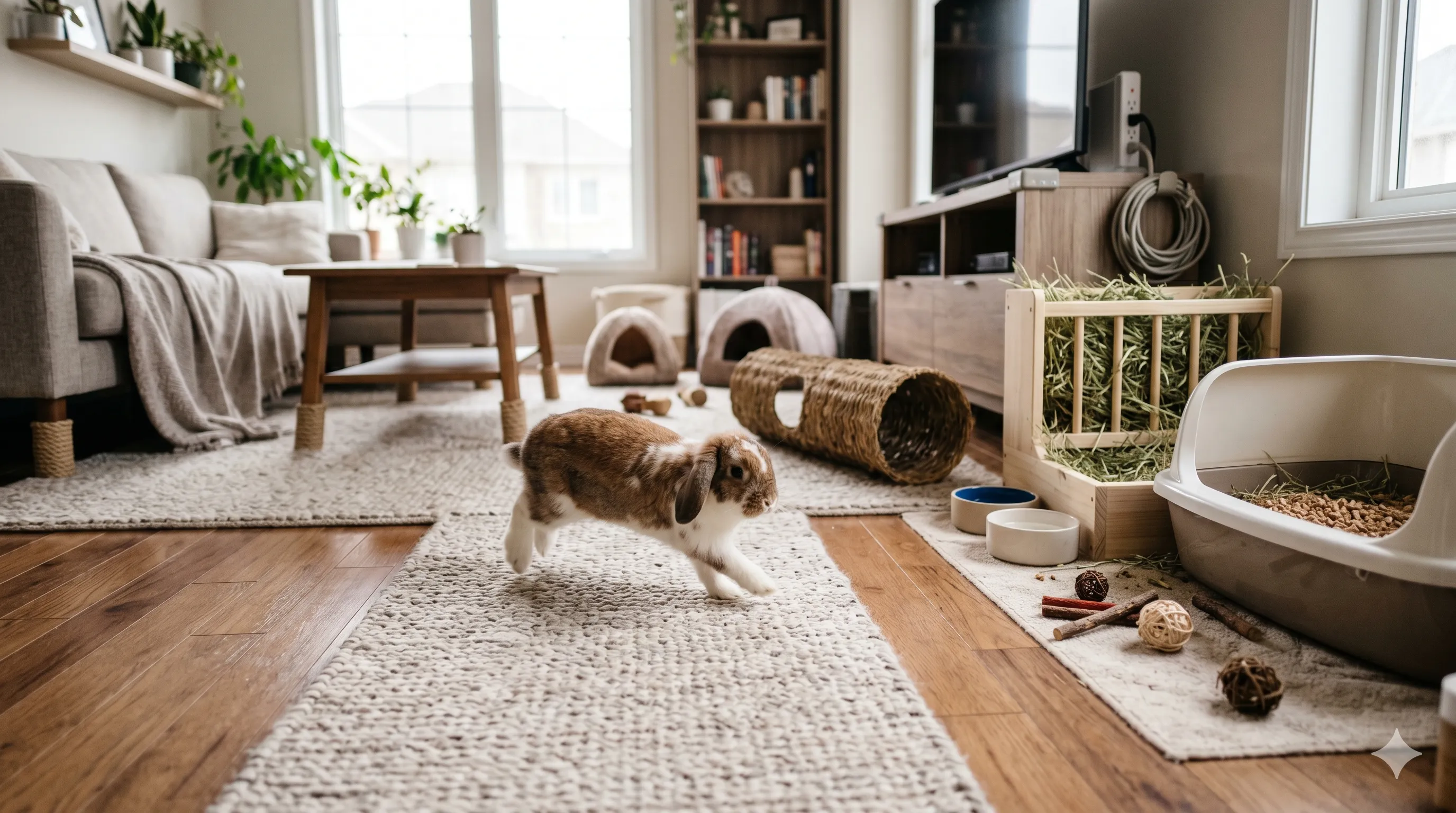
Choose a Large Litter Box
Rabbits need enough room to comfortably:
- Turn around
- Sit naturally
- Eat hay
- Stretch slightly
Cat-sized litter boxes often work very well for rabbits.
Use Rabbit-Safe Litter
Safe rabbit litter options include:
- Paper-based litter
- Aspen shavings
- Compressed paper pellets
Avoid:
- Clumping cat litter
- Scented litter
- Cedar shavings
- Pine shavings with strong oils
Unsafe litter may contribute to respiratory or digestive problems.
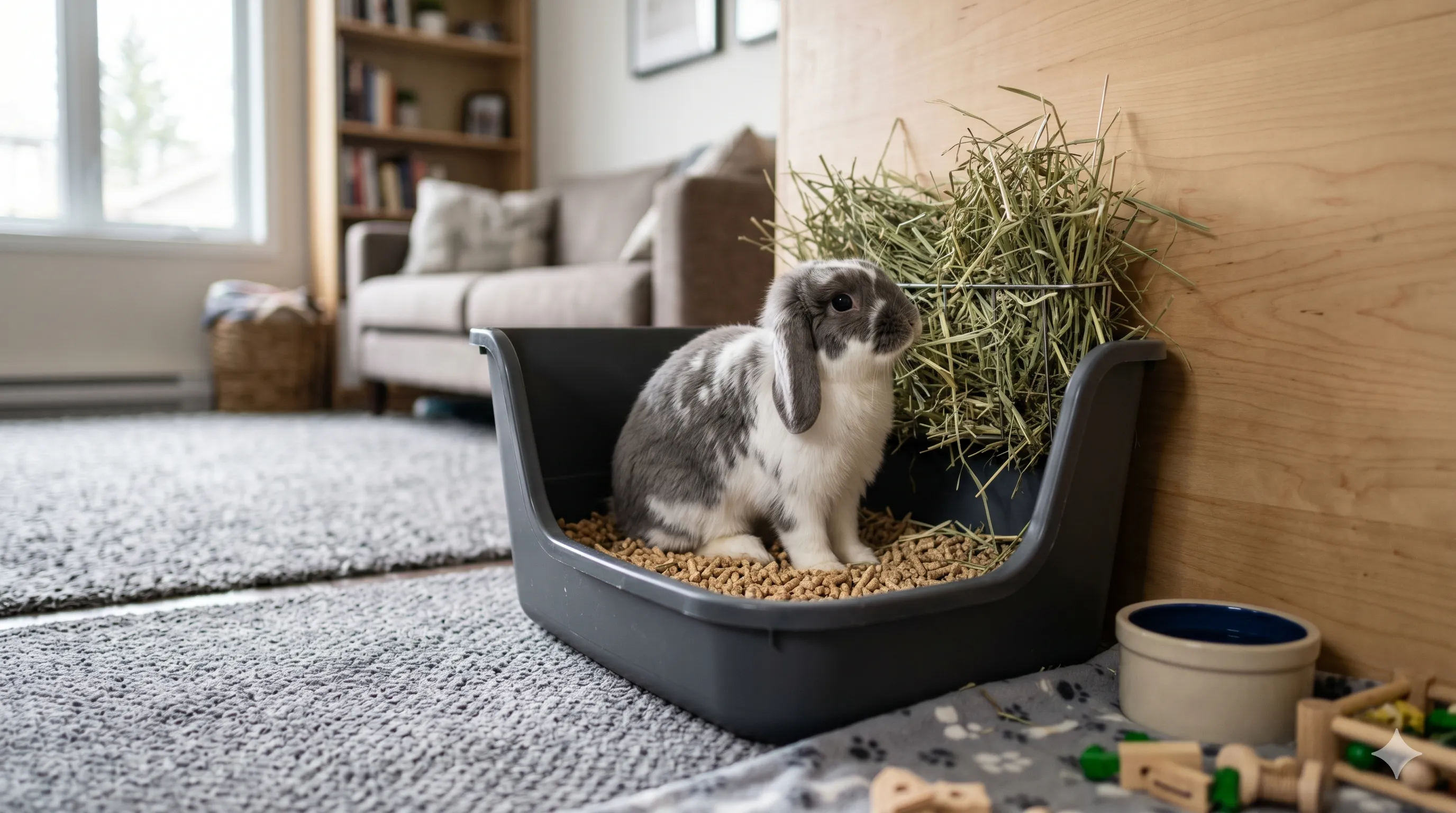
Place Hay Near the Litter Box
Rabbits naturally like eating and using the bathroom at the same time.
Adding fresh hay near or above the litter box often improves litter training success dramatically.
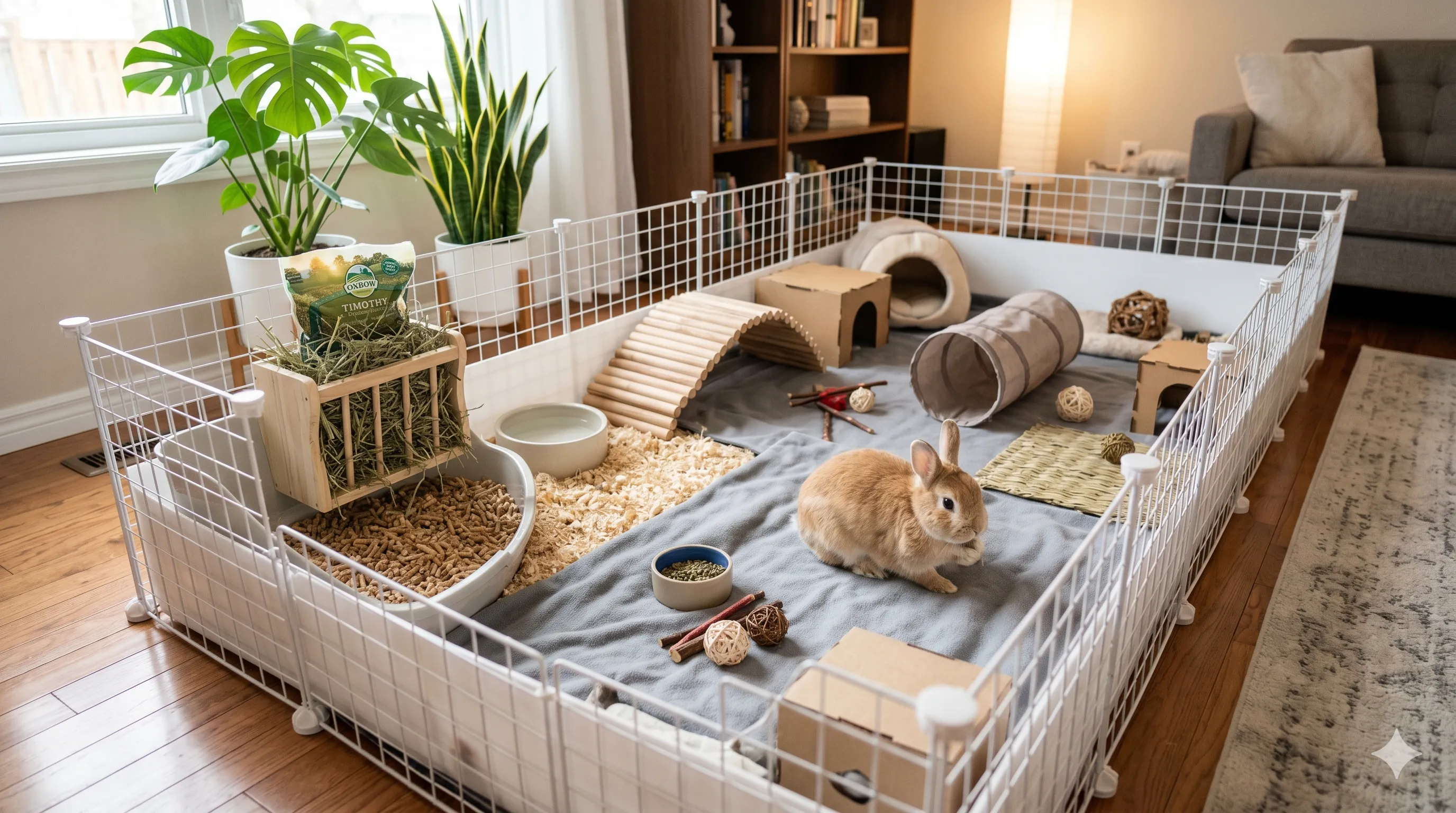
Start With a Smaller Space First
Limiting space initially helps rabbits build consistent habits faster.
Once litter behavior improves, you can gradually expand free-roam access safely.
rabbit appetite emergency signsStep-by-Step Rabbit Litter Training Guide
Step 1: Observe Bathroom Habits
Watch where your rabbit naturally prefers going to the bathroom.
Many rabbits automatically choose corners.
Place the litter box in the preferred location whenever possible.
Step 2: Add Hay to Encourage Use
Fresh hay encourages rabbits to spend more time near the litter box.
Hay placement is one of the easiest ways to improve litter training success.
Step 3: Move Droppings Into the Box
If accidents happen:
- Place droppings into the litter box
- Clean urine spots thoroughly
- Leave mild scent cues inside the box
This helps rabbits associate the litter area with bathroom behavior.
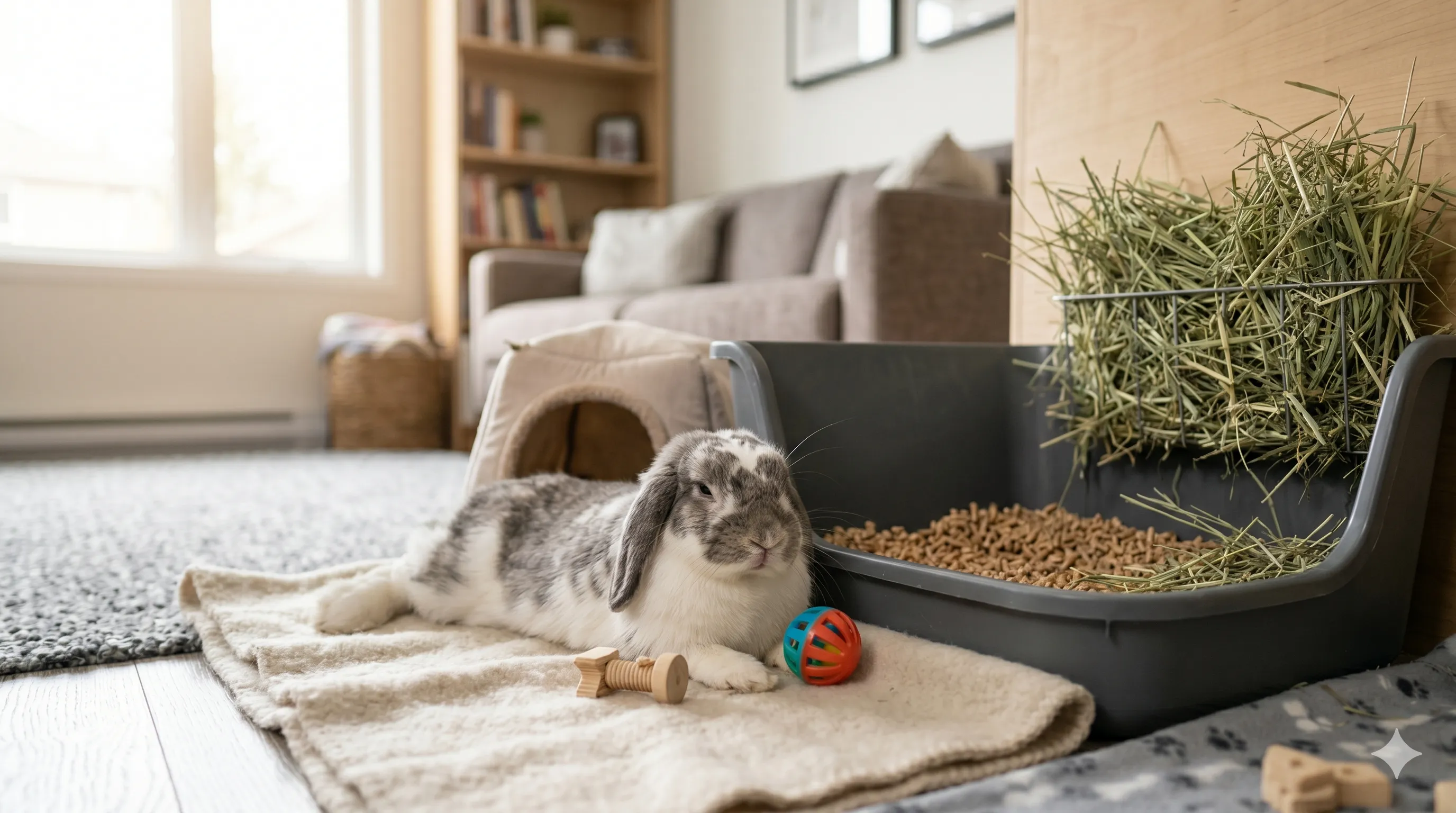
Step 4: Reward Correct Behavior
Positive reinforcement helps many rabbits learn faster.
Helpful rewards may include:
- Gentle praise
- Tiny healthy treats
- Petting if the rabbit enjoys it
Avoid punishment completely because fear often worsens litter problems.
Step 5: Stay Consistent
Litter training takes patience.
Consistency matters far more than speed.
Some rabbits learn within days, while others require several weeks.
How to Stop Rabbit Accidents
Clean Accidents Properly
Use pet-safe cleaners to fully remove urine odor.
If rabbits continue smelling old bathroom spots, they may keep returning there repeatedly.
Add Multiple Litter Boxes
Larger spaces may require multiple litter areas.
This becomes especially helpful during free-roam time.
Reduce Territory Stress
Stress may increase marking behavior.
Possible triggers include:
- New pets
- Environmental changes
- Hormones
- Loud noise
- Unfamiliar smells
Spay or Neuter Your Rabbit
Spayed and neutered rabbits are often:
- Cleaner
- Less territorial
- More reliable with litter habits
- Less likely to spray urine
Hormonal marking usually improves significantly after surgery.
Why Does My Rabbit Still Poop Outside the Litter Box?
Even well-trained rabbits may occasionally leave droppings outside the litter box.
This sometimes happens because:
- Rabbits naturally scatter a few droppings
- Territory marking occurs
- The litter box is dirty
- The rabbit feels stressed
- The setup needs adjustment
A few stray droppings are fairly common even in well-trained rabbits.
How Often Should You Clean a Rabbit Litter Box?
Daily spot cleaning helps maintain good litter habits.
Helpful cleaning routines include:
- Remove wet litter daily
- Refresh hay frequently
- Fully clean boxes weekly
- Monitor urine and droppings
- Wash food and water areas regularly
Clean litter boxes encourage rabbits to continue using them consistently.
rabbit stress behavior signsCan Free-Roam Rabbits Stay Litter Trained?
Yes, many free-roam rabbits maintain reliable litter habits successfully.
However, success depends heavily on:
- Proper training foundation
- Spaying or neutering
- Stable routines
- Enough litter access
- Consistent cleaning
- Gradual space expansion
Some owners use multiple litter stations throughout the home.
Common Rabbit Litter Training Mistakes
- Using tiny litter boxes
- Choosing unsafe litter
- Punishing accidents
- Allowing too much space too early
- Skipping spay or neuter discussions
- Not cleaning accidents properly
- Removing all scent cues immediately
- Using strongly scented cleaners
Patience and proper setup usually matter far more than strict correction methods.
Signs Your Rabbit Is Becoming Successfully Litter Trained
Positive litter training progress often includes:
- Using litter boxes consistently
- Fewer accidents daily
- Returning to the same bathroom spots
- Reduced territorial spraying
- Better free-roam reliability
Most rabbits improve gradually rather than perfectly overnight.
rabbit urine health monitoringExample Scenario
The scenario below is an illustrative example of how this situation can play out, not a documented case study.
One indoor rabbit owner initially struggled with accidents because the litter box was too small and lacked nearby hay. After upgrading the setup and adding fresh hay above the box, litter habits improved dramatically within two weeks.
Another owner noticed territorial spraying stopped almost completely after neutering their rabbit and maintaining a consistent cleaning routine.
Small setup adjustments often create huge improvements in rabbit litter behavior.
Final Thoughts
Learning how to litter train a rabbit successfully takes patience, consistency, and proper setup.
Fortunately, rabbits naturally prefer bathroom corners and can often develop reliable litter habits surprisingly well.
The keys to success usually include large litter boxes, rabbit-safe litter, fresh hay placement, positive reinforcement, and stable routines.
Spaying or neutering also plays a major role in improving long-term litter reliability for many rabbits.
With time and consistency, most indoor rabbits can become much cleaner, easier to manage, and safer to free-roam around the home.
This article is intended for educational purposes and should not replace professional veterinary advice. If your rabbit suddenly develops major litter habit changes, excessive urine marking, or health concerns, consult a rabbit-experienced veterinarian.
Medical Disclaimer
This content is provided for informational and educational purposes only and should not be considered veterinary, medical, behavioral, or training advice. While we strive for accuracy, we make no guarantees regarding completeness or results. Always consult a licensed veterinarian or qualified pet care professional before making decisions about your pet’s health, diet, or behavior.
AI Illustration Notice
Some images in this article may have been generated or enhanced using artificial intelligence for illustrative purposes.
Frequently Asked Questions
Yes, many rabbits can learn reliable litter box habits with patience proper setup and consistent routines.
Paper-based litter and compressed paper pellets are among the safest litter options for rabbits.
Rabbits may leave occasional droppings because of territory marking stress hormones or natural behavior.
Yes, spayed and neutered rabbits are usually much easier to litter train consistently.
Yes, rabbits naturally like eating hay while using the bathroom so hay placement often improves litter training success.
Some rabbits learn within days while others may require several weeks of consistent training.
Yes, many free-roam rabbits maintain good litter habits when training setup and routines remain consistent.
Large cat-sized litter boxes usually work best because rabbits need room to sit turn around and eat hay comfortably.
Editorial Note
This article is part of PetNurture's educational library.
Topics draw on publicly available educational resources, recognised veterinary organisations, academic publications and established animal welfare references where appropriate.
The specific sources this article draws on are listed in its References section. If you spot an error, please let us know.
References
The information in this article has been reviewed and supported using the following sources.
House Rabbit Society
House Rabbit Society recommends placing hay at one end of or near the litter box, since rabbits naturally eat while eliminating and this encourages consistent litter box use.
Accessed Aug 6, 2026
RSPCA
How Do I Litter Train My Rabbit?
RSPCA guidance recommends changing litter box contents every one to two days to prevent ammonia buildup, and lists straw, hay, and rabbit-safe pellets as appropriate litter materials.
Accessed Aug 6, 2026
Pet Emergency Guidance
Every pet is unique. If your pet exhibits severe symptoms, sudden behavioral changes, or a medical emergency, do not rely on online guides — contact a licensed veterinarian or emergency clinic immediately.
About PetNurture
PetNurture is an educational library of pet care guides, interactive tools and practical resources for pet parents. We work continuously to keep our content accurate and up to date. Reader feedback helps us maintain content quality.
Related Articles

Popular Rabbit Guides