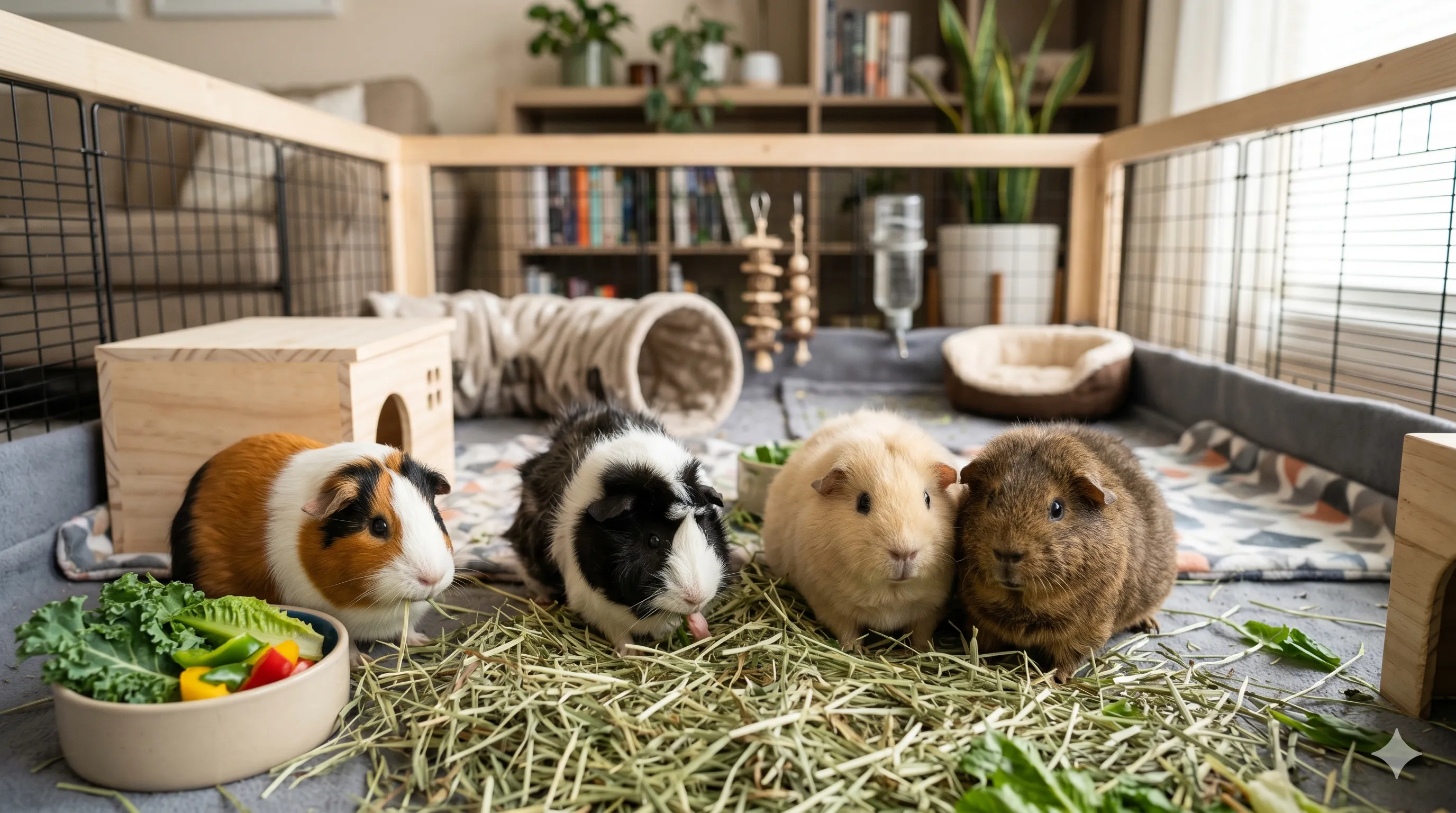
Abyssinian Guinea Pig Guide (Personality & Grooming Needs)
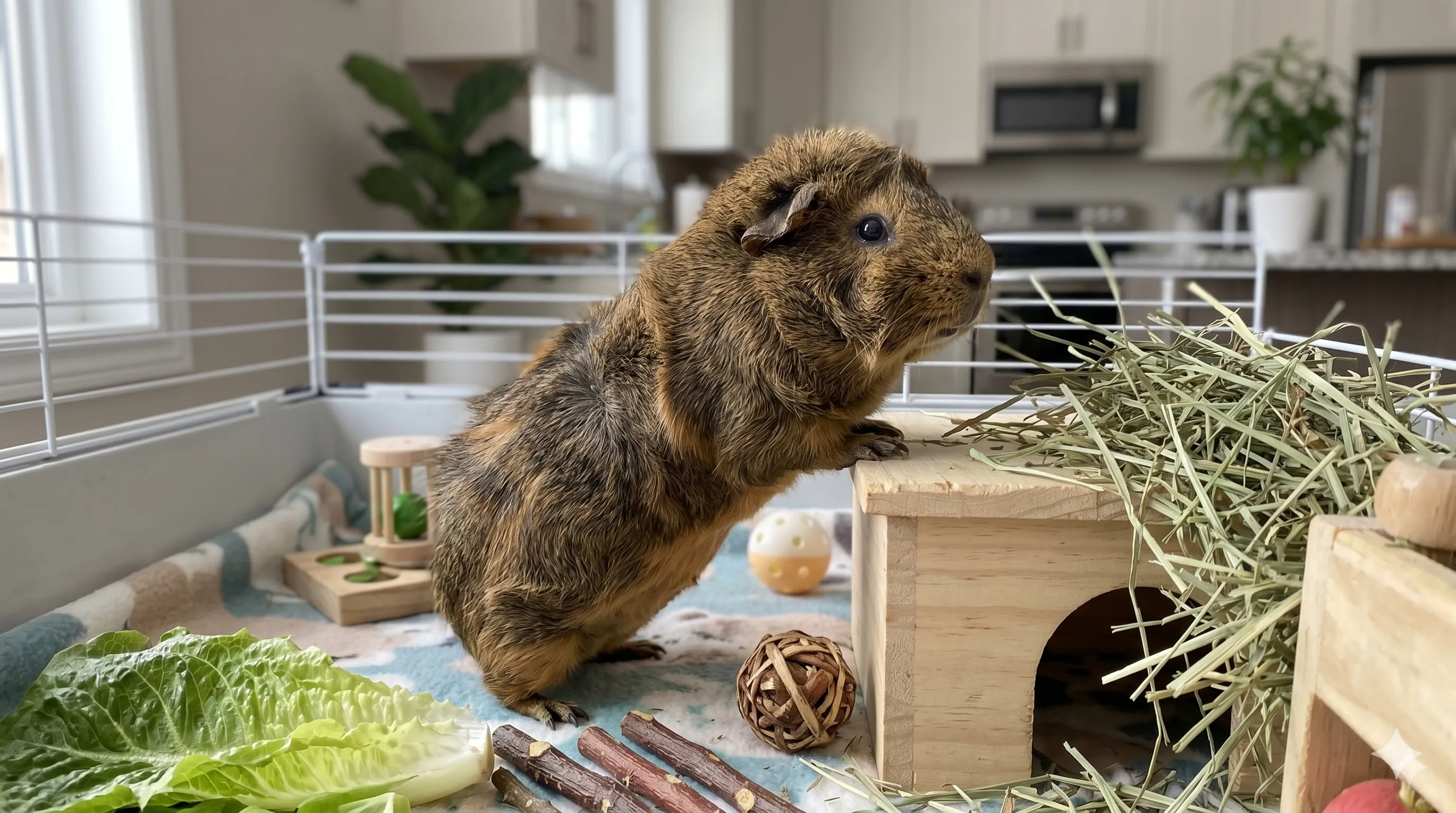
- What Makes the Abyssinian Coat Different
- Abyssinian Personality and Temperament
- Bold and Curious
- Vocal and Expressive
- High Energy
- Grooming Needs for the Rosette Coat
- Brushing Frequency
- Detangling the Rosettes
- Coat Checks During Grooming
- General Care Beyond the Coat
- Housing and Space
- Diet
- Companionship
- Handling and Bonding
- Is an Abyssinian Right for Your Household
- A Good Fit For
- Worth Considering Before Committing
- Expert Tips for Abyssinian Owners
- Common Mistakes to Avoid
- Final Thoughts
Note: This article is for informational purposes only and does not replace professional veterinary advice.
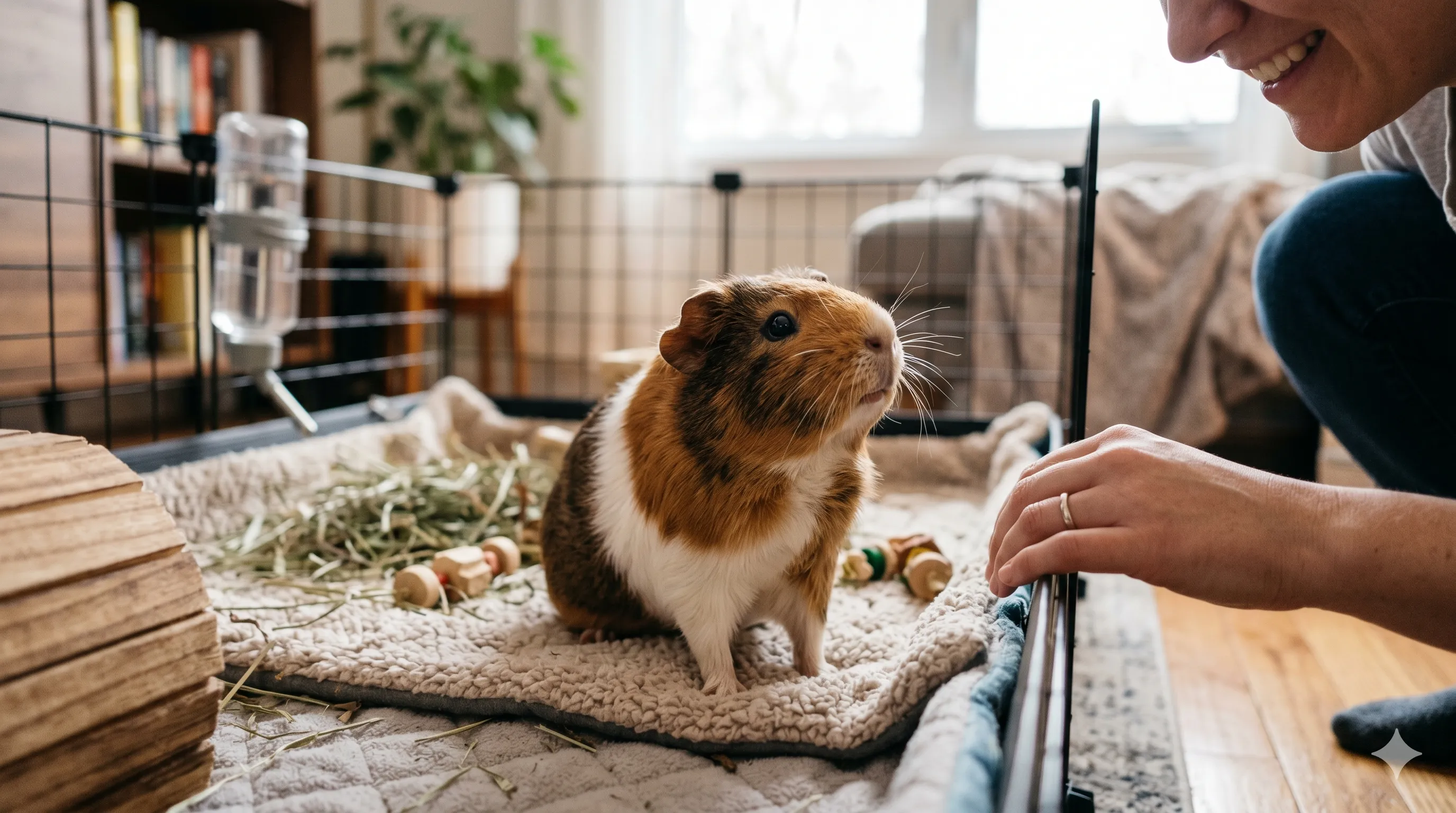
Abyssinian guinea pigs are the breed with the spiky, whorled coat, easy to spot from across a room and just as easy to recognize by personality once you've met one. They typically carry six to eight rosettes across the body, weigh two to three pounds, and live around five to seven years with good care. What sets them apart from smooth-coated breeds isn't just the coat though, it's a bolder, more vocal, more curious temperament that shows up almost immediately. This guide covers what makes an Abyssinian's personality distinct, the grooming routine their coat actually needs, and whether the breed is a good match for your household.
What Makes the Abyssinian Coat Different
The defining trait of the breed is the rosette, a whorl of hair that grows outward from a central point and forces the surrounding coat to stand up rather than lie flat. Most Abyssinians have between six and eight rosettes spread across the back, hips, and shoulders, giving them the rough, textured look owners often describe as a permanent bad-hair day. The rosette pattern is set genetically, so no amount of grooming will smooth it into a flat coat the way brushing works on smooth-coated breeds.
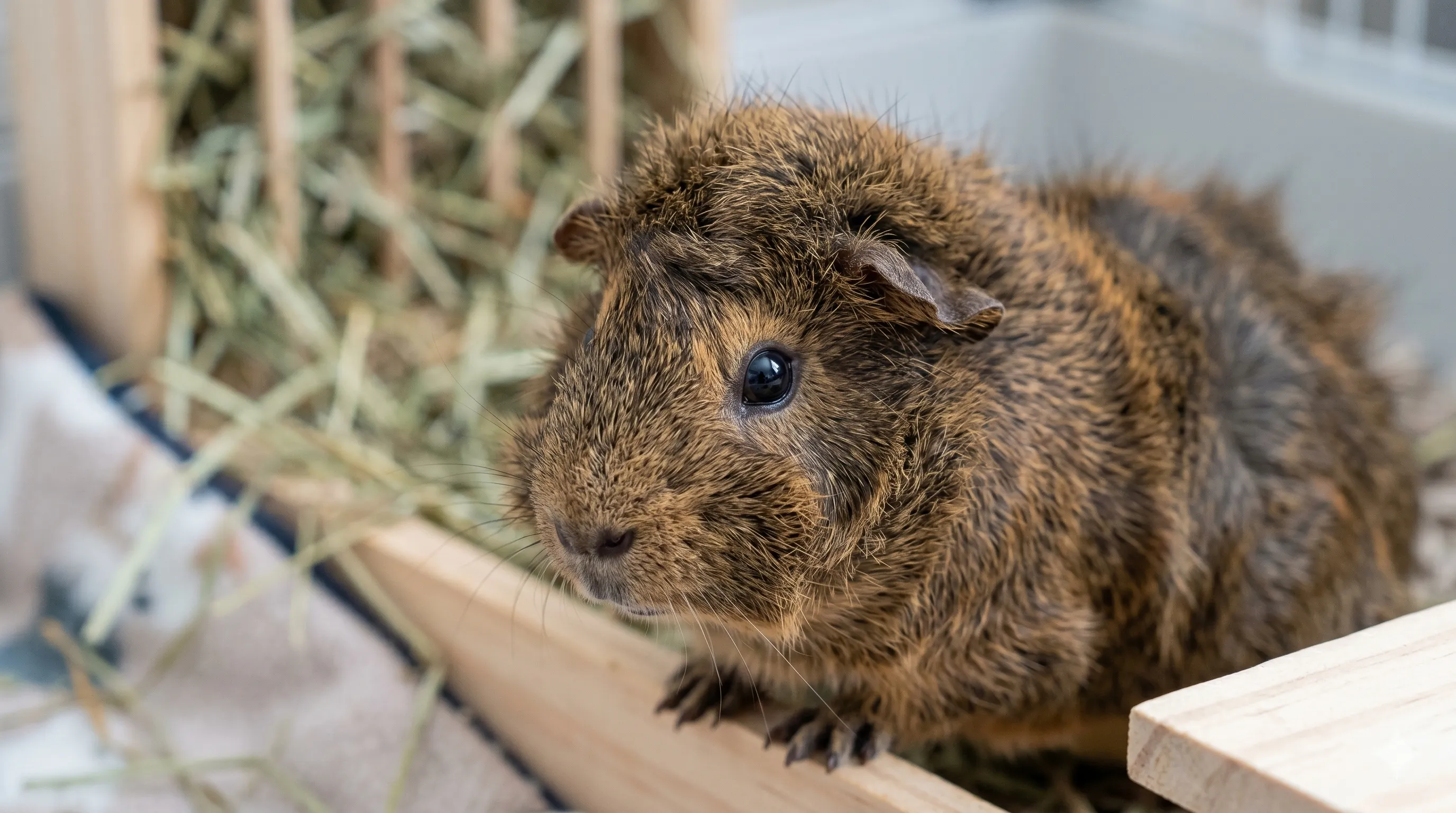
Because the coat grows in so many directions at once, it also tends to trap loose hair, hay, and bedding debris more easily than a smooth coat does, which is the main reason Abyssinians need a more attentive grooming routine than some other breeds. If you're comparing breeds, our guide to the American guinea pig is a good next read.
Abyssinian Personality and Temperament
Bold and Curious
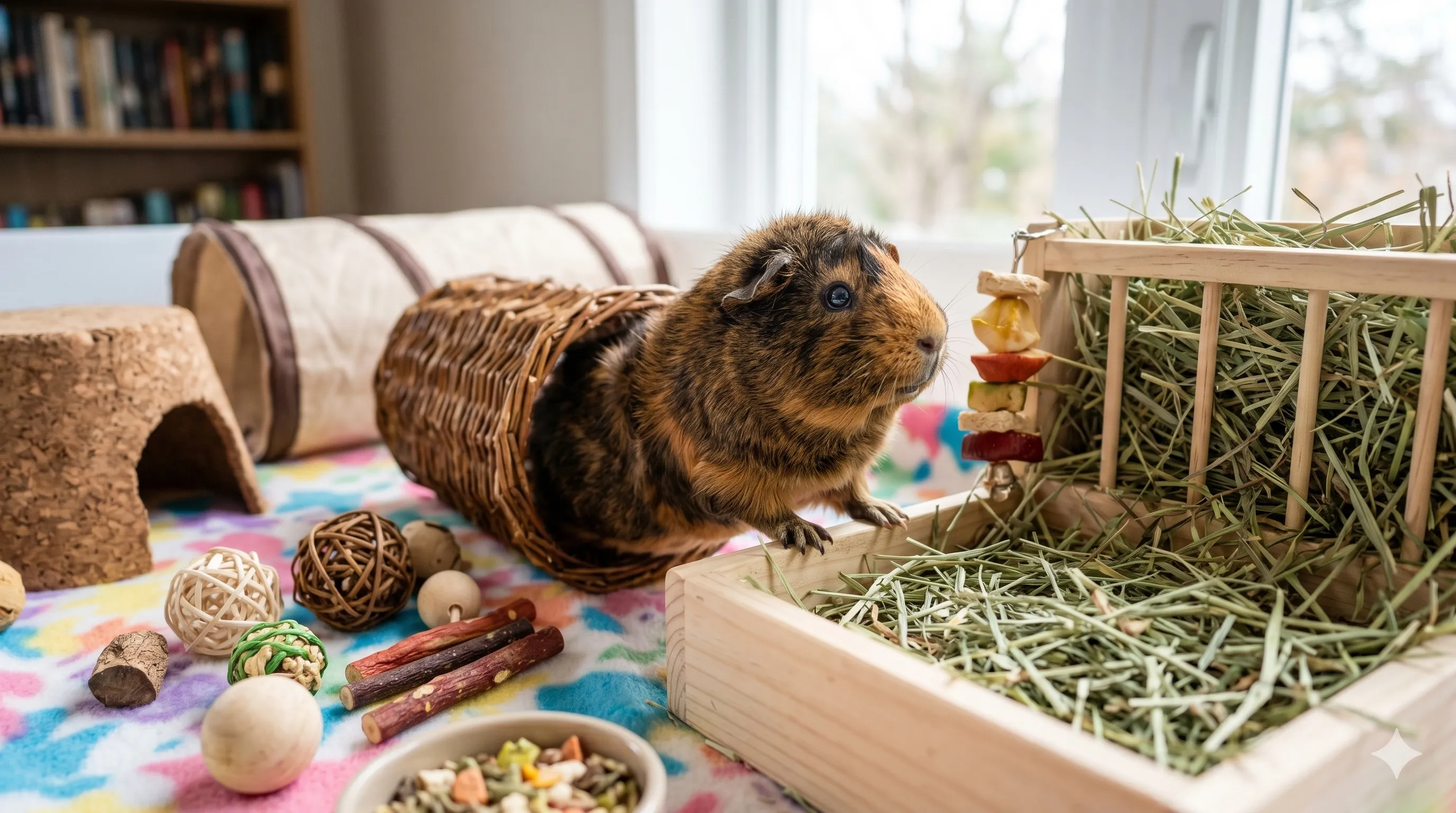
Abyssinians have a reputation as the extroverts of the guinea pig world. They tend to investigate new objects and people in their space faster than shyer breeds, and many owners describe them as confident almost from the first introduction.
Vocal and Expressive
This is one of the more vocal breeds, quick to wheek at the sound of a fridge door or a bag rustling. Owners who want a guinea pig that clearly communicates its mood tend to find Abyssinians especially rewarding, since the breed rarely leaves you guessing how it feels about mealtime or a new toy.
High Energy
Abyssinians are active explorers that make good use of floor time and popcorn enthusiastically when excited, often more visibly than calmer breeds. A cage that meets or exceeds the standard minimum size matters more for this breed than for a calmer, less active one, since a cramped space limits the exercise this particular breed actively seeks out.
Grooming Needs for the Rosette Coat
Brushing Frequency
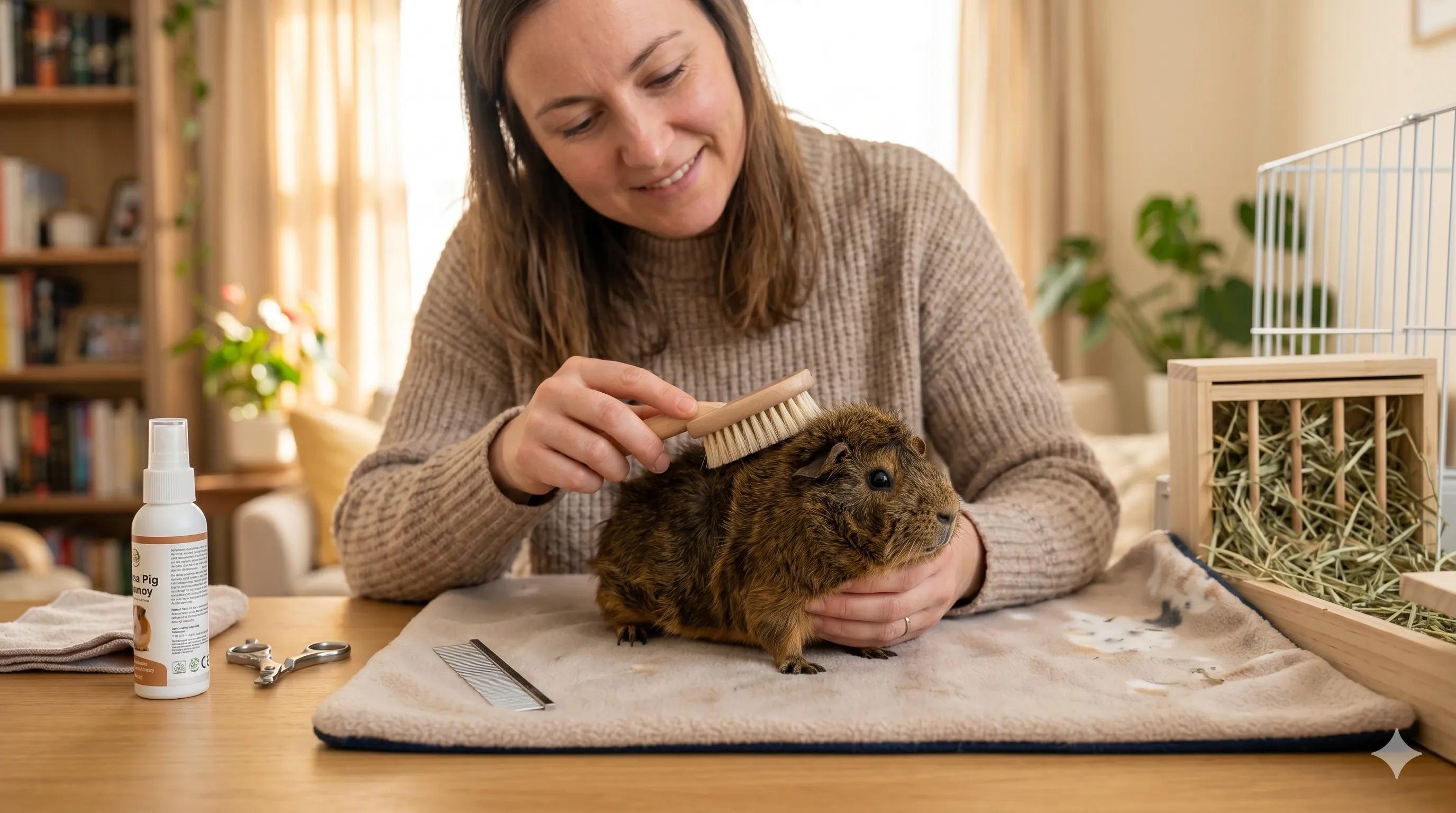
Plan on brushing an Abyssinian every two to three days with a soft bristle brush, and daily during spring and fall shedding seasons. This is noticeably more upkeep than a smooth-coated breed typically needs.
Detangling the Rosettes
Each rosette is a natural gathering point for tangles, so working a small comb gently through each one during a brushing session catches mats before they tighten. Rosettes near the hips and shoulders tend to need the most attention.
Coat Checks During Grooming
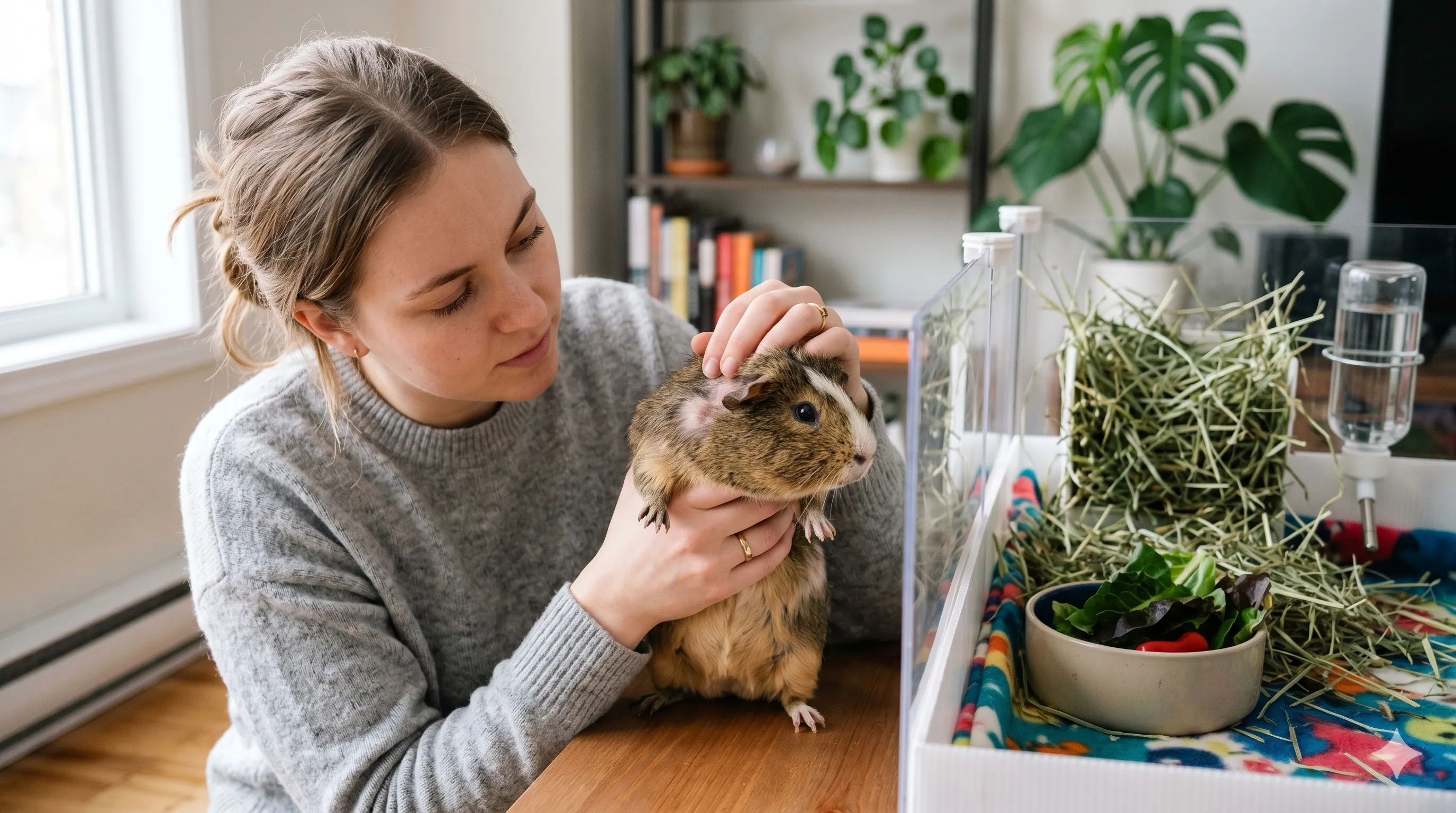
Because the rosettes can hide the skin underneath, regular brushing sessions double as a good opportunity to check the skin for anything unusual, since a coat this textured can mask early skin or coat changes that would be easy to spot on a smooth-coated guinea pig. A vet is the right resource for anything found that looks out of the ordinary.
General Care Beyond the Coat
Housing and Space
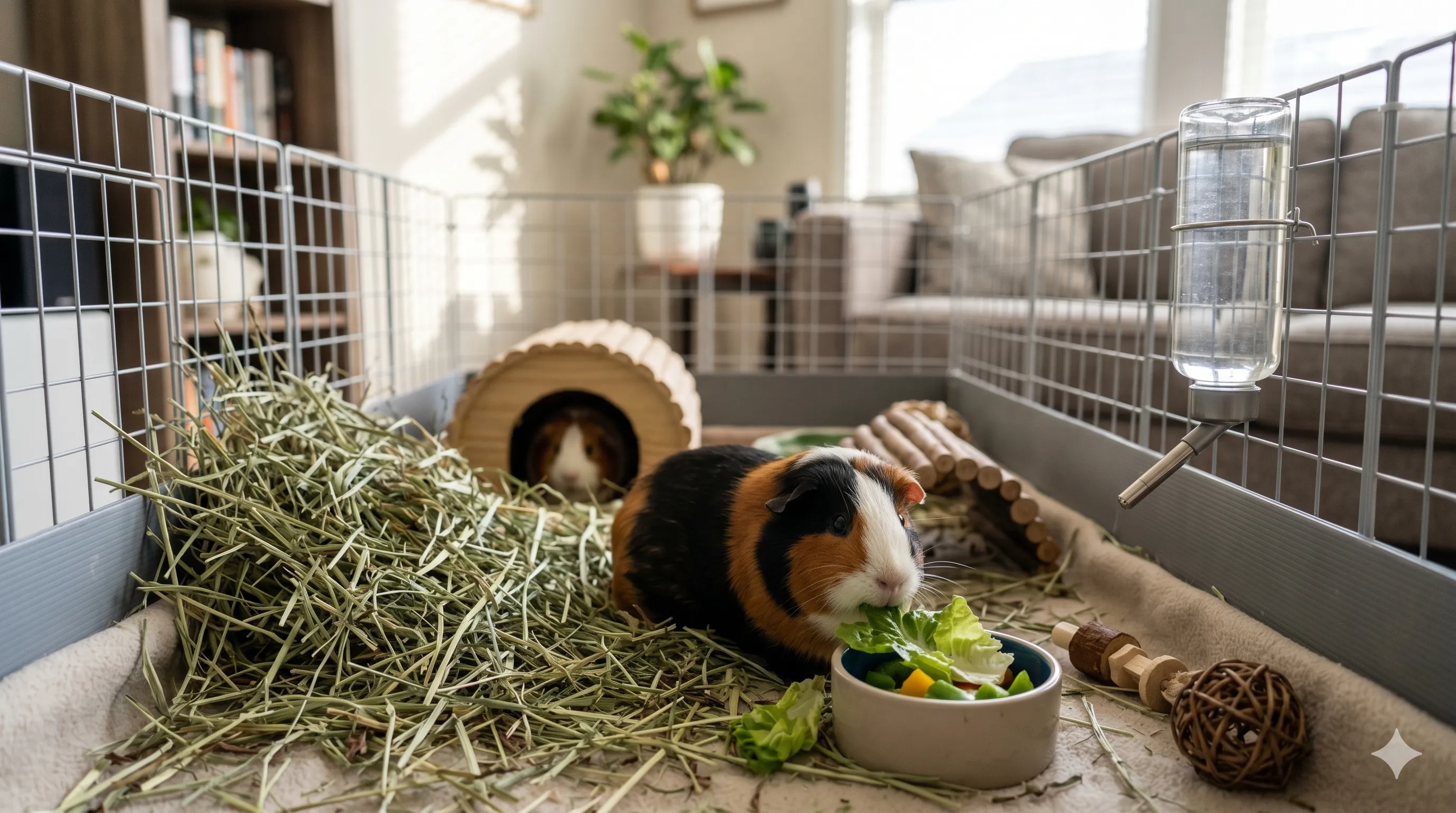
Standard guinea pig housing guidelines apply, and an active breed like this one benefits from staying at the higher end of the recommended range rather than the bare minimum. Our cage setup guide is a useful starting point for putting together a setup that gives this breed room to explore.
Diet
Diet needs match any guinea pig: unlimited timothy hay, a measured portion of pellets, fresh vitamin-C-rich vegetables daily, and constant access to clean water. Nothing about the rosette coat changes dietary requirements.
Companionship
Abyssinians do well paired with another guinea pig, and their outgoing personality often makes introductions to a new cagemate go smoothly once both pigs have settled into neutral territory together. Pairing an Abyssinian with a calmer, smooth-coated breed tends to work well too, since the more confident Abyssinian often takes the lead in exploring while a quieter cagemate settles in alongside it.
Handling and Bonding
Because Abyssinians tend to be confident from early on, many settle into regular handling faster than shyer breeds. Short, consistent handling sessions during the first few weeks still matter for building trust, even with a naturally bold personality.
Is an Abyssinian Right for Your Household
A Good Fit For
Owners who enjoy an interactive, vocal pet and don't mind a grooming routine every two to three days will likely find an Abyssinian a rewarding breed. Households with time for regular floor play suit this breed's energy level well.
Worth Considering Before Committing
The grooming commitment is real and ongoing, not a one-time task, so anyone considering the breed should be honest about whether brushing every two to three days fits their routine long term. First-time guinea pig owners can absolutely succeed with an Abyssinian, but should go in expecting more coat maintenance than a smooth-coated breed.
Expert Tips for Abyssinian Owners
- Keep a small comb specifically for rosettes since a standard brush alone often can't fully work through a tightly whorled section.
- Increase brushing to daily during spring and fall shedding rather than waiting for visible mats to appear.
- Checking the skin and coat for anything unusual regularly, since a coat this textured is easy to overlook during a quick visual check.
- Trim nails on the same schedule as any guinea pig, roughly every two to three weeks, since the coat doesn't affect nail growth.
Common Mistakes to Avoid
- Trying to brush a rosette flat, which fights the natural growth pattern instead of simply detangling it.
- Skipping brushing sessions because the coat looks fine on the surface, when tangles often start underneath the visible layer first.
- Assuming a smaller cage is fine because the breed is small-bodied, when this breed's high energy level actually benefits from more floor space, not less.
- Choosing the breed for looks alone without planning for the ongoing grooming time it needs.
Final Thoughts
Abyssinian guinea pigs pair a distinctive, whorled coat with a bold, vocal personality that makes them stand out in both looks and character.
The tradeoff is a real grooming commitment, brushing every two to three days at minimum, in exchange for one of the more interactive and expressive breeds available. Our complete guinea pig care guide covers the daily and weekly basics every guinea pig needs regardless of breed, and is worth reviewing alongside this guide before bringing one home.
A rosette coat looks high-maintenance, but it's the temperament, not the grooming, that decides whether this breed is the right fit.
This content is written to provide general educational guidance for guinea pig owners and pet families and is not a substitute for professional veterinary advice.
Medical Disclaimer
This content is provided for informational and educational purposes only and should not be considered veterinary, medical, behavioral, or training advice. While we strive for accuracy, we make no guarantees regarding completeness or results. Always consult a licensed veterinarian or qualified pet care professional before making decisions about your pet’s health, diet, or behavior.
AI Illustration Notice
Some images in this article may have been generated or enhanced using artificial intelligence for illustrative purposes.
Frequently Asked Questions
Most Abyssinians have six to eight rosettes though some carry as many as ten. The exact number and placement varies from pig to pig.
Every two to three days at minimum and daily during spring and fall shedding seasons. This is more frequent than most smooth-coated breeds need.
They can be a great choice for first-time owners who are ready for regular grooming. The personality is rewarding but the coat needs more attention than a smooth-coated breed.
Typically around five to seven years with good care. Diet quality and regular vet checkups both play a role in lifespan.
Yes, they're known as one of the more vocal breeds and often wheek readily at familiar sounds like a fridge door. Many owners see this as part of the breed's charm.
Not a bigger cage specifically but staying toward the higher end of the standard recommended size suits this breed's active energy level well.
A soft bristle brush works for general brushing but a small comb is also useful for detangling individual rosettes. Using both together covers the coat more thoroughly.
Editorial Note
This article is part of PetNurture's educational library.
Topics draw on publicly available educational resources, recognised veterinary organisations, academic publications and established animal welfare references where appropriate.
The specific sources this article draws on are listed in its References section. If you spot an error, please let us know.
References
The information in this article has been reviewed and supported using the following sources.
VCA Animal Hospitals
VCA Animal Hospitals reports that guinea pigs typically live 5 to 6 years on average, with some reaching 8 to 10 years of age with good care.
Accessed Aug 6, 2026
VCA Animal Hospitals
VCA Animal Hospitals notes that guinea pigs are highly social animals that thrive in pairs or groups, and recommends keeping at least two guinea pigs together.
Accessed Aug 6, 2026
RSPCA
How Should I Groom My Guinea Pigs?
The RSPCA recommends using a small, stiff brush along with a small metal comb to work through mats and tangles, brushing in the direction the guinea pig's hair grows.
Accessed Aug 6, 2026
Pet Emergency Guidance
Every pet is unique. If your pet exhibits severe symptoms, sudden behavioral changes, or a medical emergency, do not rely on online guides — contact a licensed veterinarian or emergency clinic immediately.
About PetNurture
PetNurture is an educational library of pet care guides, interactive tools and practical resources for pet parents. We work continuously to keep our content accurate and up to date. Reader feedback helps us maintain content quality.
Related Articles
Popular Guinea Pig Guides
Guinea Pig
Guinea Pig Feeding Calculator
Calculate daily food portions for your guinea pig by weight.
Guinea Pig
Guinea Pig Cage Size Calculator
Find the minimum recommended cage size for your guinea pigs.