
Guinea Pig Pregnancy: Gestation Period, Signs & Week-by-Week Care
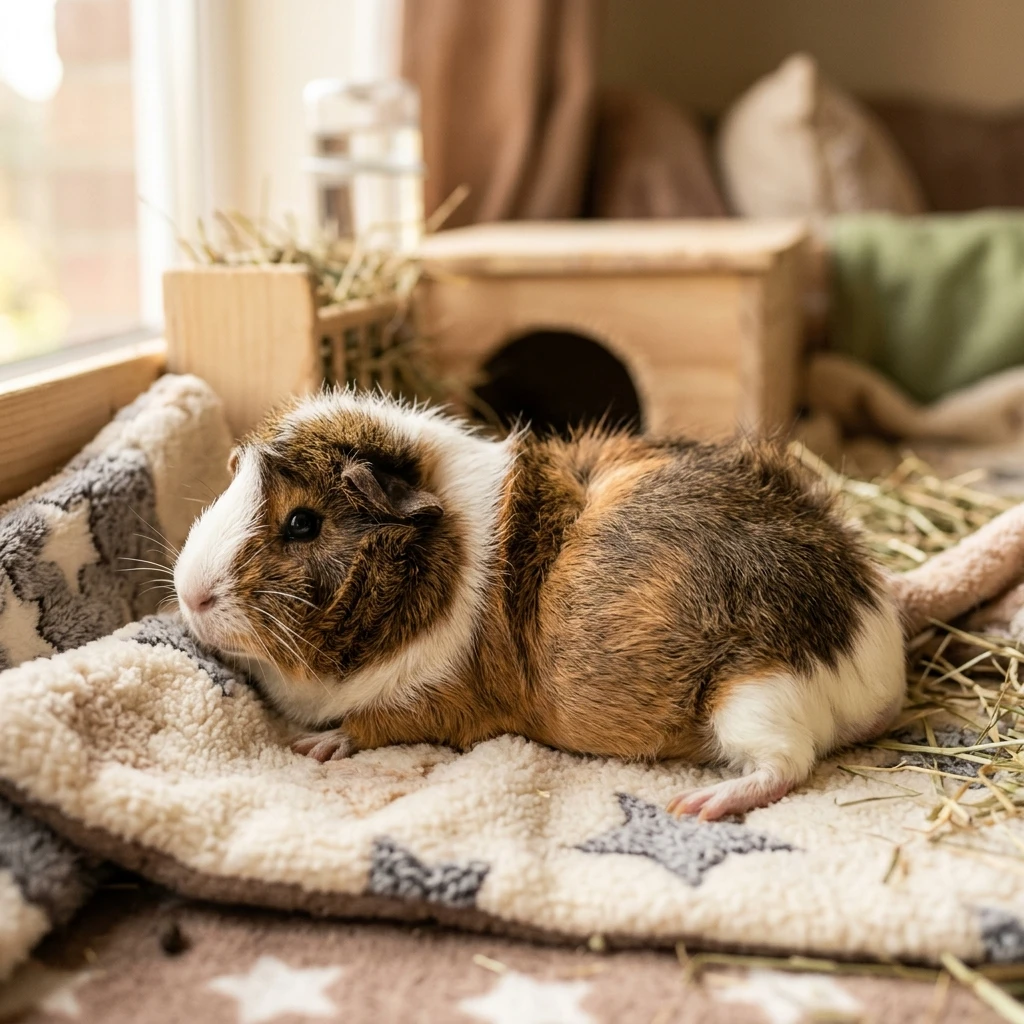
- Why Guinea Pig Pregnancy Needs Special Attention
- How Long Are Guinea Pigs Pregnant? Gestation Period Explained
- What Affects Gestation Length
- Early Signs Your Guinea Pig Is Pregnant
- Behavioral Signs
- Physical Signs
- Guinea Pig Pregnancy Week by Week
- Weeks 1 to 3: Early Pregnancy
- Weeks 4 to 6: Mid Pregnancy
- Weeks 7 to 10: Final Weeks
- Safe Breeding Age and Why Timing Matters So Much
- The Ideal Breeding Window
- Why Breeding After 8 Months Is Risky
- Caring for a Pregnant Guinea Pig
- Nutrition During Pregnancy
- Housing and Space Needs
- Handling and Stress
- Labor, Delivery & Warning Signs You Should Never Ignore
- What Normal Labor Looks Like
- Pregnancy Toxemia: A True Emergency
- Dystocia: When Birth Doesn't Progress
- Expert Tips for Supporting a Pregnant Guinea Pig
- Common Mistakes to Avoid
- Final Thoughts
Note: This article is for informational purposes only and does not replace professional veterinary advice.
Quick Answer
Guinea pigs are pregnant for about 59 to 72 days, averaging around 68 days depending on litter size. Watch for a rounder abdomen, weight gain, and increased appetite as pregnancy progresses, and never breed a female for the first time after about 8 months old since her pelvis fuses and raises the risk of a fatal difficult birth.
A guinea pig's pregnancy lasts only about two months but it comes with real risks that most first-time owners never see coming, from a narrow safe breeding window to a rare but fatal complication called pregnancy toxemia. Whether a pregnancy was planned or a surprise from an unexpectedly mixed-sex cage, knowing what is normal and what is an emergency makes the difference between a smooth delivery and a trip to the exotic vet at 2 a.m. This guide covers exactly how long guinea pig pregnancy lasts, the early signs to watch for, a week-by-week look at what changes, the safe age to breed a female, and the warning signs of toxemia and difficult birth that should never be brushed off as ordinary tiredness.
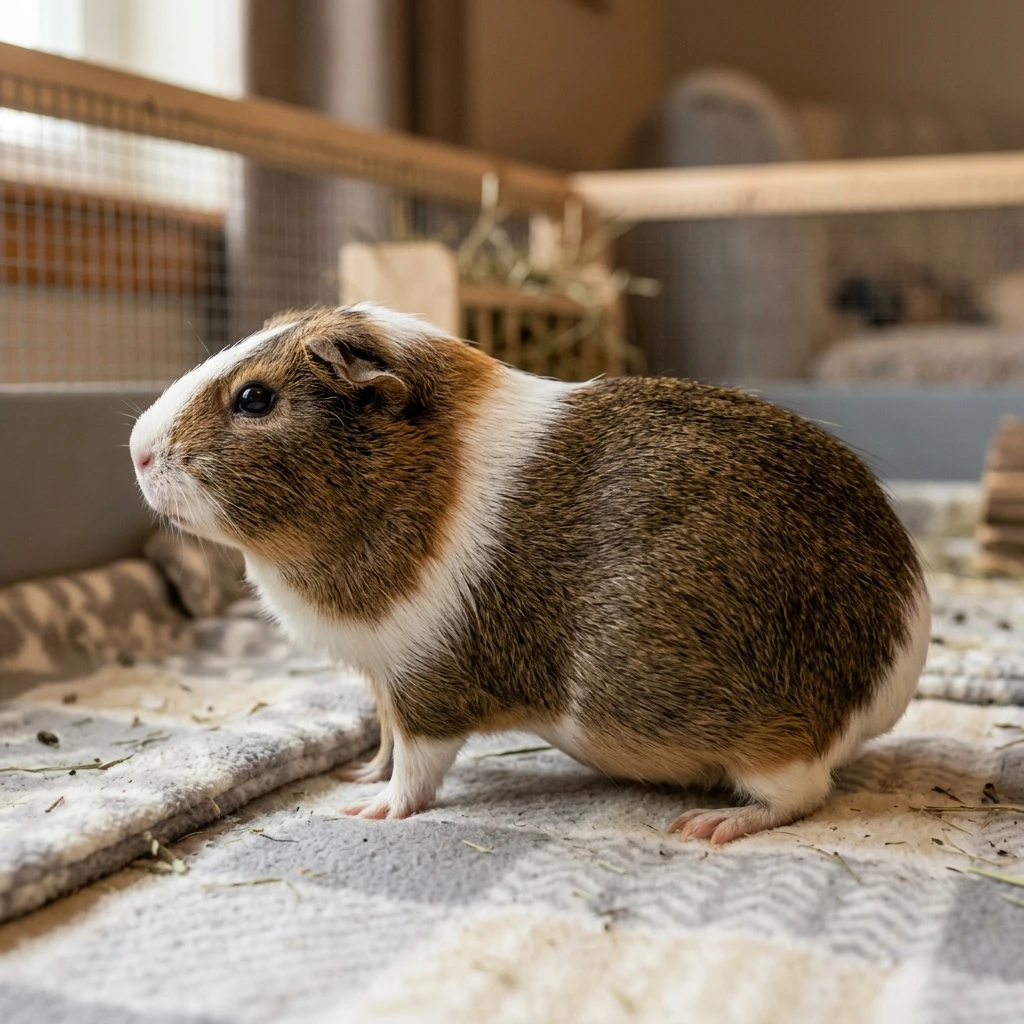
Why Guinea Pig Pregnancy Needs Special Attention
Guinea pigs are more fragile during pregnancy than many other small pets because of one specific anatomical detail: a female's pelvic bones fuse together as she matures, and once that fusion happens her body can no longer widen enough for an easy birth. This single fact drives most of the safe-breeding-age guidance in this article and is the reason accidental litters from an unplanned male and female pairing carry more risk than they would in many other rodents.
On top of that, pregnant guinea pigs are prone to a metabolic emergency called pregnancy toxemia that can move from mild lethargy to death within a matter of days if it is missed. None of this means pregnancy is automatically dangerous for every guinea pig, but it does mean an owner who knows the timeline and the warning signs is in a far better position to catch a problem early.
How Long Are Guinea Pigs Pregnant? Gestation Period Explained
Guinea pig gestation typically runs 59 to 72 days and most veterinary and breeder sources put the average at around 68 days, which is notably longer than the pregnancy length of most other rodents kept as pets. This extended gestation is part of why guinea pig pups are born so much more developed than a typical newborn rodent.
What Affects Gestation Length
Litter size is the biggest factor in how long a specific pregnancy lasts. A sow carrying a single large pup tends to stay pregnant closer to the 70-day mark, while a sow carrying four or five pups often delivers a few days earlier since a larger litter reaches full development sooner relative to available space. A first-time mother and an experienced mother can also vary slightly in gestation length even with a similar litter size, so treat the 59 to 72 day range as a normal window rather than expecting an exact date.
Early Signs Your Guinea Pig Is Pregnant
The first few weeks of guinea pig pregnancy rarely show obvious physical changes, which is exactly why an accidental pregnancy can go unnoticed until a sow is already showing. Watching for a combination of behavioral and physical changes gives a clearer picture than relying on any single sign alone.
Behavioral Signs
- Eating and drinking noticeably more than her usual routine
- A stronger preference for vitamin C rich vegetables and fruit over her regular pellets
- Becoming a little less tolerant of being picked up or handled around the middle
- Resting more than usual as the pregnancy progresses into its later weeks
Physical Signs
- A gradually rounder and firmer abdomen starting around the midpoint of pregnancy
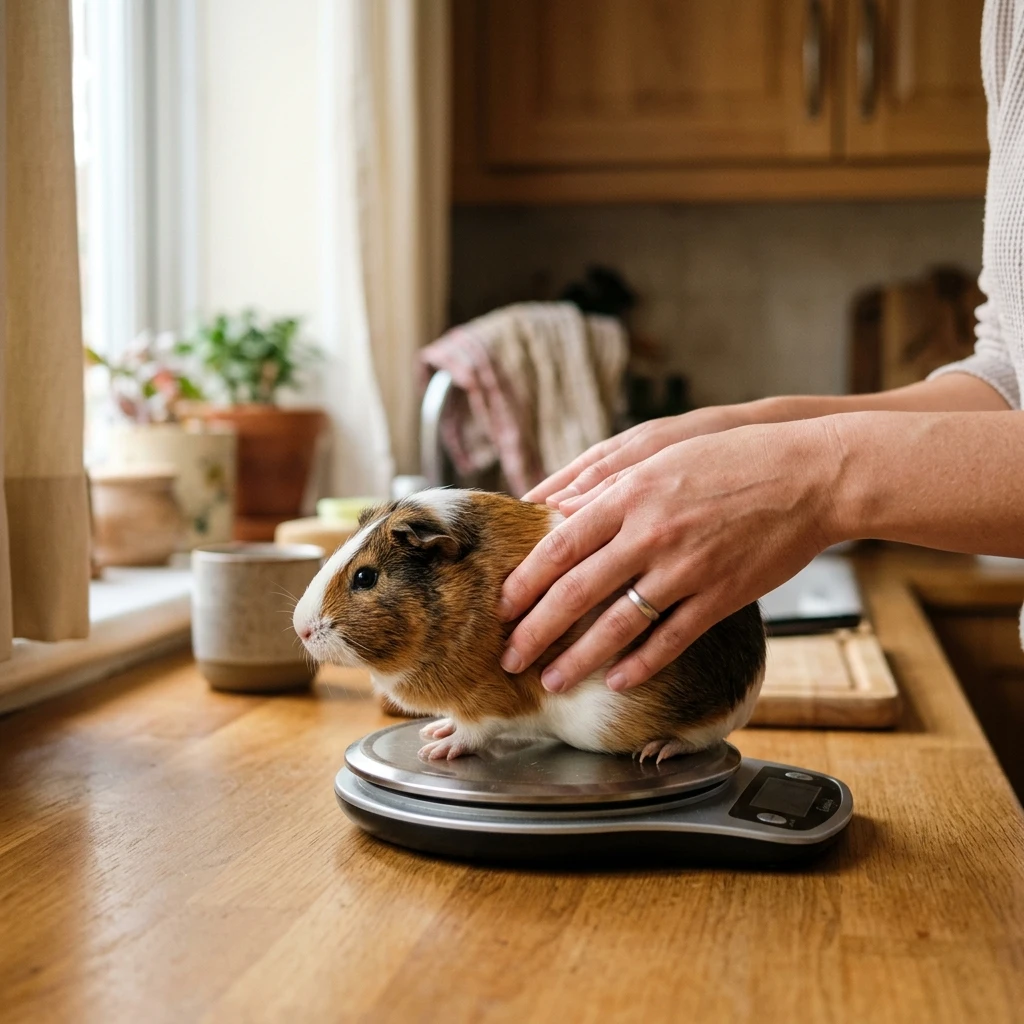
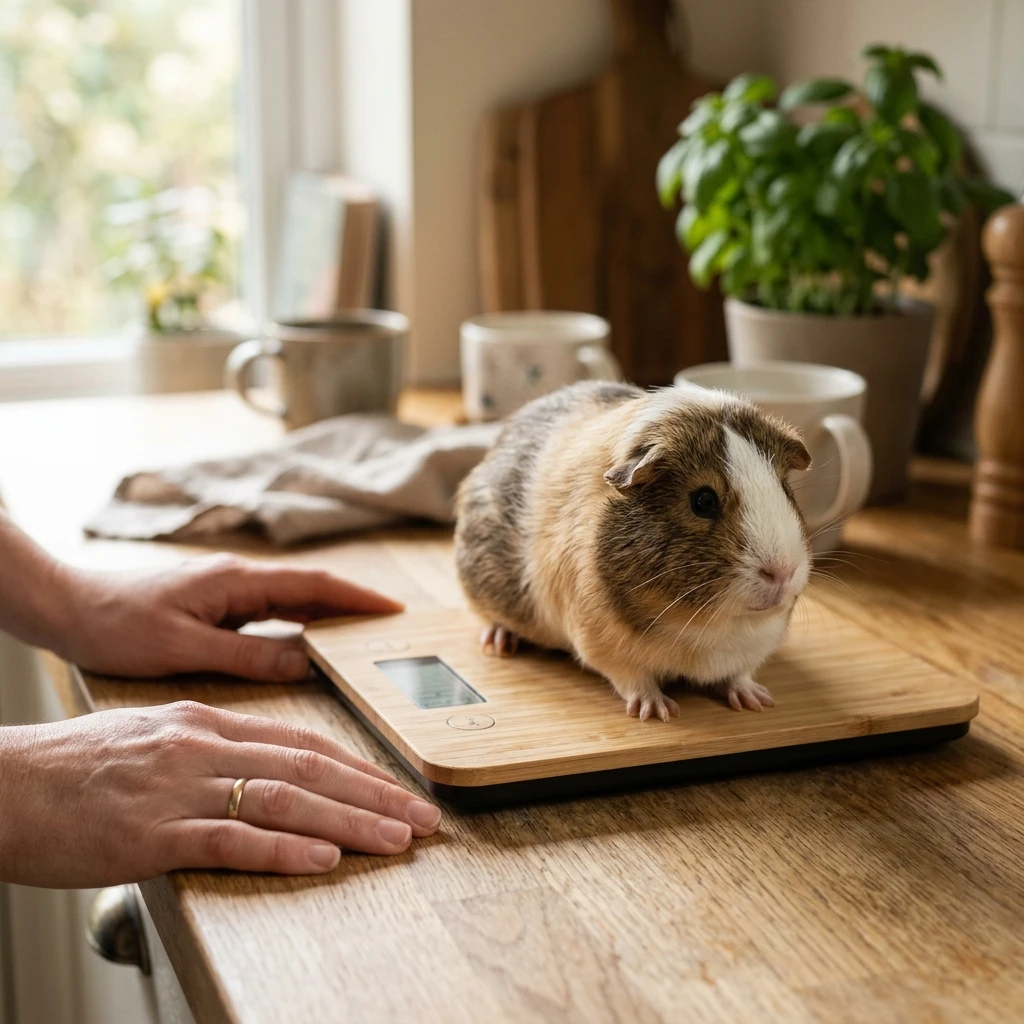
- Steady weight gain that a kitchen scale will pick up well before it is visible to the eye
- Visible or feelable movement from the pups in the final two to three weeks
- Enlarged nipples in the last stretch before delivery
Weighing a female weekly is the single most reliable way to confirm and track a pregnancy at home, since the abdomen often does not look obviously different until she is already well over a month along. A baseline reading from a guinea pig weight checker taken before breeding makes later changes easier to interpret.
Guinea Pig Pregnancy Week by Week
Because outward signs lag behind what is actually happening internally, breaking gestation into rough stages helps set realistic expectations for what to look for and when.
Weeks 1 to 3: Early Pregnancy
There is usually little to no visible change during this stage. Appetite may start to increase and some sows show an early preference for vitamin C rich foods, but the abdomen typically has not changed shape yet and weight gain is often too small to notice without a scale.
Weeks 4 to 6: Mid Pregnancy
This is when most owners first suspect something is different. The abdomen begins to round out into a distinct pear shape, weekly weight gain becomes obvious on a scale, and activity levels may start to slow down slightly compared to her normal pace.
Weeks 7 to 10: Final Weeks
The abdomen is now clearly enlarged and pup movement is often visible or feelable through the side of her belly. She may become noticeably less active, spend more time resting, and grow less tolerant of being picked up. This is also the window where the risk of pregnancy toxemia rises sharply, which is covered in detail further down this guide.
Safe Breeding Age and Why Timing Matters So Much
If there is one fact every guinea pig owner should know before allowing a male and female to share space, it is this: the age a female is first bred matters more than almost anything else for how safely she delivers.
The Ideal Breeding Window
Most exotic veterinarians and experienced breeders recommend a female's first litter happen between four and six months of age. At this stage her pelvic bones are still flexible enough to widen properly during birth, which keeps the risk of a difficult delivery comparatively low.
Why Breeding After 8 Months Is Risky
A female guinea pig's pubic bones gradually fuse together as she matures, and by around seven to eight months of age that fusion is typically far enough along that her pelvis can no longer widen the way it needs to for birth. A female bred for the first time after this point faces a much higher risk of dystocia, meaning a pup becomes stuck in the birth canal because the pelvis simply cannot stretch enough to let it pass. This is why the standing guidance across exotic veterinary sources is so consistent: never breed a female guinea pig for the first time once she is past roughly eight months old, and if an unplanned pregnancy happens in an older first-time mother, treat it as a higher-risk pregnancy that calls for closer monitoring and an exotic vet who already knows her history.
Caring for a Pregnant Guinea Pig
A pregnant sow's needs shift gradually as gestation progresses, and getting nutrition, space, and handling right reduces stress on a body that is already working hard.
Nutrition During Pregnancy
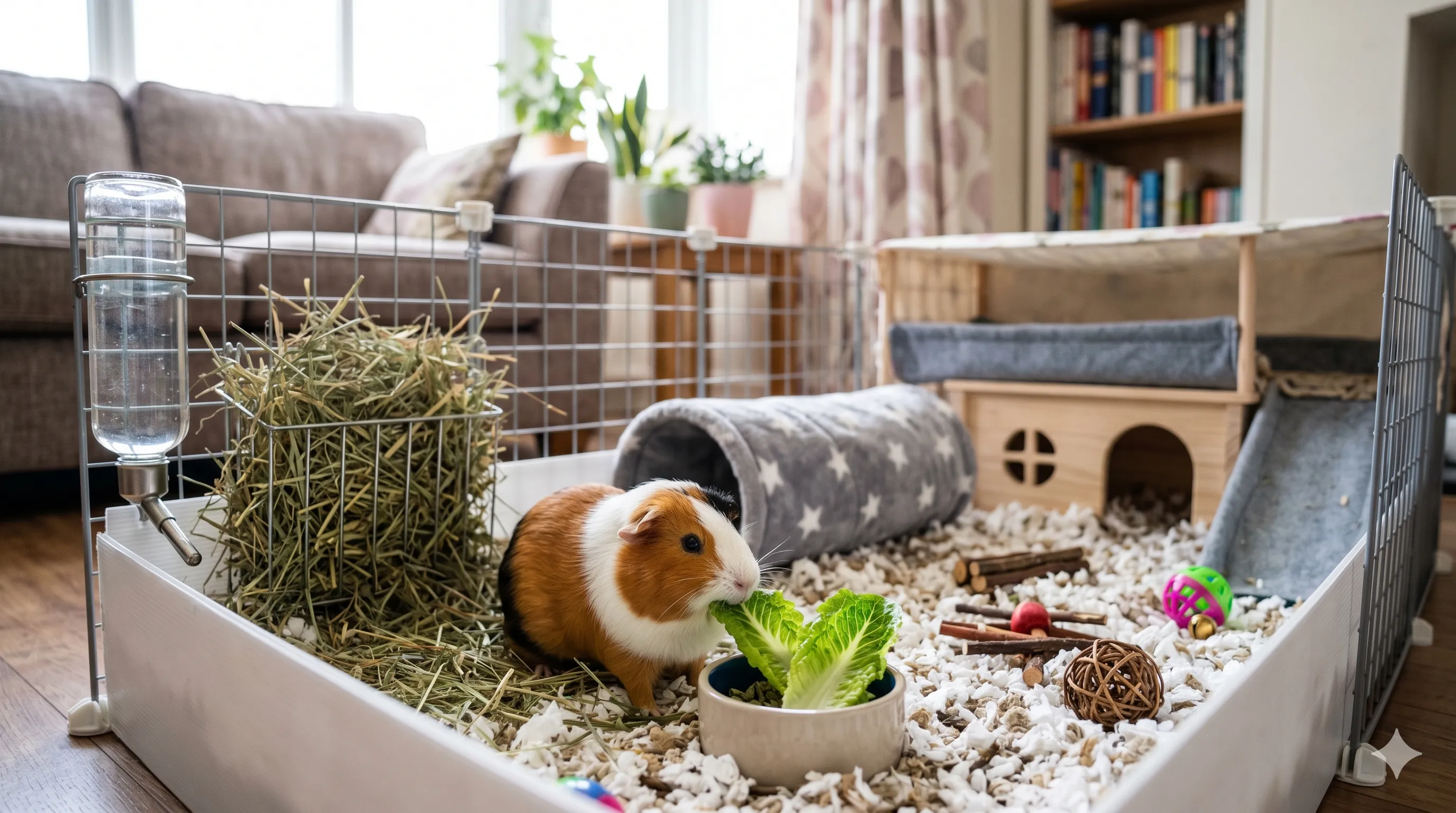
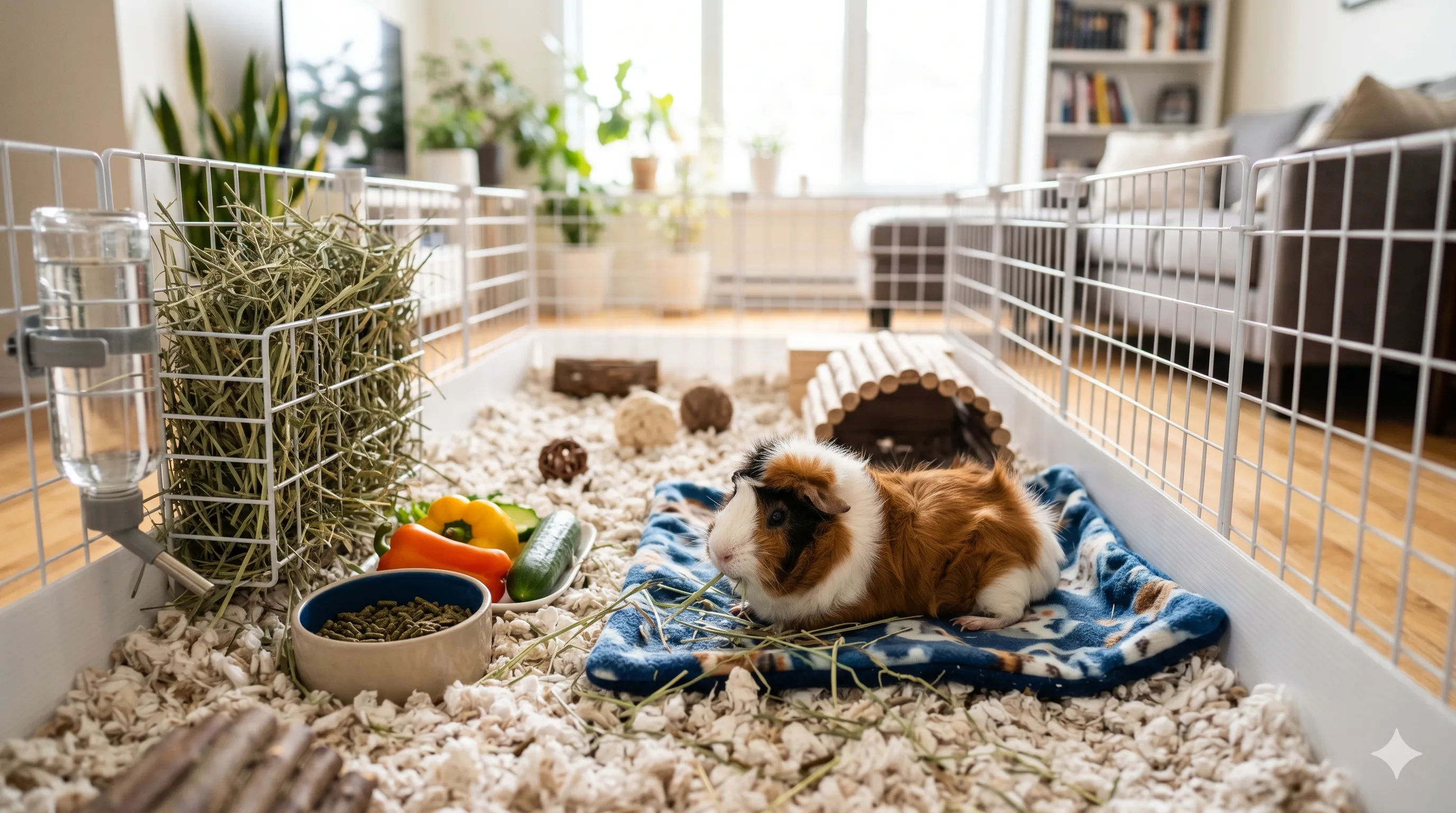
A pregnant guinea pig needs steady access to fresh water, unlimited grass hay, and her normal daily pellets, with extra vitamin C rich vegetables added to support both her and the developing pups since steady access to fresh hay matters even more than usual during this stretch. Avoid sudden diet changes or new foods introduced for the first time during pregnancy, since digestive upset adds unnecessary stress at a time when her body has little room to spare.
Housing and Space Needs
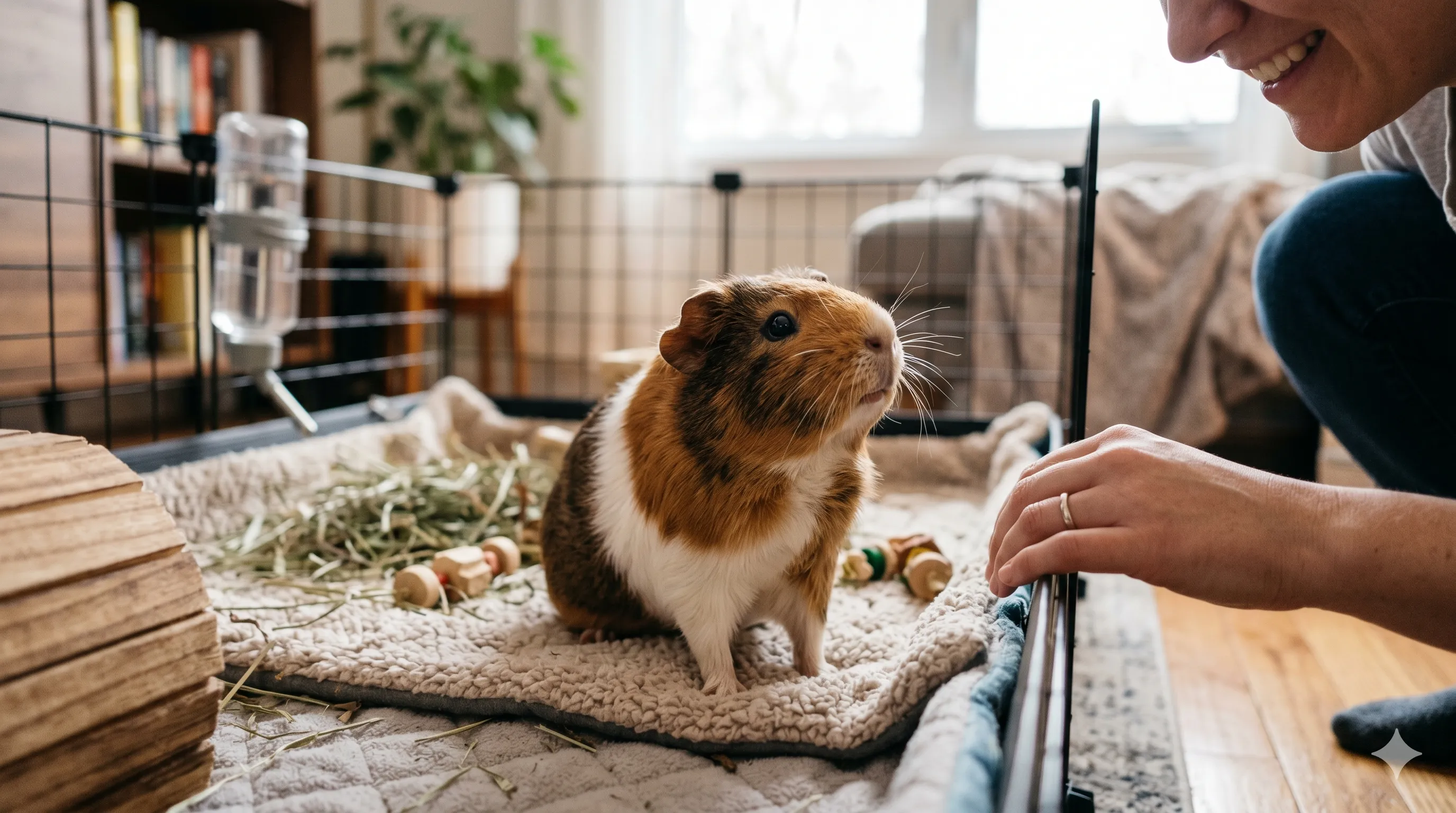
A pregnant or nursing sow benefits from more floor space than usual, since enough enclosure space for a growing litter becomes especially important once a litter arrives and needs room to move around safely. Line the enclosure with safe soft bedding material so the delivery area stays soft, dry, and easy to keep clean once the pups are born.
Handling and Stress
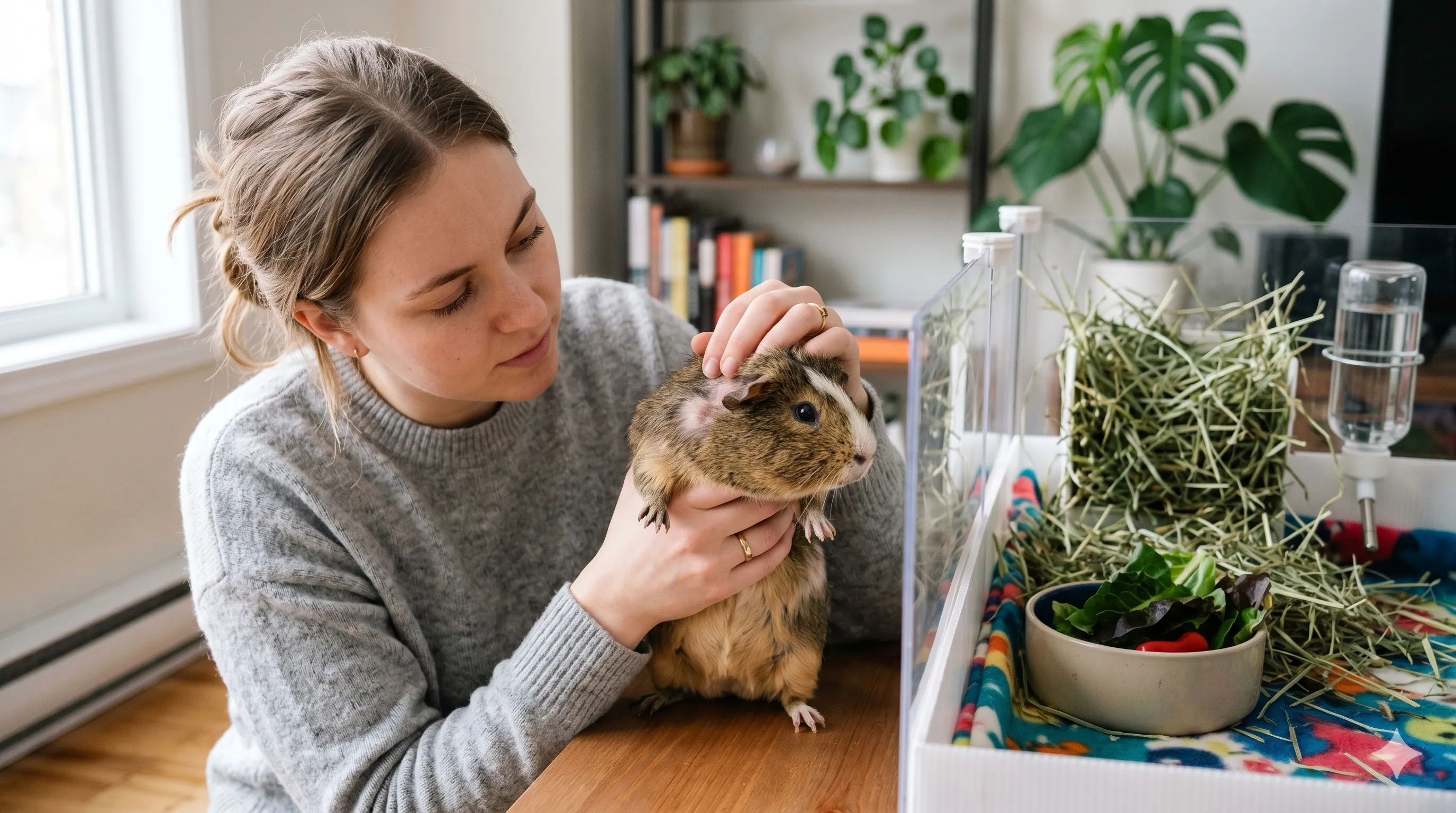
Keep handling gentle and brief in the final few weeks, and never pick up a heavily pregnant guinea pig by squeezing or lifting under the belly. Support her full body weight with both hands instead, and let her decide when she wants to come out for attention rather than pulling her from the cage. Reducing loud noise, sudden cage changes, and unfamiliar handlers around her due date helps keep stress levels low during a period when her body is already under pressure.
Labor, Delivery & Warning Signs You Should Never Ignore
Most guinea pig births go smoothly and finish faster than owners expect, but knowing what normal labor looks like makes it much easier to recognize the two complications that genuinely require emergency care.
What Normal Labor Looks Like
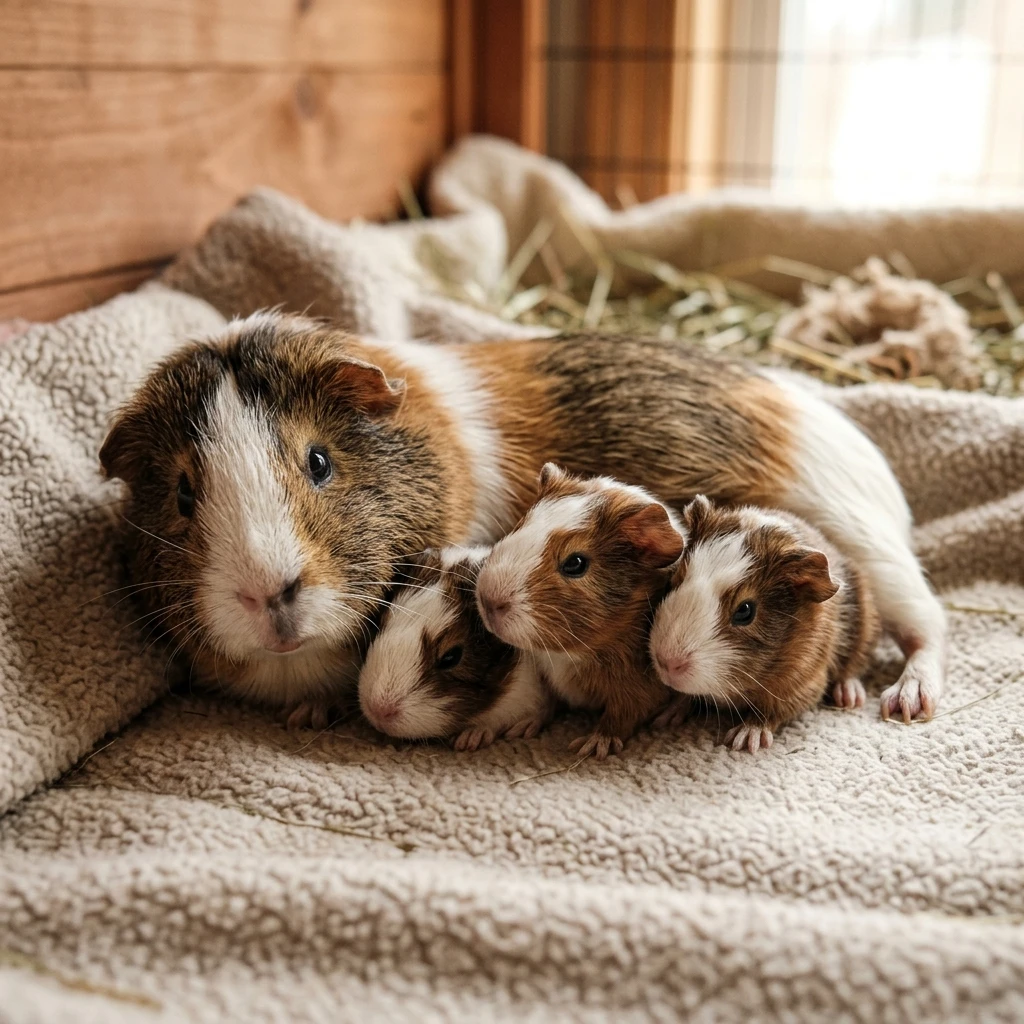
Labor often starts and finishes within about 30 minutes to an hour, frequently overnight or in the early morning when the environment is quiet. Pups typically arrive every few minutes apart, and the mother usually cleans each one and eats the afterbirth immediately, which is normal behavior rather than something to intervene in. Unlike many newborn rodents, baby guinea pigs are born fully furred with their eyes open and can walk and nibble solid food within hours, so a healthy litter needs surprisingly little hands-on help right after birth.
Pregnancy Toxemia: A True Emergency
Pregnancy toxemia is a metabolic emergency that can appear in the final week of pregnancy or shortly after delivery, and it can turn fatal within one to five days once symptoms start. Watch for a sudden loss of appetite, unusual lethargy or weakness, dull glazed eyes sometimes with a crusty discharge, and labored or rapid breathing, since sudden appetite loss is one of the clearest early warning signs something is wrong. Overweight sows, first-time mothers, and females carrying a large litter face a higher risk, but any pregnant or newly delivered guinea pig showing these signs needs an exotic-animal vet the same day, not the next morning. This condition is not something to try to manage at home, and waiting to see if she improves on her own is one of the riskiest choices an owner can make.
Dystocia: When Birth Doesn't Progress
Dystocia means a pup is stuck and cannot pass through the birth canal, and it is most common in females bred for the first time after the safe breeding window has closed. Signs include hard straining for fifteen to twenty minutes or longer without producing a pup, visible distress or crying out, or a partially delivered pup that isn't progressing. This also needs emergency veterinary care immediately since a stuck pup can be fatal for both the mother and the litter the longer it goes unresolved, and it is never safe to try to pull a stuck pup free at home.
Expert Tips for Supporting a Pregnant Guinea Pig
- Weigh her weekly on a kitchen scale and write the numbers down, since a sudden weight loss or a plateau late in pregnancy is often the earliest sign something needs a vet's attention.
- Separate any intact males from a pregnant female well before her due date, since a female guinea pig can conceive again within hours of giving birth and back-to-back pregnancies are especially hard on her body.
- Save the phone number and address of the nearest exotic-animal vet before her due date arrives rather than searching for one during an emergency.
- Avoid introducing new cage mates or rearranging her enclosure in the final two weeks, since unfamiliar changes add stress right when her body needs stability most.
- Let a healthy litter nurse and explore on their own terms. Guinea pig pups need far less hands-on intervention right after birth than most other newborn pets.
Common Mistakes to Avoid
- Breeding a female for the first time after 8 months old without realizing her pelvis has already fused, which raises the risk of a fatal difficult birth
- Mistaking sudden lethargy or appetite loss in the final week of pregnancy for ordinary tiredness instead of a possible toxemia warning sign
- Keeping an intact male housed with a female after she gives birth, not realizing she can become pregnant again within hours
- Making sudden diet changes or introducing new foods during pregnancy instead of keeping her routine stable
- Handling a heavily pregnant guinea pig by lifting or squeezing around the belly instead of supporting her full body weight
- Waiting overnight to call a vet when a sow shows dull eyes, labored breathing, or hard straining without progress
Final Thoughts
Guinea pig pregnancy runs on a fairly predictable 59 to 72 day timeline, but the details that matter most are the ones a lot of owners never hear about until it is too late: the narrow safe breeding window closing around eight months, and the fast-moving danger of pregnancy toxemia in the final stretch. Tracking her weight weekly, keeping her diet and environment stable, and knowing the difference between normal late-pregnancy tiredness and a genuine emergency puts an owner in the best possible position to help her through it safely.
For more on keeping a guinea pig healthy and comfortable well beyond pregnancy, this complete guinea pig care guide covers the daily fundamentals every owner should have in place.
The safest guinea pig pregnancies come from breeding within the four to six month window and treating sudden appetite loss or lethargy in the final week as an emergency rather than a wait-and-see situation.
This guide is for general education and is not a substitute for veterinary care. Any pregnant or recently delivered guinea pig showing signs of lethargy, appetite loss, or difficult labor should be seen by an exotic-animal veterinarian right away.
Medical Disclaimer
This content is provided for informational and educational purposes only and should not be considered veterinary, medical, behavioral, or training advice. While we strive for accuracy, we make no guarantees regarding completeness or results. Always consult a licensed veterinarian or qualified pet care professional before making decisions about your pet’s health, diet, or behavior.
AI Illustration Notice
Some images in this article may have been generated or enhanced using artificial intelligence for illustrative purposes.
Frequently Asked Questions
Guinea pig gestation typically lasts between 59 and 72 days and averages around 68 days. Litters with fewer larger pups tend to run closer to the longer end while bigger litters often arrive a few days earlier.
Early signs include eating and drinking more than usual and a stronger preference for vitamin C rich vegetables. Physical changes like a rounder abdomen and steady weight gain usually don't become noticeable until around the midpoint of pregnancy.
The safest window is between four and six months old while her pelvic bones are still flexible enough to widen for birth. Breeding her for the first time after roughly eight months carries a much higher risk of a difficult delivery.
Her pubic bones gradually fuse together as she matures and by eight months that fusion is usually far enough along that her pelvis can no longer stretch properly. This raises the risk of dystocia which means a pup becomes stuck and cannot pass through the birth canal.
Litter size most commonly ranges from two to four pups though it can run from a single pup up to five or six in larger litters. Litter size also affects gestation length since bigger litters tend to arrive slightly earlier.
Pregnancy toxemia is a metabolic emergency that can appear in the final week of pregnancy or shortly after birth. It can progress from lethargy and appetite loss to a life-threatening condition within one to five days so it needs same-day veterinary attention.
Watch for sudden loss of appetite and unusual weakness or lethargy along with dull glazed eyes that sometimes show a crusty discharge. Labored or rapid breathing is another red flag that should prompt an immediate call to an exotic-animal vet.
Labor usually starts quickly and finishes within about 30 minutes to an hour with pups arriving a few minutes apart. Hard straining for fifteen to twenty minutes or longer without producing a pup is not normal and needs emergency care.
Healthy pups are born fully furred with their eyes open and can move and nibble food within hours so they need very little hands-on help. Let the mother clean and settle them and avoid excessive handling during the first day or two.
Yes. A female can go into heat and conceive again within hours of delivering her litter which is why intact males should be separated well before her due date. Back-to-back pregnancies place extra strain on her body so separation matters even after a healthy birth.
She needs her normal hay and pellets plus extra vitamin C rich vegetables to support herself and the developing pups. Avoid introducing brand new foods during pregnancy since digestive upset adds unnecessary stress.
Call an exotic-animal vet the same day if she stops eating or seems unusually weak or shows dull or crusty eyes or strains hard without progress during labor. These signs can point to toxemia or a difficult birth so both need same-day care since either can turn fatal within a day or two if left unchecked.
Normal vs. Concerning Symptoms
A general guide to help you tell everyday variation apart from something worth a vet visit. This is educational context, not a diagnosis.
| Symptom | What's Normal | When to Be Concerned |
|---|---|---|
| Appetite | Steady or increased appetite through most of pregnancy | Sudden loss of appetite especially in the final week or right after birth |
| Energy level | Slightly slower and more rested in the final days before delivery | Sudden weakness, wobbliness, or collapse |
| Eyes | Bright, clear, and alert | Dull or glazed eyes sometimes with crusty discharge |
| Breathing | Normal steady breathing at rest | Labored, rapid, or visibly effortful breathing |
| Labor progress | Delivers a pup roughly every few minutes during active labor | Hard straining for 15 to 20 minutes or longer without producing a pup |
What Should I Do Next?
A general decision guide — always use your own judgement and contact a veterinarian for anything beyond routine care.
- Watch closely in the final week and right after birth This window carries the highest risk for pregnancy toxemia so track appetite energy and eye clarity daily.
- Call an exotic-animal vet the same day symptoms appear Toxemia and dystocia can turn fatal within one to five days so do not wait overnight to see if she improves.
- Keep her warm calm and undisturbed while arranging care Reduce handling and noise and avoid offering unfamiliar foods while waiting for veterinary guidance.
- Never attempt to pull a stuck pup at home A difficult birth needs veterinary intervention since attempting to assist delivery yourself can injure the mother.
- Bring her in even if she seems to rally A brief improvement does not rule out toxemia so a same-day exam is still the safest choice.
Common Mistakes
- Breeding a female for the first time after 8 months old without realizing her pelvis has already fused
- Mistaking sudden lethargy or appetite loss in the final week for ordinary tiredness instead of a toxemia warning sign
- Keeping an intact male housed with a female after birth not realizing she can conceive again within hours
- Making sudden diet changes or introducing new foods during pregnancy instead of keeping her routine stable
- Handling a heavily pregnant guinea pig by lifting or squeezing around the belly instead of supporting her full body weight
- Waiting overnight to call a vet when a sow shows dull eyes labored breathing or hard straining without progress
Prevention Tips
- Breed females for the first time between 4 and 6 months old and never for the first time after about 8 months
- Weigh her weekly on a kitchen scale throughout pregnancy to catch sudden weight loss early
- Separate intact males from a pregnant or newly delivered female well before her due date
- Keep hay pellets and vitamin C rich vegetables consistently available throughout pregnancy
- Avoid new cage mates or enclosure changes in the final two weeks before delivery
- Save the contact information for the nearest exotic-animal vet before her due date arrives
Illustrative Example
Consider a guinea pig owner who notices their sow eating more than usual and gaining weight steadily over several weeks, later confirmed as pregnancy from a weekly weigh-in routine. As she nears her due date the owner keeps her diet stable, separates the intact male from her enclosure, and adds a soft bedding-lined corner for delivery. When labor begins overnight it finishes within about forty minutes with three healthy pups arriving a few minutes apart. Because the owner already knew what normal labor looked like they were able to recognize it as progressing well rather than mistaking active labor for a problem needing intervention, and because they had bred her at five months old rather than waiting past eight the delivery itself carried a much lower risk from the start.
Practical Checklist
- Confirm her age and breeding history to assess dystocia risk before breeding
- Weigh her weekly and log the numbers to track healthy progress
- Stock extra hay, pellets, and vitamin C rich vegetables ahead of her due date
- Set up a quiet draft-free area lined with safe bedding for delivery
- Remove any intact males from her enclosure well before the due date
- Save the phone number for the nearest exotic-animal vet or emergency clinic
Editorial Note
This article is part of PetNurture's educational library.
Topics draw on publicly available educational resources, recognised veterinary organisations, academic publications and established animal welfare references where appropriate.
The specific sources this article draws on are listed in its References section. If you spot an error, please let us know.
References
The information in this article has been reviewed and supported using the following sources.
PetMD
Difficulty Giving Birth in Guinea Pigs (Dystocia)
Confirms the pelvic fusion risk after roughly 7 to 8 months of age and the dystocia warning signs of prolonged straining without delivery; supports the Safe Breeding Age and Dystocia sections of this article.
Accessed Aug 19, 2026
PetMD
Pregnancy Toxemia in Guinea Pigs
Confirms the pregnancy toxemia symptom set including appetite loss, lethargy, dull or crusty eyes, and labored breathing along with the rapid one to five day progression; supports the Pregnancy Toxemia section of this article.
Accessed Aug 19, 2026
Guinea Lynx
Confirms the 59 to 72 day gestation range, typical litter size, and the recommended 4 to 6 month first-breeding window; supports the Gestation Period and Safe Breeding Age sections of this article.
Accessed Aug 19, 2026
Pet Emergency Guidance
Every pet is unique. If your pet exhibits severe symptoms, sudden behavioral changes, or a medical emergency, do not rely on online guides — contact a licensed veterinarian or emergency clinic immediately.
About PetNurture
PetNurture is an educational library of pet care guides, interactive tools and practical resources for pet parents. We work continuously to keep our content accurate and up to date. Reader feedback helps us maintain content quality.
Related Articles
Popular Guinea Pig Guides

Guinea Pig
Guinea Pig Feeding Calculator
Calculate daily food portions for your guinea pig by weight.
Guinea Pig
Guinea Pig Cage Size Calculator
Find the minimum recommended cage size for your guinea pigs.