
Dog Poisoning Emergency: Symptoms, First Aid & What to Do Fast

- Why Poisoning Emergencies Move Fast
- Signs of Poisoning in Dogs
- Immediate or Early Signs
- Delayed Signs That Show Up Hours or Days Later
- The Most Common Toxic Triggers
- Chocolate
- Xylitol
- Grapes and Raisins
- Onions, Garlic, and Other Household Foods
- Human Medications
- Rodenticides and Household Chemicals
- What to Do in the First 5 Minutes
- What to Expect at the Vet or Emergency Clinic
- What Information to Have Ready When You Call
- Which Dogs Face Higher Risk
- Expert Tips for Handling a Suspected Poisoning
- Common Mistakes That Make Poisoning Worse
- Final Thoughts
Note: This article is for informational purposes only and does not replace professional veterinary advice.
Quick Answer
If a dog eats something toxic, move it away from the source, collect the packaging or a sample of what was eaten, and call a vet, emergency animal hospital, the ASPCA Animal Poison Control Center at 888-426-4435, or the Pet Poison Helpline at 855-764-7661 immediately. Do not induce vomiting or give home remedies unless specifically instructed to.
If a dog has just eaten something toxic, the next few minutes matter more than almost anything else in the response. Some poisons act within minutes while others, like certain rodenticides, can take days to cause visible symptoms, which is exactly why waiting to "see how she does" is one of the most dangerous choices an owner can make. This guide covers the early and delayed signs of poisoning, the most common household triggers, the exact first-aid steps to take right away, and what to have ready before calling a vet or poison control.
Why Poisoning Emergencies Move Fast
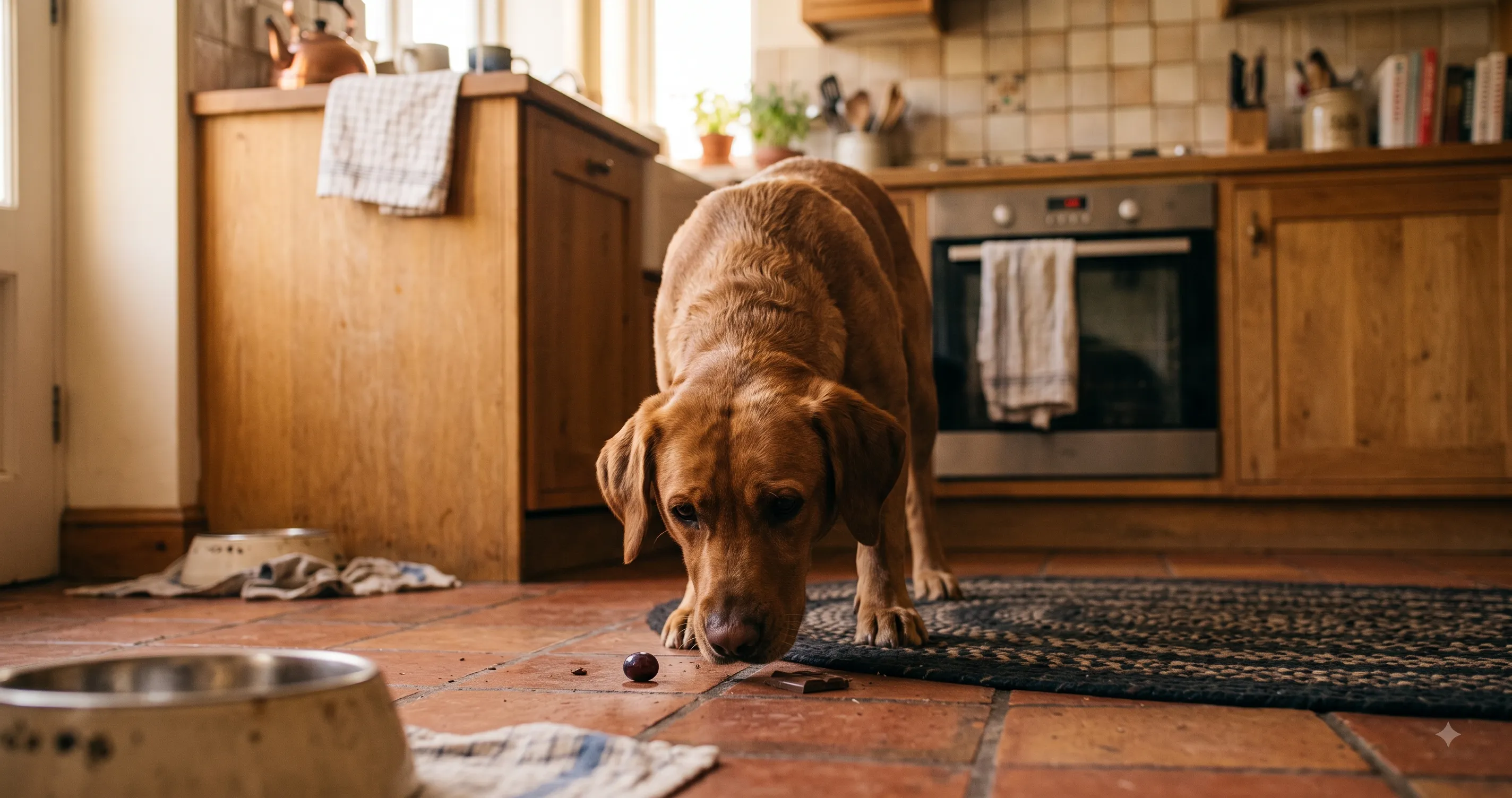
Not every toxin behaves the same way. Some substances cause vomiting or drooling almost immediately, while others work quietly for hours or even days before real damage becomes visible. Grapes are a good example: symptoms often do not appear until 24 to 48 hours after ingestion, by which point the kidneys may already be affected. This delay is exactly why "wait and watch" is not a safe strategy for a known or suspected poisoning, even when a dog seems completely fine in the moment. To check a specific food before sharing it, use our human food safety checker for dogs.
The other factor that makes these emergencies move fast is scale. Dogs are curious, opportunistic eaters, and a counter, an open bag, or a dropped pill can turn an ordinary afternoon into an emergency in seconds. None of this requires a careless owner. It simply requires a dog with a nose faster than a hand.
Signs of Poisoning in Dogs
Dogs that get into something toxic do not always show the same symptoms, but a few patterns show up across most cases.
Immediate or Early Signs
- Sudden vomiting or drooling
- Restlessness or pacing
- Diarrhea
- Loss of coordination or wobbliness
- Rapid or labored breathing
Delayed Signs That Show Up Hours or Days Later
- Lethargy or unusual sleepiness that does not match a normal tired day
- Pale, yellow, or bright red gums
- Loss of appetite
- Increased thirst or urination
- Seizures or collapse in advanced cases
Because excessive sleepiness in dogs can look identical to ordinary tiredness at first glance, any unusual sleepiness following a known or suspected exposure deserves extra attention rather than being dismissed as a dog just having a slow day.
A single vomit after eating too fast or nibbling on grass is usually harmless and resolves quickly on its own. Repeated vomiting, vomiting with blood, or vomiting after any known access to an unfamiliar substance is a different situation entirely and should be treated as a possible poisoning until ruled out.
The Most Common Toxic Triggers
Most poisoning cases in dogs trace back to a small handful of repeat offenders.
Chocolate
Darker and more concentrated chocolate is more dangerous than milk chocolate. If a dog gets into chocolate, save the wrapper so a vet or poison control can identify the type and estimate the dose, and check whether it contained raisins or macadamia nuts, which carry their own separate risks.
Xylitol
Xylitol is one of the most dangerous common household toxins for dogs, found in sugar-free gum, some peanut butters, and baked goods. Even a small amount can cause a rapid drop in blood sugar and, in some cases, liver failure. This is a call-immediately situation rather than a wait-and-see one.
Grapes and Raisins
Grapes and raisins can cause kidney damage in dogs, and the exact mechanism is still not fully understood, which is part of why there is no known "safe amount." Any known ingestion warrants a call to a vet, even without symptoms yet.
Onions, Garlic, and Other Household Foods
Onions and garlic can damage red blood cells over time, even in cooked or powdered form found in many prepared foods and sauces. A dedicated food safety guide covering the complete list of safe and toxic human foods is linked at the end of this article.
Human Medications
Over-the-counter pain relievers such as ibuprofen and acetaminophen are among the most common non-food poisonings vets see, since dropped pills or an open bottle on a nightstand are easy for a curious dog to find. These medications can cause stomach ulcers, kidney damage, or liver failure depending on the drug and dose. Prescription medications carry the same risk, so pill organizers and bottles should be stored well out of reach rather than left on a counter or in an easily knocked-over bag.
Rodenticides and Household Chemicals
Rat and mouse poison is designed to be appealing to animals, which unfortunately makes it appealing to dogs too, and different formulations cause very different symptoms ranging from internal bleeding to seizures. Antifreeze, cleaning products, and certain houseplants round out the most common non-food household hazards. Because rodenticide symptoms can take days to appear, any known or suspected exposure is a call-immediately situation regardless of how the dog looks in the moment.

What to Do in the First 5 Minutes
- Move the dog away from the source immediately. Stop access to whatever was eaten or is still nearby before anything else.
- Collect the packaging or a sample of what was ingested. This helps a vet or poison control identify the exact substance and estimate how much was consumed.
- Call for help right away. Contact your vet, the nearest emergency animal hospital, the ASPCA Animal Poison Control Center at (888) 426-4435, or the Pet Poison Helpline at (855) 764-7661.
- Do not induce vomiting or give home remedies unless specifically told to. Milk, bread, salt, and activated charcoal are not universally safe, and some substances cause more damage coming back up than staying down.
- Have key details ready. Your dog's weight, age, what was ingested, roughly how much, and when it happened all help the professional on the phone give faster, more accurate guidance.
- Follow the exact instructions given. If told to come in, go immediately rather than waiting to see if symptoms change first.
Dogs that chew or lick at everything in their path are naturally at higher risk here, and understanding why some dogs lick and chew everything can help explain why some dogs investigate hazards with their mouth far more than others do.
What to Expect at the Vet or Emergency Clinic
Depending on what was ingested and how much time has passed, a vet may induce vomiting under controlled supervision, administer activated charcoal to help bind the toxin, or start IV fluids to support the kidneys and liver while the body processes what was consumed. Bloodwork is common to check organ function, and for a small number of specific toxins there are direct antidotes a vet can administer. None of this should be attempted at home. Professional treatment exists precisely because the right response depends on identifying the exact substance, something a phone call to a specialist is built to help with.
What Information to Have Ready When You Call
A poison control specialist or emergency vet can move faster with a few specific details rather than a general description. Useful information includes the exact product or substance name if known, the approximate amount consumed, the time it happened, the dog's current weight and age, any existing medical conditions or medications, and any symptoms already showing. Having this ready before dialing saves time that genuinely matters in a fast-moving situation.
Which Dogs Face Higher Risk
Puppies explore the world with their mouths far more than adult dogs do, which makes them more likely to sample something they should not. Small and toy breeds face a higher relative dose from the same amount of a toxin simply because of their lower body weight, so what might cause mild symptoms in a large dog can be far more serious in a small one. Dogs with existing kidney, liver, or heart conditions also have less reserve to handle the added strain a toxin puts on the body, so any known exposure in a dog with pre-existing health issues deserves an extra-cautious response.
Expert Tips for Handling a Suspected Poisoning
- Save the ASPCA Animal Poison Control number and Pet Poison Helpline number in your phone contacts now, before an emergency happens, so there is no scrambling to search for them under pressure.
- Do not assume a "small amount" is automatically safe. Dose matters, but so does the specific toxin, and some substances are dangerous even in tiny quantities.
- If a dog vomits on its own after ingesting something, bring a sample of the vomit along to the vet visit if possible, since it can help with identification of the toxin.
- Keep an eye on delayed signs for several days after any known exposure, not just the first few hours, especially with toxins known to have a delayed onset.
- Trust a genuine gut feeling that something is wrong even without a confirmed cause. Vets would rather see a false alarm than a missed emergency.
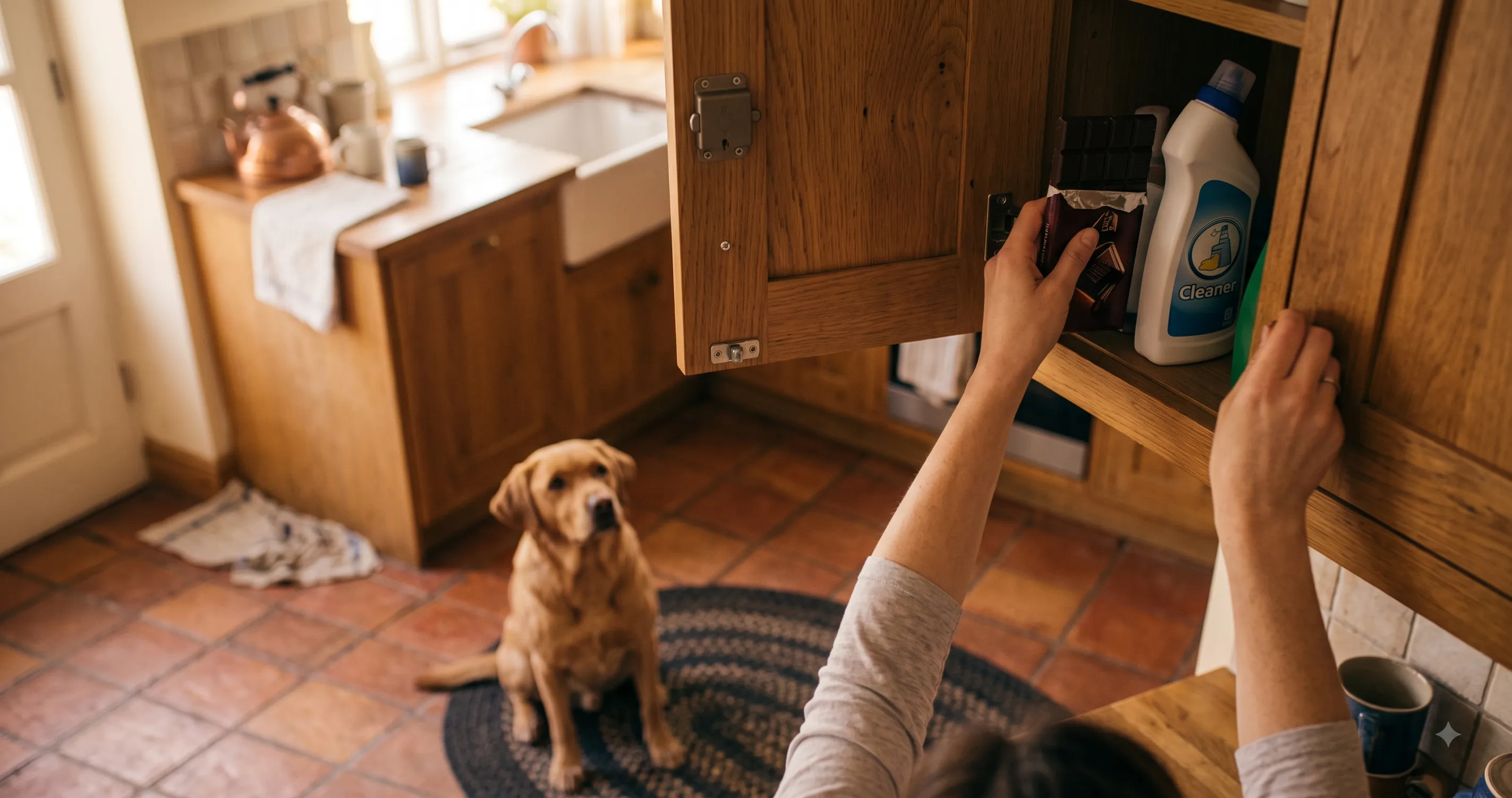
- Childproof latches on cabinets that hold medications or cleaning products add a real layer of protection for a dog that has learned to nose open a regular cabinet door.
Common Mistakes That Make Poisoning Worse
- Waiting to see if symptoms appear before calling, even though some toxins take days to show visible signs
- Inducing vomiting without being told to, which can cause further harm with certain corrosive or sharp-edged substances
- Giving home remedies like milk, bread, or activated charcoal without professional guidance first
- Searching the internet for advice instead of calling a vet or poison control line immediately
- Throwing away the packaging or wrapper before identifying exactly what was ingested
Final Thoughts
Poisoning emergencies are frightening, but they are also one of the more manageable emergencies when an owner knows exactly what to do in the first few minutes. Recognizing the early and delayed warning signs, calling a professional immediately instead of waiting, and having the right details ready all make a real difference in outcome.
For a complete breakdown of which everyday foods are safe to share and which ones to keep locked away, this full safe-food breakdown is worth bookmarking alongside this guide.
The fastest way to protect a dog from a poisoning emergency is calling a vet or poison control immediately rather than waiting to see if symptoms appear.
This guide is for general education and is not a substitute for veterinary care. If you suspect your dog has ingested something toxic, contact a veterinarian or animal poison control center right away.
Medical Disclaimer
This content is provided for informational and educational purposes only and should not be considered veterinary, medical, behavioral, or training advice. While we strive for accuracy, we make no guarantees regarding completeness or results. Always consult a licensed veterinarian or qualified pet care professional before making decisions about your pet’s health, diet, or behavior.
AI Illustration Notice
Some images in this article may have been generated or enhanced using artificial intelligence for illustrative purposes.
Frequently Asked Questions
Sudden vomiting drooling restlessness and loss of coordination are the most common early signs. Diarrhea and rapid breathing often show up around the same time. Any of these signs after known or suspected access to a toxic substance should be treated as an emergency.
Save the wrapper so a vet or poison control can identify the type and estimate the amount eaten. Call your vet the ASPCA Animal Poison Control Center or the Pet Poison Helpline right away rather than waiting for symptoms. Darker chocolate carries more risk than milk chocolate.
It depends entirely on the toxin. Some substances cause symptoms within minutes while others such as certain rodenticides can take several days. This is exactly why a dog that seems fine right after eating something toxic still needs a call to a professional.
Not without being told to by a vet or poison control specialist first. Some substances cause more damage coming back up than staying down and inducing vomiting incorrectly can make the situation worse rather than better.
There is no known safe amount since the exact mechanism behind grape toxicity in dogs is still not fully understood. Any known ingestion of grapes or raisins warrants a call to a vet even if the dog appears completely normal at first.
Call your regular vet the nearest emergency animal hospital the ASPCA Animal Poison Control Center at 888-426-4435 or the Pet Poison Helpline at 855-764-7661. Any of these can guide you through the next steps based on exactly what was ingested.
Yes. Xylitol found in sugar-free gum and some peanut butters can cause a rapid and dangerous drop in blood sugar even in small amounts and in some cases leads to liver failure. Xylitol ingestion should always be treated as a call-immediately emergency.
Have the exact substance name if known the approximate amount eaten and the time it happened ready to share. Your dog's weight age existing medical conditions and any symptoms already showing all help a specialist give faster and more accurate guidance.
Yes. Onions and garlic can damage a dog's red blood cells over time even in cooked or powdered form found in many prepared foods. Repeated small exposures can add up so these ingredients should be avoided entirely rather than fed occasionally.
Avoid milk bread salt or activated charcoal unless a vet specifically instructs you to use them. None of these home remedies are universally safe and relying on them instead of calling a professional can waste critical time.
Normal vs. Concerning Symptoms
A general guide to help you tell everyday variation apart from something worth a vet visit. This is educational context, not a diagnosis.
| Symptom | What's Normal | When to Be Concerned |
|---|---|---|
| Vomiting | A single vomit after eating too fast or nibbling grass that resolves quickly | Repeated vomiting, vomiting with blood, or vomiting after known access to an unfamiliar substance |
| Energy and behavior | Alert, responsive, and acting normally after a meal | Sudden lethargy, wobbliness, disorientation, or restlessness that seems out of character |
| Gums | Pink and moist | Pale, yellow, or unusually bright red |
| Breathing | Calm and steady | Rapid, labored, or noticeably difficult breathing |
What Should I Do Next?
A general decision guide — always use your own judgement and contact a veterinarian for anything beyond routine care.
- Move the dog away from the source immediately Stop access to whatever was eaten or is still nearby before doing anything else.
- Collect the packaging or a sample of what was ingested This helps identify the exact substance and estimate how much was consumed.
- Call for help right away Contact your vet, the nearest emergency animal hospital, the ASPCA Animal Poison Control Center at 888-426-4435, or the Pet Poison Helpline at 855-764-7661.
- Do not induce vomiting or give home remedies unless told to Some substances cause more damage coming back up than staying down.
- Have key details ready Weight, age, what was ingested, roughly how much, and when it happened all speed up guidance.
- Follow the exact instructions given Go in immediately if told to rather than waiting to see if symptoms change first.
Common Mistakes
- Waiting to see if symptoms appear before calling, even though some toxins take days to show visible signs
- Inducing vomiting without being told to, which can cause further harm with certain corrosive or sharp-edged substances
- Giving home remedies like milk, bread, or activated charcoal without professional guidance first
- Searching the internet for advice instead of calling a vet or poison control line immediately
- Throwing away the packaging or wrapper before identifying exactly what was ingested
Prevention Tips
- Store chocolate, xylitol-containing products, and medications somewhere a dog cannot reach
- Save the ASPCA Animal Poison Control and Pet Poison Helpline numbers in your phone before an emergency happens
- Check ingredient labels on sugar-free gum, peanut butter, and baked goods for xylitol
- Supervise dogs closely on walks in areas with mushrooms, unfamiliar plants, or trash
- Keep household chemicals and rodenticides stored in cabinets a dog cannot access
- Ask guests and family members not to share table scraps without checking what is safe first
Illustrative Example
Picture a dog that gets into an open bag of grapes left on a counter while the owner steps out of the room for a few minutes. Nothing seems wrong at first. The dog acts completely normal for the rest of the evening. Because the owner knows grape toxicity often does not cause symptoms for 24 to 48 hours, they call the vet that same night anyway, describing roughly how many grapes were missing from the bag. The vet recommends bringing the dog in for monitoring and early bloodwork rather than waiting for symptoms to appear. Early intervention gives the kidneys the best possible chance before any real damage sets in, which is the entire reason calling immediately matters even when a dog looks completely fine.
Practical Checklist
- Move the dog away from the substance right away
- Collect the packaging, wrapper, or a sample of what was eaten
- Call your vet, emergency clinic, or a poison control hotline immediately
- Note the dog's weight, the substance, the amount, and the time it happened
- Do not give food, water, or home remedies unless told to
- Follow the professional's instructions exactly, including going in for monitoring if advised
Editorial Note
This article is part of PetNurture's educational library.
Topics draw on publicly available educational resources, recognised veterinary organisations, academic publications and established animal welfare references where appropriate.
The specific sources this article draws on are listed in its References section. If you spot an error, please let us know.
References
The information in this article has been reviewed and supported using the following sources.
American Kennel Club
The Common Signs and Symptoms of Poisoning in Dogs
Confirms early versus delayed poisoning symptoms and the variable onset timing across different toxins; supports the Signs of Poisoning and Why Poisoning Emergencies Move Fast sections of this article.
Accessed Aug 13, 2026
ASPCA
What to Do If Your Pet Gets into Chocolate
Confirms the recommendation to save packaging for identification and check for co-ingredients like raisins or macadamia nuts, plus the ASPCA Animal Poison Control Center contact information; supports the Chocolate and First 5 Minutes sections of this article.
Accessed Aug 13, 2026
Pet Emergency Guidance
Every pet is unique. If your pet exhibits severe symptoms, sudden behavioral changes, or a medical emergency, do not rely on online guides — contact a licensed veterinarian or emergency clinic immediately.
About PetNurture
PetNurture is an educational library of pet care guides, interactive tools and practical resources for pet parents. We work continuously to keep our content accurate and up to date. Reader feedback helps us maintain content quality.
Related Articles



Popular Dog Guides


Dog
Dog Calorie Calculator
Find the right daily calorie target for your dog's weight and activity level.
Dog
Dog Chocolate Toxicity Calculator
Assess chocolate toxicity risk based on your dog's weight and the amount eaten.