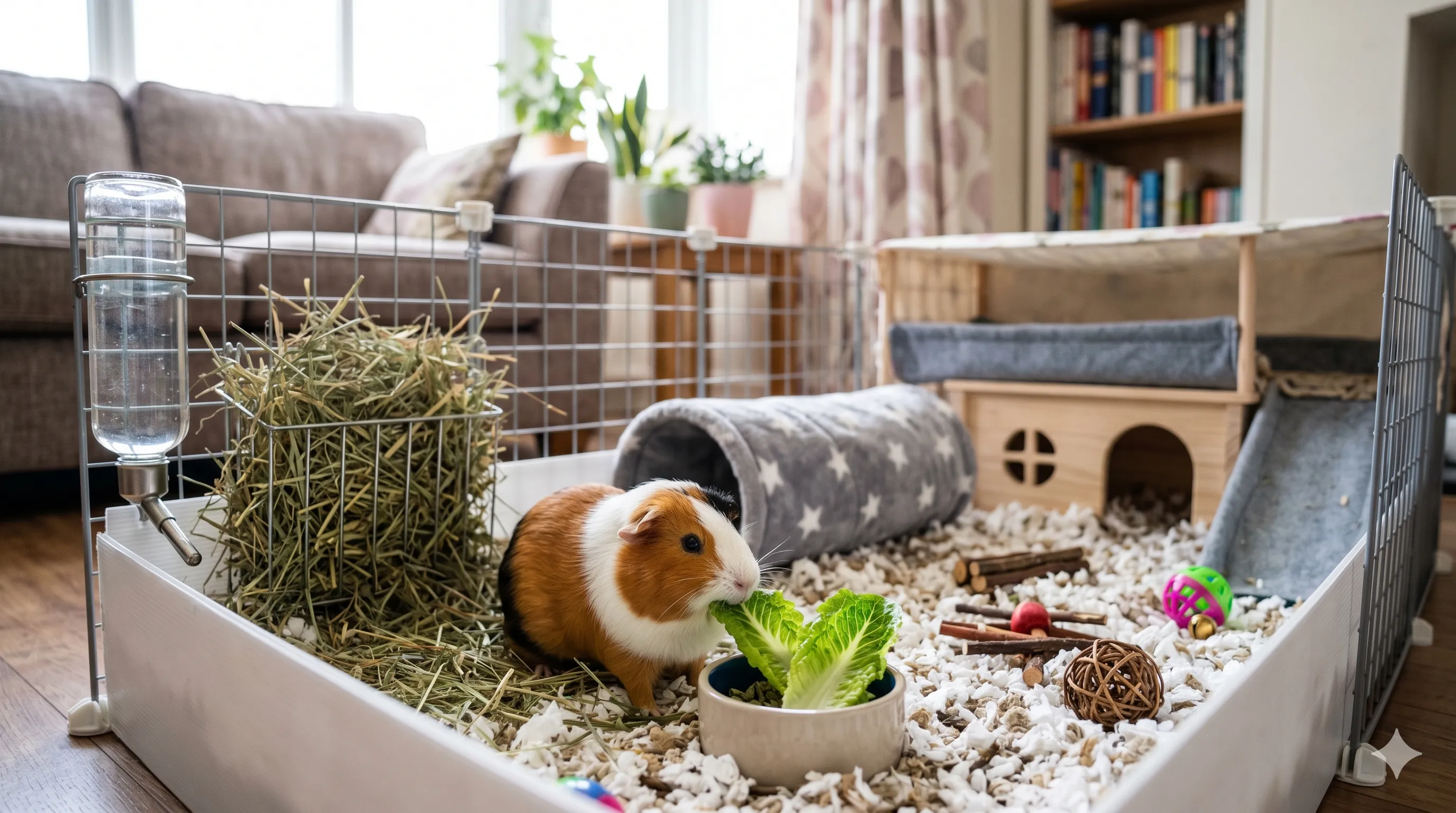
Best Cage Size for Guinea Pigs (Minimum Space Requirements Explained)
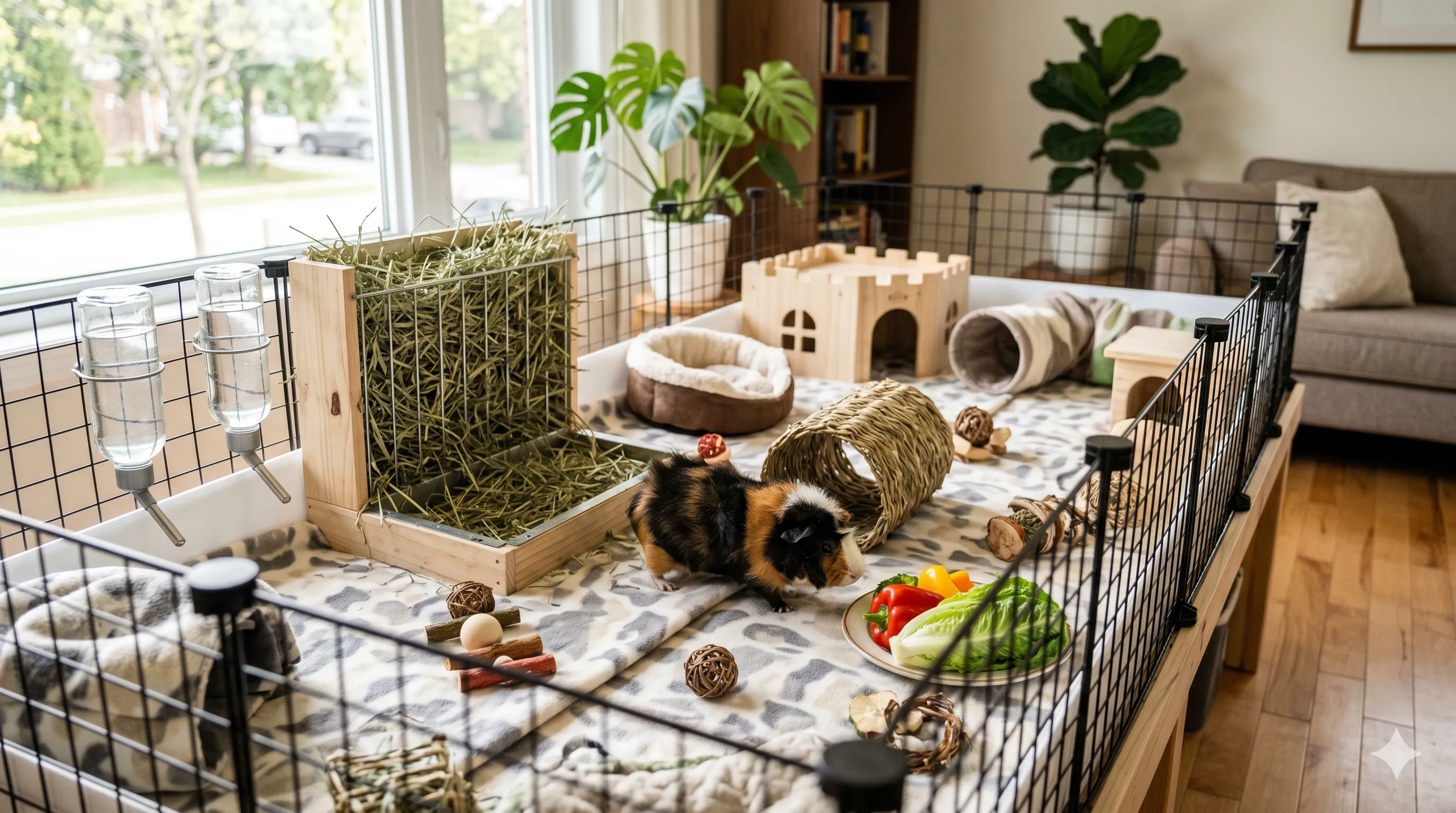
- Why Cage Size Actually Matters
- Minimum Cage Size by Number of Guinea Pigs
- One Guinea Pig
- Two Guinea Pigs
- Three Guinea Pigs
- Four or More Guinea Pigs
- Understanding C&C Cage Measurements
- What C&C Means
- Reading Grid Configurations
- Converting Grids to Square Feet
- Cage Shape and Layout Considerations
- Floor Space Over Height
- Furniture Eats Floor Space
- Long and Narrow Beats Square
- Expert Tips for Choosing Cage Size
- Common Mistakes to Avoid
- Final Thoughts
Note: This article is for informational purposes only and does not replace professional veterinary advice.
The absolute minimum cage size for one guinea pig is 7.5 square feet, and most experts consider 10.5 square feet the real standard once you factor in a hiding spot, a hay area, and room to run. Guinea pigs are floor-space animals rather than climbers, so the number that matters most is square footage on a single level, not cage height. This guide breaks down the minimum and ideal cage size for one, two, three, and four or more guinea pigs, explains how C&C grid measurements translate into real square footage, and covers the layout mistakes that shrink usable space even in a correctly sized cage.
Why Cage Size Actually Matters
Guinea pigs kept in undersized cages show measurable changes in behavior and health. Cramped housing limits the exploring and running they need for basic exercise, and it forces cagemates into close, constant contact that can trigger dominance disputes and stress. Owners of cramped cages often notice their pig hide more often more than usual, since retreating into a shelter is a common response to feeling crowded or exposed. Persistent stress can also show up as shaking or trembling, another common signal that a pig doesn't feel settled in its space.
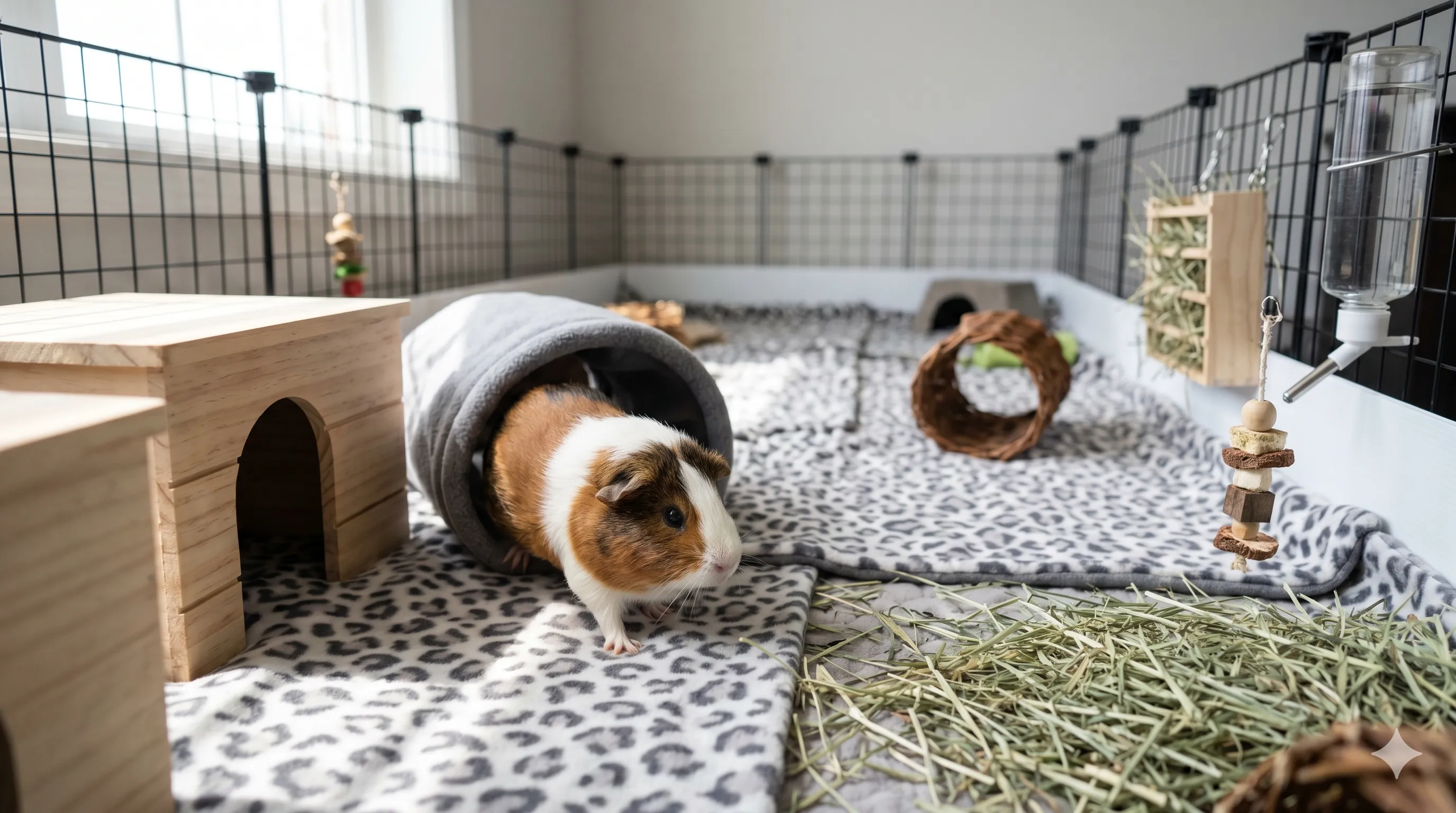
Cage size recommendations in this guide come from the rescue and veterinary community rather than pet store packaging, which is a useful thing to know before shopping. Most cages sold as guinea pig cages in stores are built to a minimum legal footprint, not a comfortable one, and fall well short of what two guinea pigs actually need.
Minimum Cage Size by Number of Guinea Pigs
One Guinea Pig
A single guinea pig needs a minimum of 7.5 square feet of floor space, roughly 30 by 36 inches. Solo guinea pigs are uncommon since they're a herd species and do best with a companion, but if a vet has recommended keeping one alone, aim for closer to 10.5 square feet so the pig still has room to run laps and explore.
Two Guinea Pigs
Two guinea pigs need at least 7.5 square feet, but 10.5 square feet is the widely recommended standard and the size most rescue adoption contracts require. In C&C grid terms that's a 2x4 configuration, roughly 28 by 56 inches. Two boars housed together often do better with the full 10.5 square feet or more since males can be territorial and benefit from separate resting areas.
Three Guinea Pigs
Three guinea pigs need a minimum of 10.5 square feet, with 13 square feet considered ideal. That maps to a 2x5 C&C cage, about 28 by 70 inches. Adding a third pig to an existing 2x4 setup without expanding it is one of the most common space mistakes new multi-pig owners make.
Four or More Guinea Pigs
Four guinea pigs need at least 13 square feet, and each additional pig beyond that should add roughly 2.5 to 3 square feet. Larger herds are easiest to house in a 2x6 or 2x7 C&C cage, or in an L-shaped layout that uses a corner of a room more efficiently than a single long rectangle.
Understanding C&C Cage Measurements
What C&C Means
C&C stands for Cubes and Coroplast: wire storage-cube grid panels clipped together to form the walls, sitting on a solid Coroplast corrugated-plastic base that contains the bedding. The grids only ever form the sides. The floor should always be solid Coroplast, never open grid, since wire flooring can injure a guinea pig's feet.
Reading Grid Configurations
Standard C&C grids measure 14 inches square, and cage sizes are described by how many grids wide and long the layout is. A 2x4 cage uses two grids across one side and four along the other, giving roughly 28 by 56 inches of floor space. Always confirm a kit uses full 14 inch grids rather than the smaller 9.5 or 12 inch storage-cube grids sometimes sold for other purposes, since those shrink the usable footprint without changing the advertised grid count.
Converting Grids to Square Feet
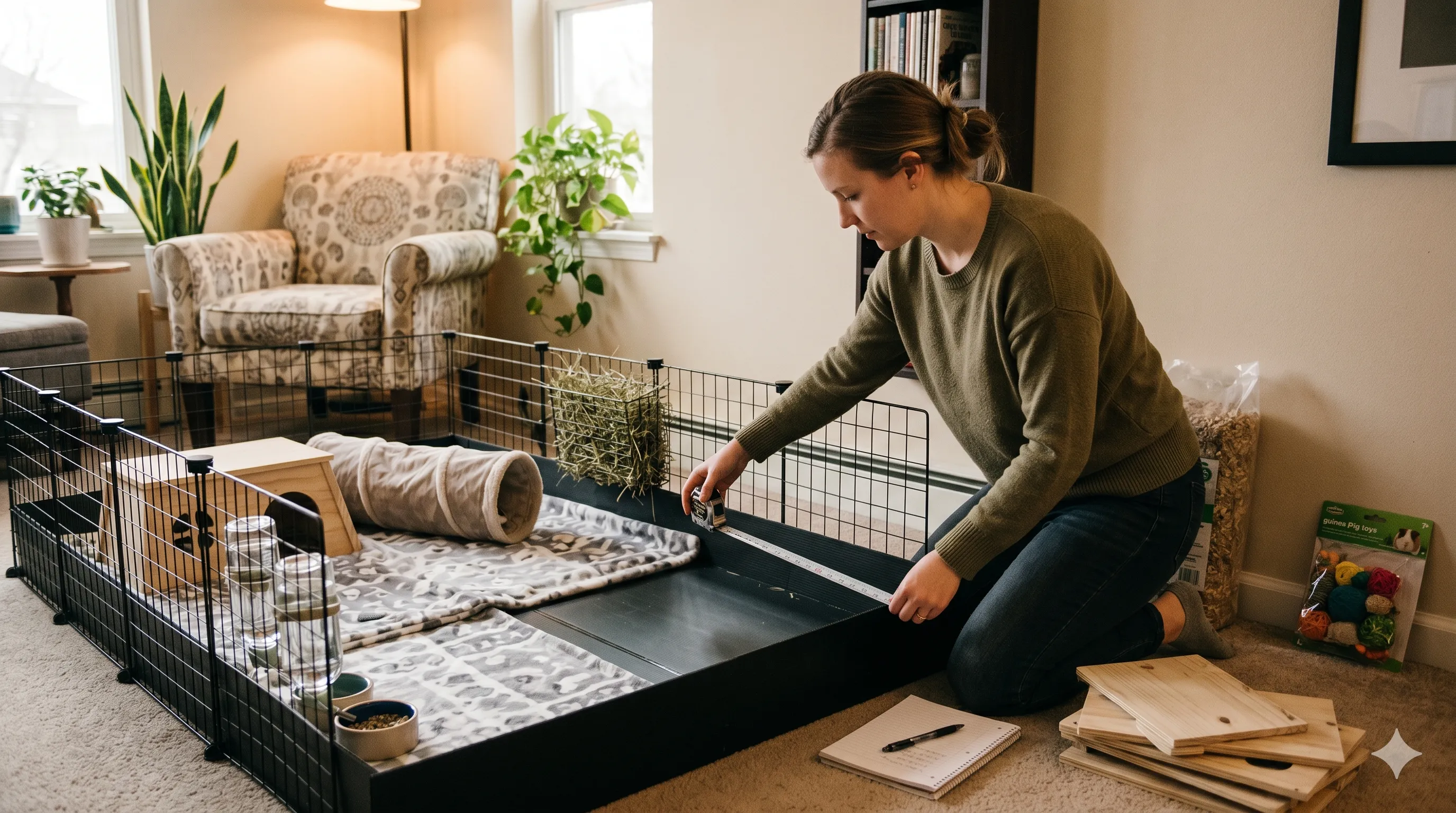
As a quick reference, a 2x3 cage is about 8.6 square feet, a 2x4 is about 10.9 square feet, a 2x5 is about 14.4 square feet, and a 2x6 is about 17 square feet. Measure the intended room before ordering grids rather than working backward from a size on a website, since real furniture and door clearances rarely match a product photo exactly. Once the footprint is settled, our cage setup guide covers what actually goes inside it.
Cage Shape and Layout Considerations
Floor Space Over Height
Guinea pigs don't climb or jump the way rabbits do, so a tall cage with a small footprint doesn't make up for a lack of floor space. Multi-level cages with ramps look space efficient but often provide less usable area than advertised, since ramps and platforms eat into the floor plan below them and many guinea pigs use ramps rarely once they're past a few months old. Owners who size up the floor plan instead of adding a second story often see more popcorning, a happy sign the pig finally has room to move freely.
Furniture Eats Floor Space
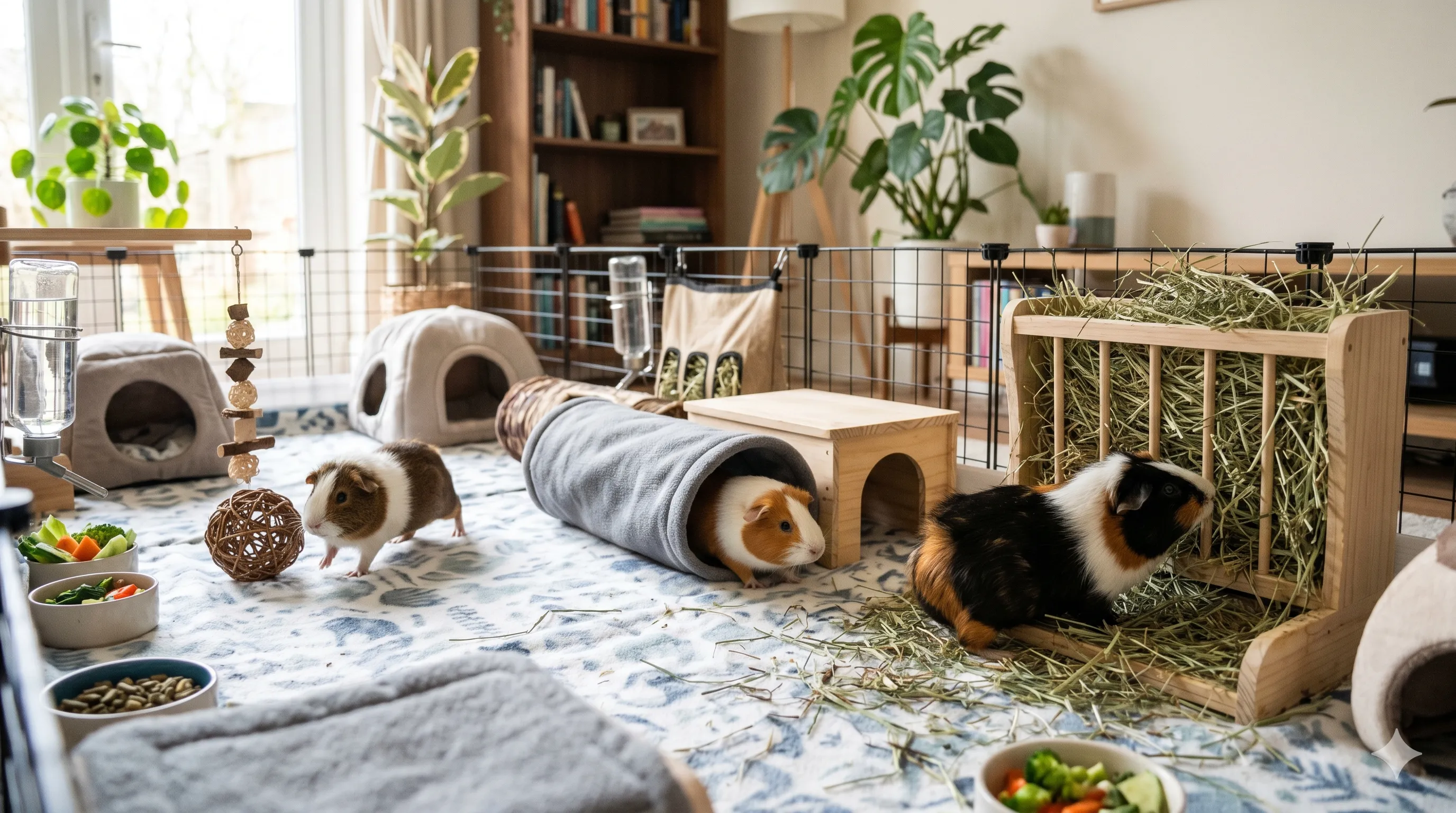
A hideout, hay rack, water bottle stand, and food bowl all sit inside the minimum square footage, not on top of it. A cage that meets the 10.5 square foot minimum on paper can feel cramped once furnishings are added, so many owners size up by one grid in each direction to keep the open running area generous.
Long and Narrow Beats Square
Guinea pigs use running space more than they use width, so a long, narrow layout like a 2x5 generally suits their natural movement better than a square layout with the same total area. If floor space allows, an L-shaped C&C build along two walls of a room is an efficient way to add square footage without taking over the whole floor. Pairing a correctly sized cage with regular time in a guinea pig playpen adds even more room to explore without needing a permanently larger footprint.
Expert Tips for Choosing Cage Size
- Size up before adding a new cagemate rather than after, since introductions go more smoothly in a cage that already has enough room for both pigs to retreat from each other.
- Measure the actual room footprint before ordering a C&C kit, including clearance for the lid or cover if one is planned, since a 2x5 cage needs more floor space than the grid count alone suggests.
- Choose the next size up rather than the exact minimum whenever the room allows it, since a slightly larger cage costs little extra but noticeably improves day to day comfort.
- Reassess cage size after any new pig joins the herd rather than assuming the original size still works, since minimums scale with pig count.
Common Mistakes to Avoid
- Buying a store cage marketed for guinea pigs without checking its actual square footage, since many fall under the 7.5 square foot absolute minimum for even one pig.
- Counting a cage's second story or ramp toward the total floor space instead of measuring the ground-level footprint alone.
- Adding a third or fourth guinea pig to a 2x4 cage built for two without expanding it first.
- Using grids smaller than 14 inches to save money, which shrinks the real usable area below what the grid count implies.
Final Thoughts
Matching cage size to the number of guinea pigs in the household is one of the simplest ways to prevent stress, weight gain, and cagemate conflict before they start.
Start with 10.5 square feet for two pigs, add roughly 2.5 to 3 square feet for each additional guinea pig, and prioritize floor space over height or added levels. Our complete guinea pig care guide covers the daily and weekly basics that go alongside a correctly sized cage, from feeding routines to health checks. If you're unsure whether a current setup is large enough, a rescue or exotic vet can review your specific pig count and layout.
Floor space is the one measurement worth being generous with — everything else about a cage is easier to fix later.
This content is written to provide general educational guidance for guinea pig owners and pet families and is not a substitute for professional veterinary advice.
Medical Disclaimer
This content is provided for informational and educational purposes only and should not be considered veterinary, medical, behavioral, or training advice. While we strive for accuracy, we make no guarantees regarding completeness or results. Always consult a licensed veterinarian or qualified pet care professional before making decisions about your pet’s health, diet, or behavior.
AI Illustration Notice
Some images in this article may have been generated or enhanced using artificial intelligence for illustrative purposes.
Frequently Asked Questions
The absolute minimum is 7.5 square feet for a single guinea pig. Most owners aim higher since 7.5 square feet is a bare floor rather than a comfortable long term home.
Yes, a 2x4 C&C cage measures roughly 10.9 square feet which meets the recommended standard for two guinea pigs. It becomes too small the moment a third pig joins the household.
No, guinea pigs rarely use ramps consistently and a multi level cage often provides less real floor space than a single level cage of the same footprint. A wide single level layout is usually the better choice.
Three guinea pigs need a minimum of 10.5 square feet and ideally 13 square feet. A 2x5 C&C configuration comfortably covers this range.
Standard C&C grids measure 14 inches square. Smaller storage cube grids around 9.5 or 12 inches reduce the real floor space even when the grid count looks the same.
No, two male guinea pigs generally need at least as much space as females and often benefit from more. Extra room gives boars separate areas to reduce territorial tension.
Not much since guinea pigs are ground dwelling animals that don't climb or jump like rabbits. Floor space matters far more than cage height when choosing a size.
Reassess cage size any time a new guinea pig joins the household or an existing cage starts to feel crowded. Sizing up before problems appear is easier than resizing after conflict starts.
Editorial Note
This article is part of PetNurture's educational library.
Topics draw on publicly available educational resources, recognised veterinary organisations, academic publications and established animal welfare references where appropriate.
The specific sources this article draws on are listed in its References section. If you spot an error, please let us know.
References
The information in this article has been reviewed and supported using the following sources.
Humane Society
Guinea Pig Housing Requirements and Bedding Options
The Humane Society lists 7.5 square feet as the bare minimum for one guinea pig, with at least 10.5 square feet preferred for a pair.
Accessed Aug 6, 2026
VCA Animal Hospitals
VCA Animal Hospitals recommends an indoor cage size minimum of 24 by 36 inches to comfortably house a guinea pig, noting that bigger is always better.
Accessed Aug 6, 2026
Pet Emergency Guidance
Every pet is unique. If your pet exhibits severe symptoms, sudden behavioral changes, or a medical emergency, do not rely on online guides — contact a licensed veterinarian or emergency clinic immediately.
About PetNurture
PetNurture is an educational library of pet care guides, interactive tools and practical resources for pet parents. We work continuously to keep our content accurate and up to date. Reader feedback helps us maintain content quality.
Related Articles
Popular Guinea Pig Guides
Guinea Pig
Guinea Pig Feeding Calculator
Calculate daily food portions for your guinea pig by weight.
Guinea Pig
Guinea Pig Cage Size Calculator
Find the minimum recommended cage size for your guinea pigs.