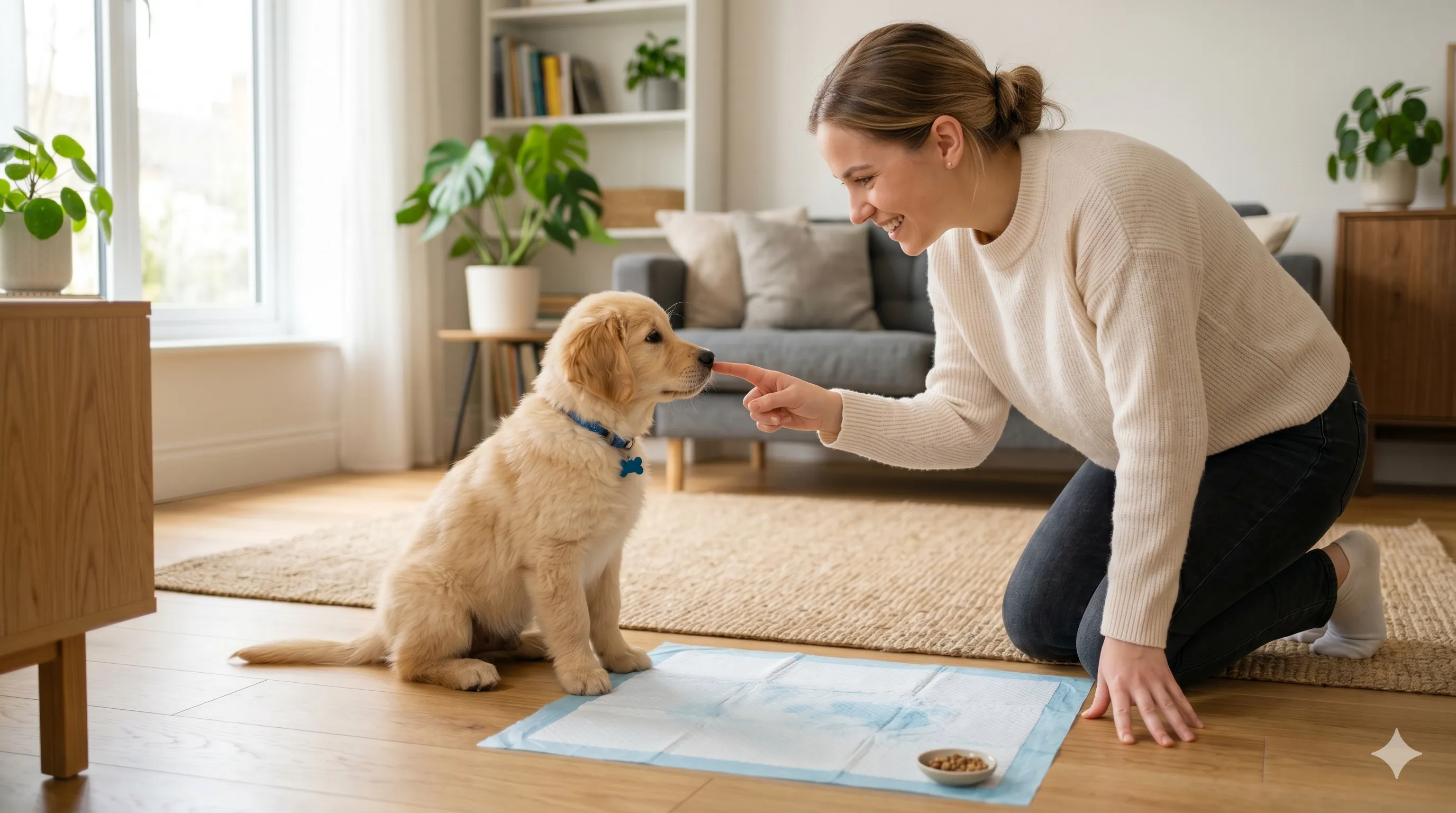
How to Crate Train a Puppy: Step-by-Step Routine, Age-Based Schedule & Common Mistakes to Avoid
- How to Crate Train a Puppy (Quick Answer)
- Why Crate Training Works
- The Biggest Misunderstanding About Crates
- Best Age to Start Crate Training
- Crate Training Schedule by Age
- How to Choose the Right Crate
- Step-by-Step Crate Training Process
- Step 1: Let Your Puppy Explore Freely
- Step 2: Create Positive Associations
- Step 3: Introduce Short Closed-Door Sessions
- Step 4: Build Calm Independence
- Step 5: Establish a Daily Crate Routine
- How Crate Training Helps Potty Training
- Why Puppies Cry in the Crate
- What to Do When a Puppy Cries in the Crate
- Check Basic Needs First
- Avoid Immediate Reinforcement
- Progress More Gradually
- Create a Calmer Environment
- Nighttime Crate Training
- Common Crate Training Mistakes
- Using the Crate as Punishment
- Leaving Puppies Crated Too Long
- Moving Too Fast
- Only Using the Crate When Leaving
- Ignoring Mental Stimulation
- How Long Does Crate Training Take?
- Signs Crate Training Is Working
- Real-Life Example
- When Crate Training May Need Adjustment
- Final Thoughts
Note: This article is for informational purposes only and does not replace professional veterinary advice.
Crate training is one of the most misunderstood parts of puppy training.
Some owners worry that using a crate feels restrictive or unfair, while others accidentally create fear around the crate by introducing it too quickly or using it as punishment.
When done properly, however, crate training becomes one of the most valuable tools for raising a calm, confident, and well-behaved dog.
A properly trained puppy often sees the crate as:
- a safe sleeping area,
- a quiet retreat,
- a predictable routine space,
- and a place where they feel secure.
If you are learning how to crate train a puppy, the goal is not confinement. The real goal is emotional safety, routine building, independence training, and preventing destructive habits before they develop.
crate training supports routines when learning how to potty train a puppy fastThis guide explains how crate training actually works psychologically, how to introduce a crate properly, common mistakes that slow progress, realistic expectations by age, and step-by-step methods that create long-term success.
How to Crate Train a Puppy (Quick Answer)
To crate train a puppy successfully, introduce the crate gradually, build positive associations using treats and routine, increase crate time slowly, and make the crate feel calm and predictable.
Most puppies begin adjusting within several days, while full comfort and independence often develop over a few weeks of consistent training.
Why Crate Training Works
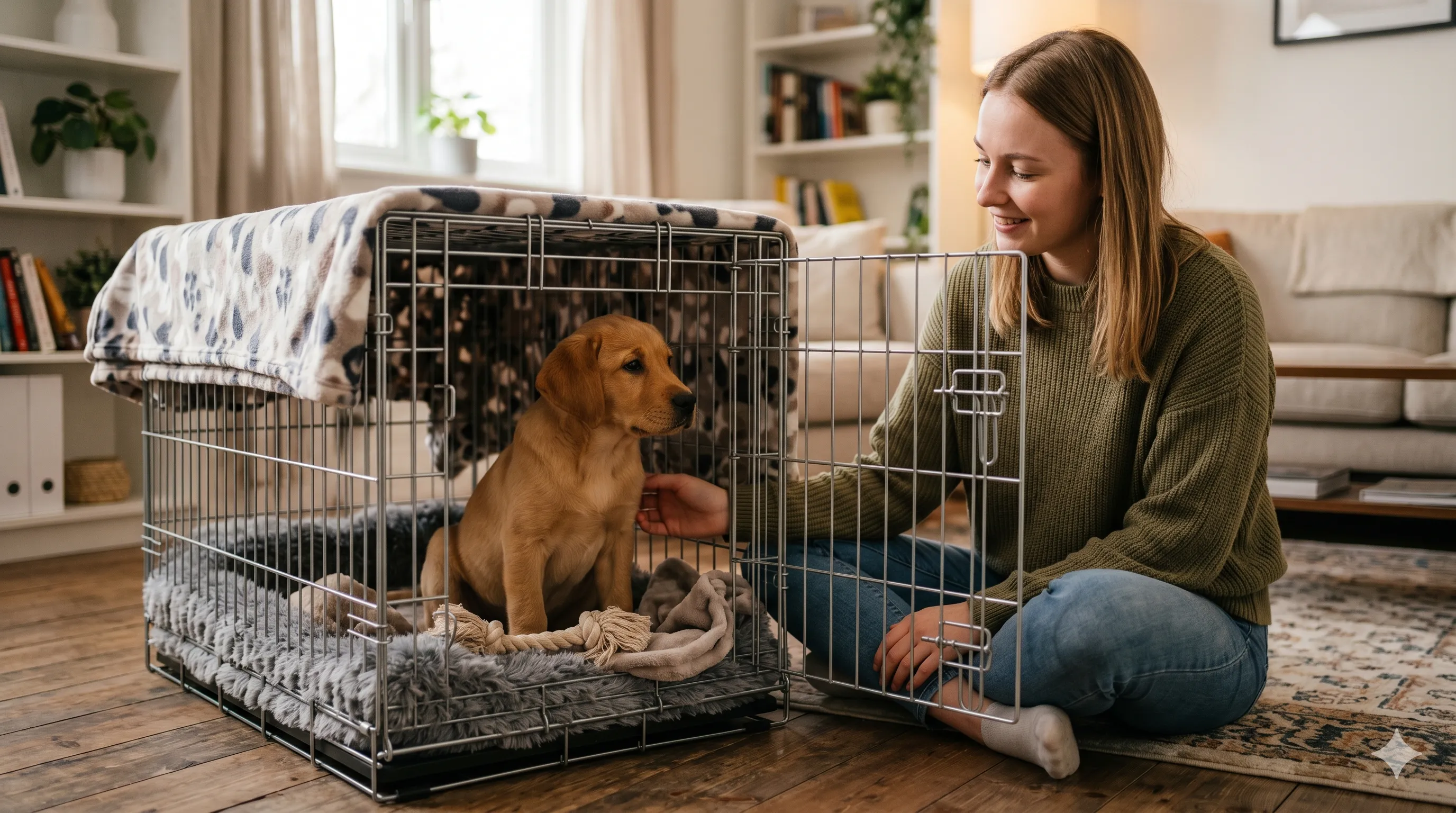
Dogs naturally seek safe den-like spaces.
In the wild, enclosed resting areas help animals feel protected during sleep and vulnerable moments.
A crate works best when it becomes:
- predictable,
- comfortable,
- quiet,
- and emotionally safe.
Crate training also helps reduce overstimulation, which is one of the biggest causes of destructive puppy behavior.
The Biggest Misunderstanding About Crates
The crate itself is usually not the problem.
Negative experiences happen when owners:
- rush the process,
- leave puppies inside too long,
- ignore emotional distress,
- or use the crate for punishment.
A puppy forced into a stressful crate experience may begin associating the crate with fear and isolation instead of safety.
proper crate routines can also help calm an anxious dog and reduce stress behaviorsBest Age to Start Crate Training
The earlier crate training begins, the easier habit formation usually becomes.
Most puppies can begin crate training immediately after arriving home.
Young puppies adapt faster because routines and environmental expectations are still developing.
Crate Training Schedule by Age
| Puppy Age | Recommended Crate Time | Training Focus |
|---|---|---|
| 8-10 weeks | 1-2 hours | Comfort and short sessions |
| 10-12 weeks | 2-3 hours | Routine building |
| 3-4 months | 3-4 hours | Independence development |
| 4-6 months | 4-5 hours | Consistency and confidence |
| 6+ months | 5-6 hours | More stable bladder control |
How to Choose the Right Crate
The crate should be:
- large enough for standing and turning around,
- but not so large that one side becomes a bathroom area.
Overly large crates often slow potty training because puppies may separate sleeping and elimination spaces.
Comfortable bedding, airflow, and a quiet location also matter significantly.
Step-by-Step Crate Training Process
Step 1: Let Your Puppy Explore Freely
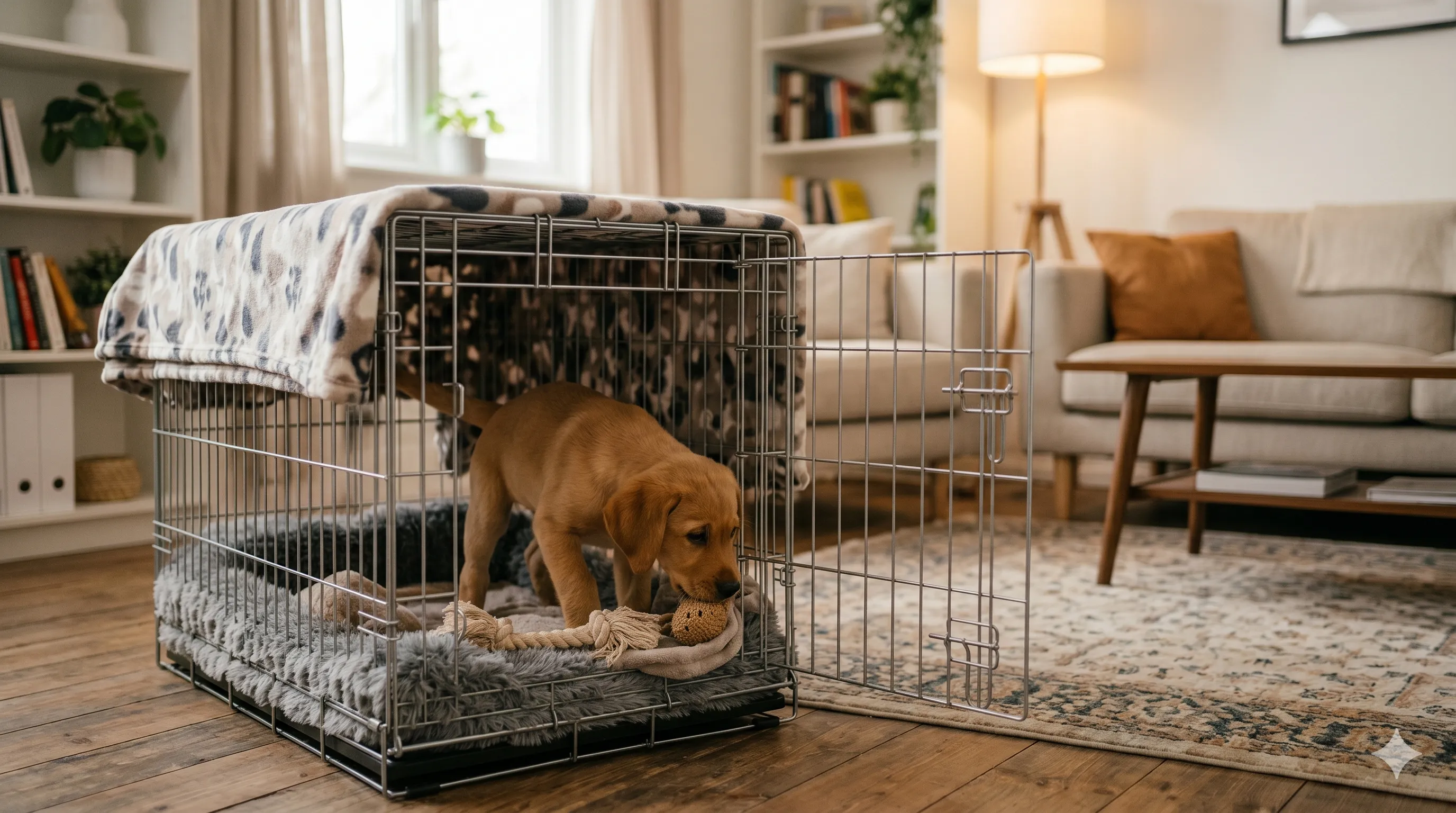
Leave the crate open initially.
Allow curiosity to happen naturally without forcing entry.
Many puppies willingly explore when pressure is removed.
Step 2: Create Positive Associations
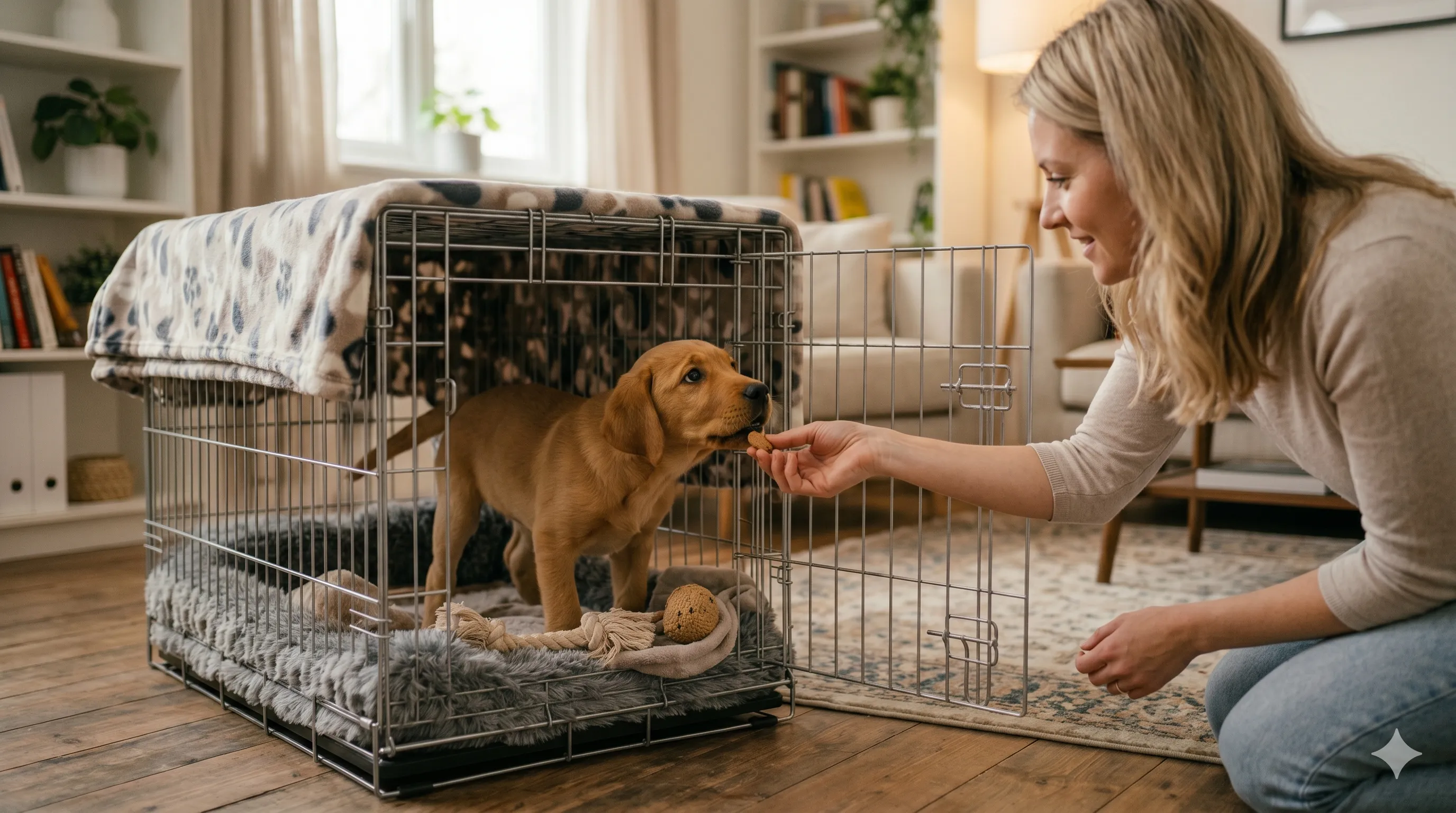
Place:
- treats,
- toys,
- meals,
- or chew items
inside the crate.
The puppy should begin connecting the crate with positive experiences.
Step 3: Introduce Short Closed-Door Sessions
Once your puppy enters comfortably, briefly close the crate door for a few minutes.
Stay nearby initially to reduce stress.
Gradually increase duration over time.
Step 4: Build Calm Independence
Crate training is also independence training.
Your puppy must learn that temporary separation is safe and predictable.
Short departures help prevent future emotional dependency.
building independence early helps prevent dog separation anxiety later onStep 5: Establish a Daily Crate Routine
Consistency helps puppies feel secure.
Use the crate during:
- naps,
- quiet time,
- bedtime,
- and structured rest periods.
Routine reduces confusion and improves emotional stability.
How Crate Training Helps Potty Training
One major reason crate training works so well is biological instinct.
Most puppies naturally avoid soiling their sleeping space.
When used properly, crates help puppies:
- develop bladder control,
- build bathroom routines,
- and reduce random indoor accidents.
However, expecting puppies to "hold it" beyond their developmental ability creates stress and setbacks.
Why Puppies Cry in the Crate
Crying is extremely common during early crate training.
This does not always mean something is wrong.
Puppies may cry because of:
- confusion,
- adjustment stress,
- loneliness,
- fear of isolation,
- or unmet physical needs.
The key is learning to distinguish normal adjustment whining from genuine distress.
What to Do When a Puppy Cries in the Crate
Check Basic Needs First
Ensure your puppy:
- has gone potty,
- is not hungry,
- has exercised,
- and is not overstimulated.
Avoid Immediate Reinforcement
If puppies learn crying instantly opens the crate, they may repeat the behavior habitually.
Wait for brief calm moments before opening the crate whenever possible.
Progress More Gradually
Many puppies struggle because crate time increased too quickly.
Reduce duration temporarily and rebuild confidence slowly.
Create a Calmer Environment
Soft bedding, calm lighting, and reduced noise often help significantly.
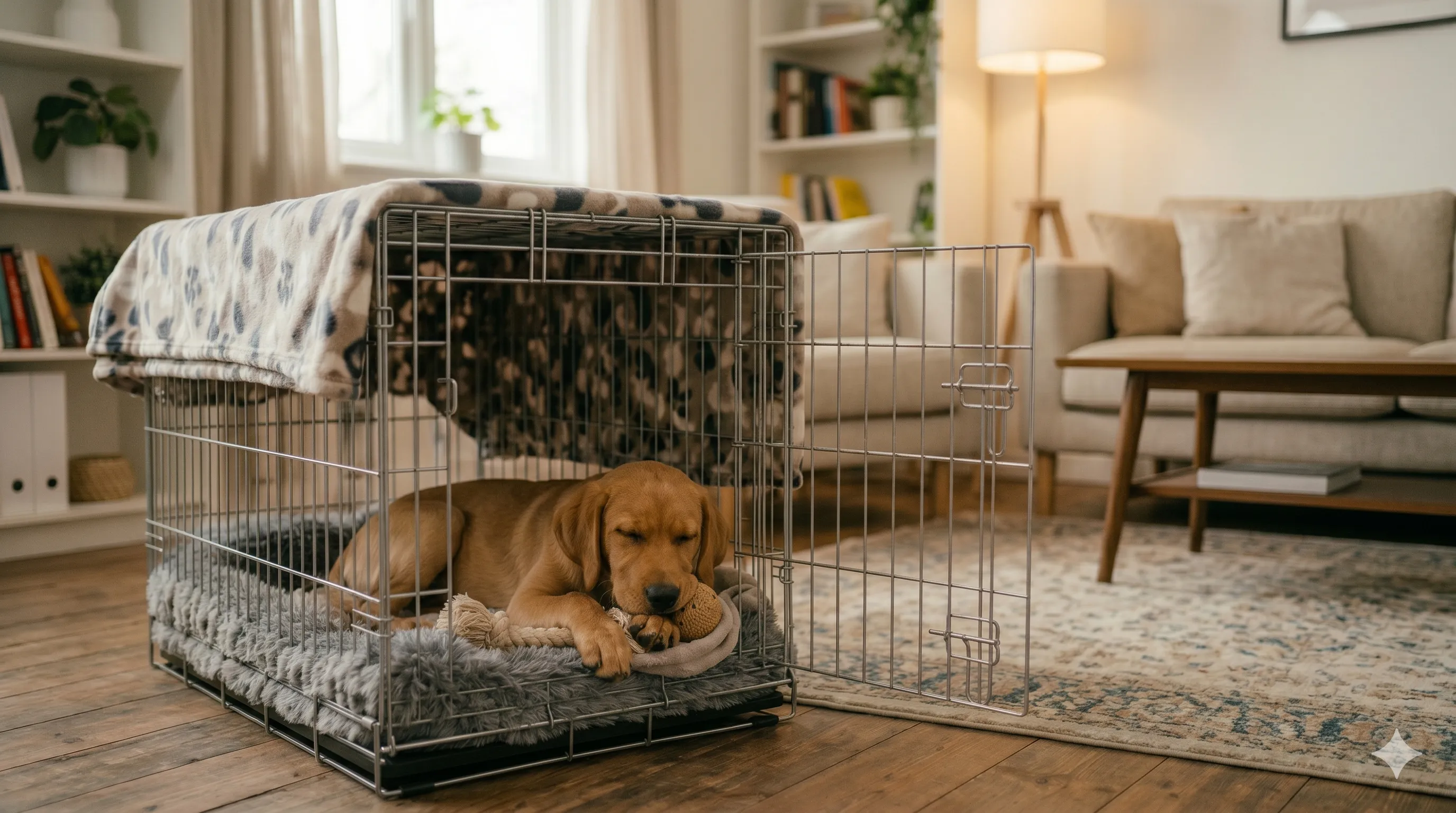
Nighttime Crate Training
The first few nights are often the hardest.
Young puppies suddenly experience:
- new surroundings,
- new smells,
- and separation from littermates.
Placing the crate near your bed initially often helps reduce stress dramatically.
This provides reassurance while still encouraging independence.
Common Crate Training Mistakes
Using the Crate as Punishment
This destroys positive emotional association.
Leaving Puppies Crated Too Long
Excessive crate time can increase anxiety and frustration.
Moving Too Fast
Rapid progression often creates setbacks and fear.
Only Using the Crate When Leaving
Puppies may begin associating the crate exclusively with isolation.
Use the crate during normal calm periods too.
Ignoring Mental Stimulation
An under-stimulated puppy often struggles more during crate training.
consistent structure also helps when you train a puppy not to biteHow Long Does Crate Training Take?
Most puppies begin understanding crate routines within several days.
However, emotional comfort develops gradually.
Some confident puppies adjust quickly, while sensitive puppies may require several weeks of slower progression.
Consistency matters far more than speed.
Signs Crate Training Is Working
- Your puppy enters voluntarily
- Crying decreases significantly
- The puppy relaxes inside calmly
- Naps happen naturally in the crate
- Accidents decrease
- Destructive behavior improves
Real-Life Example
A 9-week-old puppy initially screamed whenever the crate door closed.
The owners slowed the process dramatically by:
- feeding meals inside the crate,
- using short calm sessions,
- adding structured naps,
- and avoiding long isolation periods.
Within one week, the puppy voluntarily entered the crate for naps.
By the third week, nighttime crying had almost completely stopped.
The biggest improvement came from reducing emotional pressure rather than forcing longer crate sessions.
When Crate Training May Need Adjustment
Some puppies may struggle more due to:
- separation anxiety tendencies,
- past trauma,
- extreme sensitivity,
- or inconsistent owner routines.
If distress becomes extreme or persistent, gradual behavioral support may be necessary.
Final Thoughts
Crate training is not about restriction or control.
When introduced properly, the crate becomes a powerful tool for:
- routine building,
- emotional security,
- potty training,
- behavior management,
- and healthy independence.
The puppies that adapt best are usually the ones trained with patience, consistency, calm structure, and positive emotional experiences.
Once trust develops, many dogs continue using their crates voluntarily for comfort long after formal training ends.
This content is reviewed for educational accuracy and should not replace professional veterinary or behavioral guidance for puppies showing severe anxiety or extreme distress during crate training.
Medical Disclaimer
This content is provided for informational and educational purposes only and should not be considered veterinary, medical, behavioral, or training advice. While we strive for accuracy, we make no guarantees regarding completeness or results. Always consult a licensed veterinarian or qualified pet care professional before making decisions about your pet’s health, diet, or behavior.
AI Illustration Notice
Some images in this article may have been generated or enhanced using artificial intelligence for illustrative purposes.
Frequently Asked Questions
Young puppies usually tolerate 1–2 hours initially, while older puppies can gradually handle longer periods depending on age and bladder control.
Yes. When used correctly, crate training creates a safe and secure environment for puppies.
Many puppies begin adjusting within several days, but full comfort and routine stability may take a few weeks.
Puppies may cry due to adjustment stress, loneliness, unmet needs, or because crate time increased too quickly.
Some puppies feel calmer with partial crate covering, while others prefer visibility. It depends on the individual dog.
Yes. Crate training helps puppies build bladder control and reduces indoor accidents when used properly.
Yes, but young puppies may still require nighttime potty breaks during early training.
A comfortable bed, safe chew toy, water when appropriate, and calming items can help create a positive crate experience.
Editorial Note
This article is part of PetNurture's educational library.
Topics are researched using publicly available educational resources, recognised veterinary organisations, academic publications and established animal welfare references where appropriate.
Every article is reviewed by the PetNurture editorial team for clarity, structure, readability and consistency before publication.
References
The information in this article has been reviewed and supported using the following sources.
American Kennel Club
Safe and Stress-Free Crate Training: A Step-by-Step Guide
The AKC recommends building positive crate associations by feeding meals near or inside the crate, scattering treats and toys around and inside it, and playing games near the crate so the dog forms a favorable association with the space.
Accessed Aug 6, 2026
American Kennel Club
Safe and Stress-Free Crate Training: A Step-by-Step Guide
The AKC advises never releasing a puppy from the crate while it is whining, since this teaches the puppy that crying opens the door, and instead recommends waiting for a few seconds of quiet before letting them out, while making an exception overnight when whining likely signals a genuine bathroom need.
Accessed Aug 6, 2026
American Kennel Club
Safe and Stress-Free Crate Training: A Step-by-Step Guide
The AKC states plainly that a crate should never be used for punishment, and that if a time-out is needed, owners should calmly encourage the dog inside and reward it for entering so the crate keeps its positive association.
Accessed Aug 6, 2026
Pet Emergency Guidance
Every pet is unique. If your pet exhibits severe symptoms, sudden behavioral changes, or a medical emergency, do not rely on online guides — contact a licensed veterinarian or emergency clinic immediately.
About PetNurture
PetNurture is an educational library of pet care guides, interactive tools and practical resources for pet parents. We work continuously to keep our content accurate and up to date. Reader feedback helps us maintain content quality.
Related Articles
Popular Dog Guides
Dog
Dog Pregnancy Calculator
Estimate your dog's due date, pregnancy timeline, and key gestation milestones.
Dog
Dog Calorie Calculator
Find the right daily calorie target for your dog's weight and activity level.