Why Does My Dog Wag Its Tail? (Real Meaning, Hidden Signals & When to Be Careful)
- Why Does My Dog Wag Its Tail? (Quick Answer)
- Dog Tail Wagging Meaning (Quick Guide)
- Why Dogs Use Their Tails to Communicate
- 7 Real Reasons Why Dogs Wag Their Tails
- 1. Happiness and Excitement
- 2. Greeting and Social Bonding
- 3. Curiosity and Interest
- 4. Attention-Seeking Behavior
- 5. Anxiety or Nervousness
- 6. Submission
- 7. Alertness and Tension
- Tail Position Matters More Than Most People Realize
- High Tail Position
- Neutral Tail Position
- Low Tail Position
- Tucked Tail
- Does Tail Wagging Always Mean Happiness?
- How to Read Tail Wagging Correctly
- 1. Observe Full Body Language
- 2. Watch Tail Speed
- 3. Pay Attention to Stiffness
- 4. Understand Environmental Context
- 5. Respect Nervous Signals
- 6. Reinforce Calm Emotional States
- 7. Stay Calm Yourself
- Normal vs Problematic Tail Wagging
- When Should You Be Concerned?
- How Dogs Learn Tail Wagging Responses
- Common Mistakes Dog Owners Make
- Real-Life Example
- Final Thoughts
Note: This article is for informational purposes only and does not replace professional veterinary advice.
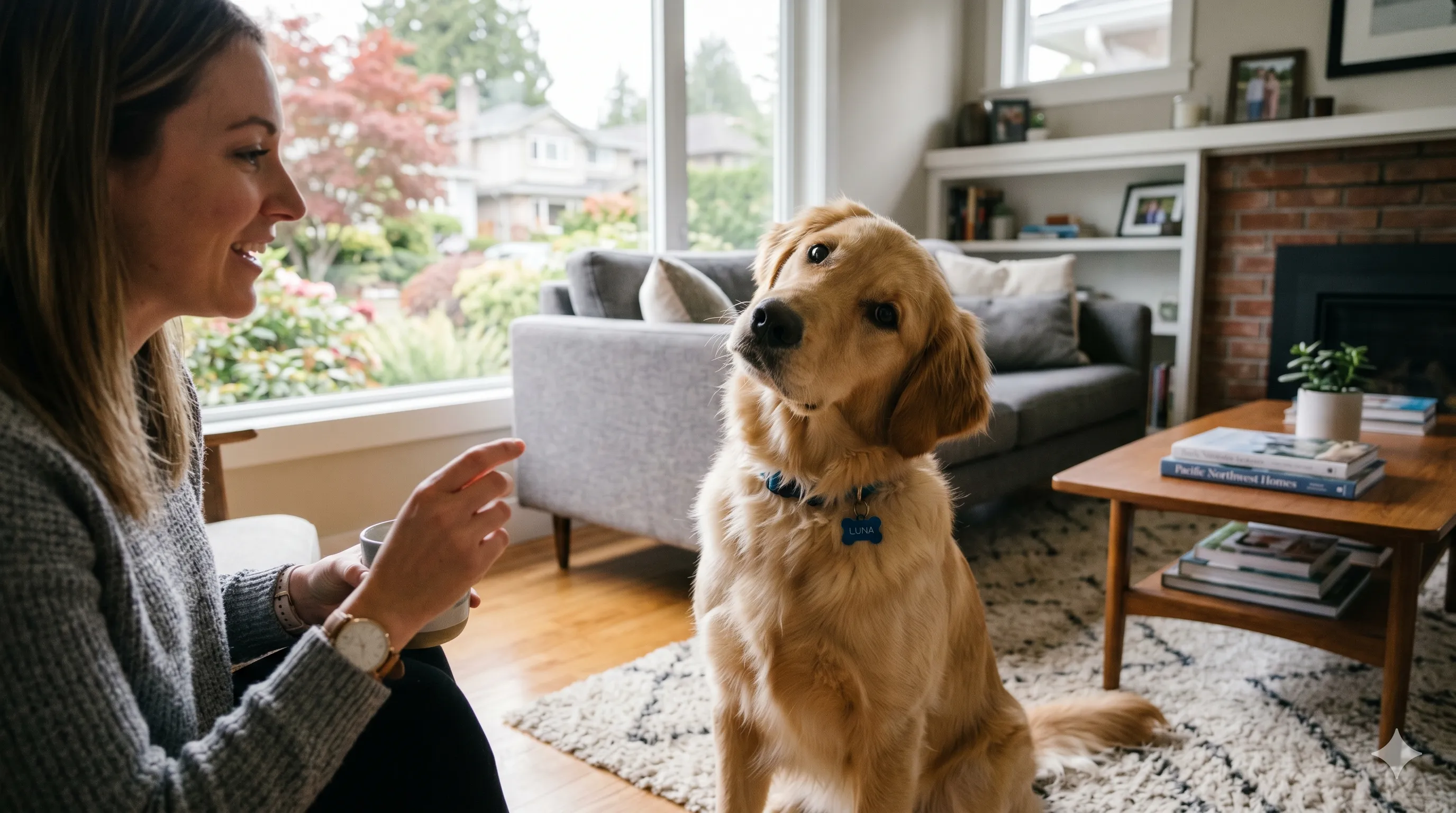
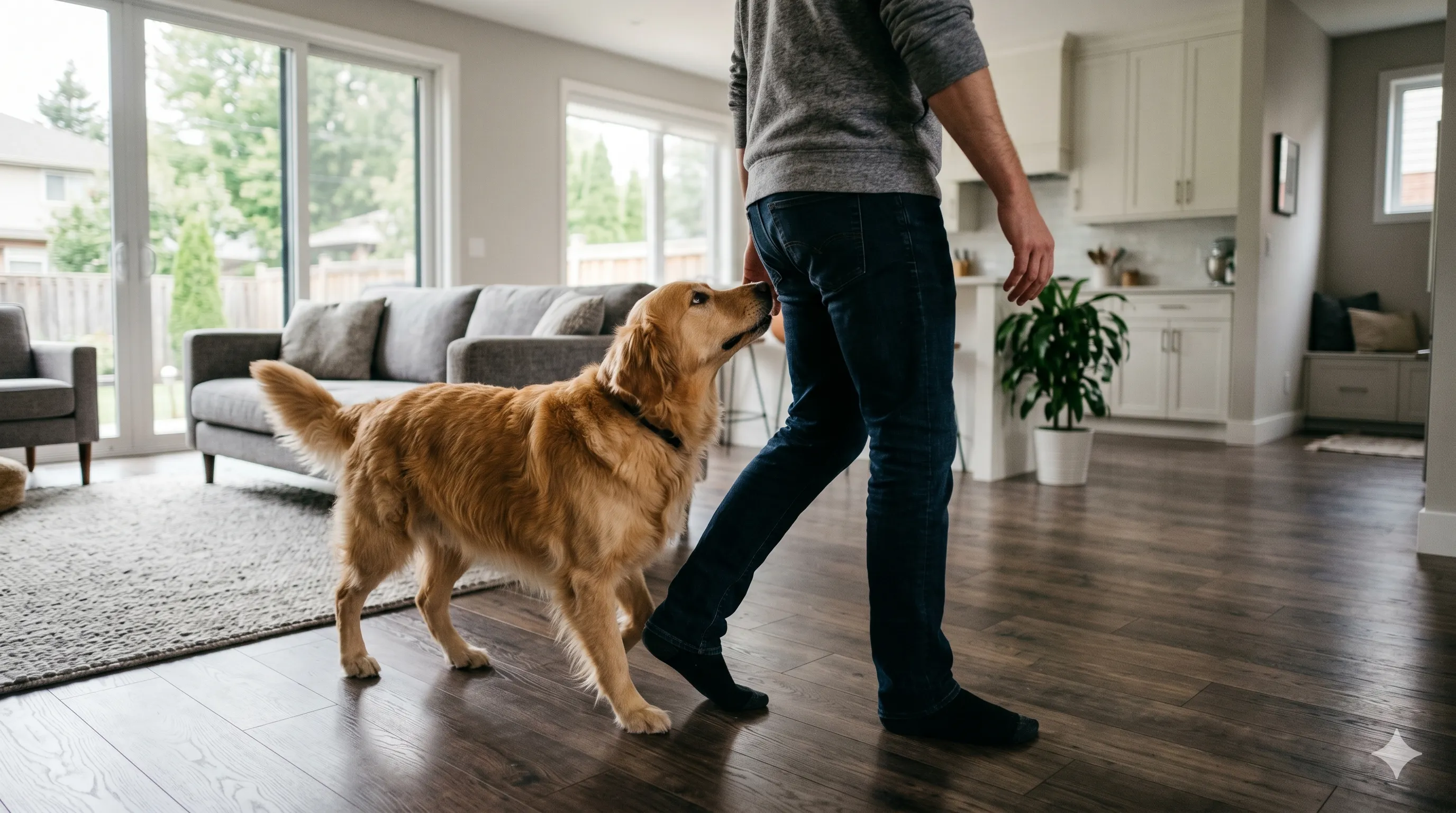
You walk through the front door after a long day, and within seconds your dog's tail starts moving wildly from side to side. It's one of the most recognizable behaviors in the animal world and one of the easiest to misunderstand. If you've ever wondered why does my dog wag its tail, the answer is far more complex than simple happiness. strongly bonded dogs usually show relaxed and happy tail wagging around their favorite people
Dogs use their tails as a powerful communication tool. A wagging tail can signal excitement, curiosity, nervousness, uncertainty, friendliness, overstimulation, or even a warning depending on how the tail moves and what the rest of the body is doing.
This is why understanding tail wagging correctly matters. Many people assume every wagging dog is friendly, but experienced trainers and veterinarians know that tail movement only tells part of the story.
Learning how to interpret your dog's tail language helps you understand emotions more accurately, avoid stressful situations, improve communication, and strengthen your relationship with your pet.
This complete guide breaks down what different tail wags actually mean, when you should be cautious, and how to read your dog's emotional state the right way.
Why Does My Dog Wag Its Tail? (Quick Answer)
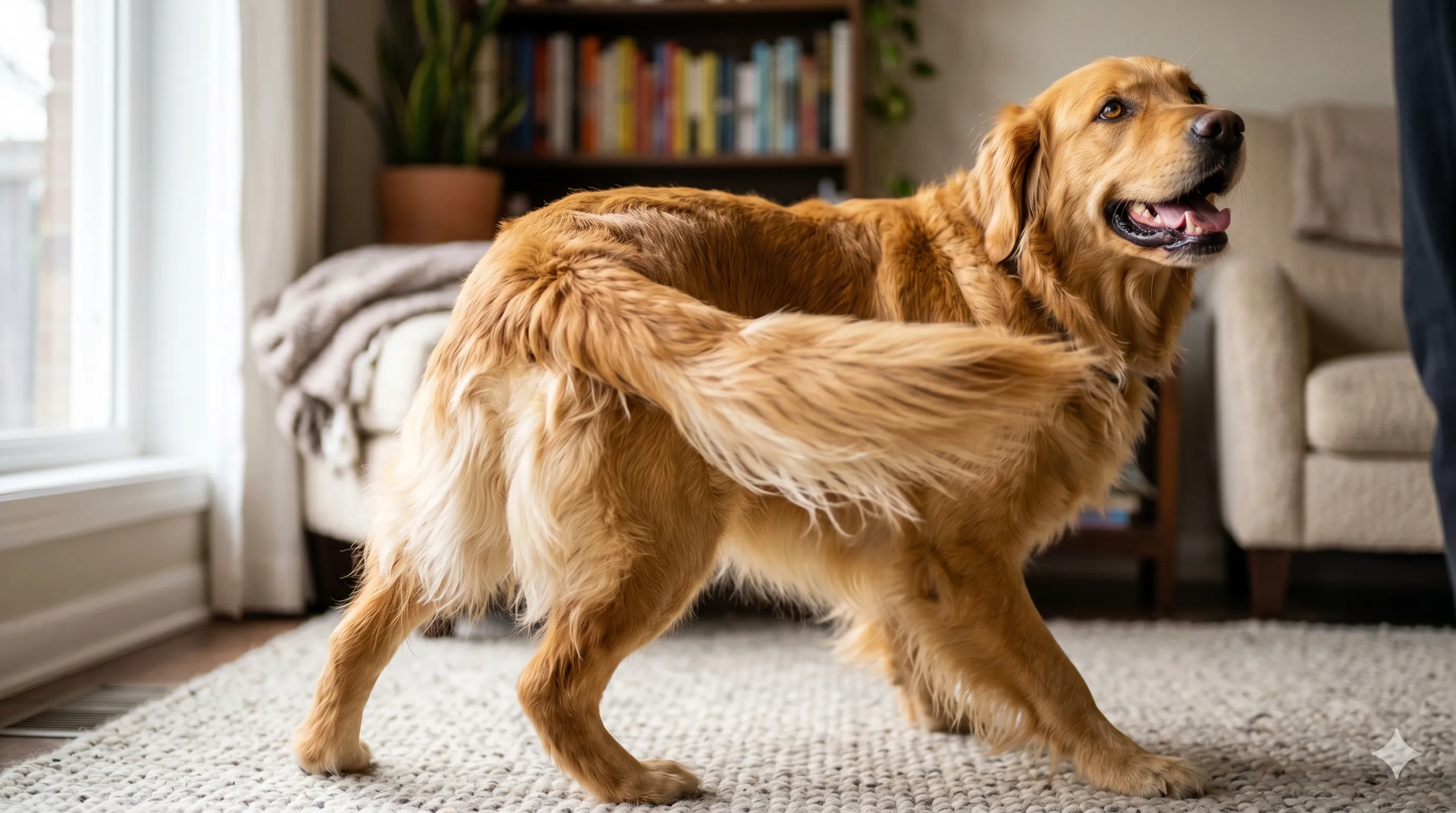
Dogs wag their tails to communicate emotions and reactions. Tail wagging may signal happiness, excitement, alertness, anxiety, curiosity, submission, or tension depending on tail speed, direction, height, and overall body language. A wagging tail does not always mean a dog is friendly or relaxed.
Dog Tail Wagging Meaning (Quick Guide)
| Tail Movement | Likely Meaning | Normal or Concern? | Recommended Response |
|---|---|---|---|
| Loose wide wag | Happy and relaxed | Normal | Engage positively |
| Fast energetic wag | Excitement or overstimulation | Usually normal | Monitor energy level |
| Low gentle wag | Uncertainty or submission | Watch carefully | Give reassurance |
| High stiff wag | Alertness or tension | Potential concern | Use caution |
| Slow controlled wag | Evaluation or uncertainty | Depends on context | Observe body language |
Tail movement alone never gives the full answer. The meaning becomes clearer when you observe posture, ears, eyes, movement, and environment together.

Why Dogs Use Their Tails to Communicate
Dogs rely heavily on body language because they communicate differently from humans. While people depend mostly on spoken language, dogs communicate through posture, movement, facial expressions, scent, and tail signals.
The tail acts almost like an emotional indicator. It helps other dogs and humans understand how the dog feels in a particular situation.
Different tail positions can communicate:
- Confidence
- Relaxation
- Excitement
- Fear
- Curiosity
- Submission
- Tension
- Defensiveness
This is why professional trainers always evaluate the "whole dog," not just the wagging tail itself.
7 Real Reasons Why Dogs Wag Their Tails
1. Happiness and Excitement
The most recognizable tail wag happens when dogs feel genuinely happy and emotionally comfortable.
This usually appears as a loose, wide, relaxed wag combined with soft eyes and relaxed posture.
Dogs commonly display this type of wag when greeting owners, preparing for play, or receiving attention.
2. Greeting and Social Bonding
Dogs naturally wag their tails during social greetings.
When your dog sees someone familiar, the wag often reflects recognition, emotional connection, and positive anticipation.
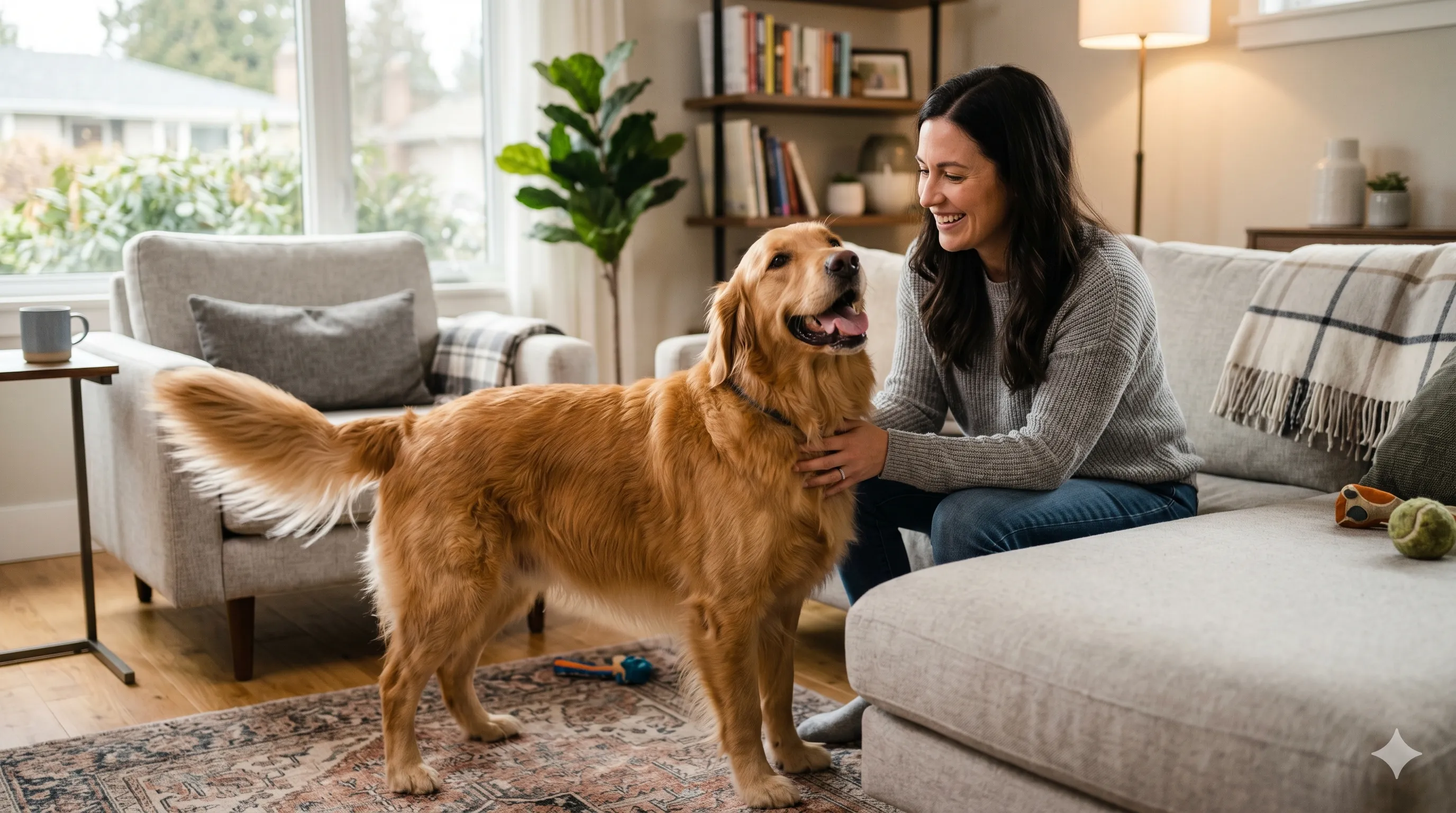
Strongly bonded dogs frequently display relaxed tail wagging when interacting closely with their favorite people. anxious dogs may combine nervous tail wagging with excessive nighttime barking or pacing
3. Curiosity and Interest
Dogs often wag their tails when observing something unfamiliar or interesting.
This type of wag is usually slower and more focused while the dog evaluates the environment.
4. Attention-Seeking Behavior
Some dogs quickly learn that tail wagging attracts positive reactions from humans.
If wagging consistently results in praise, petting, or interaction, dogs may repeat the behavior intentionally.
5. Anxiety or Nervousness
Not all wagging reflects happiness.
Low tail wagging, stiff movements, or hesitant motion may indicate stress, uncertainty, or emotional discomfort.
Dogs experiencing anxiety sometimes combine tail wagging with other stress signals like lip licking, pacing, yawning, whining, or barking. overexcited dogs that pull during walks often display rapid and energetic tail movement
6. Submission
Dogs may wag their tails lower when showing submissive behavior around people or other dogs.
This often appears alongside lowered posture, cautious movement, or avoidance of direct eye contact.
7. Alertness and Tension
A high, rigid, controlled wag may indicate alertness or defensive tension rather than friendliness.
This is one of the most misunderstood tail signals because people often mistake all wagging for positive emotion.

Tail Position Matters More Than Most People Realize
The height and stiffness of the tail provide important emotional clues.
High Tail Position
Usually signals confidence, excitement, stimulation, or alertness.
If combined with stiffness, intense staring, or rigid posture, it may indicate tension.
Neutral Tail Position
Typically reflects calm, balanced emotional state.
Low Tail Position
Often linked to uncertainty, nervousness, or submission.
Tucked Tail
Usually indicates fear, insecurity, or stress.
Understanding tail position prevents dangerous misunderstandings and helps owners respond more appropriately.
Does Tail Wagging Always Mean Happiness?
No. This is one of the biggest misconceptions about dog behavior.
Dogs wag their tails whenever they experience emotional arousal positive or negative.
A wagging tail simply means the dog is emotionally engaged. The emotion itself may be excitement, nervousness, uncertainty, or tension.
This is why context and full-body observation are essential.
How to Read Tail Wagging Correctly
1. Observe Full Body Language
The tail is only one communication signal.
Always observe:
- Ear position
- Eye contact
- Body stiffness
- Facial expression
- Movement speed
- Vocalization
2. Watch Tail Speed
Fast wagging often signals excitement or high stimulation.
Slow wagging may indicate caution, uncertainty, or careful evaluation.
3. Pay Attention to Stiffness
A relaxed wag feels loose and fluid.
A rigid wag combined with tense posture may signal discomfort or defensive behavior.
4. Understand Environmental Context
The same wag may mean different things depending on the situation.
A relaxed home environment produces very different emotional signals compared to crowded or stressful surroundings.
5. Respect Nervous Signals
If your dog appears uncomfortable, avoid forcing interaction.
Many bites occur because humans misinterpret anxious wagging as friendliness.
6. Reinforce Calm Emotional States
Reward relaxed, balanced behavior during greetings and interactions.
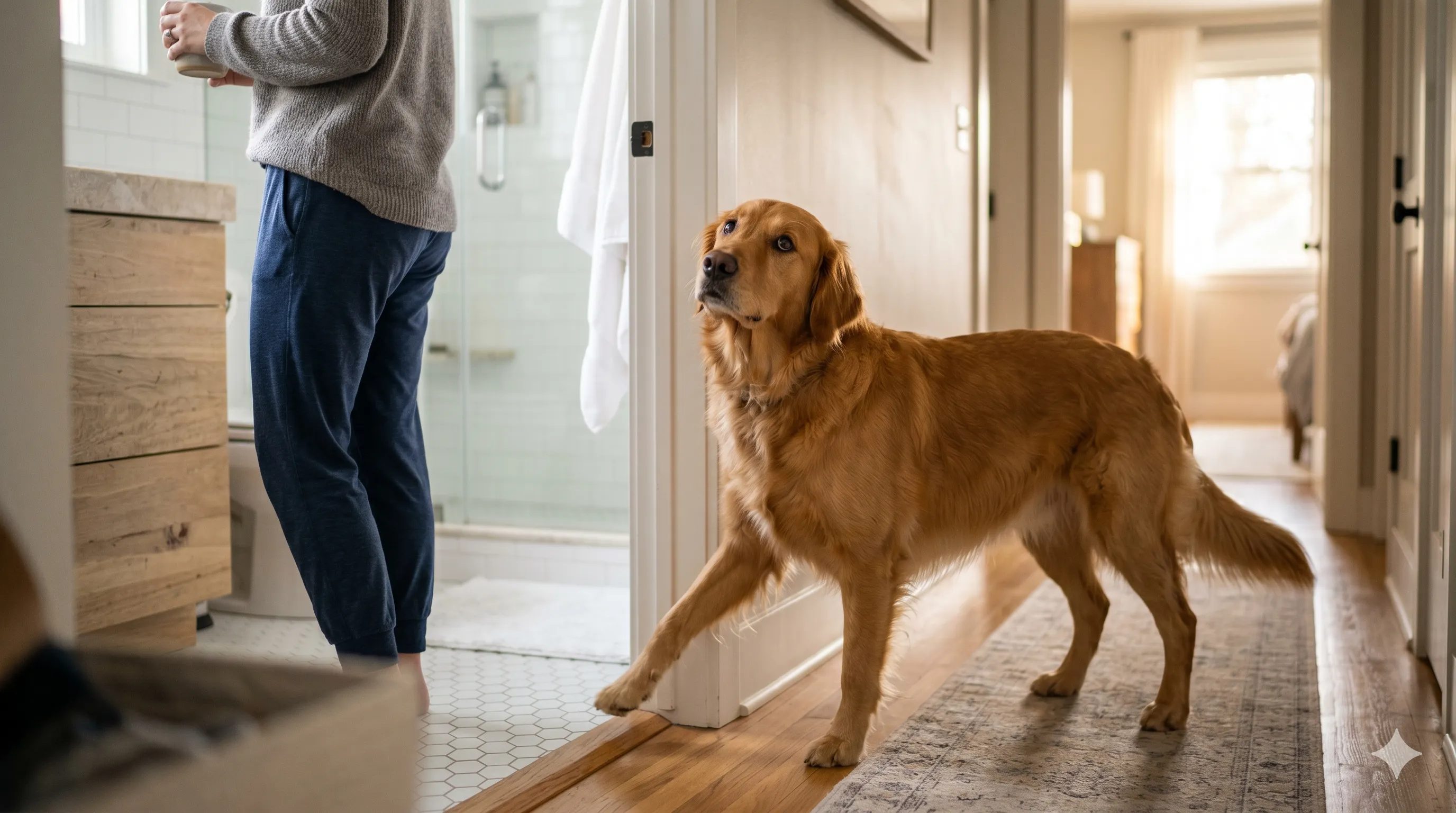
Overexcited dogs often benefit from calmer communication and structured routines. dogs frequently use multiple communication signals together including head tilting and tail wagging
7. Stay Calm Yourself
Dogs are highly sensitive to human emotions and energy.
Your own calm behavior helps create emotional stability and trust.
Normal vs Problematic Tail Wagging
- Normal Tail Wagging: Relaxed body, playful movement, balanced posture, social engagement
- Potentially Problematic Tail Wagging: Stiff body, growling, tension, hard staring, fearful posture, aggressive reactions
The difference is usually not the wag itself it's the emotional context surrounding it.
When Should You Be Concerned?
While tail wagging itself is normal, some situations deserve closer attention.
- Tail wagging combined with growling or showing teeth
- Sudden changes in normal tail movement
- Signs of pain when moving the tail
- No tail movement combined with low energy
- Fearful or defensive behavior
- Obsessive pacing or stress signals
Behavioral changes involving tail movement may occasionally indicate stress, injury, neurological issues, or emotional discomfort.
proper socialization helps puppies develop calmer and more balanced body language around people and other dogsHow Dogs Learn Tail Wagging Responses
Dogs quickly learn which behaviors create reactions from humans.
If a tail wag consistently leads to praise, attention, treats, or excitement, dogs may repeat it more frequently.
This learned communication becomes part of the bond between dogs and owners.
Over time, many dogs develop highly expressive tail language specifically shaped by human interaction.
Common Mistakes Dog Owners Make
- Assuming every wag means happiness
- Ignoring stiff posture or tension
- Approaching unfamiliar wagging dogs too quickly
- Forcing interaction during nervous behavior
- Missing subtle stress signals
- Overstimulating highly excited dogs
Understanding emotional context dramatically improves safety and communication.
Real-Life Example
A dog owner believed their dog loved meeting strangers because the tail wagged constantly during walks.
However, after learning more about canine body language, they noticed the dog's posture remained stiff and tense around unfamiliar people.
The wagging was actually signaling nervous overstimulation rather than comfort.
By slowing introductions and reducing pressure, the dog gradually became calmer and more confident in social situations.
This shows why understanding emotional signals beyond the tail itself is so important.
Final Thoughts
Understanding why does my dog wag its tail gives you a much deeper understanding of canine communication.
Tail wagging is not simply a "happy signal." It's a complex emotional language influenced by excitement, curiosity, stress, alertness, bonding, and environment.
The more accurately you read your dog's body language, the better you can respond, build trust, and avoid misunderstandings.
When you learn to interpret tail wagging correctly, you strengthen both communication and the emotional connection you share with your dog.
Medical Disclaimer
This content is provided for informational and educational purposes only and should not be considered veterinary, medical, behavioral, or training advice. While we strive for accuracy, we make no guarantees regarding completeness or results. Always consult a licensed veterinarian or qualified pet care professional before making decisions about your pet’s health, diet, or behavior.
AI Illustration Notice
Some images in this article may have been generated or enhanced using artificial intelligence for illustrative purposes.
Frequently Asked Questions
No, tail wagging can also indicate nervousness, alertness, uncertainty, or tension depending on body language and context.
Dogs often wag their tails during greetings because they feel excitement, emotional connection, and recognition.
Yes, nervous dogs may wag their tails low or stiffly while showing other stress-related body language signals.
A stiff tail wag may indicate tension, alertness, overstimulation, or defensive behavior rather than friendliness.
Dogs may wag around strangers due to curiosity, uncertainty, excitement, or social engagement depending on the situation.
No, you should always observe full body language because not all wagging dogs are comfortable with interaction.
Low tail wagging is not always bad, but it often reflects nervousness, uncertainty, or submissive behavior.
You should pay attention if tail wagging changes suddenly or appears alongside stiffness, growling, fear, pain, or unusual behavior.
Editorial Note
This article is part of PetNurture's educational library.
Topics are researched using publicly available educational resources, recognised veterinary organisations, academic publications and established animal welfare references where appropriate.
Every article is reviewed by the PetNurture editorial team for clarity, structure, readability and consistency before publication.
References
The information in this article has been reviewed and supported using the following sources.
American Kennel Club
Confirms that tail wagging signals emotional arousal generally, not only happiness, and that wag speed, direction, and position affect meaning; supports the quick-answer and tail-position sections of this article.
Accessed Aug 6, 2026
American Kennel Club
Understanding Dog Body Language: Decipher Dogs' Signs & Signals
Supports reading tail signals alongside ears, eyes, and posture rather than in isolation, as recommended in the 'How to Read Tail Wagging Correctly' section of this article.
Accessed Aug 6, 2026
Pet Emergency Guidance
Every pet is unique. If your pet exhibits severe symptoms, sudden behavioral changes, or a medical emergency, do not rely on online guides — contact a licensed veterinarian or emergency clinic immediately.
About PetNurture
PetNurture is an educational library of pet care guides, interactive tools and practical resources for pet parents. We work continuously to keep our content accurate and up to date. Reader feedback helps us maintain content quality.
Related Articles
Popular Dog Guides


Dog
Dog Calorie Calculator
Find the right daily calorie target for your dog's weight and activity level.