Why Does My Cat Meow So Much? Real Reasons, Warning Signs & How to Reduce Excessive Meowing
- Why Does My Cat Meow So Much? (Quick Answer)
- What Different Types of Cat Meows Can Mean
- Why Cats Meow More at Humans Than Other Cats
- 8 Real Reasons Why Cats Meow So Much
- 1. Attention-Seeking Behavior
- 2. Hunger and Feeding Anticipation
- 3. Boredom and Lack of Stimulation
- 4. Stress and Environmental Changes
- 5. Nighttime Activity Cycles
- 6. Medical Problems or Pain
- 7. Aging and Cognitive Changes
- 8. Personality and Breed Tendencies
- When Excessive Meowing Becomes Concerning
- How to Reduce Excessive Cat Meowing
- Identify the Real Trigger First
- Maintain Predictable Daily Routines
- Increase Mental and Physical Enrichment
- Avoid Reinforcing Demand Meowing
- Provide Evening Play Sessions
- Reduce Environmental Stress
- Common Owner Mistakes
- Responding to Every Meow
- Ignoring Sudden Behavioral Changes
- Assuming the Cat Is "Just Talkative"
- Providing Too Little Enrichment
- Using Punishment
- Real-Life Example
- When to See a Veterinarian
- Final Thoughts
Note: This article is for informational purposes only and does not replace professional veterinary advice.
Cats may not speak human language, but they communicate constantly and meowing is one of the clearest ways they try to get your attention.
Some cats meow softly when greeting you. Others vocalize loudly before meals, during the night, while wandering through the house, or seemingly for no obvious reason at all.
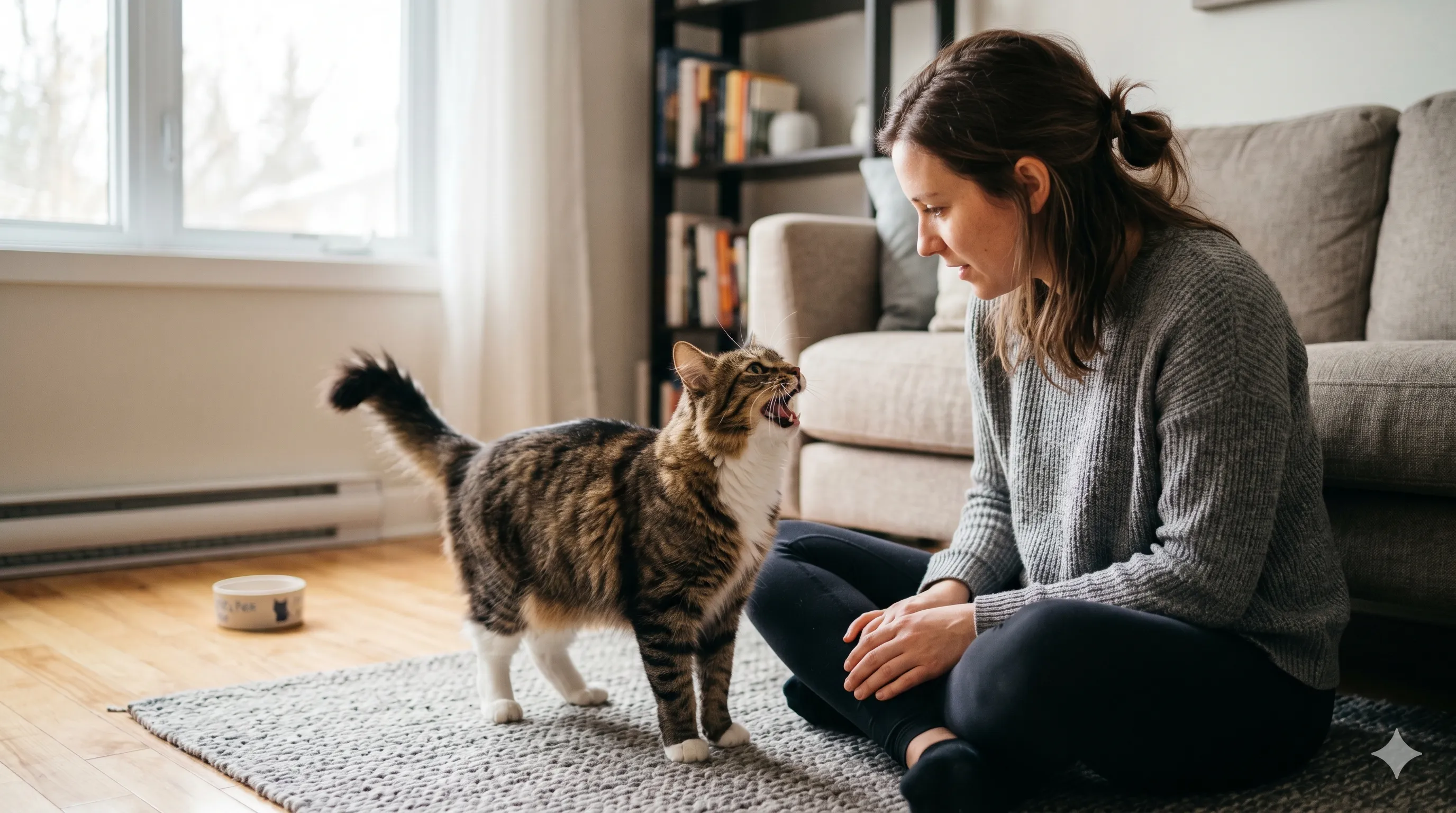
If you keep asking yourself "why does my cat meow so much?", the answer is usually more complex than simple attention-seeking behavior.
Excessive meowing can be connected to boredom, routine changes, stress, emotional dependency, aging, environmental triggers, learned communication habits, or even hidden medical problems. cats that constantly follow their owners may also use excessive meowing as attention-seeking communication
Understanding what your cat is trying to communicate is the key to reducing excessive vocalization without damaging trust or emotional security.
This guide explains the real reasons cats meow excessively, how to recognize warning signs, when to worry, and what you can do to create a calmer and healthier environment for your cat.
Why Does My Cat Meow So Much? (Quick Answer)
Cats meow primarily to communicate with humans. Excessive meowing usually happens because your cat wants attention, food, stimulation, emotional reassurance, routine consistency, or help with discomfort or stress.
Occasional meowing is completely normal, but sudden or persistent vocalization may signal behavioral or medical issues that should not be ignored.
What Different Types of Cat Meows Can Mean
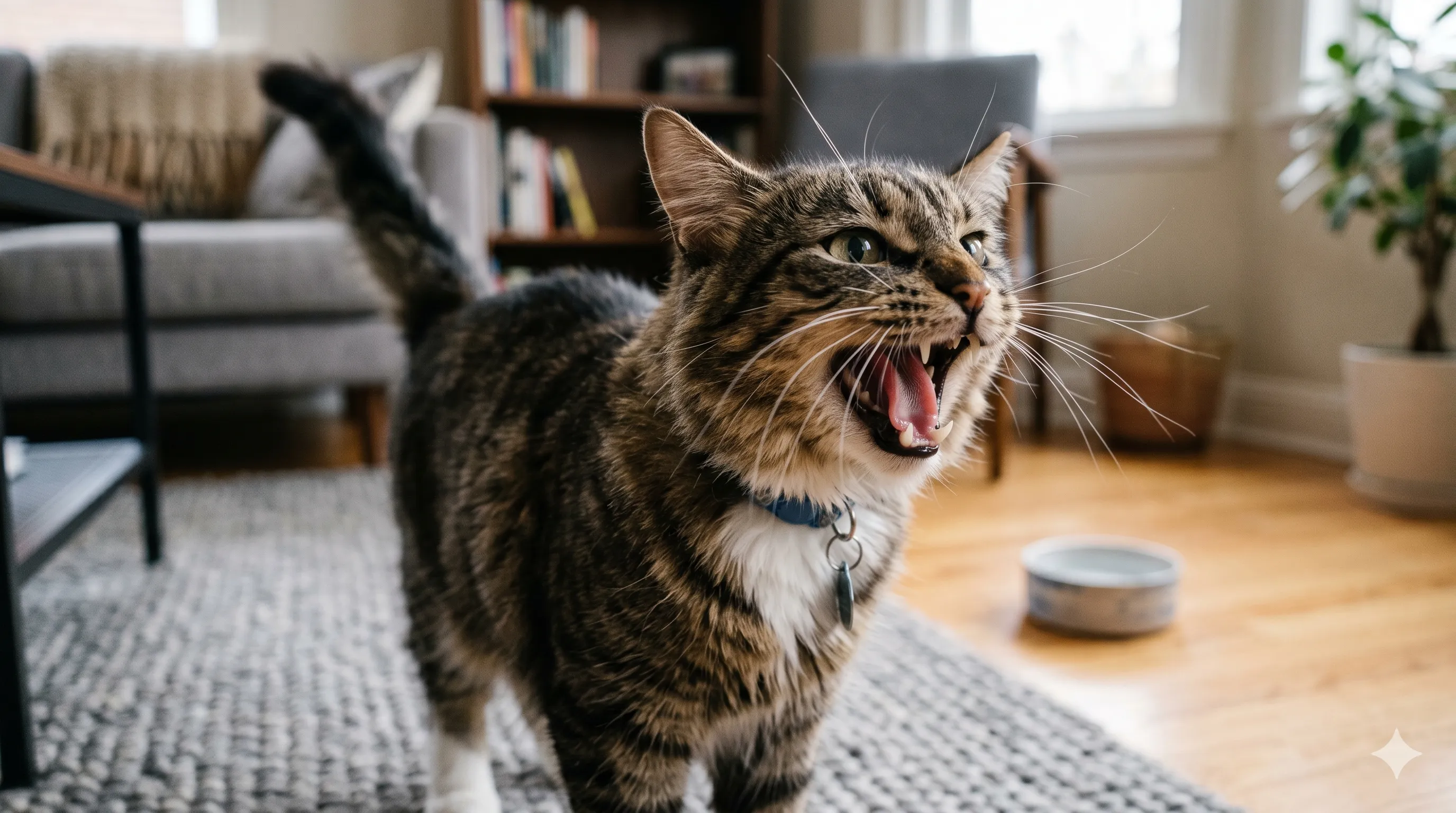
| Type of Meowing | Likely Meaning | Normal or Concern? | Recommended Response |
|---|---|---|---|
| Soft short meow | Greeting or acknowledgment | Normal | Respond calmly |
| Repeated loud meowing | Demand or frustration | Monitor closely | Check routine and triggers |
| Nighttime meowing | Boredom or disrupted routine | Sometimes concerning | Increase evening stimulation |
| Sudden nonstop vocalization | Possible discomfort or illness | Concerning | Monitor behavior carefully |
| Senior cat confusion meowing | Cognitive or sensory changes | Needs attention | Discuss with veterinarian |
| Attention-focused meowing | Learned communication behavior | Usually normal | Avoid over-reinforcement |
Understanding the pattern and timing of your cat's vocalization is often the fastest way to identify the real cause.
Why Cats Meow More at Humans Than Other Cats
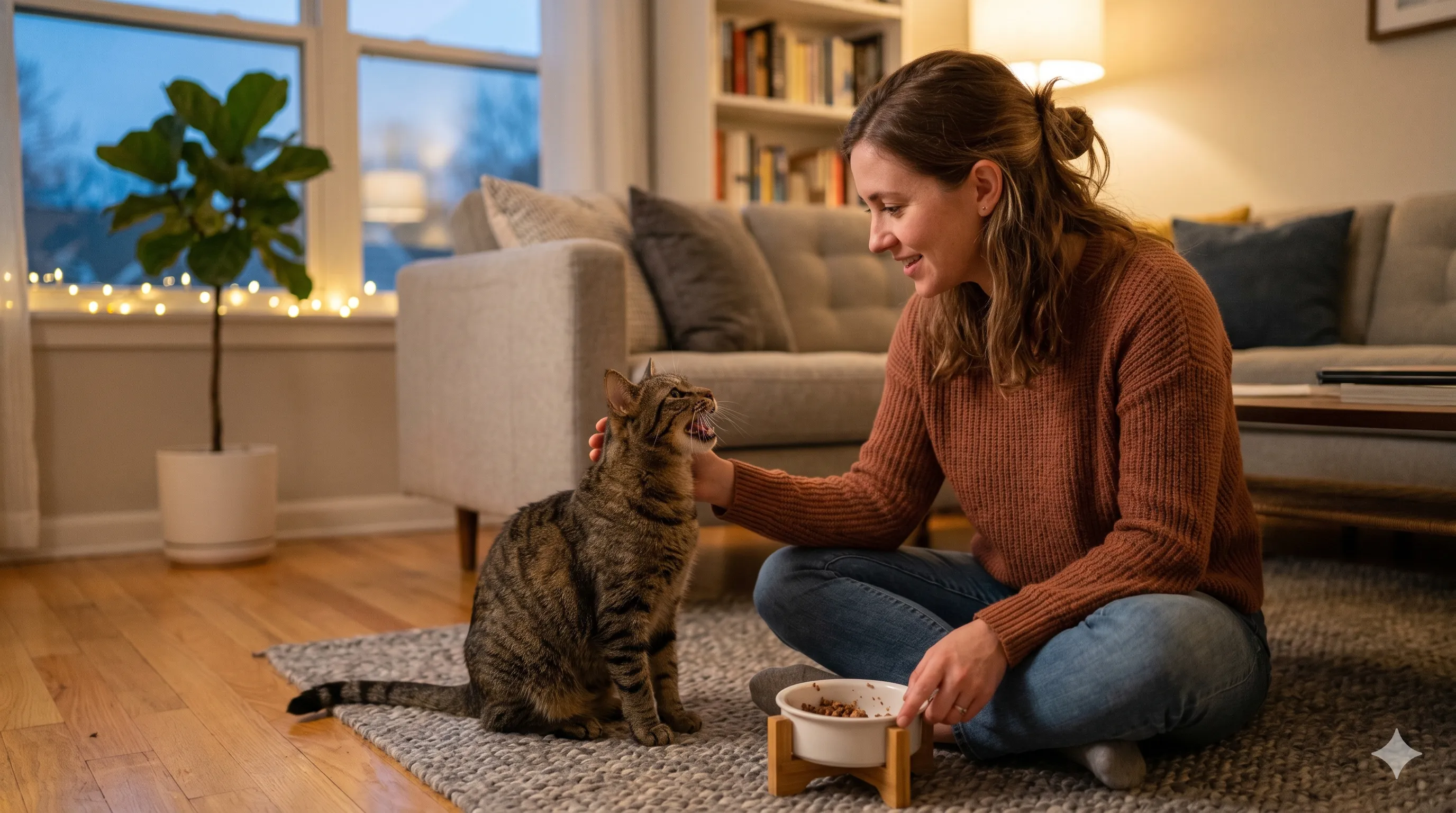
One important fact many cat owners do not realize is that adult cats rarely meow extensively at each other.
Meowing is primarily a communication system cats develop specifically for humans.
Over time, cats learn:
- which sounds attract attention,
- which vocalizations lead to food,
- and which behaviors create emotional responses.
In many homes, excessive meowing unintentionally becomes a learned communication habit.
If meowing consistently results in:
- feeding,
- petting,
- talking,
- eye contact,
- or immediate reactions,
the cat learns that vocalization works effectively.
8 Real Reasons Why Cats Meow So Much
1. Attention-Seeking Behavior
This is one of the most common reasons behind excessive meowing.
Cats quickly recognize which behaviors generate interaction from humans.
If your cat receives attention every time they vocalize, the behavior often strengthens over time.
Cats that constantly follow their owners may also use excessive meowing as a communication strategy for interaction and reassurance. bored indoor cats often combine zoomies and vocalization when they lack enough stimulation
2. Hunger and Feeding Anticipation
Many cats become extremely vocal around feeding schedules.
Cats thrive on routine and quickly memorize meal timing.
Inconsistent feeding schedules often increase:
- anticipation meowing,
- food demand behavior,
- and early morning vocalization.
Some cats even begin vocalizing long before meals because they expect food at certain times.
3. Boredom and Lack of Stimulation
Indoor cats especially may become excessively vocal when mentally under-stimulated.
Without enough:
- play,
- exploration,
- climbing,
- interactive activity,
- or enrichment,
many cats create stimulation through vocal behavior.
Bored indoor cats frequently combine zoomies, pacing, and vocalization when they lack enough activity throughout the day. persistent nighttime vocalization is one of the most common forms of excessive cat meowing
4. Stress and Environmental Changes
Cats are highly sensitive to environmental disruption.
Stress-related meowing often increases after:
- moving homes,
- new pets,
- visitors,
- schedule changes,
- construction noise,
- or unfamiliar environments.
An anxious cat may vocalize as a reassurance-seeking behavior when feeling emotionally insecure.
5. Nighttime Activity Cycles
Cats are naturally most active during dawn and dusk.
When cats receive too little daytime stimulation, nighttime vocalization often increases dramatically.
Persistent nighttime vocalization is one of the most common forms of excessive cat meowing. a sudden loss of appetite combined with excessive meowing may indicate an underlying health issue
This behavior is especially common in:
- young indoor cats,
- high-energy breeds,
- under-stimulated cats,
- and cats lacking evening routines.
6. Medical Problems or Pain
Sudden excessive meowing should never automatically be treated as "just behavioral."
Many medical conditions can increase vocalization.
Possible causes include:
- pain,
- thyroid problems,
- digestive discomfort,
- hearing decline,
- vision problems,
- high blood pressure,
- or cognitive dysfunction.
A sudden loss of appetite combined with excessive meowing may indicate an underlying health issue that requires attention. cats often combine staring and meowing together when trying to communicate a specific need
7. Aging and Cognitive Changes
Senior cats often become more vocal due to age-related changes.
Older cats may experience:
- confusion,
- memory decline,
- disorientation,
- vision loss,
- or hearing changes.
This is one reason senior cats sometimes meow loudly at night or wander while vocalizing.
8. Personality and Breed Tendencies
Some cat breeds are naturally more vocal than others.
Highly vocal breeds commonly include:
- Siamese cats
- Oriental breeds
- Bengals
- Tonkinese cats
For these breeds, frequent communication is often completely normal.
When Excessive Meowing Becomes Concerning
Occasional meowing is normal.
However, certain patterns deserve closer attention.
You should monitor carefully if your cat develops:
- sudden nonstop meowing,
- nighttime distress vocalization,
- restlessness,
- confusion,
- loss of appetite,
- aggression,
- major behavior changes,
- or excessive hiding behavior.
Stress and insecurity may also explain why cats hide more than usual while becoming increasingly vocal. stress and insecurity may also explain why cats hide more than usual
Behavioral changes combined with excessive vocalization should never be ignored.
How to Reduce Excessive Cat Meowing
Identify the Real Trigger First
The biggest mistake cat owners make is trying to stop the sound without understanding the cause.
Observe:
- when the meowing happens,
- what occurs before it,
- and how people respond afterward.
Behavior patterns often reveal the true trigger surprisingly quickly.
Maintain Predictable Daily Routines
Cats feel emotionally safer when life feels consistent.
Predictable schedules for:
- feeding,
- playtime,
- sleep,
- and interaction
often reduce anxiety-driven vocalization significantly.
Increase Mental and Physical Enrichment
Many cats vocalize excessively simply because their environment lacks stimulation.
Helpful enrichment includes:
- interactive toys,
- window perches,
- cat trees,
- food puzzles,
- hunting-style play sessions,
- and rotating toys regularly.
Avoid Reinforcing Demand Meowing
If your cat receives immediate rewards every time they vocalize loudly, the behavior strengthens.
Instead:
- reward calm quiet behavior,
- avoid dramatic reactions,
- and respond consistently.
This does not mean emotionally ignoring your cat it means avoiding accidental reinforcement of nonstop demanding behavior.
Provide Evening Play Sessions
One of the best ways to reduce nighttime meowing is structured evening activity.
Before bedtime, try:
- interactive wand toys,
- climbing games,
- food puzzles,
- or short training sessions.
This helps many cats settle more effectively overnight.
Reduce Environmental Stress
Stress reduction often lowers vocalization dramatically.
Helpful changes may include:
- quiet resting spaces,
- stable routines,
- multiple safe zones,
- and reducing overstimulation.
Common Owner Mistakes
Responding to Every Meow
This teaches the cat that vocalization controls human behavior.
Ignoring Sudden Behavioral Changes
Sudden increases in meowing should always be evaluated carefully.
Assuming the Cat Is "Just Talkative"
Sometimes excessive vocalization reflects stress, discomfort, or illness.
Providing Too Little Enrichment
Many indoor cats lack enough stimulation for healthy emotional balance.
Using Punishment
Punishing vocalization often increases anxiety and damages trust.
Real-Life Example
A young indoor cat began meowing loudly every night around 2 AM.
The owner initially responded with food and attention each time the vocalization started.
Over time, the behavior became more intense and more frequent.
After adjusting the routine by adding evening play sessions, climbing enrichment, food puzzles, and scheduled feeding times, the cat gradually became calmer.
Within two weeks, nighttime vocalization decreased significantly.
The biggest improvement came from reducing boredom and stopping accidental reinforcement of nighttime demands.
When to See a Veterinarian
You should contact a veterinarian if excessive meowing is:
- sudden,
- intense,
- paired with appetite changes,
- combined with hiding or aggression,
- or associated with aging-related confusion.
Behavioral issues and medical problems can look extremely similar in cats.
Early evaluation helps identify serious problems before they worsen.
Final Thoughts
Understanding why your cat meows so much starts with recognizing that vocalization is communication not random noise.
Most cats meow because they are trying to express:
- a need,
- an emotion,
- a routine expectation,
- or physical discomfort.
Once you identify the real trigger, excessive meowing usually becomes much easier to manage.
With proper enrichment, emotional stability, predictable routines, and careful observation, many cats become calmer, quieter, and more emotionally balanced over time.
This content is carefully reviewed for educational accuracy and should not replace professional veterinary advice for persistent behavioral or medical concerns.
Medical Disclaimer
This content is provided for informational and educational purposes only and should not be considered veterinary, medical, behavioral, or training advice. While we strive for accuracy, we make no guarantees regarding completeness or results. Always consult a licensed veterinarian or qualified pet care professional before making decisions about your pet’s health, diet, or behavior.
AI Illustration Notice
Some images in this article may have been generated or enhanced using artificial intelligence for illustrative purposes.
Frequently Asked Questions
Cats may meow excessively because of attention-seeking behavior, boredom, stress, hunger, routine changes, or medical issues.
Occasional meowing is normal, but sudden or nonstop vocalization may indicate a behavioral or health concern.
Nighttime meowing is often linked to boredom, excess energy, attention-seeking, aging, or disrupted routines.
Yes, under-stimulated indoor cats frequently become more vocal when they lack mental and physical enrichment.
Ignoring demanding meowing while rewarding calm quiet behavior can help reduce reinforcement of excessive vocalization.
Yes, pain, illness, cognitive changes, thyroid problems, and discomfort can increase vocalization significantly.
Many senior cats become more vocal because of confusion, sensory decline, or age-related cognitive changes.
Consistent routines, mental enrichment, structured play, and avoiding reinforcement of constant meowing often help reduce the behavior.
Editorial Note
This article is part of PetNurture's educational library.
Topics are researched using publicly available educational resources, recognised veterinary organisations, academic publications and established animal welfare references where appropriate.
Every article is reviewed by the PetNurture editorial team for clarity, structure, readability and consistency before publication.
References
The information in this article has been reviewed and supported using the following sources.
Cornell University College of Veterinary Medicine (Feline Health Center)
Confirms that nighttime vocalization is linked to cognitive dysfunction, hyperthyroidism, and hypertension in senior cats; supports the 'Medical Problems or Pain' and 'Aging and Cognitive Changes' sections of this article.
Accessed Aug 6, 2026
VCA Animal Hospitals
Cat Behavior Problems - Vocalization
Explains that cats develop meowing specifically as a learned communication strategy with humans and that responses can reinforce the behavior; supports the 'Why Cats Meow More at Humans Than Other Cats' and 'Attention-Seeking Behavior' sections of this article.
Accessed Aug 6, 2026
Pet Emergency Guidance
Every pet is unique. If your pet exhibits severe symptoms, sudden behavioral changes, or a medical emergency, do not rely on online guides — contact a licensed veterinarian or emergency clinic immediately.
About PetNurture
PetNurture is an educational library of pet care guides, interactive tools and practical resources for pet parents. We work continuously to keep our content accurate and up to date. Reader feedback helps us maintain content quality.
Related Articles
Popular Cat Guides

Cat
Cat Feeding Calculator
Calculate how much food your cat needs daily based on weight, age, and activity level.