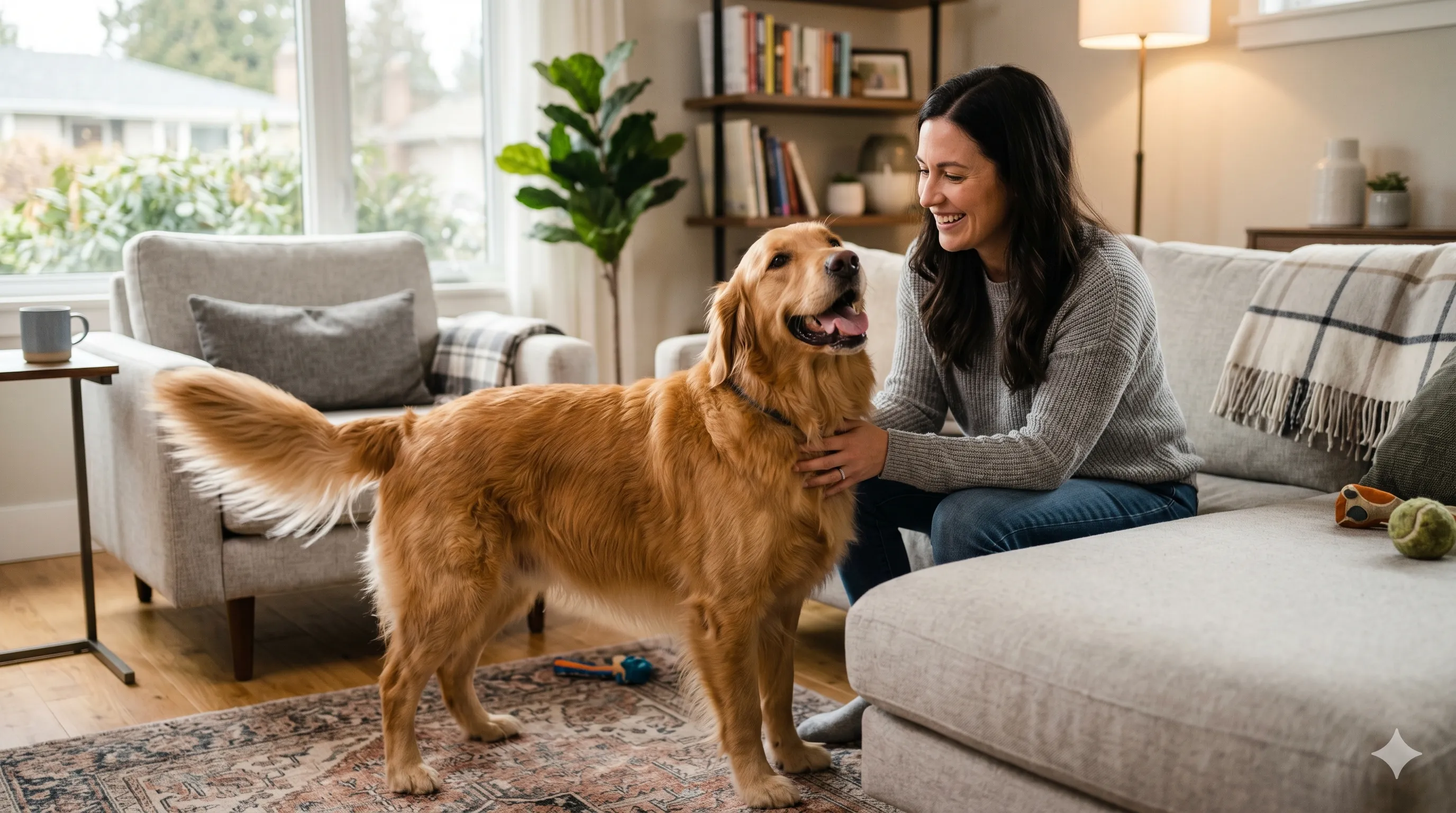
Why Does My Dog Follow Me to the Bathroom? Real Reasons and Clingy Dog Behavior Explained
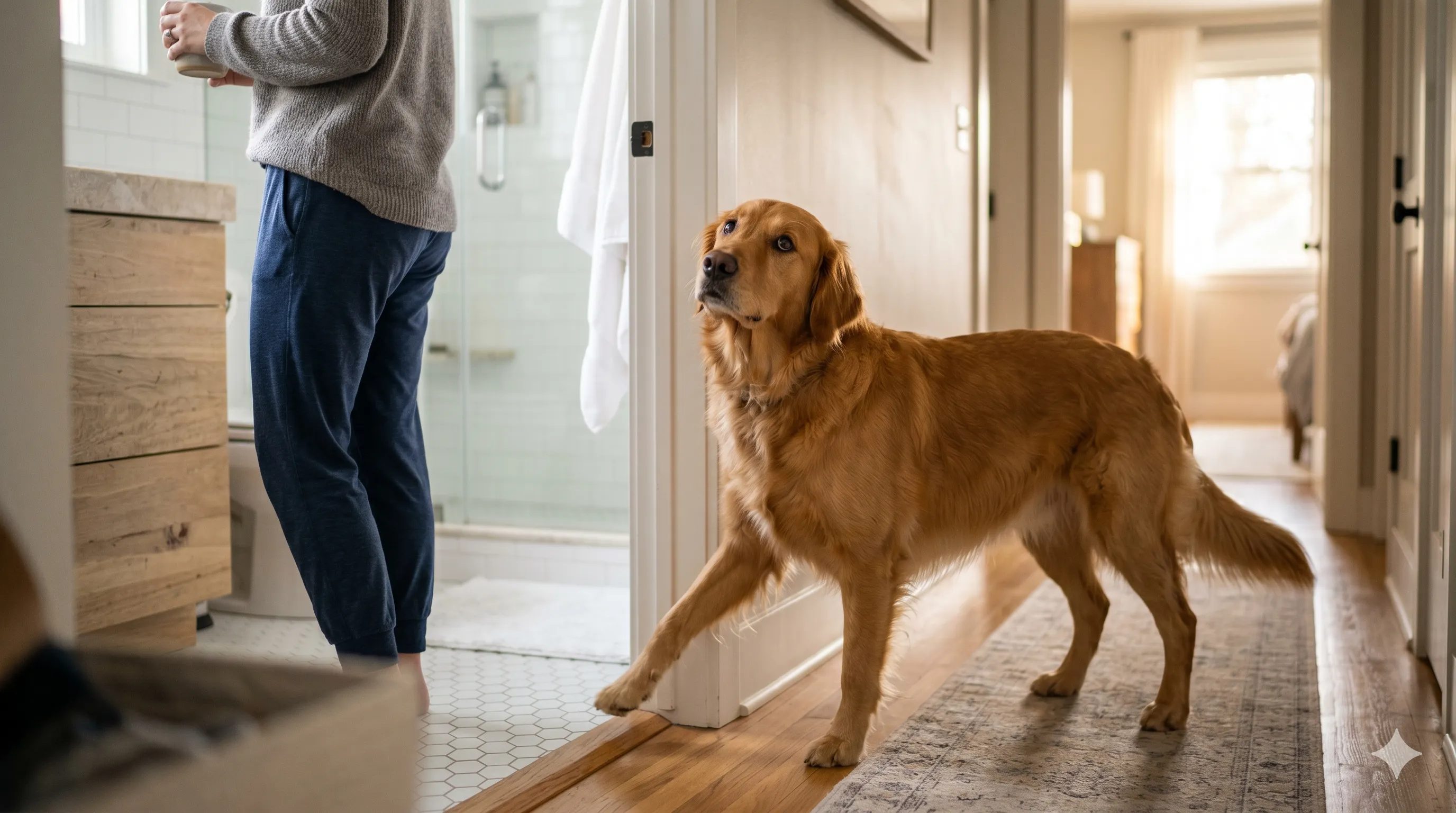
- Why Does My Dog Follow Me to the Bathroom? (Quick Answer)
- Why Dogs Naturally Want to Stay Close to Humans
- Dog Following Behavior Explained (Quick Guide)
- 7 Real Reasons Why Dogs Follow You to the Bathroom
- 1. Pack Instinct Is the Biggest Reason
- 2. Emotional Bonding and Attachment
- 3. Curiosity Plays a Major Role
- 4. Following Behavior Becomes a Habit
- 5. Your Dog May Be Seeking Interaction
- 6. Mild Separation Anxiety Can Sometimes Contribute
- 7. Some Dogs Feel Protective Toward Owners
- Normal vs Problematic Bathroom Following
- When Should You Be Concerned?
- How to Build Healthy Independence
- 1. Allow Healthy Attachment Without Encouraging Dependency
- 2. Practice Short Independent Periods
- 3. Avoid Reinforcing Every Following Behavior
- 4. Create Comfortable Independent Spaces
- 5. Maintain Predictable Routines
- Common Mistakes Owners Make
- Example Scenario
- Final Thoughts
Note: This article is for informational purposes only and does not replace professional veterinary advice.
You stand up to head toward the bathroom and before you even reach the door, your dog is already following closely behind. If this happens regularly, you've probably found yourself wondering: "why does my dog follow me to the bathroom?" dogs that follow their owners everywhere often show the same pack-bonding behavior in the bathroom
For many dog owners, this behavior feels funny at first. But over time, it can start raising questions.
Is your dog overly attached?
Could it be separation anxiety?
Or is this actually completely normal canine behavior?
The reality is that dogs do not usually follow their owners randomly. This behavior is deeply connected to natural pack instincts, emotional bonding, learned routines, curiosity, and communication patterns.
In most cases, bathroom-following behavior is harmless and simply reflects a strong connection between you and your dog.
However, the emotional intensity behind the behavior matters. Calm attachment is healthy. Panic and distress are not.
Understanding the difference helps you build a healthier relationship while preventing unhealthy dependency.
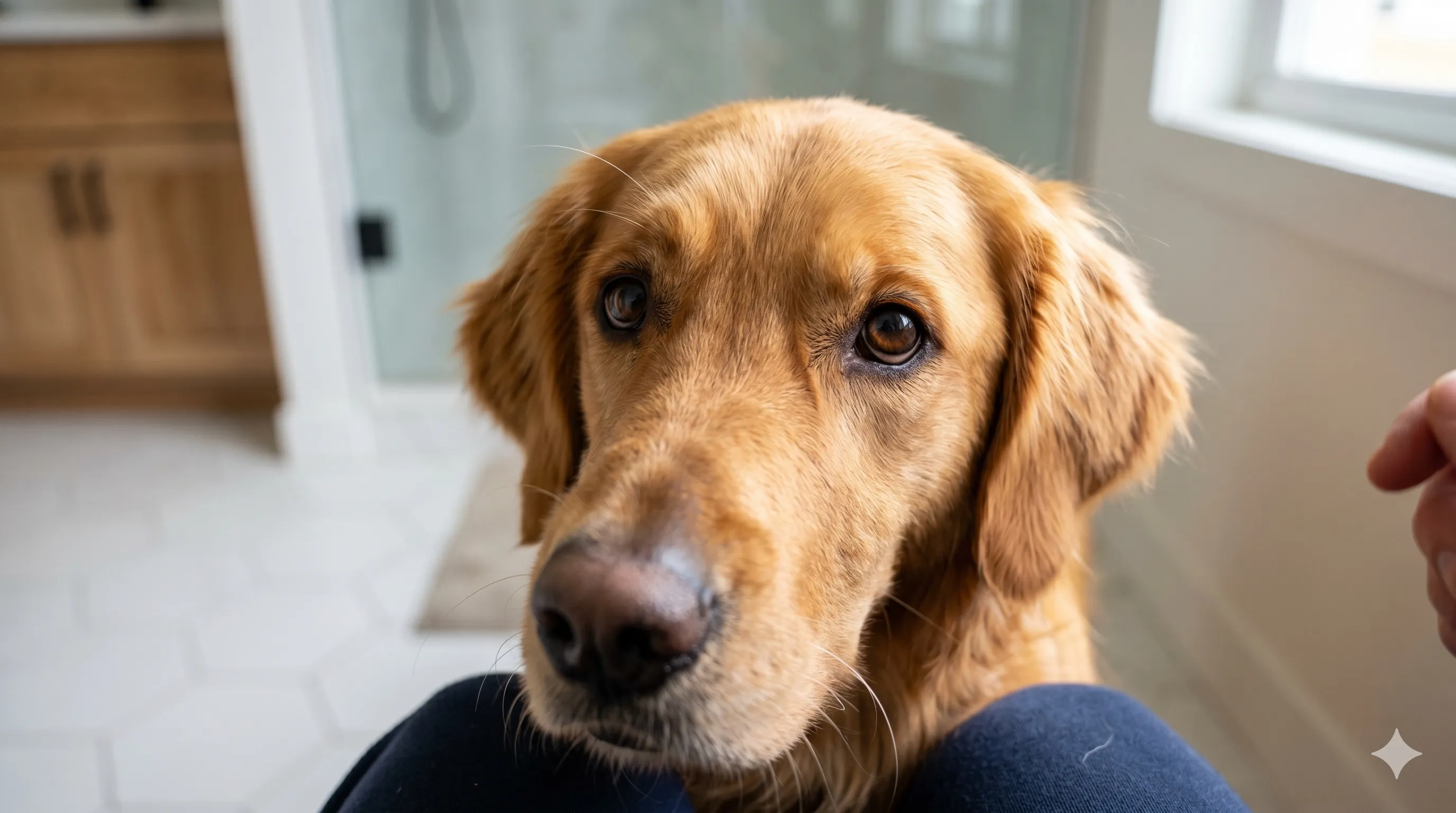
Why Does My Dog Follow Me to the Bathroom? (Quick Answer)
Dogs follow their owners to the bathroom because of pack instinct, emotional bonding, curiosity, routine behavior, and attachment. In most situations, this behavior is completely normal and reflects trust, comfort, and social connection.
The important factor is whether your dog remains emotionally relaxed or becomes distressed when separated.
Why Dogs Naturally Want to Stay Close to Humans
Dogs are highly social animals.
For thousands of years, canine survival depended heavily on staying close to their group or "pack".
In natural canine social structures, separation from the group could mean:
- Danger
- Isolation
- Reduced safety
- Loss of resources
Even though modern dogs live safely inside homes, many of these instincts still remain deeply rooted in canine behavior.
Your dog often sees you as:
- Part of their social group
- A source of security
- A provider of comfort
- A predictable routine figure
Because of this, following you from room to room can feel completely natural from your dog's perspective.
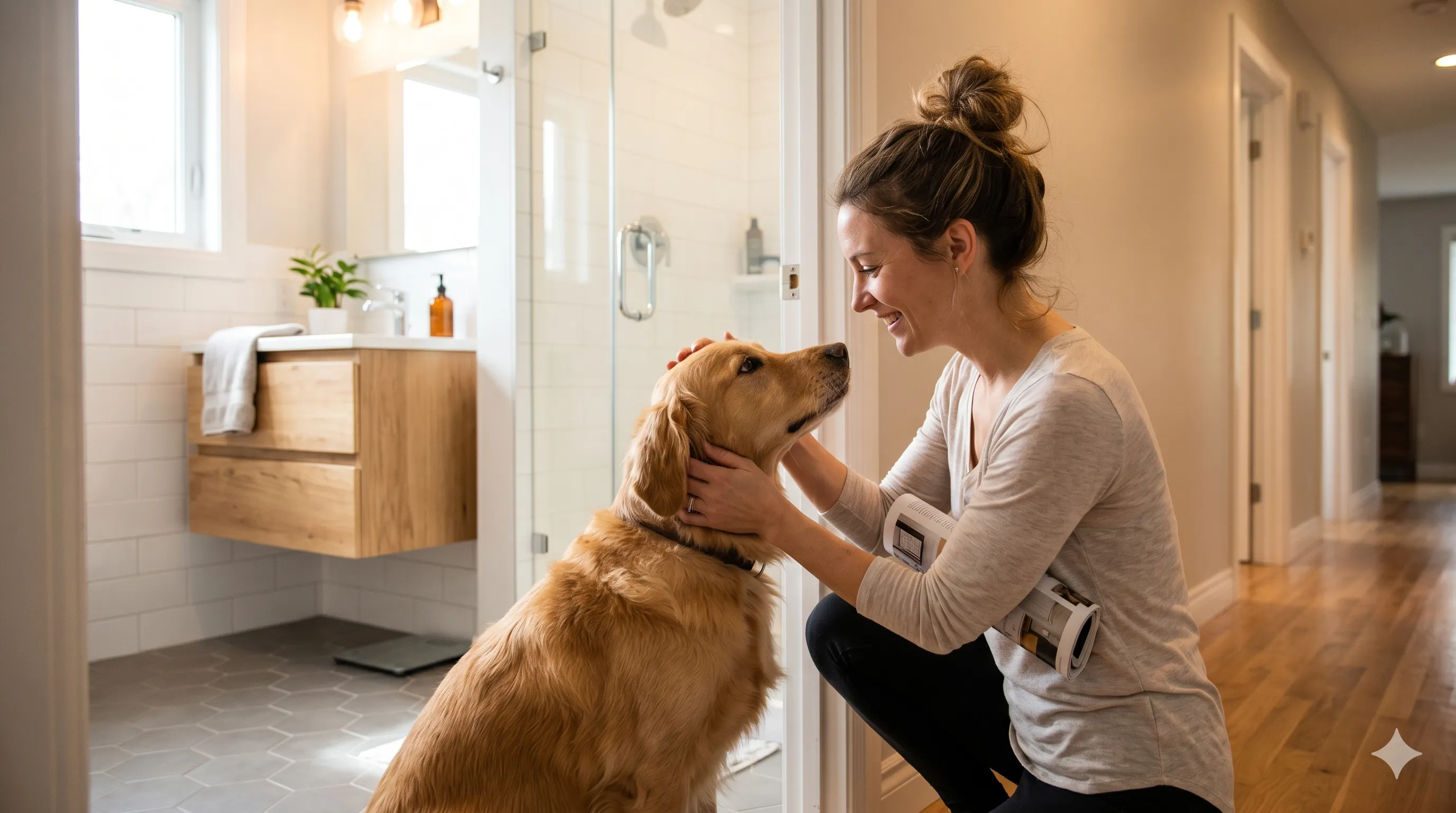
Dog Following Behavior Explained (Quick Guide)
| Behavior | Possible Meaning | Normal or Concern? | Helpful Response |
|---|---|---|---|
| Calm following | Bonding and trust | Normal | Allow healthy attachment |
| Waiting outside door | Attachment and routine | Normal | No concern needed |
| Whining or scratching | Anxiety or distress | Potential concern | Encourage independence |
| Following one owner only | Primary bonding | Normal | Build balanced interaction |
| Panic during separation | Separation anxiety | Concerning | Behavioral support needed |
7 Real Reasons Why Dogs Follow You to the Bathroom
1. Pack Instinct Is the Biggest Reason
At its core, bathroom-following behavior is usually driven by pack instinct.
Dogs naturally prefer staying near individuals they trust.
From your dog's perspective, moving away from the group without them may simply feel unusual or important to monitor.
This is especially common in:
- Highly social dogs
- Companion breeds
- Rescue dogs
- Dogs strongly bonded to one owner
Dogs that follow their owners everywhere often show the same pack-bonding behavior in the bathroom. separation anxiety in dogs can sometimes begin with clingy following behavior and difficulty staying alone
In many cases, the behavior is simply a sign that your dog enjoys your company and feels secure around you.
2. Emotional Bonding and Attachment
Dogs form deep emotional relationships with humans.
If your dog spends large amounts of time with you daily, following behavior often strengthens naturally over time.
Many dogs genuinely prefer staying close because owners provide:
- Comfort
- Safety
- Attention
- Predictability
- Emotional security
This type of attachment is usually healthy when balanced with confidence and independence.
3. Curiosity Plays a Major Role
Dogs are naturally curious animals.
When you suddenly walk toward another room and close the door behind you, your dog often wants to know:
- Where are you going?
- What's happening?
- Will something interesting happen?
Even ordinary bathroom routines can seem interesting or mysterious to a curious dog.
This is especially common in younger dogs and highly observant breeds.
4. Following Behavior Becomes a Habit
Dogs quickly develop routine-based behaviors.
If your dog has followed you to the bathroom many times without negative consequences, the pattern becomes familiar and automatic.
Over time, the behavior may happen almost unconsciously.
Dogs are excellent at learning repetitive household patterns and often anticipate owner movement before it even happens.
5. Your Dog May Be Seeking Interaction
Some dogs follow owners because the behavior consistently results in interaction.
Even simple responses such as:
- Talking
- Petting
- Eye contact
- Laughing
- Attention
can reinforce the behavior strongly.
Dogs learn quickly which actions create social engagement.
In homes where owners constantly interact with dogs during following behavior, the habit often strengthens over time.
6. Mild Separation Anxiety Can Sometimes Contribute
In some situations, bathroom-following behavior may signal mild emotional dependency or separation anxiety tendencies.
This becomes more likely when your dog:
- Whines outside the door
- Scratches repeatedly
- Barks during separation
- Shows panic when blocked from following
Separation anxiety in dogs can sometimes begin with clingy following behavior and difficulty staying alone. some dogs use staring and following together as ways to communicate attention and emotional attachment
This does not automatically mean your dog has severe anxiety. However, emotionally distressed behavior should not be ignored if it continues increasing.
7. Some Dogs Feel Protective Toward Owners
Certain dogs naturally feel responsible for monitoring or protecting family members.
This instinct can remain active even in completely safe homes.
Protective breeds especially may prefer staying close because monitoring human movement feels instinctively important.
These dogs often:
- Watch doors
- Monitor unfamiliar sounds
- Stay near owners frequently
- React strongly to environmental changes
Normal vs Problematic Bathroom Following
The behavior itself is usually not the problem.
The emotional intensity behind the behavior matters much more.
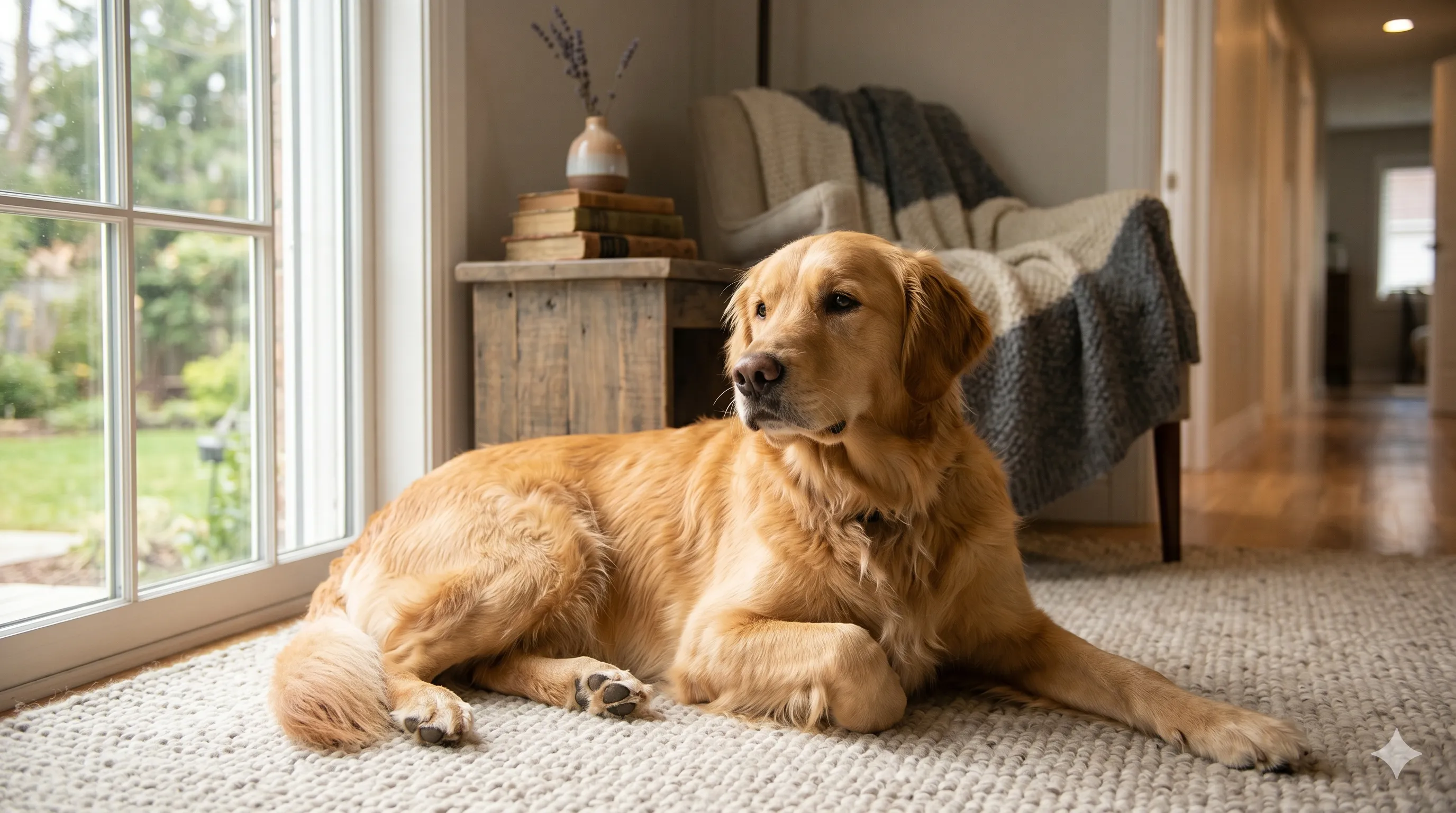
- Healthy attachment: Calm following without emotional distress
- Potential concern: Panic, whining, scratching, destructive behavior, or inability to relax alone
A relaxed dog following you casually is very different from a dog experiencing emotional distress during brief separation.
When Should You Be Concerned?
Bathroom-following behavior becomes more concerning when it appears alongside signs of anxiety or dependency.
Potential warning signs include:
- Constant clinginess
- Whining during separation
- Barking or panic behaviors
- Destructive actions when alone
- Difficulty settling independently
- Sudden increase in attachment behavior
Some dogs use staring and following together as ways to communicate attention and emotional attachment. learning how to calm an anxious dog helps reduce unhealthy dependency and stress-related behaviors
If these behaviors intensify over time, emotional dependency or separation anxiety may need additional attention.
How to Build Healthy Independence
1. Allow Healthy Attachment Without Encouraging Dependency
Following behavior itself is not automatically unhealthy.
Dogs are naturally social animals and often enjoy being close to owners.
The goal is balance not complete separation.
2. Practice Short Independent Periods
Encourage your dog to remain comfortable alone for short periods.
Start gradually with:
- Brief room separations
- Independent resting time
- Puzzle toys
- Calm alone activities
This helps build emotional confidence safely.
3. Avoid Reinforcing Every Following Behavior
If every instance of following results in constant interaction, clingy habits may strengthen unintentionally.
Occasionally allowing calm independent behavior without attention helps maintain healthier emotional balance.
4. Create Comfortable Independent Spaces
Dogs feel more confident when they have safe relaxing spaces of their own.
Helpful items include:
- Comfortable beds
- Toys
- Calming enrichment
- Quiet resting areas
A secure environment encourages emotional stability.
5. Maintain Predictable Routines
Dogs thrive on routine and consistency.
Predictable schedules help reduce anxiety, confusion, and excessive dependency behaviors.
Learning how to calm an anxious dog helps reduce unhealthy dependency and stress-related behaviors. understanding velcro dog behavior helps owners recognize the difference between healthy attachment and emotional dependency
Common Mistakes Owners Make
- Assuming all following behavior means anxiety
- Punishing natural attachment behavior
- Encouraging constant clinginess unintentionally
- Ignoring early anxiety signs
- Reacting inconsistently to following behavior
Example Scenario
The scenario below is an illustrative example of how this situation can play out, not a documented case study.
A dog owner became concerned because their dog followed them constantly throughout the house, including to the bathroom.
Initially, the behavior appeared overly clingy.
However, after observing the dog's body language more carefully, it became clear the dog remained calm, relaxed, and emotionally stable during brief separation.
By introducing short independent resting periods and maintaining a predictable routine, the dog gradually became more confident while still remaining strongly bonded to the owner.
Final Thoughts
Understanding why does my dog follow me to the bathroom helps remove much of the confusion surrounding this common canine behavior.
In most situations, bathroom-following is simply a natural expression of bonding, trust, curiosity, social instinct, and emotional connection.
The behavior only becomes concerning when attachment turns into emotional distress or anxiety.
Understanding healthy canine attachment behavior helps owners build stronger bonds while still encouraging emotional confidence and independence. understanding healthy canine attachment behavior helps owners build stronger bonds while still encouraging emotional confidence and independence
The goal is not stopping the behavior completely it's creating a healthy balance between closeness, confidence, and independence.
This content is written to provide general educational guidance for dog owners and pet families and is not a substitute for professional veterinary advice.
Medical Disclaimer
This content is provided for informational and educational purposes only and should not be considered veterinary, medical, behavioral, or training advice. While we strive for accuracy, we make no guarantees regarding completeness or results. Always consult a licensed veterinarian or qualified pet care professional before making decisions about your pet’s health, diet, or behavior.
AI Illustration Notice
Some images in this article may have been generated or enhanced using artificial intelligence for illustrative purposes.
Frequently Asked Questions
Dogs follow their owners to the bathroom because of pack instinct, emotional bonding, curiosity, routine behavior, and attachment.
Yes, many dogs naturally follow owners around because dogs are highly social animals that prefer staying close to trusted people.
Not always. Following behavior becomes more concerning only if your dog shows panic, whining, barking, or distress during separation.
Many dogs wait outside the bathroom because they want to stay close to their owner while still respecting the physical barrier of the closed door.
No, healthy following behavior is usually normal. The goal should be balancing emotional attachment with healthy independence.
Dogs often form especially strong emotional bonds with one primary caregiver based on time spent together, routines, and emotional connection.
Yes, clingy behavior can become unhealthy if the dog cannot relax independently or shows signs of emotional distress when separated.
You can encourage independence gradually through short separations, enrichment activities, calm routines, and rewarding confident independent behavior.
Editorial Note
This article is part of PetNurture's educational library.
Topics draw on publicly available educational resources, recognised veterinary organisations, academic publications and established animal welfare references where appropriate.
The specific sources this article draws on are listed in its References section. If you spot an error, please let us know.
References
The information in this article has been reviewed and supported using the following sources.
ASPCA
Describes separation-anxiety-driven distress behaviors such as whining and scratching at doors; supports the 'Mild Separation Anxiety Can Sometimes Contribute' and 'When Should You Be Concerned' sections of this article.
Accessed Aug 6, 2026
American Kennel Club
Why Does My Dog Follow Me Everywhere? It's in Their Genes
Explains pack instinct and imprinting as reasons dogs stay close to their owners; supports the 'Why Dogs Naturally Want to Stay Close to Humans' and 'Pack Instinct' sections of this article.
Accessed Aug 6, 2026
Pet Emergency Guidance
Every pet is unique. If your pet exhibits severe symptoms, sudden behavioral changes, or a medical emergency, do not rely on online guides — contact a licensed veterinarian or emergency clinic immediately.
About PetNurture
PetNurture is an educational library of pet care guides, interactive tools and practical resources for pet parents. We work continuously to keep our content accurate and up to date. Reader feedback helps us maintain content quality.
Related Articles
Popular Dog Guides
Dog
Dog Calorie Calculator
Find the right daily calorie target for your dog's weight and activity level.