Rabbit Weight Chart: Healthy Weight by Age, Breed & Body Condition
- Why Rabbit Weight Matters More Than It Seems
- Rabbit Weight Chart by Age
- Growth Milestones for Kits
- Growth Slows as a Rabbit Reaches Adulthood
- Healthy Adult Weight by Breed Size
- Dwarf and Small Breeds
- Medium Breeds
- Large Breeds
- Giant Breeds
- Mixed-Breed and Rescue Rabbits
- How to Weigh Your Rabbit Correctly
- Weighing Tips
- How Often to Weigh
- Is Your Rabbit Underweight or Overweight?
- Signs of Being Underweight
- Signs of Being Overweight
- When Weight Loss Is an Emergency
- Common Causes of Weight Loss
- How Much Weight Loss Is Too Much
- Weighing Rabbits in Multi-Rabbit Households
- Tips for Multi-Rabbit Weigh-Ins
- Rabbit Obesity: Risks and Prevention
- Health Risks of Excess Weight
- Preventing Unhealthy Weight Gain
- Expert Tips for Tracking Rabbit Weight
- Common Mistakes to Avoid
- Final Thoughts
Note: This article is for informational purposes only and does not replace professional veterinary advice.
Quick Answer
Healthy adult rabbit weight depends heavily on breed, ranging from about 2 to 4 pounds for dwarf breeds up to 13 pounds or more for giant breeds. Weigh weekly on a properly sized scale and contact a rabbit-savvy vet for any loss of roughly 10 percent of body weight or a steady downward trend.
A rabbit's weight is one of the clearest early windows into her overall health, since rabbits are prey animals that instinctively hide signs of illness until a problem is already well underway. Unlike guinea pigs or cats, healthy rabbit weight varies enormously by breed, ranging from a 2 pound Netherland Dwarf up to a 15 pound or larger Flemish Giant, which makes a single universal number far less useful than knowing your own rabbit's personal trend and body condition. This guide breaks down what a rabbit should weigh at every life stage and breed size, how to weigh her correctly at home, and the specific warning signs of weight loss or weight gain that are worth a call to a rabbit-savvy vet rather than a wait-and-see approach.
Why Rabbit Weight Matters More Than It Seems
Rabbits are wired by instinct to mask discomfort since looking weak would make them an easy target for a predator in the wild. That survival instinct means the number on a scale is often the earliest and sometimes the only sign that something is off, well before an owner notices a change in behavior.
A weight log also becomes genuinely useful the moment a rabbit needs veterinary care, since it gives a vet a documented baseline to compare against instead of a single snapshot taken during an already-stressful clinic visit. Rabbits can also decline quickly once gut motility slows down, so catching a downward trend within the first few days rather than the first few weeks can make a real difference in how quickly an underlying problem is caught and treated.
Rabbit Weight Chart by Age
Growth happens fastest in the first four months of life and then slows as a rabbit approaches her breed's mature size. Because adult size varies so much by breed, the ranges below are best read as growth stages relative to an individual rabbit's own expected adult weight rather than one fixed number for every rabbit.
Growth Milestones for Kits
- At birth: roughly 1 to 2 ounces (about 30 to 55 grams), and kits are fully dependent on their mother's milk
- 2 weeks old: eyes open and kits begin nibbling solid food, with weight climbing quickly from this point on
- 8 weeks old: roughly 8 ounces to 2 pounds depending on breed, as weaning completes and solid food becomes the main diet
- 4 months old: most rabbits have reached around 90 percent of their eventual adult body weight
- 6 months old: smaller breeds are often at or close to full adult size, while medium and large breeds are typically around 75 percent of their mature weight
Growth Slows as a Rabbit Reaches Adulthood
Small and dwarf breeds usually finish growing by around 6 months old, medium breeds by roughly 8 to 9 months, and large or giant breeds can continue filling out until 12 to 18 months old. Once growth plateaus for a given rabbit, her weight should stay fairly consistent from one weigh-in to the next, which is what makes a sudden shift in either direction worth paying attention to regardless of her breed size.
Healthy Adult Weight by Breed Size
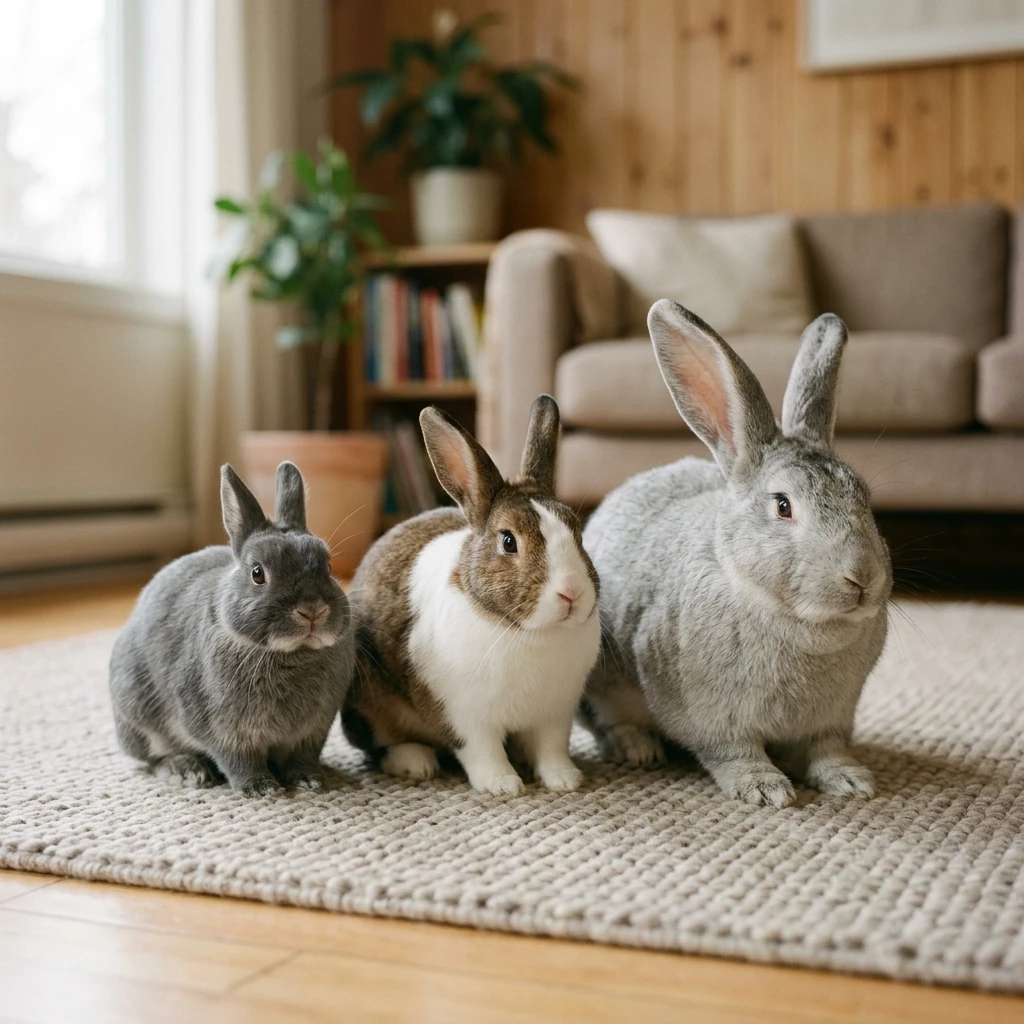
Breed is the single biggest factor separating one healthy adult rabbit weight from another, far more so than with most other small pets. Understanding how much breed size affects a rabbit's adult weight up front makes the ranges below much easier to apply to your own rabbit. Rather than memorizing dozens of individual breed standards, it helps to think in terms of four general size categories.
Dwarf and Small Breeds
Breeds such as the Netherland Dwarf, Polish, and Mini Rex typically settle between 2 and 4 pounds as adults, or roughly 0.9 to 1.8 kilograms.
Medium Breeds
Breeds like the Dutch, Havana, and standard Mini Lop typically land between 4 and 7 pounds, or roughly 1.8 to 3.2 kilograms.
Large Breeds
Breeds such as the New Zealand, Rex, and English Lop commonly range from 7 to 11 pounds, or roughly 3.2 to 5 kilograms.
Giant Breeds
The Flemish Giant and similar giant breeds can reach 13 to 15 pounds or more, sometimes exceeding 20 pounds, or roughly 6 to 9-plus kilograms.
Mixed-Breed and Rescue Rabbits
A large share of pet rabbits in the United States and Canada are rescues or mixed breeds without a documented pedigree, which makes an exact breed-standard number impossible to pin down. For these rabbits, body condition and a stable personal weight trend matter far more than matching any specific chart number, since a healthy 6 pound mixed-breed rabbit and a healthy 6 pound purebred can look and feel completely different depending on frame size.
How to Weigh Your Rabbit Correctly
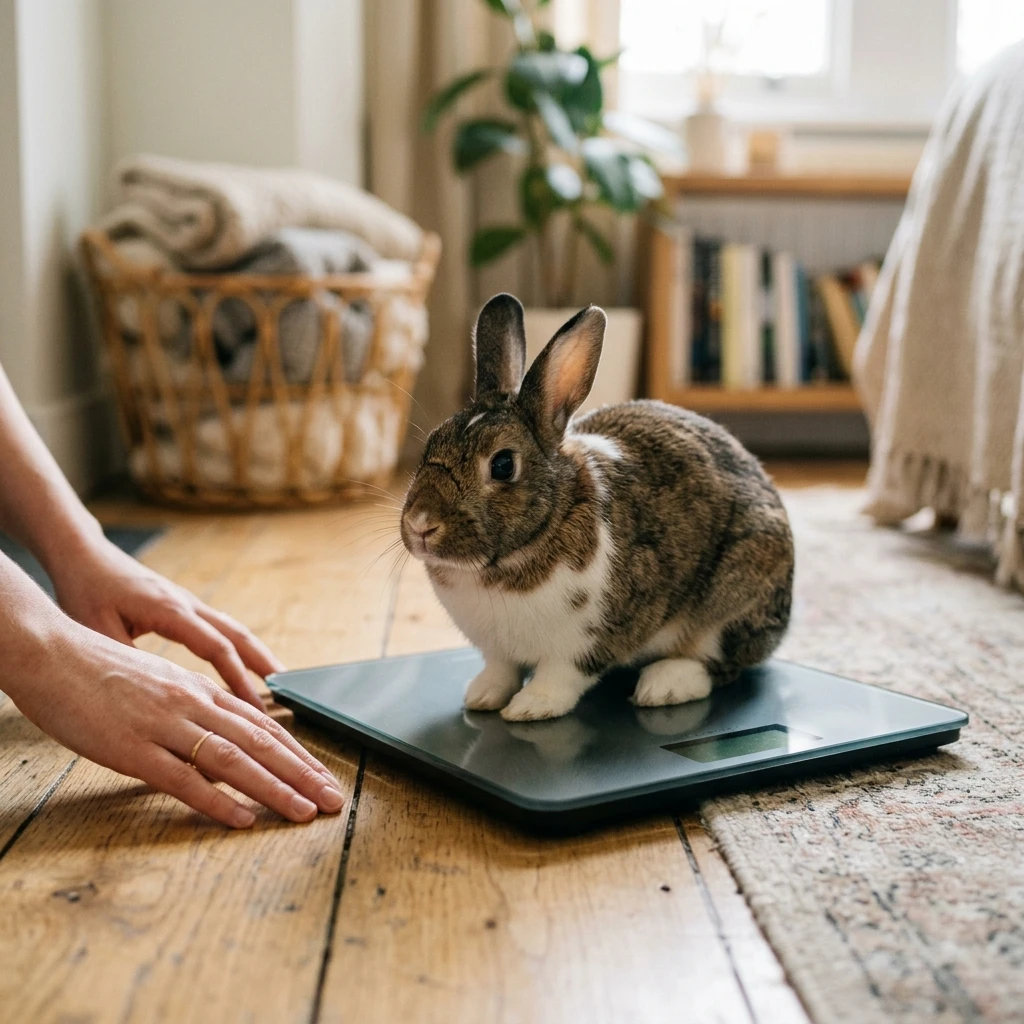
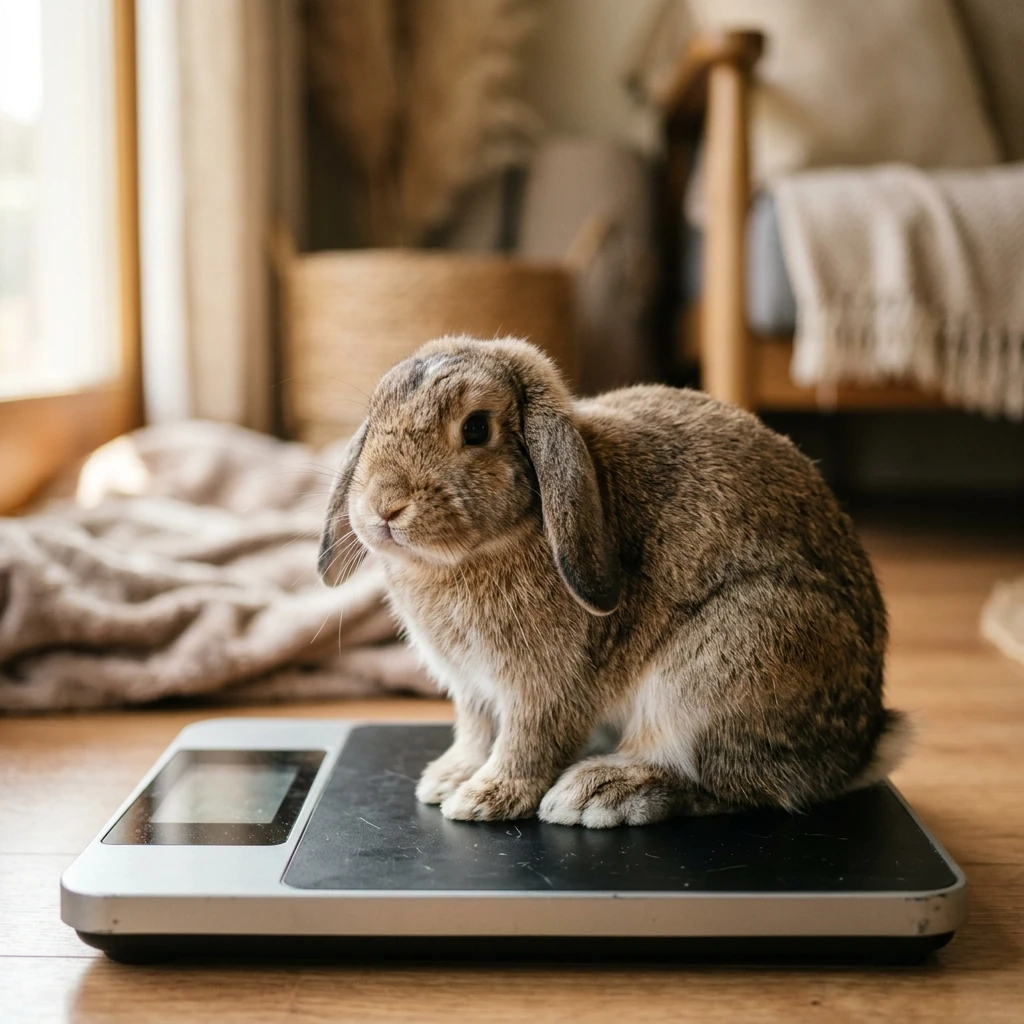
A digital kitchen food scale works well for kits and dwarf or small adult breeds, but a rabbit approaching or exceeding its weight capacity, which is common with medium, large, and giant breeds, needs a digital baby scale or bathroom-style scale instead.
Weighing Tips
- Place a small towel-lined box or carrier on the scale and zero it out before adding the rabbit, or weigh yourself holding the rabbit and subtract your own weight if she won't sit still on a small scale
- Weigh at roughly the same time of day each week since weight can shift slightly depending on when she last ate or used the litter box
- Keep her calm with a small piece of leafy green while the scale settles
- Write the number down immediately rather than relying on memory, since spotting a trend depends on having consistent records
How Often to Weigh
Weekly weighing is the standard most rabbit-savvy vets recommend for healthy adults, while growing kits and any rabbit recovering from illness often benefit from being weighed every few days instead. A single weigh-in tells you very little on its own. The real value comes from comparing this week's number to several weeks of history.
Is Your Rabbit Underweight or Overweight?
The number on a scale matters, but body condition tells the rest of the story since two rabbits at the same weight can look and feel very different depending on their frame and breed.
Signs of Being Underweight
- Ribs, spine, or hip bones that feel sharp and prominent rather than lightly padded
- No fat covering felt when running a hand along her back and sides
- A visible dip along the spine when viewed from above
- A steady downward trend across multiple weekly weigh-ins
Signs of Being Overweight
- No visible waist when viewed from above or from the side
- A belly that bulges outward rather than tucking in when felt gently
- Ribs and spine that are difficult to feel under a thick layer of fat
- A build-up of fat felt at the base of the tail where it meets the spine
Running a hand gently along her back, sides, and tail base once a week during a weigh-in is an easy way to check body condition alongside the number on the scale, since a scale alone can miss changes in muscle versus fat distribution.
When Weight Loss Is an Emergency
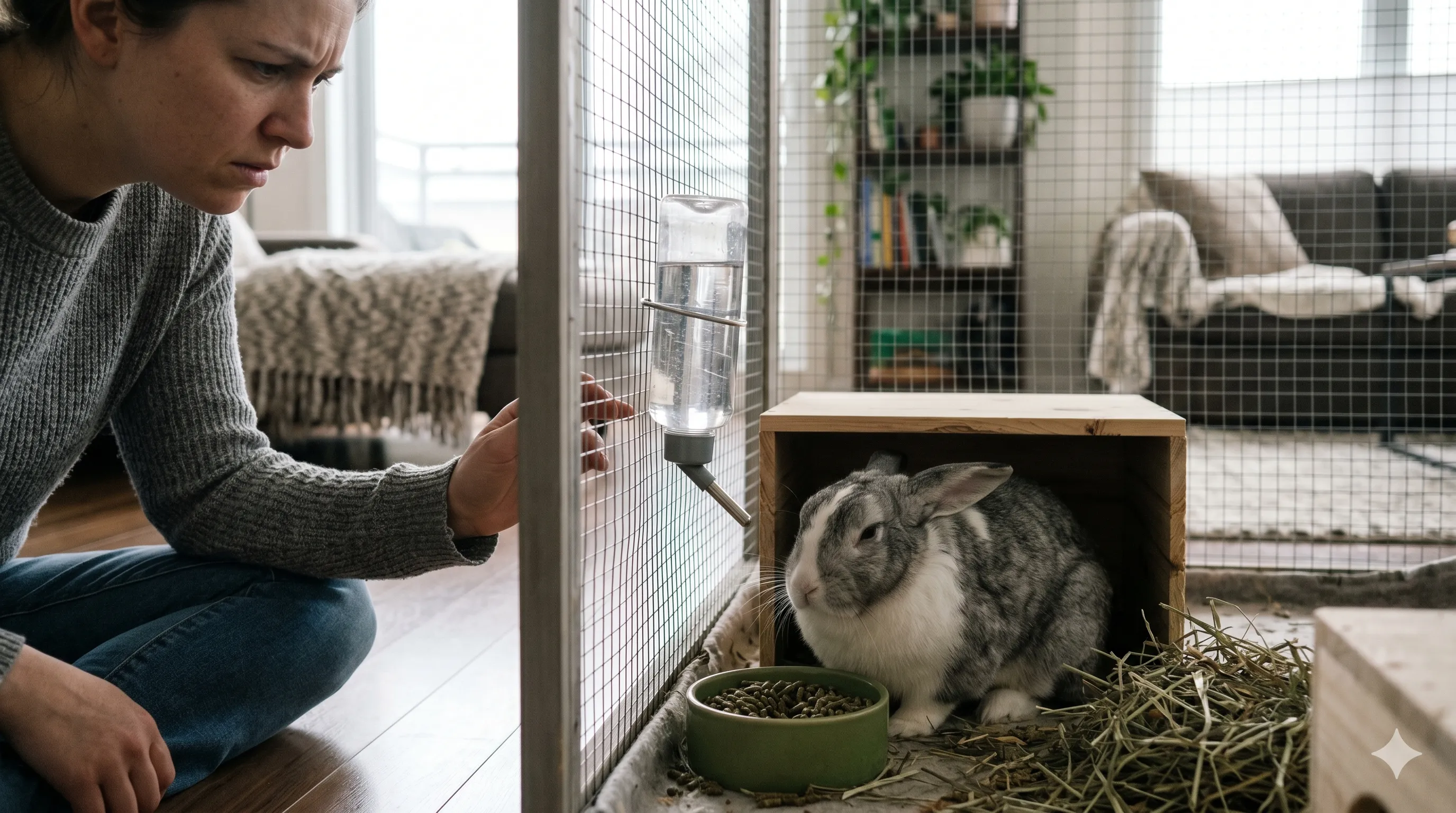
Rabbits can decline quickly once an underlying problem takes hold, which is exactly why weight loss deserves a faster response than it might in a larger, hardier pet.
Common Causes of Weight Loss
- Dental disease: overgrown or misaligned teeth make chewing hay painful, so eating slows down gradually rather than stopping all at once
- GI stasis: a slowdown in normal gut movement that reduces appetite and can become life-threatening within a day or two if untreated
- Parasites: internal or external parasites can quietly reduce appetite and body condition over several weeks
- Respiratory infection: often paired with nasal discharge or labored breathing alongside a drop in appetite and weight
- Arthritis or joint pain: more common in older or giant-breed rabbits and can make it uncomfortable to reach food or move around the enclosure normally
- Stress from a new environment or cagemate: can suppress appetite temporarily in an otherwise healthy rabbit
How Much Weight Loss Is Too Much
Because healthy rabbit weight varies so much by breed, vets generally watch for weight loss as a percentage of a rabbit's usual body weight rather than a fixed number of grams. Losing roughly 10 percent or more of her normal body weight, or any steady downward trend across a few weigh-ins, is generally considered a reason to call a rabbit-savvy vet rather than waiting to see if it self-corrects. a sudden drop in appetite alongside a drop in weight is an especially strong signal that something needs veterinary attention soon, since the two together often point to the same underlying cause such as dental pain or early GI stasis.
Weighing Rabbits in Multi-Rabbit Households
Rabbits are social animals and are usually happiest housed in a bonded pair or small group, but that same companionship can make weight tracking trickier since a shared hay pile or food bowl makes it hard to know which rabbit is actually eating less.
Tips for Multi-Rabbit Weigh-Ins
- Weigh each rabbit separately every week rather than assuming a bonded pair is doing equally well
- Keep a separate log for each individual rabbit, since a stable group average can still hide one rabbit quietly declining
- Watch for one rabbit being pushed away from the hay rack or food bowl by a more dominant cagemate, which can look like a behavior issue but shows up first as a weight change
- If one rabbit in a group starts losing weight, briefly separating rabbits at mealtimes can help confirm whether reduced access, rather than illness, is the underlying cause
Rabbit Obesity: Risks and Prevention
Weight gain rarely looks dramatic day to day, which is part of what makes it easy to miss until a rabbit is already carrying enough extra weight to affect her health. Roughly a third of pet rabbits are estimated to be overweight, and excess weight is nearly always driven by too much food and too little exercise rather than an underlying medical problem.
Health Risks of Excess Weight
Extra weight raises the risk of heart disease, arthritis, and liver disease, and can contribute to painful skin conditions such as urine scald when a rabbit can no longer reach and clean herself properly. An overweight rabbit is also less able to reach and eat the soft nighttime droppings she needs to reingest for proper nutrition, which can create a cycle of worsening digestive health.
Preventing Unhealthy Weight Gain
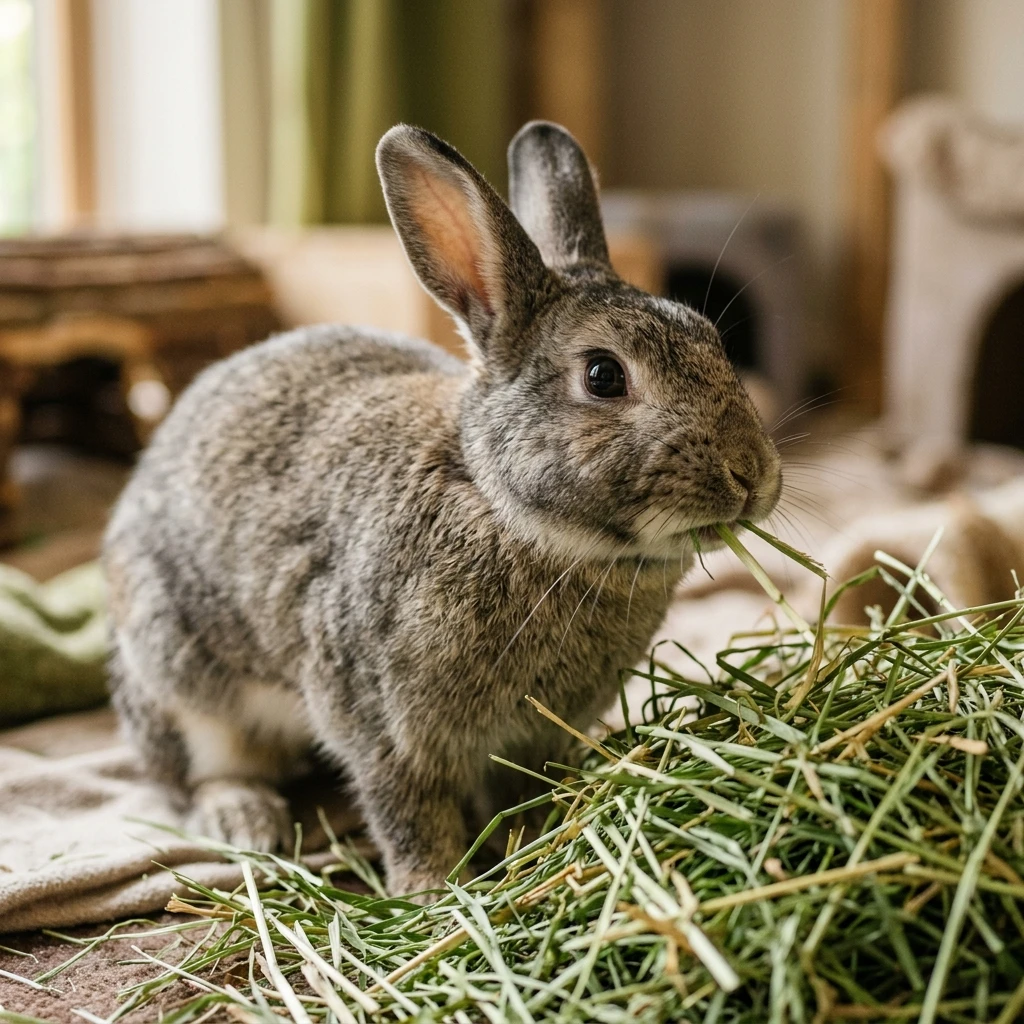
Keeping unlimited grass hay as the base of the diet rather than filling up mostly on pellets and treats goes a long way toward preventing slow unnoticed weight gain. Measuring pellet portions instead of free-feeding without limits, and giving her daily supervised free-roam time to give her room to run, jump, and stay active rather than sitting in a small enclosure most of the day, both help keep her weight in a healthy range over time.
Expert Tips for Tracking Rabbit Weight
- Keep a simple written or phone-based log of weekly weights so a gradual trend is easy to spot rather than relying on memory alone.
- Track body condition by feel during every weigh-in rather than relying on the number alone, since breed frame differences can make the same weight look very different on two rabbits.
- Bring a printed or digital copy of the weight log to vet visits, since a documented trend helps narrow down a cause much faster than a single weigh-in.
- Expect some natural weight fluctuation with the seasons, since many rabbits eat slightly more in colder weather.
- Weigh a giant-breed rabbit on a scale rated well above her expected adult weight, since a scale that is close to its limit becomes less accurate.
Common Mistakes to Avoid
- Comparing a rabbit's weight to a generic breed-average chart instead of tracking her own personal baseline, especially for mixed-breed rabbits
- Weighing only occasionally instead of on a consistent weekly schedule that actually reveals a trend
- Free-feeding unlimited pellets and treats without noticing the slow steady weight gain it can cause
- Assuming weight loss will show up as reduced appetite first, when it can sometimes appear before any obvious behavior change
- Waiting to see if a sudden weight drop corrects itself before calling a vet
Final Thoughts
A healthy rabbit weight isn't one universal number so much as a stable personal baseline that fits her breed size, ranging anywhere from 2 pounds for a small dwarf breed to well over 13 pounds for a giant breed once she reaches adulthood. Weekly weigh-ins paired with a quick body-condition check turn a vague guess into real information, and treating any loss of roughly 10 percent of her body weight or a steady decline as a same-week call to the vet gives a rabbit the best possible chance if something is actually wrong.
For more on building healthy daily habits beyond the scale, this complete rabbit care guide covers the everyday fundamentals every rabbit owner should have in place.
The single best habit for catching a health problem early is a consistent weekly weigh-in compared against your own rabbit's personal trend rather than a generic breed-average number.
This guide is for general education and is not a substitute for veterinary care. Any rabbit showing sudden weight loss, a steady downward trend, or signs of obesity-related discomfort should be seen by a rabbit-savvy veterinarian.
Medical Disclaimer
This content is provided for informational and educational purposes only and should not be considered veterinary, medical, behavioral, or training advice. While we strive for accuracy, we make no guarantees regarding completeness or results. Always consult a licensed veterinarian or qualified pet care professional before making decisions about your pet’s health, diet, or behavior.
AI Illustration Notice
Some images in this article may have been generated or enhanced using artificial intelligence for illustrative purposes.
Frequently Asked Questions
It depends heavily on breed. Dwarf and small breeds typically weigh 2 to 4 pounds while medium breeds run 4 to 7 pounds and large breeds run 7 to 11 pounds. Giant breeds such as the Flemish Giant can reach 13 pounds or more.
Rabbits were bred for many different purposes over centuries and range from tiny dwarf show breeds to giant meat and fiber breeds. This means breed is a far bigger factor in healthy weight for rabbits than it is for most other small pets.
A newborn kit usually weighs around 1 to 2 ounces at birth. Growth is fast in the first four months and most rabbits reach around 90 percent of their adult weight by that point.
Weekly weigh-ins are standard for healthy adult rabbits. Growing kits and any rabbit recovering from illness often benefit from being weighed every few days instead.
Dental disease and GI stasis are among the most common causes since both make eating uncomfortable or slow down digestion. Parasites respiratory infection arthritis and stress can also drive weight loss and more than one cause can overlap.
Losing roughly 10 percent or more of a rabbit's normal body weight or any steady downward trend across several weigh-ins is generally considered a reason to call a rabbit-savvy vet. Rabbits can decline quickly once an underlying problem takes hold so this isn't something to wait out.
Ribs spine or hip bones that feel sharp rather than lightly padded are a common sign. A visible dip along the spine combined with a downward weight trend across a few weigh-ins is worth a vet visit.
Look for no visible waist when viewed from above and a belly that bulges outward rather than tucking in when felt gently. A build-up of fat at the base of the tail is another common sign.
Excess weight raises the risk of heart disease arthritis and liver disease and can contribute to painful skin conditions like urine scald. It can also make it harder for a rabbit to reach and eat the soft droppings she needs to reingest.
A digital kitchen food scale works well for kits and small breeds. Medium large and giant breeds usually need a digital baby scale or bathroom-style scale since they can exceed a kitchen scale's weight capacity.
Not in the same precise way a purebred does since there is no single breed standard to compare against. Body condition and a stable personal weight trend matter more than matching a specific chart number for mixed-breed and rescue rabbits.
Small and dwarf breeds usually finish growing by around 6 months old. Medium breeds finish by roughly 8 to 9 months while large and giant breeds can continue filling out until 12 to 18 months old.
Normal vs. Concerning Symptoms
A general guide to help you tell everyday variation apart from something worth a vet visit. This is educational context, not a diagnosis.
| Symptom | What's Normal | When to Be Concerned |
|---|---|---|
| Weekly weight trend | Stable or only slight change from one week to the next | A loss of roughly 10 percent of body weight or a steady decline |
| Body shape | A visible waist with ribs easy to feel under a thin layer of fat | No visible waist and ribs that are hard to feel, or a belly that bulges outward |
| Appetite and hay intake | Steady eating of hay pellets and greens at the usual pace | Reduced interest in hay or usual foods |
| Droppings | Regular, well-formed fecal pellets | Fewer, smaller, or misshapen droppings |
| Activity level | Normal hopping, exploring, and interest in surroundings | Reduced movement or reluctance to move around |
What Should I Do Next?
A general decision guide — always use your own judgement and contact a veterinarian for anything beyond routine care.
- Weigh her again to confirm the trend Use the same scale and roughly the same time of day and compare the number against last week's log.
- Check appetite hay intake and droppings Reduced eating or noticeably fewer or smaller droppings often point to the same underlying problem as the weight change.
- Calculate the percentage change from her usual weight A loss near or above 10 percent of her normal body weight warrants a same-week call rather than a wait-and-see approach.
- Bring the weight log to the appointment A written trend helps a vet narrow down potential causes faster than a single weigh-in on its own.
- Follow the vet's feeding and monitoring plan Adjust portions or supplements only as directed rather than changing the diet on your own before a diagnosis.
Common Mistakes
- Comparing a rabbit's weight to a generic breed-average chart instead of tracking her own personal baseline
- Weighing only occasionally instead of on a consistent weekly schedule that actually reveals a trend
- Free-feeding unlimited pellets and treats without noticing the slow steady weight gain it can cause
- Assuming weight loss will show up as reduced appetite first, when it can sometimes appear before any obvious behavior change
- Waiting to see if a sudden weight drop corrects itself before calling a vet
Prevention Tips
- Weigh on a properly sized scale at roughly the same time each week and log the number
- Offer unlimited grass hay as the base of the diet rather than filling up mostly on pellets
- Provide daily supervised free-roam or exercise time so she can move around and stay active
- Check for a visible waist and easily felt ribs as a quick at-home body condition check
- Measure pellet and treat portions instead of free-feeding without limits
- Call a vet promptly for any unexplained weight change rather than waiting to see if it passes
Illustrative Example
Consider an owner of a mixed-breed rescue rabbit who weighs him every Sunday and logs the number in a notes app. Two weeks in a row the scale shows a drop of a few ounces each time, though he still seems to be eating and acting mostly normal. Rather than dismissing it as a fluke, since the numbers work out to nearly 10 percent of his usual weight, the owner checks his droppings and notices they are smaller than usual. Because the weekly log made the trend obvious well before any dramatic change in behavior appeared, a same-week vet visit catches early GI slowdown before it progresses into a much more serious case of stasis.
Practical Checklist
- Use a scale sized appropriately for your rabbit's breed and expected adult weight
- Weigh at roughly the same time of day each week for consistency
- Log each week's number rather than relying on memory
- Check for a visible waist and easily felt ribs as part of the weigh-in
- Note any change in appetite or droppings alongside the weight
- Call a rabbit-savvy vet for a loss near 10 percent of body weight
Editorial Note
This article is part of PetNurture's educational library.
Topics are researched using publicly available educational resources, recognised veterinary organisations, academic publications and established animal welfare references where appropriate.
Every article is reviewed by the PetNurture editorial team for clarity, structure, readability and consistency before publication.
References
The information in this article has been reviewed and supported using the following sources.
Merck Veterinary Manual
Disorders and Diseases of Rabbits
Confirms weight and body condition as clinical indicators in rabbits and common underlying causes including dental disease and GI disorders; supports the Weight Loss and Common Causes sections of this article.
Accessed Aug 20, 2026
PDSA
Confirms body condition assessment method, the approximate one-in-three overweight prevalence figure, and associated health risks; supports the Body Condition and Obesity sections.
Accessed Aug 20, 2026
PetMD
Chronic Weight Loss and Tissue Wasting in Rabbits
Confirms the percentage-of-body-weight approach to assessing dangerous weight loss and the need for prompt veterinary evaluation; supports the How Much Weight Loss Is Too Much section.
Accessed Aug 20, 2026
Pet Emergency Guidance
Every pet is unique. If your pet exhibits severe symptoms, sudden behavioral changes, or a medical emergency, do not rely on online guides — contact a licensed veterinarian or emergency clinic immediately.
About PetNurture
PetNurture is an educational library of pet care guides, interactive tools and practical resources for pet parents. We work continuously to keep our content accurate and up to date. Reader feedback helps us maintain content quality.
Related Articles



Popular Rabbit Guides