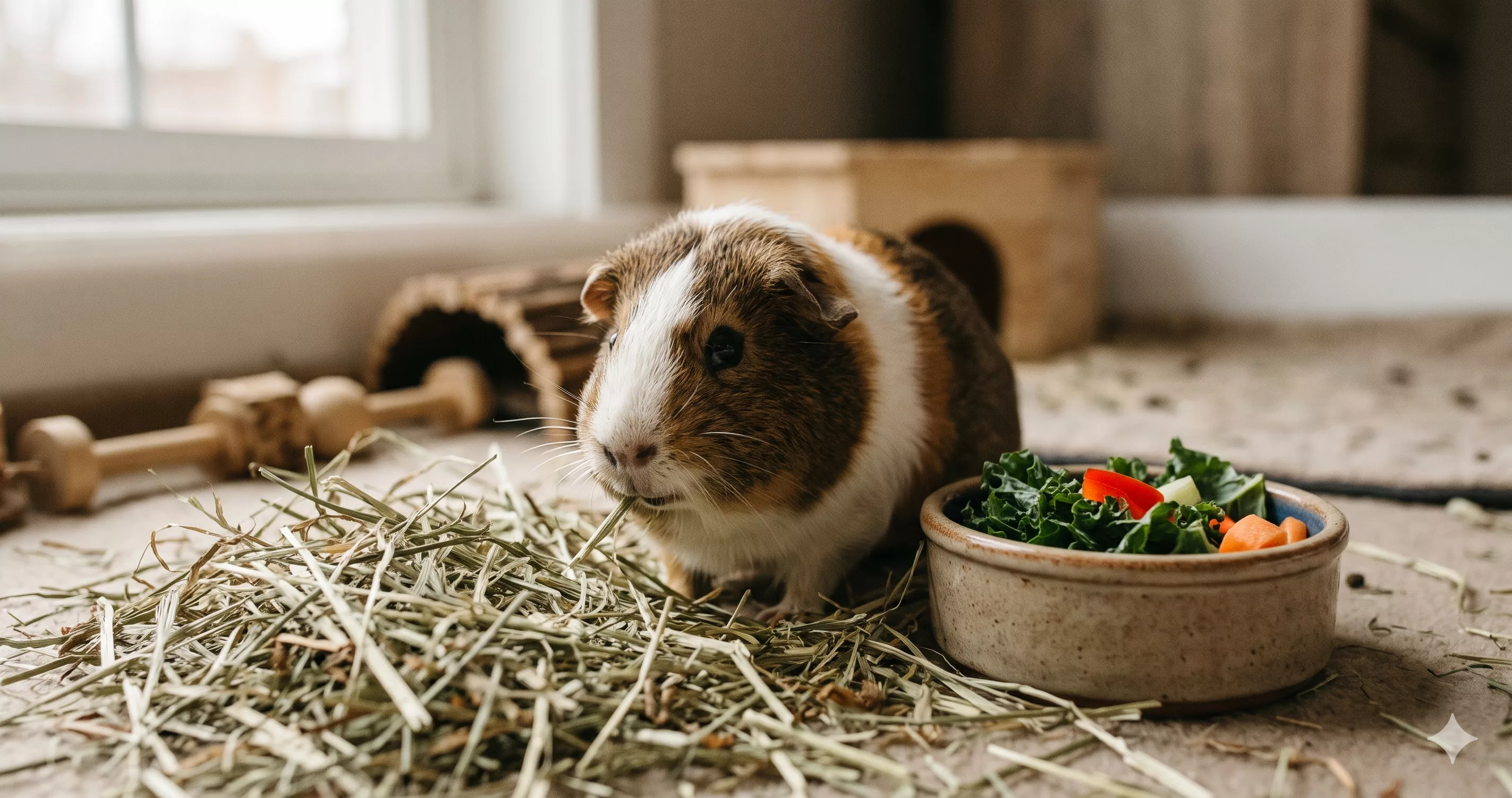
How to Bond With Your Guinea Pig: A Step-by-Step Guide
Note: This article is for informational purposes only and does not replace professional veterinary advice.
Quick Answer
Guinea pigs are a prey species. The RSPCA says to be quiet and gentle, never shout at or punish them, and give them secure hiding places and at least one guinea pig companion. PDSA advises a couple of days to settle before introducing another guinea pig. How long bonding takes depends on the individual guinea pig's age, personality and past experiences, so there is no set timeline.
The sources we read give handling advice and separate steps for introducing guinea pigs to each other. This guide sets out what PetMD (reviewed by a veterinarian), the RSPCA and the PDSA say.
How to Bond With Your Guinea Pig (Quick Answer)
PetMD says to approach slowly, let the guinea pig sniff your hand first and go slowly so it learns that being held can be a positive experience. The RSPCA says to be quiet and gentle around guinea pigs and never to shout at or punish them.
Handling
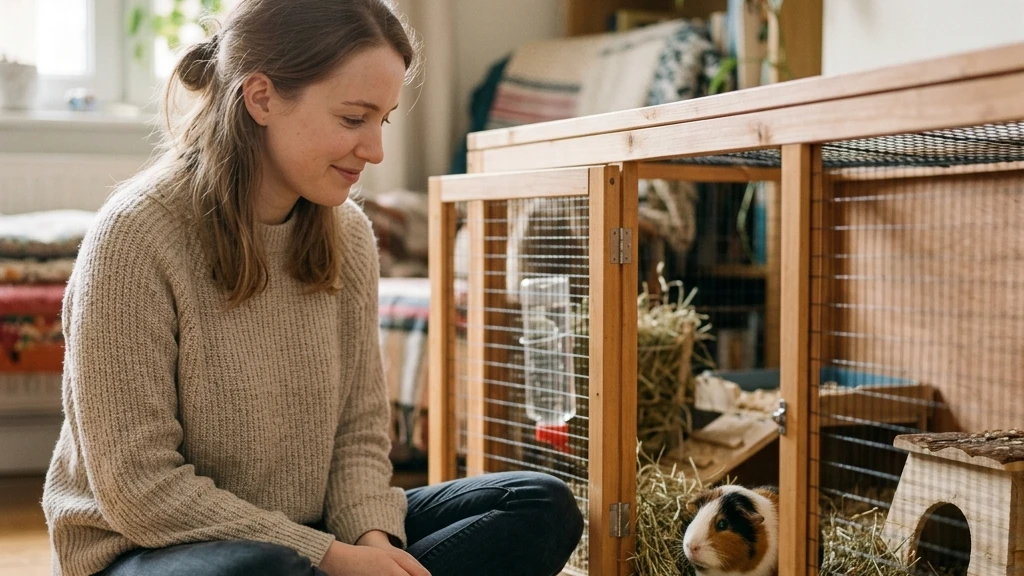
- PetMD: avoid petting the lower body, which can startle them; support the chest and hindquarters together; hold firmly but never squeeze; never hold upside down or on their back.
- RSPCA: guinea pigs are a prey species and must be able to hide in a secure place.
- PetMD: they should be allowed out at least once a day under supervision.
Introducing Two Guinea Pigs
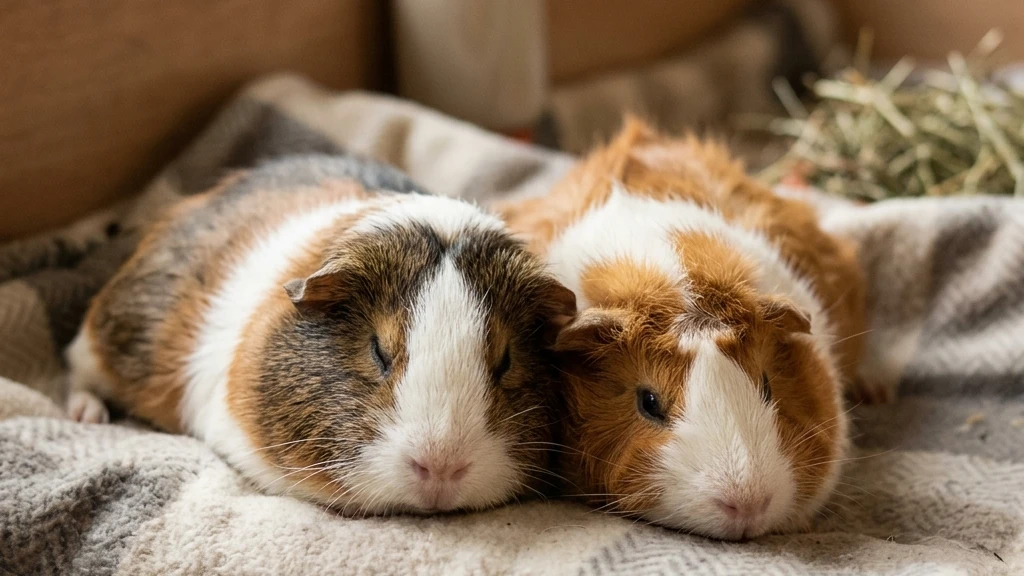
- PDSA: keep a new guinea pig apart until sure it is healthy, swap bedding for scent, then meet on neutral ground in short supervised sessions of 10 to 15 minutes.
- PDSA: separate them with a clean dustpan or board and not your hands.
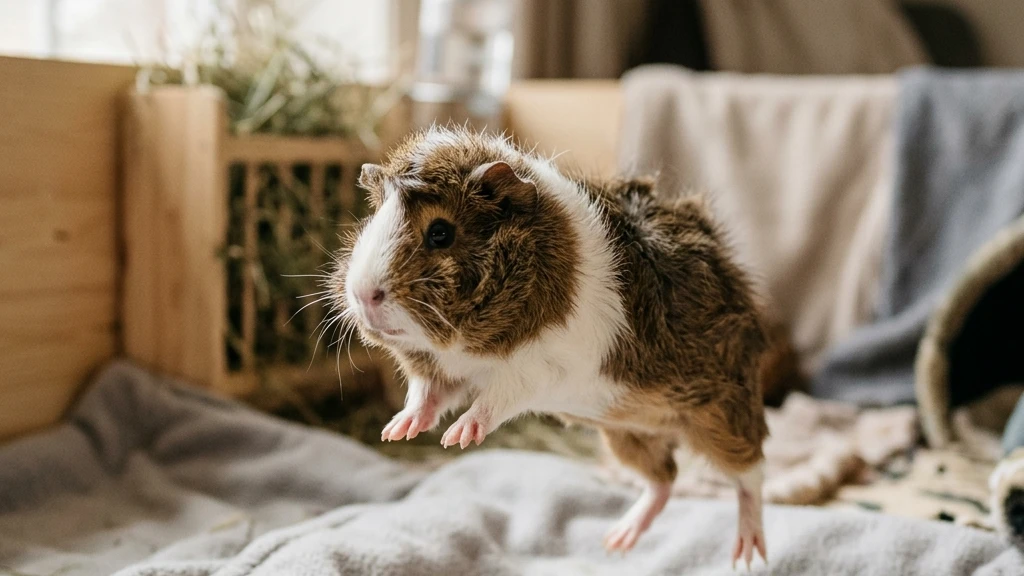
- PDSA signs of getting along: popcorning, loud wheeks, following, lying together and grooming.
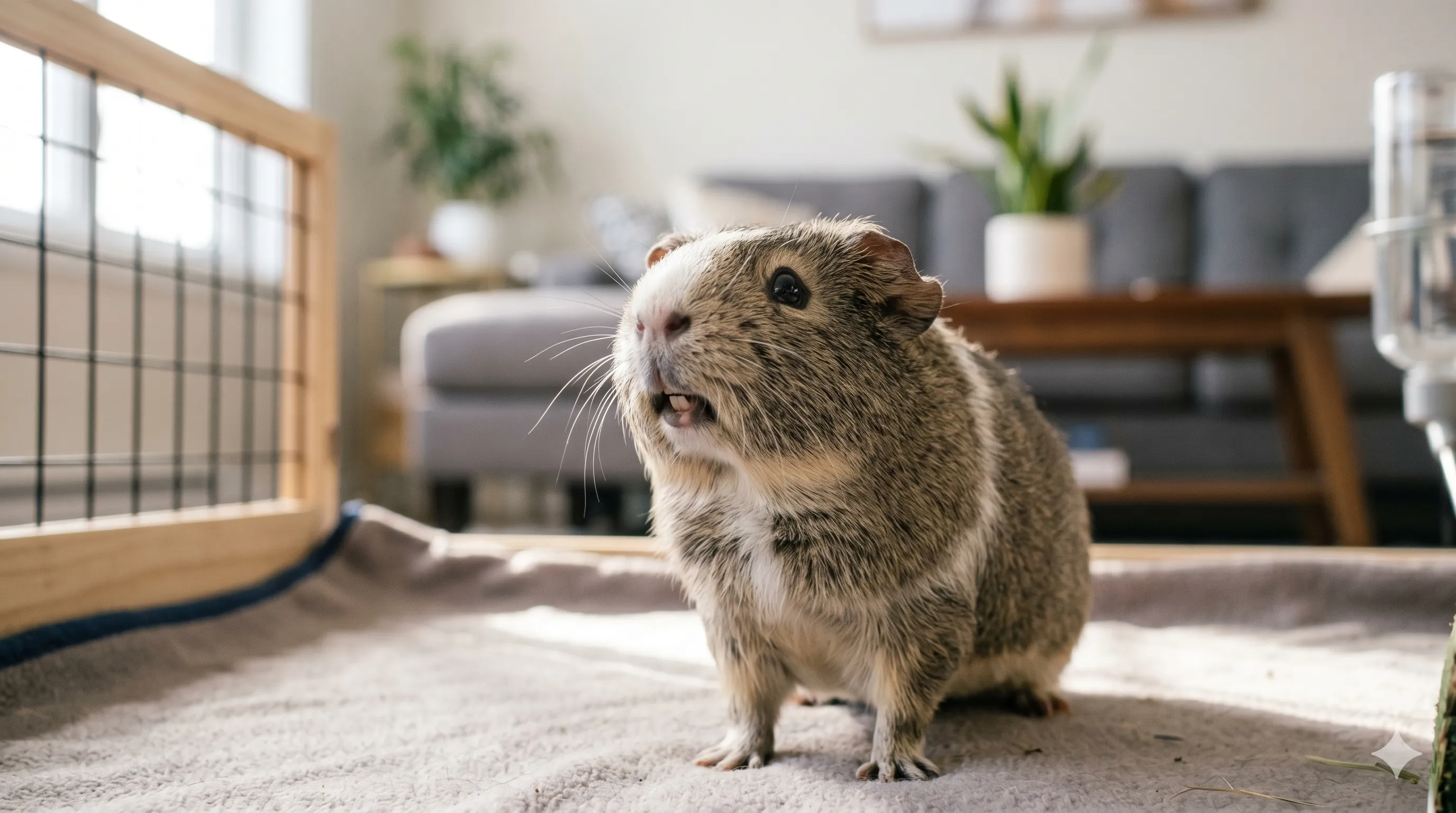
- PDSA signs of stress or fighting: teeth chattering, hiding, chasing and frequently opening their mouths at each other.
See why a guinea pig popcorns.
Signs of Stress and When to Ask a Vet
- The RSPCA lists hiding most of the time, sitting hunched, changes in feeding or toileting and repeatedly circling the enclosure as signs of stress.
- The RSPCA says a change in behaviour could mean a guinea pig is distressed, bored, ill or injured and to ask your vet or clinical animal behaviourist for advice.
See also why a guinea pig stares at you.
What We Could Not Find a Source For
We found no readable source for treat-based taming steps or how long it takes to earn a guinea pig's trust. Blue Cross and Royal Veterinary College pages could not be opened.
Final Thoughts
Go slowly, support the body and watch for stress. A licensed veterinarian can help if behaviour changes.
This article is for general education and is not a substitute for veterinary advice. If your guinea pig stops eating or seems unwell, contact a licensed veterinarian.
Medical Disclaimer
This content is provided for informational and educational purposes only and should not be considered veterinary, medical, behavioral, or training advice. While we strive for accuracy, we make no guarantees regarding completeness or results. Always consult a licensed veterinarian or qualified pet care professional before making decisions about your pet’s health, diet, or behavior.
AI Illustration Notice
Some images in this article may have been generated or enhanced using artificial intelligence for illustrative purposes.
Frequently Asked Questions
PetMD says approach slowly and let it sniff your hand first. The RSPCA says be quiet and gentle.
PetMD says support the chest and hindquarters together and never hold it upside down.
The PDSA says apart first then scent swapping then neutral ground in 10 to 15 minute sessions.
The PDSA says use a clean dustpan or board and not your hands.
The RSPCA lists hiding most of the time and sitting hunched.
What Should I Do Next?
A general decision guide — always use your own judgement and contact a veterinarian for anything beyond routine care.
- Give your guinea pig secure hiding places and a companion The RSPCA says guinea pigs are a prey species that must always be able to hide, and should live with at least one other friendly guinea pig.
- Let a newcomer settle for a couple of days PDSA advises this before any introductions, because moving home is stressful.
- Be quiet and gentle The RSPCA says never to shout at or punish a guinea pig, as it can become more nervous or scared.
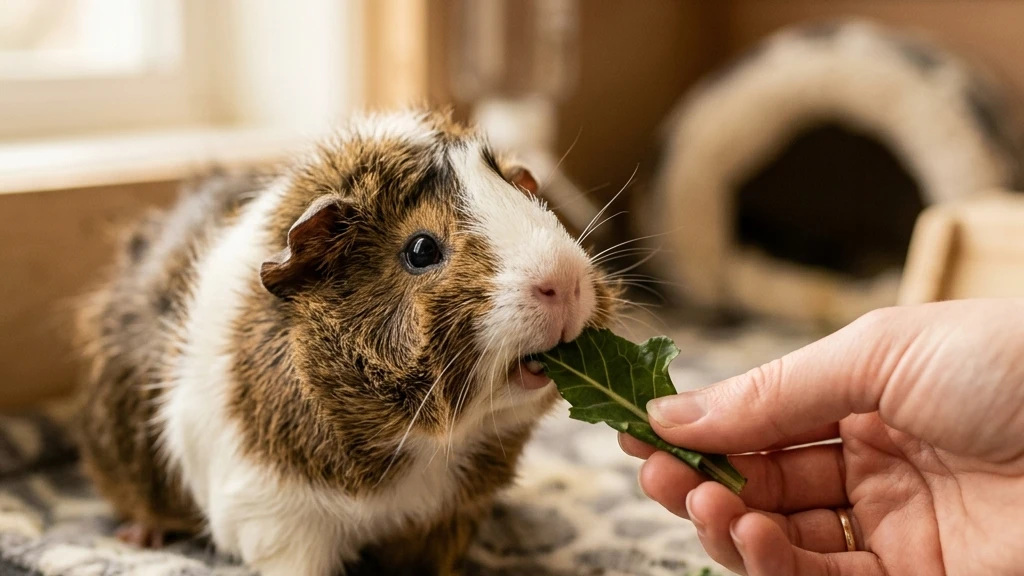
- Offer suitable foods from your hand if you wish This is our own suggestion. The RSPCA lists romaine and gem lettuce and parsley as foods guinea pigs can eat often; carrot is a small treat only.
- Watch behaviour and ask your vet about ongoing changes The RSPCA lists hiding most of the time, hunching and changes in eating or toileting among signs of stress or fear.
Common Mistakes
- Shouting at or punishing a guinea pig
- Keeping a single guinea pig alone
- Putting guinea pigs together straight away instead of following step-by-step introductions
- Offering carrot as an everyday food or iceberg lettuce at all
- Using your hands to break up a fight
- Skipping hiding places
- Ignoring ongoing changes in behaviour instead of asking a vet
Prevention Tips
- Provide secure hiding places for every guinea pig, away from predators' sight and smell
- Let a newcomer settle for a couple of days before introductions
- Be quiet and gentle and never shout or punish
- Introduce guinea pigs gradually: scent and sight, then barrier, then short supervised meetings on neutral ground
- Give two of everything when housing guinea pigs together
- Ask your vet about ongoing changes in behaviour
Illustrative Example
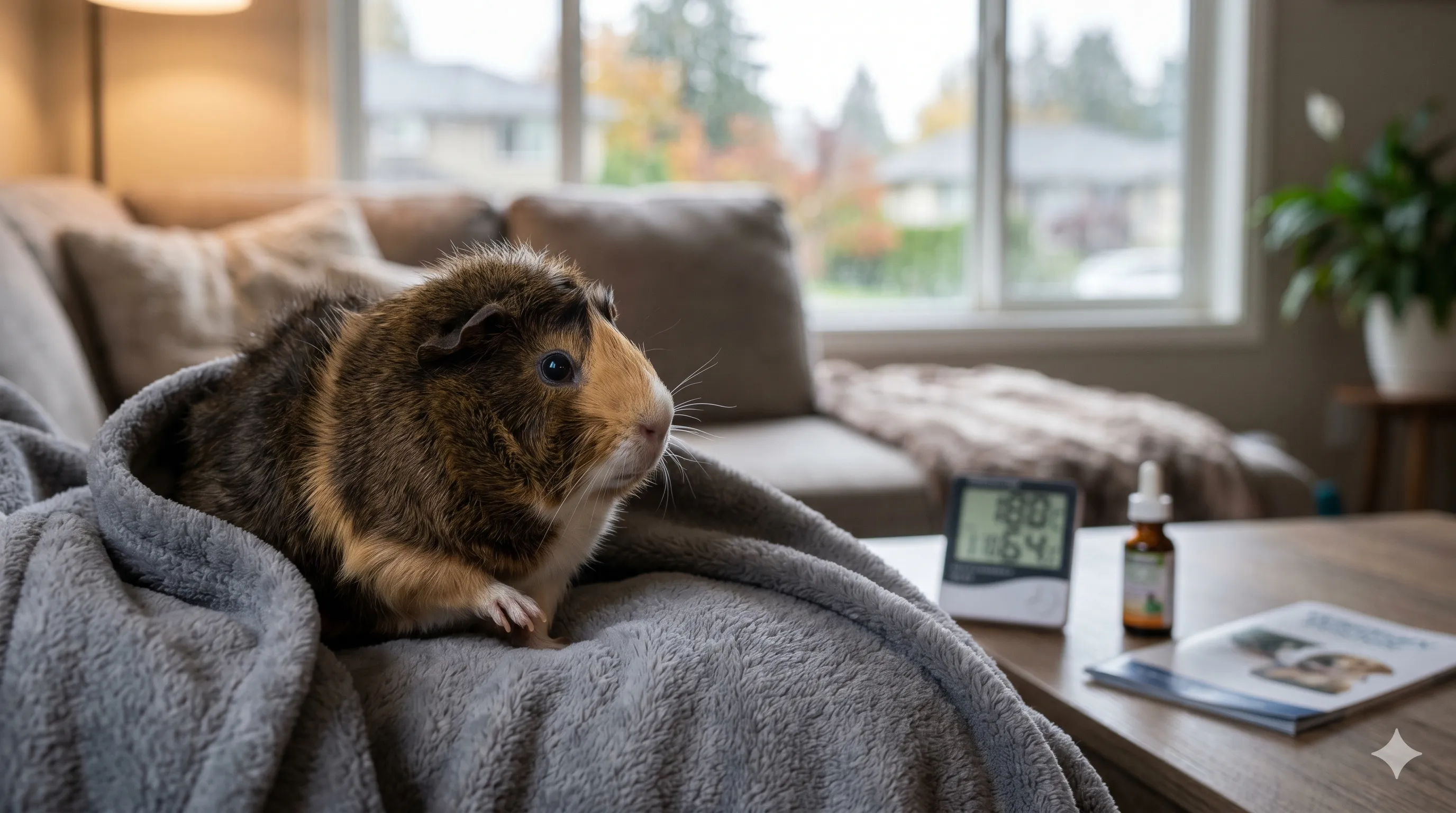
Consider a new owner whose guinea pig spends its first days in a shelter. The owner speaks softly, keeps feeding and cleaning to a routine and does not shout or force handling. When the guinea pig comes out, the owner offers a leaf of romaine lettuce and waits. The owner does not give carrot as a daily food, because the RSPCA says it is a small treat. If the guinea pig kept hiding most of the time or showed other signs of stress, the owner would ask a vet or clinical animal behaviourist, as the RSPCA advises.
Practical Checklist
- Secure hiding places for each guinea pig
- At least one friendly guinea pig companion
- A couple of days to settle before introductions
- Quiet, gentle handling with no shouting or punishing
- Romaine or gem lettuce, parsley, celery, bell pepper or cucumber as everyday foods; carrot only as a small treat
- A vet visit if behaviour changes or stress signs continue
Editorial Note
This article is part of PetNurture's educational library.
Topics draw on publicly available educational resources, recognised veterinary organisations, academic publications and established animal welfare references where appropriate.
The specific sources this article draws on are listed in its References section. If you spot an error, please let us know.
References
The information in this article has been reviewed and supported using the following sources.
PetMD (Emily Johnson, reviewed by Melissa Witherell DVM)
How to Care for Your Guinea Pig: A Guide for Pet Parents
Updated 28 August 2024. Approach slowly and let them sniff your hand; support chest and hindquarters; never hold upside down; guinea pigs do well in pairs; out of cage at least once a day supervised in a safe zone or playpen; grass hay 75% of diet; live four to eight years; yearly checkup with an exotic vet.
Accessed Nov 5, 2026
RSPCA
No date or author. Be quiet and gentle and never shout at or punish; signs of stress include hiding most of the time and sitting hunched; prey species that must be able to hide; ask your vet or clinical animal behaviourist for advice.
Accessed Nov 5, 2026
PDSA
No date or author. Keep apart until sure the new one is healthy; swap bedding and scent; barrier then neutral ground for 10 to 15 minute sessions; separate with a clean dustpan or board not hands; signs of getting along popcorning and wheeks; stress teeth chattering and chasing.
Accessed Nov 5, 2026
Pet Emergency Guidance
Every pet is unique. If your pet exhibits severe symptoms, sudden behavioral changes, or a medical emergency, do not rely on online guides — contact a licensed veterinarian or emergency clinic immediately.
Was this article helpful?
About PetNurture
PetNurture is an educational library of pet care guides, interactive tools and practical resources for pet parents. We work continuously to keep our content accurate and up to date. Reader feedback helps us maintain content quality.
Related Articles
Popular Guinea Pig Guides
Guinea Pig
Guinea Pig Feeding Calculator
Calculate daily food portions for your guinea pig by weight.
Guinea Pig
Guinea Pig Cage Size Calculator
Find the minimum recommended cage size for your guinea pigs.