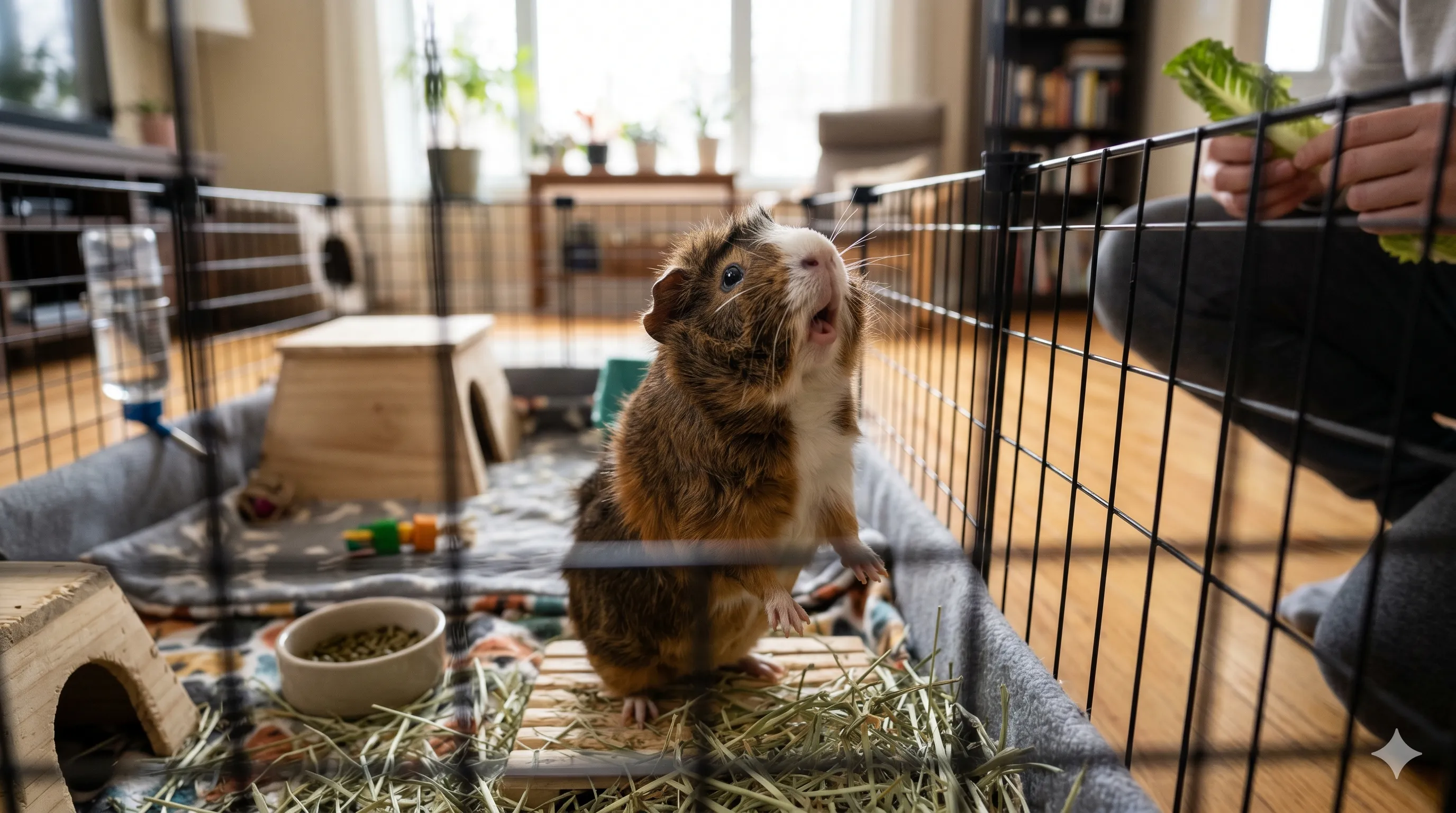
Why Is My Guinea Pig Chirping? Rare Guinea Pig Sound Explained
- Why Is My Guinea Pig Chirping? (Quick Answer)
- What Does Guinea Pig Chirping Sound Like?
- How Rare Is Guinea Pig Chirping?
- Most Common Theories Behind Guinea Pig Chirping
- 1. Heightened Alertness
- 2. Mild Stress or Uncertainty
- 3. Social Communication
- 4. Deep Focus or Trance-Like Behavior
- 5. Instinctive Behavior
- Why Do Guinea Pigs Often Chirp at Night?
- Body Language to Watch During Chirping
- Should You Be Worried About Chirping?
- When Chirping May Need Closer Attention
- What Should You Do If Your Guinea Pig Starts Chirping?
- Stay Calm
- Observe the Environment
- Monitor Health
- Record the Event
- Can Guinea Pig Chirping Be Prevented?
- Common Myths About Guinea Pig Chirping
- Myth: Chirping Always Means Illness
- Myth: Only Stressed Guinea Pigs Chirp
- Myth: Chirping Is Dangerous
- Myth: Every Guinea Pig Will Chirp Eventually
- Final Thoughts
Note: This article is for informational purposes only and does not replace professional veterinary advice.
Few guinea pig sounds generate as much curiosity as chirping. Many owners spend months or even years hearing normal squeaks, wheeks, purrs, and chatter noises without ever encountering it. Then one day, often during a quiet evening or late at night, a guinea pig suddenly begins making a sound that resembles a bird singing.
If you've been wondering why is my guinea pig chirping, you're not alone. Chirping is considered one of the rarest guinea pig vocalizations, and even experienced owners are often surprised when they hear it for the first time.
Unlike common sounds that have well-understood meanings, chirping remains somewhat mysterious. Animal behavior experts, veterinarians, and guinea pig enthusiasts have proposed several theories, but no single explanation fully accounts for every chirping episode.
What we do know is that chirping is usually linked to a guinea pig's emotional state, surroundings, or social environment rather than being a random noise. Understanding the context can help you determine whether the behavior is normal curiosity, environmental awareness, mild stress, or something that deserves closer attention.
Why Is My Guinea Pig Chirping? (Quick Answer)
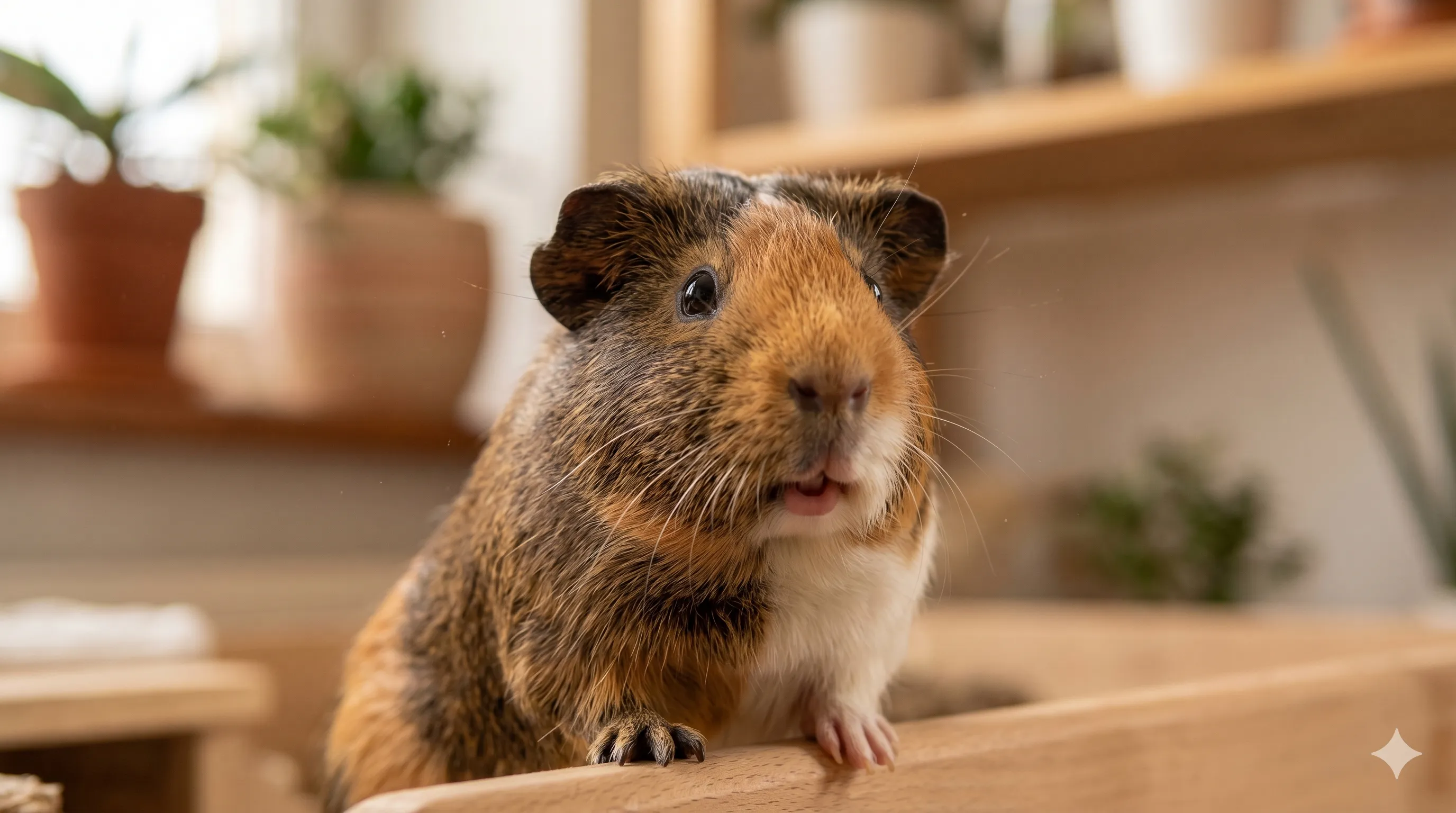
Guinea pigs may chirp because of environmental changes, heightened alertness, emotional stimulation, social communication, stress, or instinctive behavior. Chirping is rare and not fully understood, but it is usually harmless when the guinea pig otherwise appears healthy, active, and comfortable.
What Does Guinea Pig Chirping Sound Like?
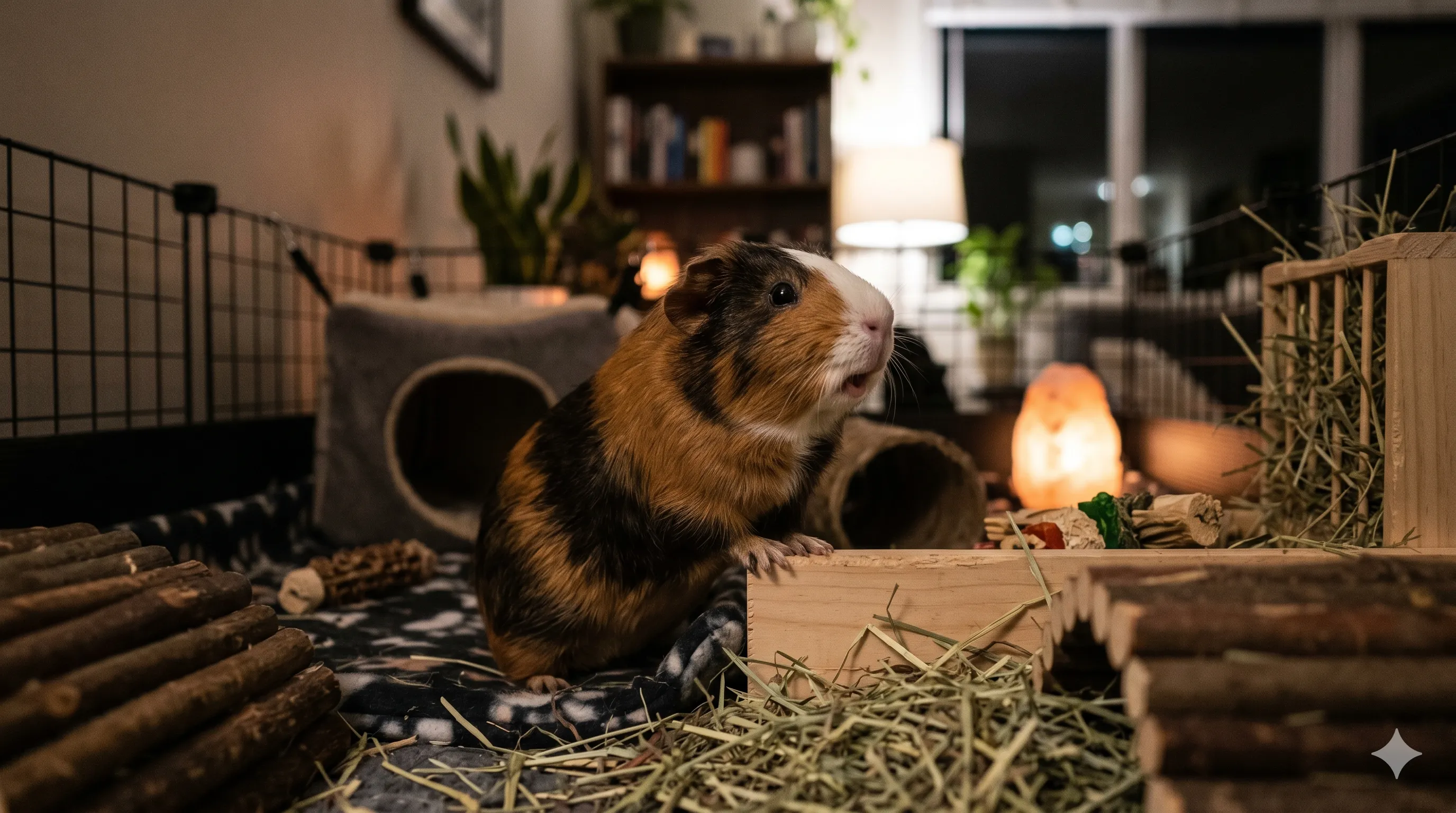
Many owners initially think a bird has somehow entered the room when they hear a guinea pig chirp.
Chirping often sounds:
- Bird-like and melodic
- Soft and repetitive
- Rhythmic rather than random
- Different from squeaks and wheeks
- Continuous for several minutes
Unlike excited wheeking, which is often loud and demanding, chirping tends to sound calmer and more repetitive.
Some guinea pigs appear almost hypnotized while chirping, remaining still and focused until the episode ends.
How Rare Is Guinea Pig Chirping?
Chirping is much less common than other guinea pig sounds.
Many guinea pigs never chirp during their lifetime. Others may chirp only once or twice over several years.
This rarity is one reason researchers have struggled to determine exactly what the behavior means.
Common guinea pig sounds such as:
- Wheeking
- Squeaking
- Purring
- Teeth chattering
- Rumbling
have relatively clear meanings. Chirping remains one of the least understood vocalizations in guinea pig communication.
guinea pig squeaking meanings explainedMost Common Theories Behind Guinea Pig Chirping
1. Heightened Alertness
One widely accepted theory suggests chirping occurs when a guinea pig becomes highly alert to its environment.
Possible triggers include:
- Unusual sounds
- Nighttime activity
- Changes in the home
- New pets nearby
- Unexpected movement
Some owners notice chirping shortly after a significant environmental change, supporting the idea that the behavior may be linked to increased awareness.
2. Mild Stress or Uncertainty
Stress does not always produce obvious fear behaviors.
Sometimes guinea pigs respond to unfamiliar situations with unusual vocalizations rather than hiding or running away.
Potential stress-related triggers include:
- Moving to a new home
- Cage rearrangements
- Introduction of new guinea pigs
- Changes in routine
- Household disruptions
However, chirping alone does not automatically mean your guinea pig is stressed.
3. Social Communication
Some behavior specialists believe chirping may serve as a rare form of social communication.
Possible situations include:
- Communicating with cage mates
- Responding to social tension
- Reacting to separation
- Expressing emotional states
Interestingly, cage mates often appear confused or unusually attentive when another guinea pig starts chirping.
4. Deep Focus or Trance-Like Behavior
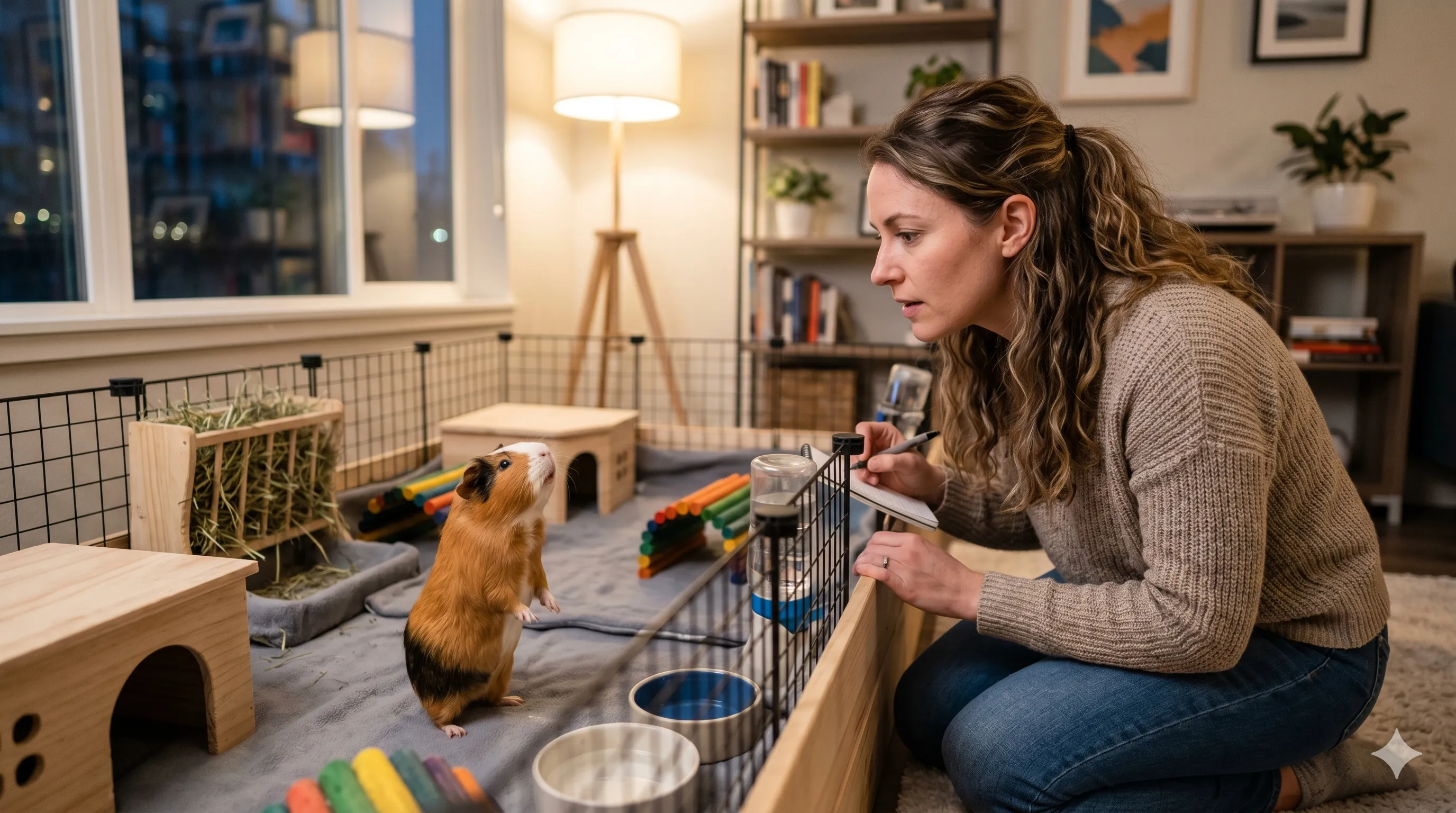
One of the strangest aspects of chirping is how some guinea pigs behave while doing it.
Owners often report:
- Reduced movement
- Fixed staring
- Calm posture
- Minimal response to surroundings
This has led some people to compare chirping episodes to a trance-like state, although there is no scientific evidence proving this explanation.
5. Instinctive Behavior
Another theory suggests chirping may be a rarely expressed instinct inherited from wild ancestors.
While there is currently no scientific consensus supporting this idea, the unusual nature of chirping keeps this theory popular among guinea pig enthusiasts.
Why Do Guinea Pigs Often Chirp at Night?
Many reported chirping episodes occur during the evening or overnight hours.
This may happen because:
- The home is quieter
- Background noise is reduced
- Guinea pigs become more active
- Subtle sounds become easier to notice
Nighttime chirping can seem dramatic simply because owners are more likely to notice the unusual sound in a quiet environment.
understanding guinea pig staring behaviorBody Language to Watch During Chirping
The sound itself only tells part of the story.
To understand why your guinea pig may be chirping, observe accompanying body language.
| Body Language | Possible Meaning |
|---|---|
| Relaxed posture | Normal vocalization |
| Calm breathing | No immediate concern |
| Fixed staring | Focused attention |
| Hiding behavior | Possible stress |
| Loss of appetite | Potential health concern |
| Lethargy | Requires monitoring |
Looking at the complete picture is far more useful than focusing on chirping alone.
Should You Be Worried About Chirping?
In most cases, no.
Occasional chirping is generally considered harmless when your guinea pig:
- Maintains a healthy appetite
- Remains active
- Continues normal social behavior
- Produces normal droppings
- Shows no signs of illness
Many healthy guinea pigs chirp occasionally without developing any medical problems.
When Chirping May Need Closer Attention
Although chirping itself is rarely dangerous, owners should monitor for additional symptoms.
Consider veterinary advice if chirping occurs alongside:
- Weight loss
- Reduced appetite
- Difficulty breathing
- Persistent hiding
- Lethargy
- Changes in droppings
- Behavioral changes
Behavior changes combined with physical symptoms deserve more attention than chirping alone.
why guinea pigs hide and what it meansWhat Should You Do If Your Guinea Pig Starts Chirping?
Stay Calm
Most chirping episodes end on their own without intervention.
Avoid sudden movements or attempts to stop the behavior.
Observe the Environment
Look for anything unusual that may have triggered the behavior.
Examples include:
- New noises
- Visitors
- Pets nearby
- Recent cage changes
- Temperature fluctuations
Monitor Health
Check whether your guinea pig continues to:
- Eat normally
- Drink normally
- Move comfortably
- Interact with cage mates
Record the Event
If possible, record the chirping sound.
This can help if you later need to discuss unusual behavior with a veterinarian.
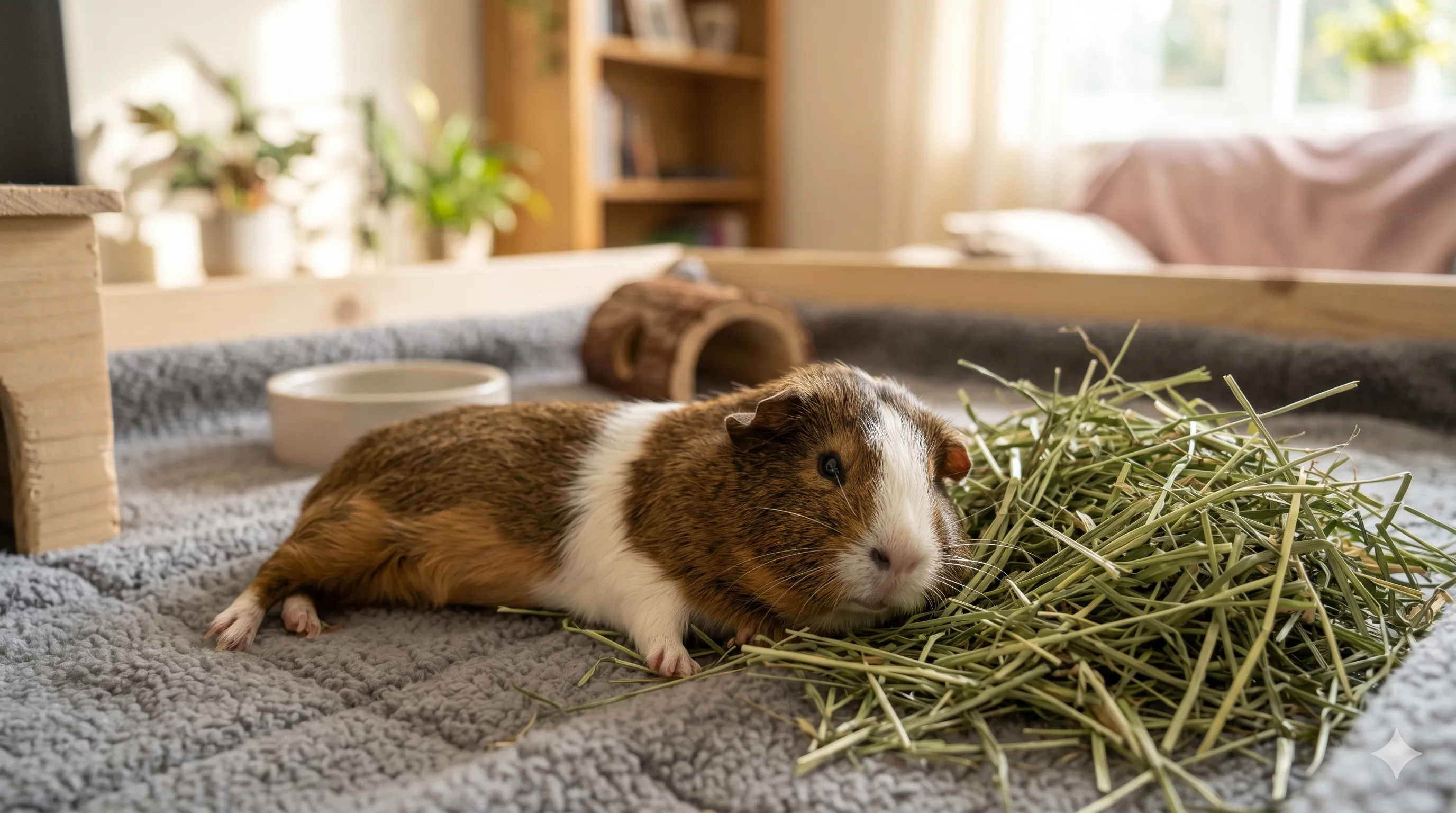
Can Guinea Pig Chirping Be Prevented?
Because the exact cause remains unclear, chirping itself is not something owners typically need to prevent.
Instead, focus on creating a healthy environment by providing:
- A stable daily routine
- Adequate cage space
- Hideouts and enrichment
- Fresh hay and proper nutrition
- Gentle handling
- Social companionship when appropriate
These practices support overall well-being and may help reduce stress-related behaviors.
guinea pig teeth chattering warning signsCommon Myths About Guinea Pig Chirping
Myth: Chirping Always Means Illness
Most chirping episodes occur in otherwise healthy guinea pigs.
Myth: Only Stressed Guinea Pigs Chirp
Some chirping episodes occur without any obvious signs of stress.
Myth: Chirping Is Dangerous
The sound itself is generally harmless and often resolves naturally.
Myth: Every Guinea Pig Will Chirp Eventually
Many guinea pigs never chirp at all.
Final Thoughts
Guinea pig chirping remains one of the most unusual and fascinating behaviors in guinea pig communication. While experts still debate the exact reason behind it, chirping is generally considered a rare vocalization linked to alertness, emotional states, environmental awareness, or social communication.
For most owners, the best response is simple observation. Monitor your guinea pig's body language, appetite, activity level, and overall health rather than focusing on the chirping alone.
As you become more familiar with your guinea pig's personality and communication style, unusual sounds become easier to interpret, helping you recognize the difference between harmless quirks and genuine warning signs.
This article is intended for educational purposes only and should not replace professional veterinary advice. If unusual vocalizations occur alongside signs of illness, appetite loss, lethargy, or breathing difficulties, consult a qualified exotic animal veterinarian.
Medical Disclaimer
This content is provided for informational and educational purposes only and should not be considered veterinary, medical, behavioral, or training advice. While we strive for accuracy, we make no guarantees regarding completeness or results. Always consult a licensed veterinarian or qualified pet care professional before making decisions about your pet’s health, diet, or behavior.
AI Illustration Notice
Some images in this article may have been generated or enhanced using artificial intelligence for illustrative purposes.
Frequently Asked Questions
Guinea pig chirping is a rare vocalization that may be linked to alertness emotional states environmental changes or social communication.
Yes, chirping is generally considered a normal but uncommon guinea pig sound when the animal otherwise appears healthy.
Chirping often sounds similar to soft repetitive bird singing or tweeting noises.
Many chirping episodes occur at night when the environment is quieter and guinea pigs are more aware of surrounding sounds.
Usually chirping alone is harmless but monitor for additional symptoms such as lethargy appetite loss or breathing difficulties.
Possibly. Environmental changes unusual noises or uncertainty may contribute to some chirping episodes.
Yes, chirping is widely considered one of the rarest vocalizations reported by guinea pig owners.
Stay calm observe your guinea pig's body language check for environmental changes and monitor overall health.
Editorial Note
This article is part of PetNurture's educational library.
Topics draw on publicly available educational resources, recognised veterinary organisations, academic publications and established animal welfare references where appropriate.
The specific sources this article draws on are listed in its References section. If you spot an error, please let us know.
References
The information in this article has been reviewed and supported using the following sources.
RSPCA
Supports distinguishing normal behavior from recognized stress signs (hiding, hunched posture, altered feeding) referenced in the 'When Chirping May Need Closer Attention' section of this article.
Accessed Aug 6, 2026
VCA Animal Hospitals
Confirms guinea pigs use a wide variety of vocal sounds to communicate, supporting the framing of chirping as one of many guinea pig vocalizations in this article.
Accessed Aug 6, 2026
Pet Emergency Guidance
Every pet is unique. If your pet exhibits severe symptoms, sudden behavioral changes, or a medical emergency, do not rely on online guides — contact a licensed veterinarian or emergency clinic immediately.
About PetNurture
PetNurture is an educational library of pet care guides, interactive tools and practical resources for pet parents. We work continuously to keep our content accurate and up to date. Reader feedback helps us maintain content quality.
Related Articles
Popular Guinea Pig Guides
Guinea Pig
Guinea Pig Vitamin C Calculator
Calculate how much vitamin C your guinea pig needs each day.
Guinea Pig
Guinea Pig Feeding Calculator
Calculate daily food portions for your guinea pig by weight.
Guinea Pig
Guinea Pig Cage Size Calculator
Find the minimum recommended cage size for your guinea pigs.