
How to Stop Dog Barking at Night: Causes, Solutions & 10 Training Tips
- How to Stop Dog Barking at Night (Quick Answer)
- Quick Fixes to Stop Dog Barking at Night
- Best Ways to Stop Dog Barking at Night (Quick Comparison)
- Why Do Dogs Bark at Night?
- 1. Separation Anxiety
- 2. Lack of Physical Exercise
- 3. Boredom and Mental Stimulation Issues
- 4. Environmental Triggers
- 5. Learned Attention-Seeking Behavior
- 6. Fear or Anxiety
- 7. Medical Problems or Discomfort
- How to Stop Dog Barking at Night (Step-by-Step Solutions)
- 1. Increase Daytime Exercise
- 2. Create a Consistent Bedtime Routine
- 3. Avoid Rewarding Barking
- 4. Reduce Environmental Triggers
- 5. Provide Mental Stimulation During the Day
- 6. Make the Sleeping Area Comfortable
- 7. Use Crate Training Properly
- 8. Address Puppy Night Barking Early
- 9. Try Calming Techniques
- 10. Consult a Veterinarian or Trainer if Needed
- Common Mistakes That Make Night Barking Worse
- When Should You Be Concerned About Night Barking?
- Example Scenario
- Final Thoughts
Note: This article is for informational purposes only and does not replace professional veterinary advice.
If you're struggling to stop dog barking at night, you're definitely not alone. Nighttime barking is one of the most common and frustrating issues dog owners face, especially when it interrupts sleep for the entire household. In many cases, barking at night happens because a dog is anxious, bored, overstimulated, or reacting to environmental triggers. understanding why dogs bark at night can help you fix the issue faster
The good news is that most nighttime barking problems can be improved with consistent training, better routines, and a few simple environmental changes. Whether you have a puppy barking in a crate, an adult dog reacting to noises, or a senior dog suddenly becoming restless overnight, identifying the root cause is the key to long-term success.
In this guide, you'll learn the most common reasons dogs bark at night, practical ways to stop the behavior, mistakes to avoid, and proven strategies that actually work for real dog owners.
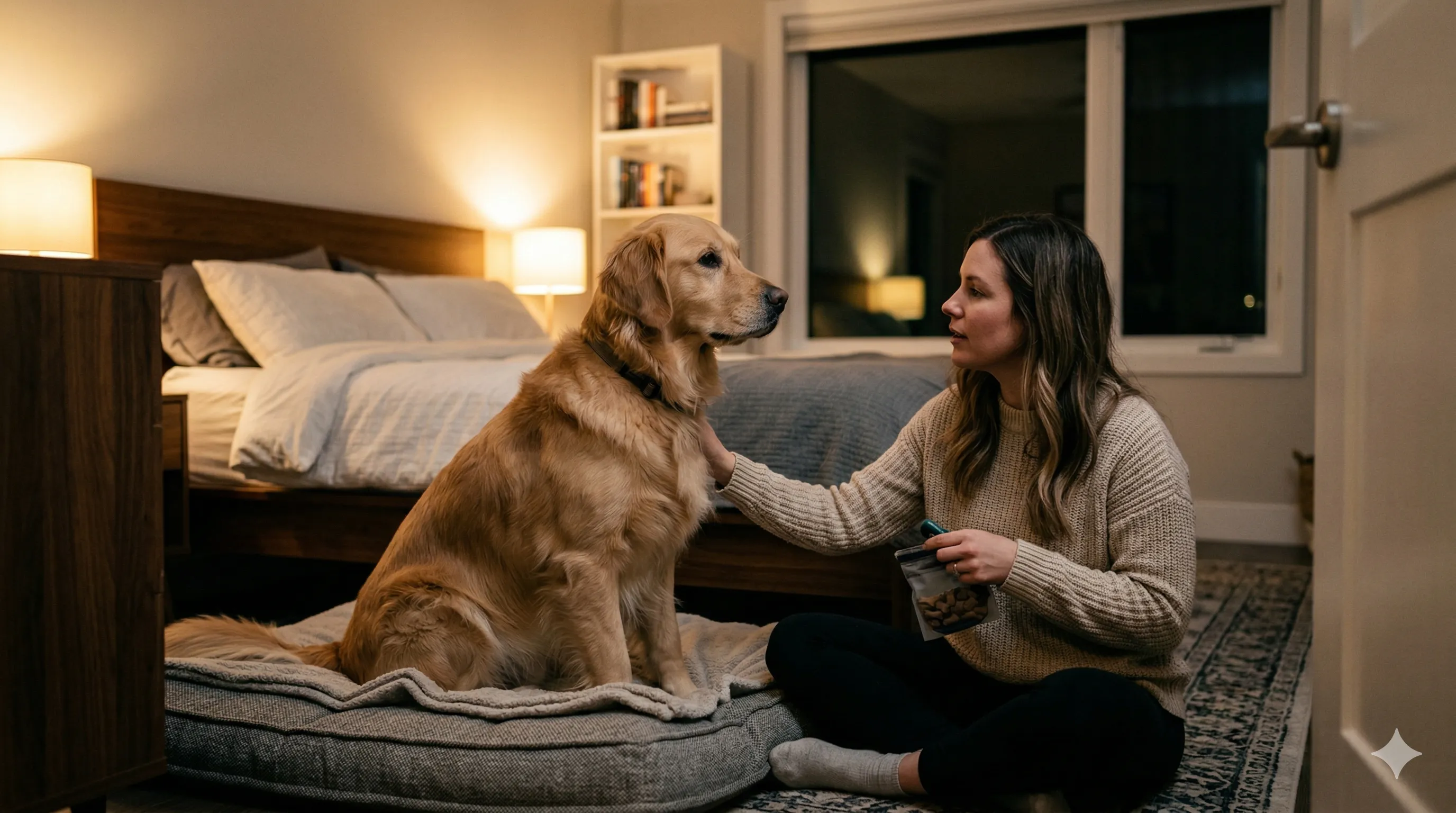
How to Stop Dog Barking at Night (Quick Answer)
To stop dog barking at night, make sure your dog gets enough physical and mental exercise during the day, follows a consistent bedtime routine, and sleeps in a calm, comfortable environment. Avoid rewarding barking with attention, identify possible triggers, and use positive reinforcement to encourage calm nighttime behavior.
Most dogs improve within a few days to several weeks depending on the underlying cause and the consistency of training.

Quick Fixes to Stop Dog Barking at Night
If you need immediate improvements, these quick strategies can often reduce barking quickly:
- Take your dog for an evening walk before bedtime
- Feed dinner earlier to avoid late-night energy bursts
- Keep the sleeping area dark, calm, and quiet
- Use white noise or calming music to block outside sounds
- Ignore attention-seeking barking whenever possible
- Give your dog puzzle toys or enrichment during the day
- try these indoor activities for bored dogs to reduce excess energy
- Maintain a predictable nighttime schedule
- Make sure your dog is not anxious or uncomfortable
- discover how to calm an anxious dog for better nighttime behavior
Best Ways to Stop Dog Barking at Night (Quick Comparison)
| Method | Effectiveness | Best For |
|---|---|---|
| Evening exercise | High | High-energy dogs |
| Consistent bedtime routine | High | All dogs |
| Reducing outside triggers | Medium-High | Noise-sensitive dogs |
| Positive reinforcement training | High | Long-term behavior improvement |
| Crate training | Medium-High | Puppies and anxious dogs |
| Calming techniques | Medium | Stress-related barking |

Why Do Dogs Bark at Night?
Before you can successfully stop nighttime barking, you need to understand what is causing it. Dogs rarely bark for no reason. In most cases, barking is your dog's way of communicating discomfort, stress, excitement, fear, or alertness.
1. Separation Anxiety
Some dogs become anxious when separated from their owners at night, especially puppies or rescue dogs adjusting to a new home. Dogs with separation anxiety may bark, whine, pace, or scratch doors when left alone.
this dog separation anxiety guide explains how to reduce stress-related barking2. Lack of Physical Exercise
Dogs that don't get enough activity during the day often still have energy at bedtime. High-energy breeds such as Huskies, Border Collies, German Shepherds, and Labradors may bark simply because they are restless or under-stimulated.
A tired dog is usually a quieter dog.
3. Boredom and Mental Stimulation Issues
Mental stimulation is just as important as physical exercise. Dogs that spend long hours inactive may become frustrated and bark for entertainment or attention during the night.
4. Environmental Triggers
Dogs have extremely sensitive hearing. Sounds like passing cars, people walking outside, other animals, thunderstorms, or even neighbors closing doors can trigger nighttime barking.
Some dogs also bark when they see movement through windows or react to unfamiliar noises in the environment.
5. Learned Attention-Seeking Behavior
If your dog learns that barking gets attention, treats, or interaction, the behavior may continue. Even negative attention, such as yelling at your dog, can unintentionally reinforce barking.
6. Fear or Anxiety
Dogs may bark at night if they feel insecure, stressed, or frightened. Puppies commonly experience anxiety during their first few nights away from their littermates, while adult dogs may develop fears after stressful experiences.
7. Medical Problems or Discomfort
Sudden nighttime barking can sometimes indicate pain, digestive discomfort, hearing problems, cognitive decline in senior dogs, or other health concerns.
If the barking appears unusual or comes with other symptoms, it's important to consult a veterinarian.
How to Stop Dog Barking at Night (Step-by-Step Solutions)
1. Increase Daytime Exercise
One of the most effective ways to stop nighttime barking is to increase physical activity during the day. Dogs that have unused energy are far more likely to stay restless overnight.
Daily walks, fetch sessions, obedience training, swimming, or playtime can help burn energy and improve sleep quality.
Even a 20–30 minute evening walk before bed can make a noticeable difference for many dogs.
see how to stop dog pulling on leash for better overall behavior control2. Create a Consistent Bedtime Routine
Dogs thrive on predictable routines. Try to keep feeding times, walks, potty breaks, and bedtime consistent every day.
A calming nighttime routine may include:
- Evening exercise
- Final potty break before bed
- Quiet bonding time
- Dimming lights
- Reducing stimulation before sleep
Over time, your dog will begin associating this routine with relaxation and sleep.
3. Avoid Rewarding Barking
Many owners accidentally reinforce barking by immediately responding every time the dog makes noise.
If your dog is barking for attention and you respond by talking, petting, or letting them out, they may learn that barking works.
Instead, wait for calm behavior before giving attention whenever possible.
However, always make sure your dog is safe and doesn't genuinely need something first.
4. Reduce Environmental Triggers
If your dog reacts to outside noises or movement, reducing stimulation can help significantly.
Try these simple adjustments:
- Close curtains or blinds
- Move the bed away from windows
- Use white noise machines or fans
- Play calming dog music
- Limit exposure to outdoor distractions
These changes are especially helpful for alert or territorial dogs.
5. Provide Mental Stimulation During the Day
Dogs need mental exercise just like humans do. Puzzle feeders, scent games, obedience sessions, and interactive toys can help reduce boredom-related barking.
Training activities also strengthen your bond with your dog and improve focus.
6. Make the Sleeping Area Comfortable
Your dog should have a secure and comfortable place to sleep.
A good sleeping environment should be:
- Quiet
- Comfortable
- Not too hot or cold
- Free from excessive distractions
- Associated with safety and relaxation
Some dogs sleep better near their owners, while others prefer quieter isolated spaces.
7. Use Crate Training Properly
Crates can help many dogs feel secure at night when introduced correctly. However, improper crate use can increase anxiety and barking.
The crate should never feel like punishment.
learn how to crate train a puppy for a calmer and quieter night routine8. Address Puppy Night Barking Early
Puppies commonly bark at night during the adjustment period. They may miss their littermates, need nighttime potty breaks, or feel confused in a new environment.
Patience and consistency are essential during this stage.
learn how to socialize a puppy to prevent behavior issues early follow these tips to potty train a puppy fast and avoid nighttime disruptions9. Try Calming Techniques
Some dogs benefit from calming techniques such as:
- White noise
- Soft calming music
- Calming pheromone diffusers
- Comfort blankets
- Relaxation training
These methods may help anxious or noise-sensitive dogs settle more easily at night.
10. Consult a Veterinarian or Trainer if Needed
If barking becomes excessive, sudden, or difficult to control, professional guidance may be necessary.
A veterinarian can rule out medical problems, while a qualified dog trainer or behaviorist can identify deeper behavioral issues.

Common Mistakes That Make Night Barking Worse
Some common owner mistakes can unintentionally reinforce nighttime barking.
- Shouting at your dog
- Using punishment-based training
- Inconsistent schedules
- Not providing enough exercise
- Responding immediately to attention barking
- Ignoring anxiety or stress signals
- Expecting instant results
Consistency matters more than quick fixes.
When Should You Be Concerned About Night Barking?
Occasional barking is normal, but some situations may require veterinary attention.
You should contact a veterinarian if your dog:
- Suddenly starts barking excessively at night
- Seems disoriented or confused
- Shows signs of pain or illness
- Has changes in appetite or behavior
- Cannot settle despite training efforts
- Displays severe anxiety symptoms
Senior dogs may sometimes develop nighttime confusion or cognitive issues that require medical evaluation.
Example Scenario
The scenario below is an illustrative example of how this situation can play out, not a documented case study.
One dog owner noticed their young Labrador barking every night around midnight. After increasing daytime exercise, adding evening enrichment activities, and ignoring attention-seeking barking consistently, the behavior improved significantly within two weeks.
Another owner discovered their dog was reacting to outdoor movement near a window. Simply moving the bed away from the window and using white noise reduced barking almost immediately.
Small environmental changes can sometimes create surprisingly large improvements.
Final Thoughts
Learning how to stop dog barking at night starts with understanding why your dog is barking in the first place. Most nighttime barking problems are caused by anxiety, boredom, lack of exercise, environmental triggers, or inconsistent routines.
With patience, structure, and positive reinforcement, most dogs can learn to settle calmly at night.
The key is consistency. Focus on creating a calm environment, meeting your dog's physical and emotional needs, and avoiding habits that accidentally reinforce barking.
Over time, these small changes can lead to quieter nights and a happier, more relaxed dog.
This content is written to provide general educational guidance for dog owners. It should not replace professional veterinary or behavioral advice for severe cases.
Medical Disclaimer
This content is provided for informational and educational purposes only and should not be considered veterinary, medical, behavioral, or training advice. While we strive for accuracy, we make no guarantees regarding completeness or results. Always consult a licensed veterinarian or qualified pet care professional before making decisions about your pet’s health, diet, or behavior.
AI Illustration Notice
Some images in this article may have been generated or enhanced using artificial intelligence for illustrative purposes.
Frequently Asked Questions
Dogs may bark at night due to boredom, anxiety, environmental triggers, loneliness, lack of exercise, or discomfort.
Some dogs improve within a few days, while others may take several weeks depending on the cause and training consistency.
If the barking is attention-seeking and your dog is safe, ignoring the behavior may help. However, always rule out medical problems or genuine distress first.
Yes. Dogs with separation anxiety often bark, whine, or become restless when left alone at night.
The best approach combines exercise, mental stimulation, consistent routines, environmental management, and positive reinforcement training.
Editorial Note
This article is part of PetNurture's educational library.
Topics draw on publicly available educational resources, recognised veterinary organisations, academic publications and established animal welfare references where appropriate.
The specific sources this article draws on are listed in its References section. If you spot an error, please let us know.
References
The information in this article has been reviewed and supported using the following sources.
American Kennel Club
How to Stop Nuisance Dog Barking
Explains general causes of nuisance barking and reinforcement-based techniques such as ignoring attention-seeking barks; supports the quick-fixes and common-mistakes guidance in this article.
Accessed Aug 5, 2026
American Kennel Club
How to Stop a Dog From Barking and Whining When They Are Left Alone
Covers exercise and mental stimulation as ways to reduce barking when a dog is left alone; supports the exercise and routine recommendations in this article.
Accessed Aug 5, 2026
American Kennel Club
How to Crate Train Your Dog: Expert Tips for Every Age
Step-by-step crate training guidance; supports the crate training section of this article.
Accessed Aug 5, 2026
ASPCA
General overview of causes and patterns of nuisance barking in dogs; supports the causes section of this article.
Accessed Aug 5, 2026
ASPCA
Describes separation-anxiety-driven barking and its accompanying behaviors; supports the separation anxiety section of this article.
Accessed Aug 5, 2026
American Veterinary Medical Association
New Diagnostic Tools for Identifying Early Stages of Canine Dementia
Reports on canine cognitive dysfunction in senior dogs, including nighttime restlessness and vocalization; supports the medical-causes and senior-dog guidance in this article.
Accessed Aug 5, 2026
Pet Emergency Guidance
Every pet is unique. If your pet exhibits severe symptoms, sudden behavioral changes, or a medical emergency, do not rely on online guides — contact a licensed veterinarian or emergency clinic immediately.
About PetNurture
PetNurture is an educational library of pet care guides, interactive tools and practical resources for pet parents. We work continuously to keep our content accurate and up to date. Reader feedback helps us maintain content quality.
Related Articles


Popular Dog Guides



Dog
Dog Calorie Calculator
Find the right daily calorie target for your dog's weight and activity level.