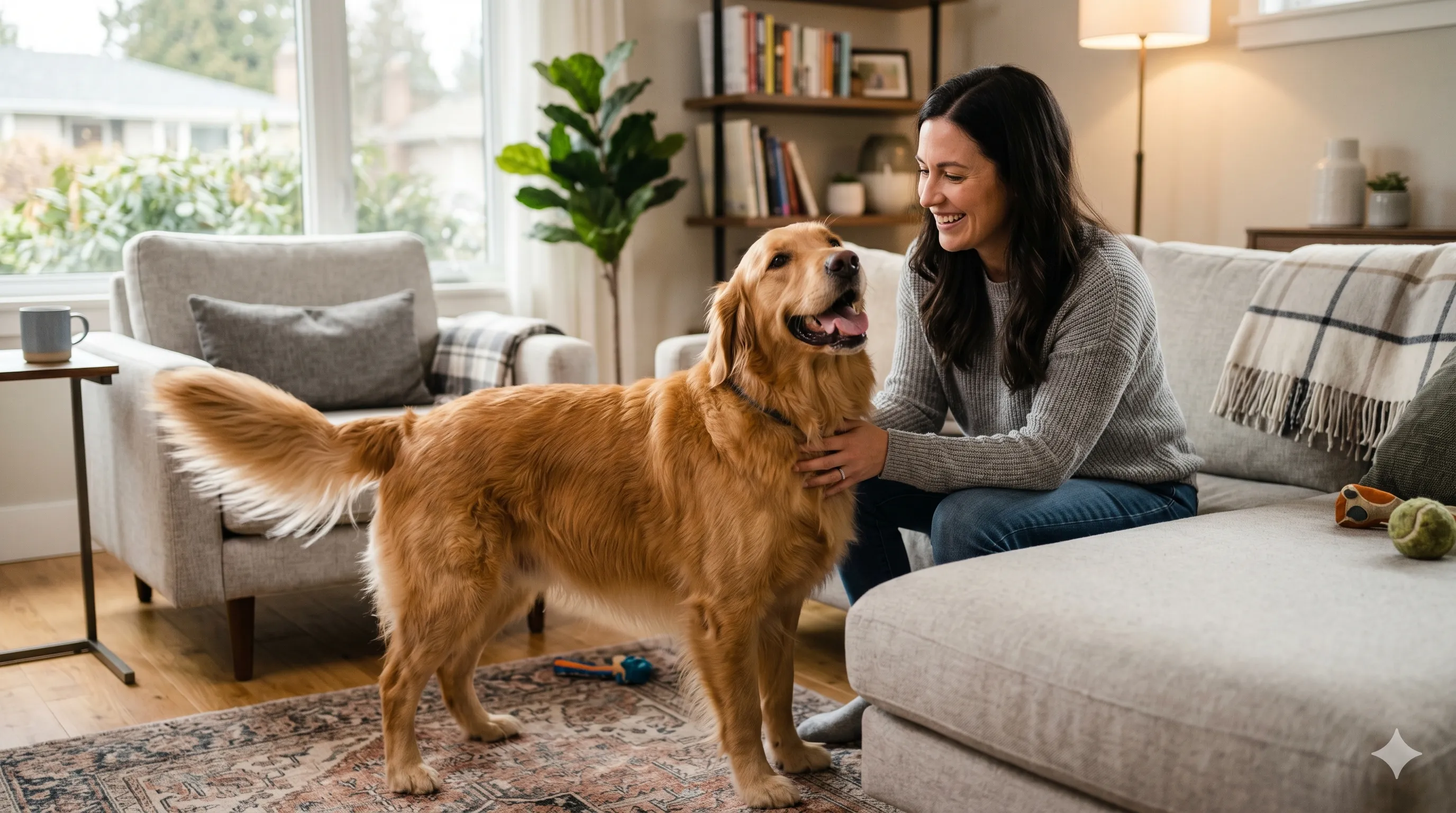
How to Calm an Anxious Dog: Causes, Fast Relief & Long-Term Training Solutions
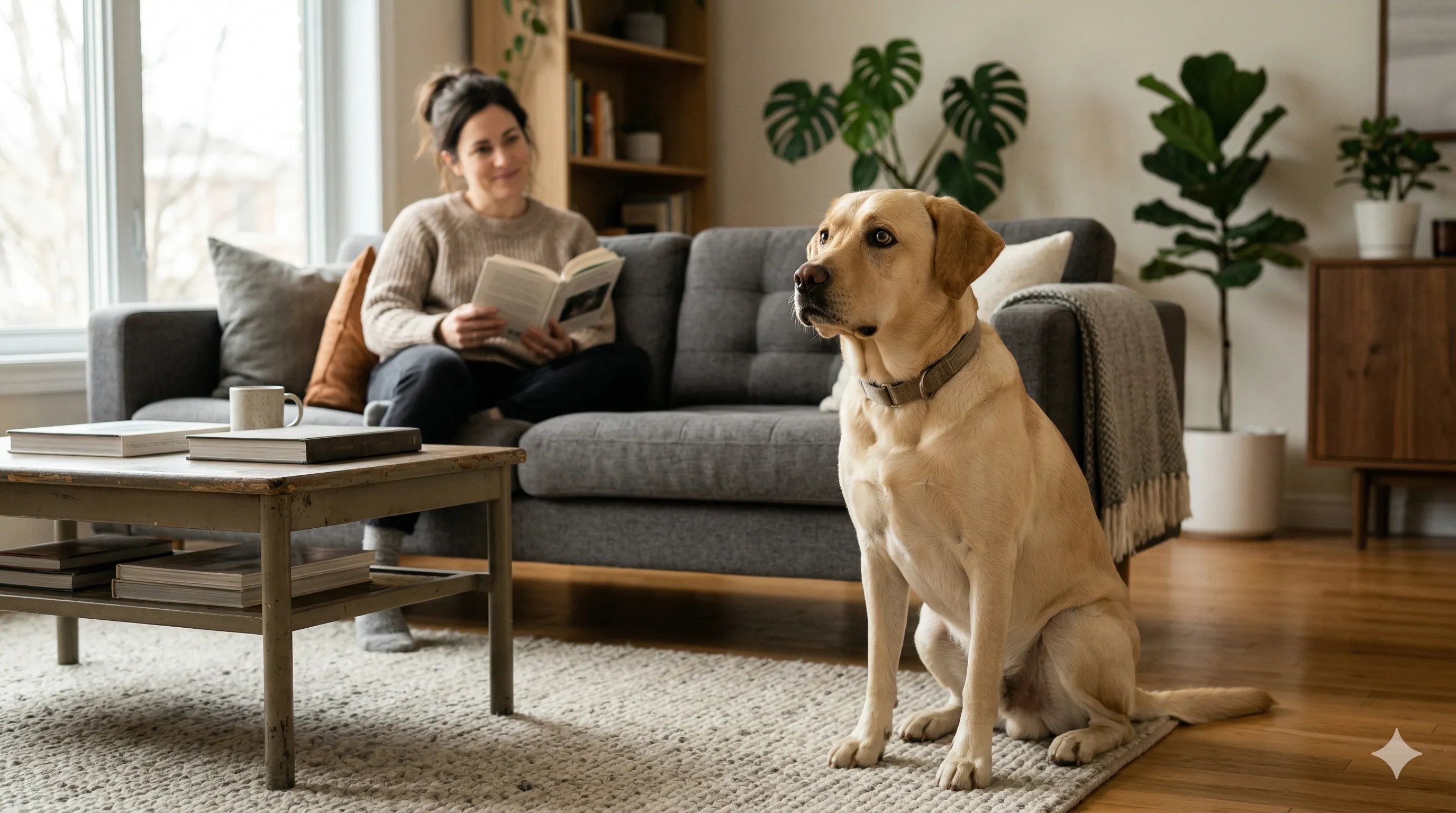
- How to Calm an Anxious Dog (Quick Answer)
- What Anxiety Looks Like in Dogs
- Common Signs of Anxiety in Dogs
- Why Dogs Become Anxious
- 1. Separation Anxiety
- 2. Trigger Stacking and Overstimulation
- 3. Lack of Predictability
- 4. Poor Early Socialization
- 5. Fear-Based Experiences
- 6. Boredom and Under-Stimulation
- What Many Owners Accidentally Do Wrong
- How to Calm an Anxious Dog Step-by-Step
- Create a Safe Decompression Space
- Build Predictable Daily Routines
- Increase Mental Enrichment
- Provide Appropriate Exercise
- Stay Emotionally Calm Yourself
- Use Gradual Exposure Training
- Fast Calming Techniques During Anxiety Episodes
- Move to a Quiet Area
- Reduce Environmental Triggers
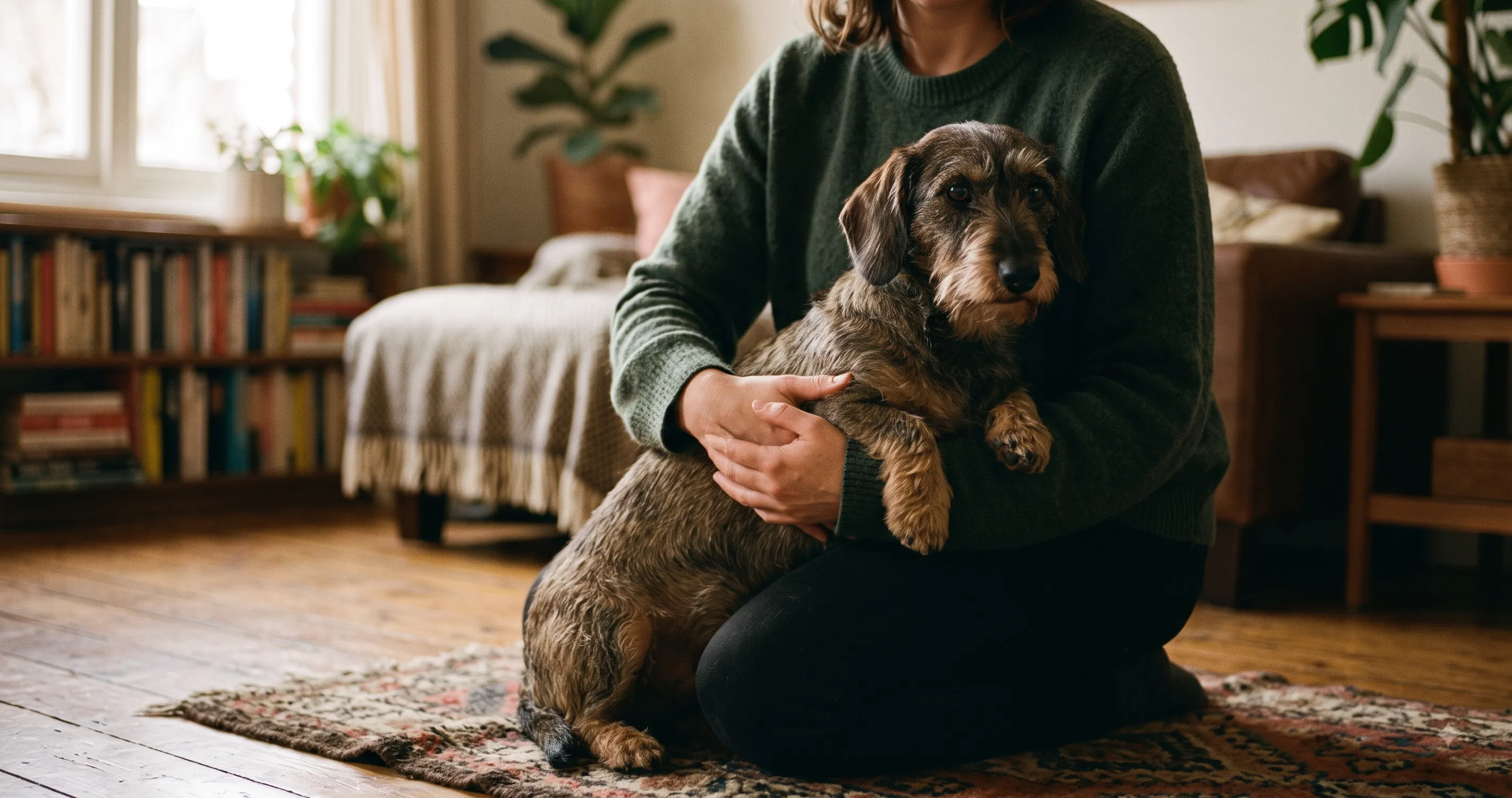
- Use Calm Physical Contact Carefully
- Offer Safe Chewing or Licking Activities
- Avoid Over-Talking
- How Long Does It Take to Calm an Anxious Dog?
- Nighttime Anxiety in Dogs
- Signs Anxiety May Require Professional Help
- Common Mistakes That Make Anxiety Worse
- Using Punishment
- Forcing Social Interaction
- Ignoring Rest and Sleep
- Overstimulating Nervous Dogs
- Expecting Instant Recovery
- Example Scenario
- Final Thoughts
Note: This article is for informational purposes only and does not replace professional veterinary advice.
Living with an anxious dog can feel emotionally exhausting for both the dog and the owner. Some dogs pace constantly, bark excessively, shake during loud noises, panic when left alone, or struggle to relax even in safe environments. Others become clingy, destructive, withdrawn, or unusually reactive.
If you are searching for how to calm an anxious dog, it is important to understand that anxiety is not simply "bad behavior". Anxiety is an emotional and physiological stress response that affects how a dog thinks, reacts, learns, and feels.
Many anxious dogs are not trying to misbehave they are struggling to feel safe, predictable, and emotionally regulated. understanding dog separation anxiety can help you identify stress triggers early
The good news is that most dogs can improve significantly with the right combination of routine, confidence-building, environmental management, mental stimulation, and calm training methods.
This guide explains what causes anxiety in dogs, how anxiety affects behavior, what owners often misunderstand, and the most effective ways to help an anxious dog feel calmer and more secure over time.
How to Calm an Anxious Dog (Quick Answer)
To calm an anxious dog, reduce environmental stress, create predictable routines, provide physical and mental stimulation, avoid reinforcing panic, and gradually build confidence through calm exposure and positive reinforcement.
Some dogs improve within days, while moderate or severe anxiety may require several weeks or months of consistent behavioral support.
What Anxiety Looks Like in Dogs
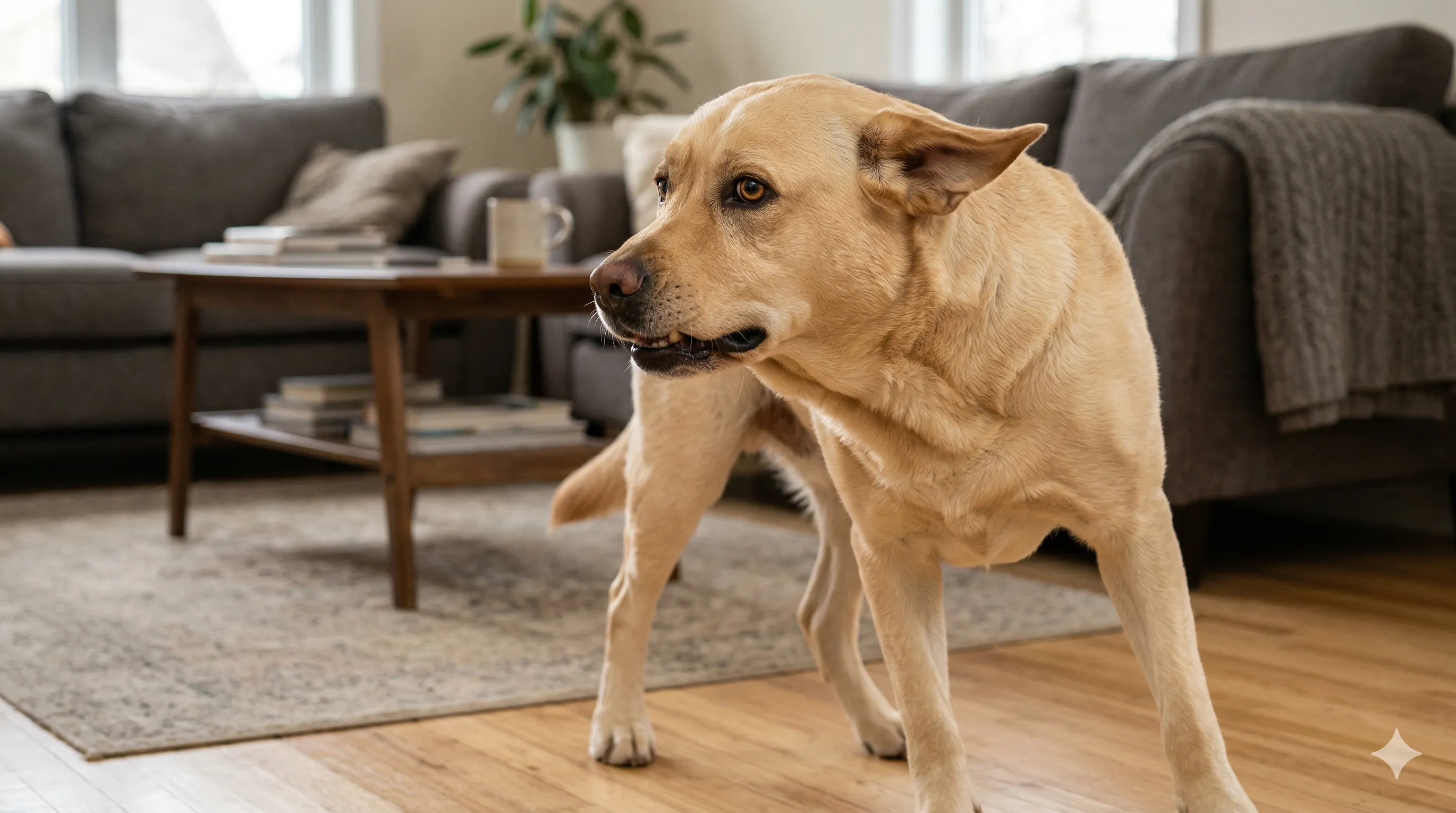
Anxiety does not always appear dramatic.
Some dogs show obvious panic behaviors, while others display subtle stress signals owners often miss.
| Behavior | Possible Meaning | Severity Level |
|---|---|---|
| Pacing or restlessness | Nervous energy or uncertainty | Mild-Moderate |
| Whining or barking | Stress response or attention seeking | Mild-Moderate |
| Destructive chewing | Stress release or panic | Moderate |
| Hiding or withdrawal | Fear or overstimulation | Moderate |
| Excessive licking | Self-soothing behavior | Moderate |
| Escape attempts or panic | Severe anxiety response | High |
Common Signs of Anxiety in Dogs
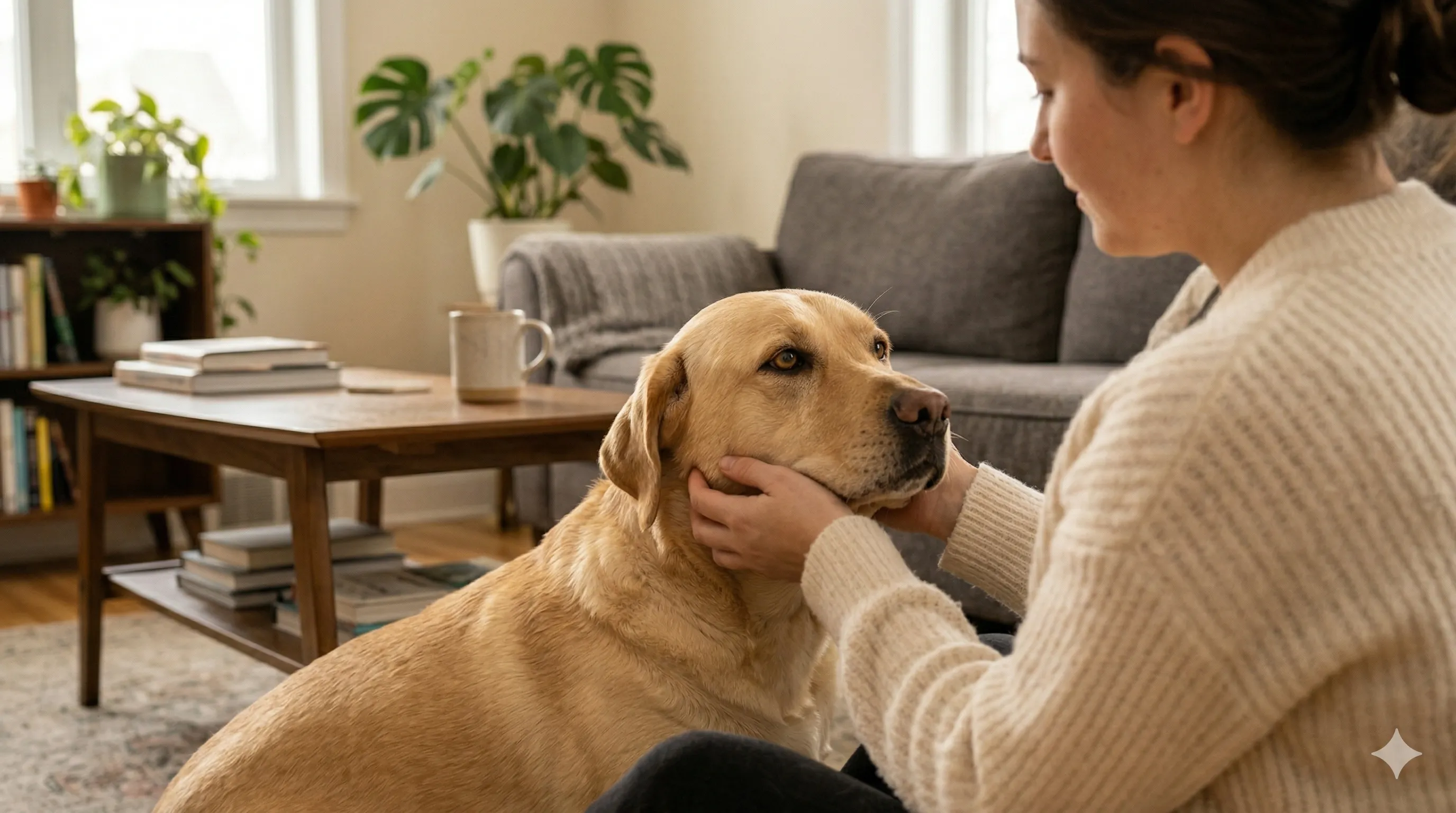
Dog anxiety can affect both behavior and physical health.
Common symptoms include:
- Pacing
- Restlessness
- Excessive barking
- Whining
- Shaking or trembling
- Hiding
- Panting without exercise
- Destructive behavior
- Loss of appetite
- Excessive licking or chewing
Many anxious dogs also struggle to settle down fully, even when physically tired.
Why Dogs Become Anxious
Anxiety usually develops through a combination of emotional sensitivity, life experiences, environment, and learned associations.
Most anxiety behaviors are not random.
1. Separation Anxiety
Some dogs become emotionally dependent on constant owner presence.
When left alone, they may panic because they have not developed healthy independence or coping skills.
properly socialize a puppy to build confidence and reduce fear-based behaviorSeparation anxiety commonly causes:
- Barking
- Pacing
- Destruction
- Escape attempts
- Indoor accidents
2. Trigger Stacking and Overstimulation
One major misunderstanding is that anxiety often builds gradually throughout the day.
This is known as trigger stacking.
For example:
- Loud noises
- Lack of sleep
- Excitement
- Visitors
- Schedule changes
- Too much stimulation
may slowly overwhelm a dog's nervous system.
Eventually, even small triggers create exaggerated reactions.
3. Lack of Predictability
Dogs generally feel safer when life feels predictable.
Inconsistent schedules, chaotic households, or sudden changes may increase stress significantly.
4. Poor Early Socialization
Dogs that were not gradually exposed to different people, sounds, environments, and experiences during early development may struggle with confidence later in life.
try indoor activities for bored dogs to reduce stress and excess nervous energy5. Fear-Based Experiences
Past traumatic experiences can create long-term fear associations.
Examples include:
- Abandonment
- Harsh punishment
- Attacks from other dogs
- Loud traumatic events
6. Boredom and Under-Stimulation
Dogs lacking mental and physical engagement often develop stress behaviors.
Excess nervous energy frequently turns into:
- Pacing
- Barking
- Licking
- Chewing
- Hyperactivity
What Many Owners Accidentally Do Wrong
Owners often unintentionally reinforce anxiety by reacting emotionally to fearful behavior.
Common mistakes include:
- Panicking when the dog panics
- Over-comforting intense fear reactions
- Punishing stress behaviors
- Providing inconsistent routines
- Overstimulating anxious dogs
Anxious dogs usually need calm structure more than emotional chaos.
How to Calm an Anxious Dog Step-by-Step
Create a Safe Decompression Space
Anxious dogs benefit greatly from having a predictable quiet area where they can relax without pressure.
A calming area may include:
- Soft bedding
- Low noise
- Familiar scents
- Safe chew toys
- Dim lighting
Do not force interaction when your dog chooses to decompress.
Build Predictable Daily Routines
Predictability reduces uncertainty.
Try to keep:
- Feeding times
- Walk schedules
- Training sessions
- Rest periods
fairly consistent.
Dogs often calm significantly when they know what to expect.
Increase Mental Enrichment
Mental stimulation is one of the most powerful anxiety-management tools.
Helpful activities include:
- Puzzle toys
- Scent games
- Basic obedience training
- Food enrichment
- Problem-solving exercises
Mental work helps redirect nervous energy into focused activity.
Provide Appropriate Exercise
Physical activity helps regulate stress hormones and release excess energy.
However, overstimulation is possible.
Balance matters more than exhausting the dog completely.
learn how to stop dog barking at night caused by stress and insecurityStay Emotionally Calm Yourself
Dogs are highly sensitive to human emotional energy.
An owner's nervous reactions may unintentionally increase anxiety.
During stressful moments:
- Speak calmly
- Move slowly
- Avoid chaotic reactions
- Focus on structure and predictability
Use Gradual Exposure Training
Avoid forcing fearful dogs directly into overwhelming situations.
Instead, use slow controlled exposure paired with positive experiences.
This process helps the dog build confidence gradually without panic escalation.
Fast Calming Techniques During Anxiety Episodes
When your dog becomes actively anxious, focus first on reducing nervous system overload.
Move to a Quiet Area
Reducing sensory input often helps lower stress levels quickly.
Reduce Environmental Triggers
Lower noise, reduce activity, and create emotional distance from stressors when possible.
Use Calm Physical Contact Carefully
Some dogs relax with gentle touch, while others prefer space.
Observe your dog's response rather than forcing comfort.
Offer Safe Chewing or Licking Activities
Chewing and licking can naturally help regulate stress for some dogs.
Avoid Over-Talking
Too much emotional talking may accidentally maintain excitement or nervousness.
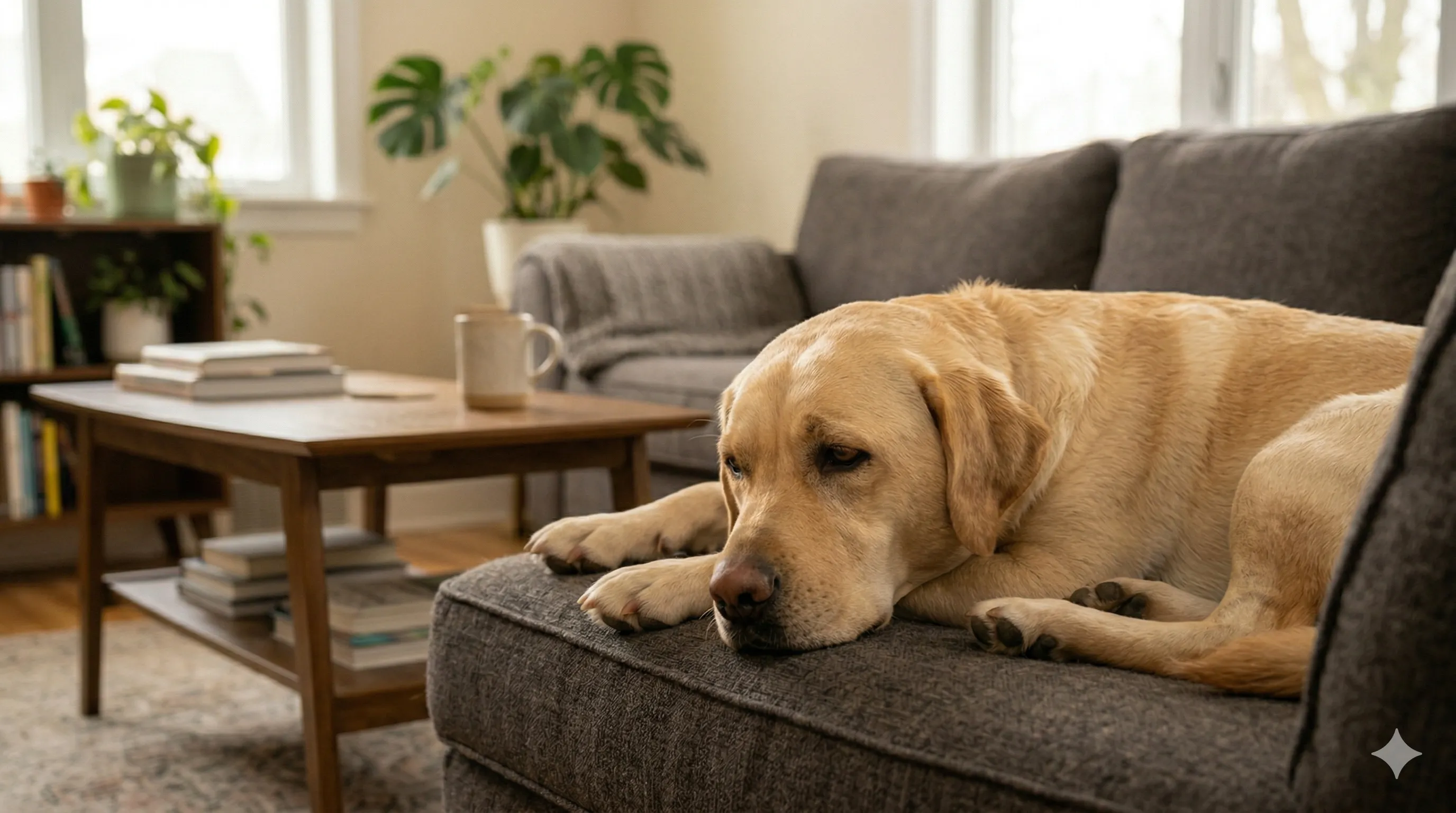
How Long Does It Take to Calm an Anxious Dog?
The timeline depends heavily on:
- Severity
- Consistency
- Environment
- Past experiences
- Training approach
General expectations:
- Mild anxiety: several days to 2 weeks
- Moderate anxiety: several weeks
- Severe anxiety: months of structured support
Improvement is usually gradual rather than immediate.
Nighttime Anxiety in Dogs
Some dogs become more anxious at night due to:
- Isolation
- Reduced stimulation
- Environmental sounds
- Lack of routine
- Insufficient daytime activity
Consistent bedtime routines often help anxious dogs settle more easily.
Signs Anxiety May Require Professional Help
Professional behavioral support may be necessary if your dog shows:
- Self-injury
- Extreme panic
- Aggression
- Persistent destruction
- No improvement over time
- Severe separation anxiety
Some dogs benefit from professional training plans or veterinary behavioral support.
Common Mistakes That Make Anxiety Worse
Using Punishment
Punishment often increases fear and insecurity.
Forcing Social Interaction
Not all anxious dogs want immediate interaction with strangers or dogs.
Ignoring Rest and Sleep
Overtired dogs often become more emotionally reactive.
Overstimulating Nervous Dogs
Constant activity without decompression may worsen anxiety.
Expecting Instant Recovery
Confidence-building takes time.
Example Scenario
The scenario below is an illustrative example of how this situation can play out, not a documented case study.
One rescue dog became highly anxious whenever visitors entered the home.
The dog barked constantly, paced around furniture, and struggled to settle for hours afterward.
The owners initially tried constant reassurance and excitement, which accidentally increased the dog's emotional arousal.
After introducing structured routines, decompression time, gradual visitor exposure, scent games, and calm handling, the dog slowly became more confident over several months.
The biggest improvement came from reducing overstimulation and allowing the dog more emotional recovery time after stressful events.
Final Thoughts
Helping an anxious dog is not about forcing confidence overnight.
It is about gradually teaching the dog that the world feels predictable, safe, and manageable again.
Dogs experiencing anxiety often need:
- Routine
- Patience
- Calm leadership
- Mental stimulation
- Emotional safety
With consistency and understanding, many anxious dogs become significantly calmer, more confident, and emotionally balanced over time.
This content is written for general educational purposes and should not replace professional veterinary or behavioral care for severe anxiety, panic disorders, or aggressive behavior.
Medical Disclaimer
This content is provided for informational and educational purposes only and should not be considered veterinary, medical, behavioral, or training advice. While we strive for accuracy, we make no guarantees regarding completeness or results. Always consult a licensed veterinarian or qualified pet care professional before making decisions about your pet’s health, diet, or behavior.
AI Illustration Notice
Some images in this article may have been generated or enhanced using artificial intelligence for illustrative purposes.
Frequently Asked Questions
Move your dog to a quiet environment, reduce triggers, stay calm, and provide safe calming activities like chewing or scent enrichment.
Dog anxiety may develop because of separation anxiety, poor socialization, traumatic experiences, overstimulation, loud noises, or inconsistent routines.
Mild anxiety may improve within days or weeks, while severe anxiety often requires months of consistent behavioral support.
Many dogs improve dramatically with proper training, routine, confidence-building, and stress management, although some remain emotionally sensitive.
Severe anxiety may involve panic, self-injury, nonstop pacing, destructive behavior, escape attempts, or aggressive reactions.
Yes. Appropriate physical activity helps regulate stress hormones and reduce excess nervous energy.
Gentle calm reassurance may help some dogs, but overly emotional reactions can accidentally increase nervous behavior in sensitive dogs.
Yes. Dogs lacking mental stimulation and structured activity often develop stress-related behaviors and emotional frustration.
Editorial Note
This article is part of PetNurture's educational library.
Topics draw on publicly available educational resources, recognised veterinary organisations, academic publications and established animal welfare references where appropriate.
The specific sources this article draws on are listed in its References section. If you spot an error, please let us know.
References
The information in this article has been reviewed and supported using the following sources.
American Veterinary Medical Association
AVMA's clinical resource collection on canine anxiety disorders; supports the overall medical and behavioral framing of anxiety used throughout this article.
Accessed Aug 6, 2026
American Veterinary Medical Association
Treating Anxiety to Prevent Canine Aggression
Discusses the relationship between unresolved anxiety and behavioral escalation in dogs; supports the emphasis on early, consistent intervention in this article.
Accessed Aug 6, 2026
ASPCA
Supports the separation-anxiety cause and symptom details described in the 'Separation Anxiety' section of this article.
Accessed Aug 6, 2026
Pet Emergency Guidance
Every pet is unique. If your pet exhibits severe symptoms, sudden behavioral changes, or a medical emergency, do not rely on online guides — contact a licensed veterinarian or emergency clinic immediately.
About PetNurture
PetNurture is an educational library of pet care guides, interactive tools and practical resources for pet parents. We work continuously to keep our content accurate and up to date. Reader feedback helps us maintain content quality.
Related Articles
Popular Dog Guides
Dog
Dog Calorie Calculator
Find the right daily calorie target for your dog's weight and activity level.