Why Does My Rabbit Thump? Understanding Rabbit Thumping, Fear Signals & Bunny Communication

- Why Does My Rabbit Thump? (Quick Answer)
- What Does Rabbit Thumping Sound Like?
- Why Rabbits Thump in the Wild
- Common Reasons Rabbits Thump
- 1. Fear or Feeling Threatened
- 2. Frustration or Annoyance
- 3. Territorial Behavior
- 4. Attention-Seeking Behavior
- 5. Stress or Anxiety
- 6. Pain or Illness
- Rabbit Thumping Body Language Explained
- Why Does My Rabbit Thump at Night?
- How to Calm a Thumping Rabbit
- Create a Safe Environment
- Avoid Sudden Loud Noises
- Build Trust Slowly
- Do Not Punish Thumping
- When Should You Worry About Rabbit Thumping?
- Final Thoughts
Note: This article is for informational purposes only and does not replace professional veterinary advice.
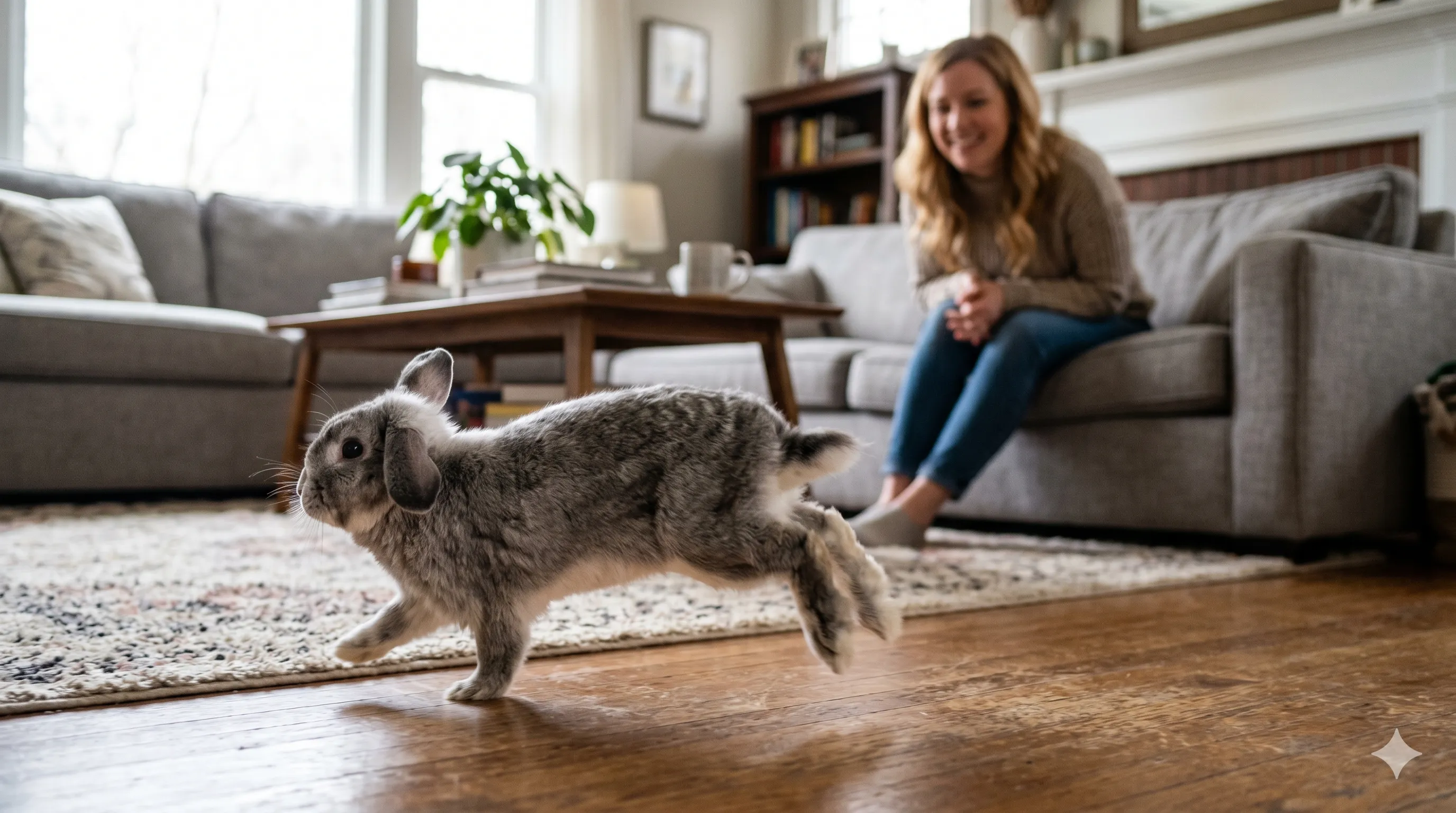
You're relaxing at home when suddenly your rabbit slams its back feet against the floor with a loud thump. Maybe it happens late at night. Maybe your bunny stomps during feeding time or after hearing a strange sound outside the window.
If you've been wondering "why does my rabbit thump?" you're not alone. Rabbit thumping is one of the most common and most misunderstood rabbit behaviors.
In the wild rabbits thump to warn nearby rabbits about danger. Domestic rabbits still carry this deeply rooted survival instinct even when they live safely indoors. But fear is not the only reason rabbits stomp their feet.
Some rabbits thump because they feel stressed annoyed territorial lonely or frustrated. Others use thumping to communicate discomfort or get attention from their owners.
Understanding the context behind the behavior helps you figure out what your rabbit is trying to tell you.
In this complete guide you'll learn:
- Why rabbits thump
- What rabbit thumping means emotionally
- Normal vs concerning thumping behavior
- How to calm a thumping rabbit
- When rabbit thumping may signal illness or stress
Why Does My Rabbit Thump? (Quick Answer)
Rabbits thump their back legs to communicate fear alertness stress frustration annoyance territorial behavior or discomfort. In the wild thumping warns other rabbits about possible danger. Domestic rabbits still use this instinctive behavior to express emotions and react to their environment.
Occasional thumping is completely normal. However sudden excessive or repeated thumping may indicate anxiety environmental stress loneliness or illness.

What Does Rabbit Thumping Sound Like?
Rabbit thumping sounds like a sudden loud stomp or bang against the floor. Many rabbit owners are surprised by how powerful the sound can be especially from larger breeds.
A rabbit may:
- Stamp one back foot
- Thump both hind legs repeatedly
- Freeze after stomping
- Run and hide immediately afterward
- Stare toward the perceived danger
- Flatten their ears or body
Even indoor rabbits that have never encountered predators naturally retain this survival behavior.
Why Rabbits Thump in the Wild
Wild rabbits survive by staying extremely alert. Since rabbits are prey animals they constantly monitor their surroundings for danger.
When one rabbit senses danger it may slam its powerful back legs into the ground to warn nearby rabbits.
This warning signal helps the group react quickly before predators approach.
Domestic rabbits still carry these instincts even when living inside safe homes.
rabbit shaking and stress warning signsCommon Reasons Rabbits Thump
1. Fear or Feeling Threatened
The most common reason rabbits thump is fear.
Rabbits are naturally cautious animals and can react strongly to unfamiliar sounds movements or environments.
Common fear triggers include:
- Thunderstorms
- Vacuum cleaners
- Dogs barking
- Fireworks
- Strangers visiting
- Loud TVs or music
- Outdoor animals near windows
- Sudden movement nearby
Many rabbits thump first then either freeze or run for cover.
Some rabbits become especially alert at night because rabbits are naturally more active during dawn and dusk.
why rabbits stare at owners and what it means2. Frustration or Annoyance
Not every rabbit thump means fear. Some rabbits thump because they are annoyed.
Rabbits often develop strong routines and personalities. If something interrupts their expectations they may stomp dramatically to express frustration.
Your rabbit may thump after:
- Being picked up
- Having their enclosure cleaned
- Being denied treats
- Waiting too long for food
- Not getting attention
- Being placed back into their enclosure
- Changes in routine
A rabbit that thumps while turning away from you is often expressing irritation rather than fear.
3. Territorial Behavior
Rabbits can become territorial especially if they are unspayed or unneutered.
Your rabbit may stomp when:
- Another pet approaches their space
- A new rabbit is introduced
- Someone enters their enclosure
- Their belongings are moved
- They feel their territory is threatened
Territorial thumping is often paired with:
- Grunting
- Lunging
- Chin rubbing
- Blocking behavior
- Aggressive posture
4. Attention-Seeking Behavior
Some rabbits quickly learn that thumping gets a response from their owners.
If you immediately react every time your rabbit stomps your bunny may begin using thumping as communication.
Social rabbits sometimes thump because they:
- Want treats
- Want playtime
- Want free roam time
- Feel bored
- Want interaction
This is especially common in intelligent highly social rabbits.

5. Stress or Anxiety
Frequent thumping may signal chronic stress.
Rabbits are highly sensitive animals and prolonged stress can affect both emotional and physical health.
Common rabbit stress triggers include:
- Small living spaces
- Lack of enrichment
- Loneliness
- Predatory pets nearby
- Constant loud noise
- Poor bonding experiences
- Frequent environmental changes
- Insufficient hiding spaces
Signs of a stressed rabbit may include:
- Hiding constantly
- Aggression
- Reduced appetite
- Restlessness
- Over-grooming
- Chewing excessively
- Avoiding interaction
6. Pain or Illness
Although less common rabbits may sometimes thump because they feel physical discomfort or pain.
A rabbit experiencing illness may become more reactive defensive or anxious.
Warning signs that suggest a possible medical issue include:
- Loss of appetite
- Lethargy
- Hunched posture
- Teeth grinding
- Refusing movement
- Changes in poop or urine
- Sudden unusual behavior
If your rabbit suddenly begins excessive thumping alongside other symptoms contact a rabbit-savvy veterinarian immediately.
free roam rabbit safety and indoor setup guideRabbit Thumping Body Language Explained
| Behavior | Possible Meaning |
|---|---|
| Single loud thump | Alert or warning |
| Repeated rapid thumping | High fear stress or panic |
| Thumping while hiding | Feeling unsafe |
| Thumping then staring | Monitoring possible danger |
| Thumping during handling | Discomfort or frustration |
| Thumping near food time | Attention-seeking behavior |
Why Does My Rabbit Thump at Night?
Nighttime thumping is extremely common.
Rabbits are crepuscular animals meaning they are naturally most active during early morning and evening hours.
Your rabbit may hear sounds humans barely notice including:
- Outdoor animals
- Cars passing
- Doors moving
- Neighbors walking nearby
- House settling noises
- Wind or rain sounds
Some rabbits simply become more alert during nighttime hours.
How to Calm a Thumping Rabbit
Create a Safe Environment
Rabbits feel calmer when they have predictable safe spaces.
Make sure your rabbit has:
- Hideouts
- Quiet resting areas
- Enough free roaming space
- Consistent routines
- Safe enrichment toys
Avoid Sudden Loud Noises
Try reducing environmental stress whenever possible.
Keep loud appliances away from your rabbit's resting area and avoid startling them unexpectedly.
Build Trust Slowly
Rabbits become more confident when interactions are calm and predictable.
Spend time sitting quietly near your rabbit instead of forcing interaction.
Many rabbits become less reactive once they feel secure in their environment.
Do Not Punish Thumping
Never punish a rabbit for thumping.
Thumping is communication not bad behavior.
Punishment can increase fear stress and distrust.
When Should You Worry About Rabbit Thumping?
Occasional thumping is normal.
However you should monitor your rabbit more closely if:
- Thumping suddenly increases
- Your rabbit stops eating
- The rabbit appears fearful constantly
- Hiding becomes excessive
- Your rabbit becomes aggressive
- Other illness symptoms appear
Because rabbits hide illness extremely well sudden behavioral changes should always be taken seriously.
complete indoor rabbit care guide for beginnersFinal Thoughts
If you've been wondering why your rabbit thumps the behavior is usually your bunny's way of communicating fear alertness frustration stress or emotional discomfort.
Most thumping is completely normal and instinctive. The key is learning to understand the situation surrounding the behavior.
With patience consistency enrichment and a calm environment most rabbits become more relaxed confident and trusting over time.
Pay attention to your rabbit's body language daily because understanding these small signals helps strengthen the bond between you and your bunny.
Medical Disclaimer
This content is provided for informational and educational purposes only and should not be considered veterinary, medical, behavioral, or training advice. While we strive for accuracy, we make no guarantees regarding completeness or results. Always consult a licensed veterinarian or qualified pet care professional before making decisions about your pet’s health, diet, or behavior.
AI Illustration Notice
Some images in this article may have been generated or enhanced using artificial intelligence for illustrative purposes.
Frequently Asked Questions
Rabbits often thump at night because they hear unfamiliar sounds or feel naturally more alert during evening hours
Yes, occasional rabbit thumping is completely normal behavior
Many rabbits dislike being picked up because it triggers prey instincts and makes them feel unsafe
Most rabbit thumping is linked to fear stress frustration or alertness rather than happiness
You should worry if thumping becomes excessive or appears alongside appetite loss hiding lethargy or unusual behavior
Many rabbits thump before running away because they feel startled or unsafe
Yes, some social rabbits learn that thumping gets attention treats or interaction from their owners
Yes, chronic stress anxiety boredom or environmental discomfort can cause repeated thumping behavior
Editorial Note
This article is part of PetNurture's educational library.
Topics draw on publicly available educational resources, recognised veterinary organisations, academic publications and established animal welfare references where appropriate.
The specific sources this article draws on are listed in its References section. If you spot an error, please let us know.
References
The information in this article has been reviewed and supported using the following sources.
House Rabbit Society
Directly confirms thumping as a rabbit's way of signaling it detects something out of the ordinary or has an announcement to make, matching the alert/warning meaning described in this article.
Accessed Aug 6, 2026
House Rabbit Society
Confirms appetite loss, lethargy, and tooth grinding as illness warning signs; supports the 'Pain or Illness' and 'When Should You Worry About Rabbit Thumping' sections of this article.
Accessed Aug 6, 2026
Pet Emergency Guidance
Every pet is unique. If your pet exhibits severe symptoms, sudden behavioral changes, or a medical emergency, do not rely on online guides — contact a licensed veterinarian or emergency clinic immediately.
About PetNurture
PetNurture is an educational library of pet care guides, interactive tools and practical resources for pet parents. We work continuously to keep our content accurate and up to date. Reader feedback helps us maintain content quality.
Related Articles



Popular Rabbit Guides