Why Does My Rabbit Bite Me Softly? Understanding Bunny Love Bites, Communication & Aggression Signs
- Why Does My Rabbit Bite Me Softly? (Quick Answer)
- What Soft Rabbit Bites Usually Mean
- What Are Rabbit Love Bites?
- Does My Rabbit Biting Me Softly Mean They Love Me?
- Common Reasons Rabbits Bite Softly
- 1. Grooming and Affection
- 2. Attention-Seeking Behavior
- 3. Mild Frustration or Impatience
- 4. Your Rabbit Wants You to Move
- 5. Curiosity and Exploration
- 6. Hormonal or Territorial Behavior
- Why Does My Rabbit Bite Me While I'm Petting Them?
- Rabbit Body Language That Often Appears With Soft Biting
- How to Tell the Difference Between Love Bites and Aggression
- Signs of Love Bites
- Signs of Aggressive Biting
- How to Respond to Soft Rabbit Biting
- When Should You Be Concerned?
- Example Scenario
- Final Thoughts
Note: This article is for informational purposes only and does not replace professional veterinary advice.
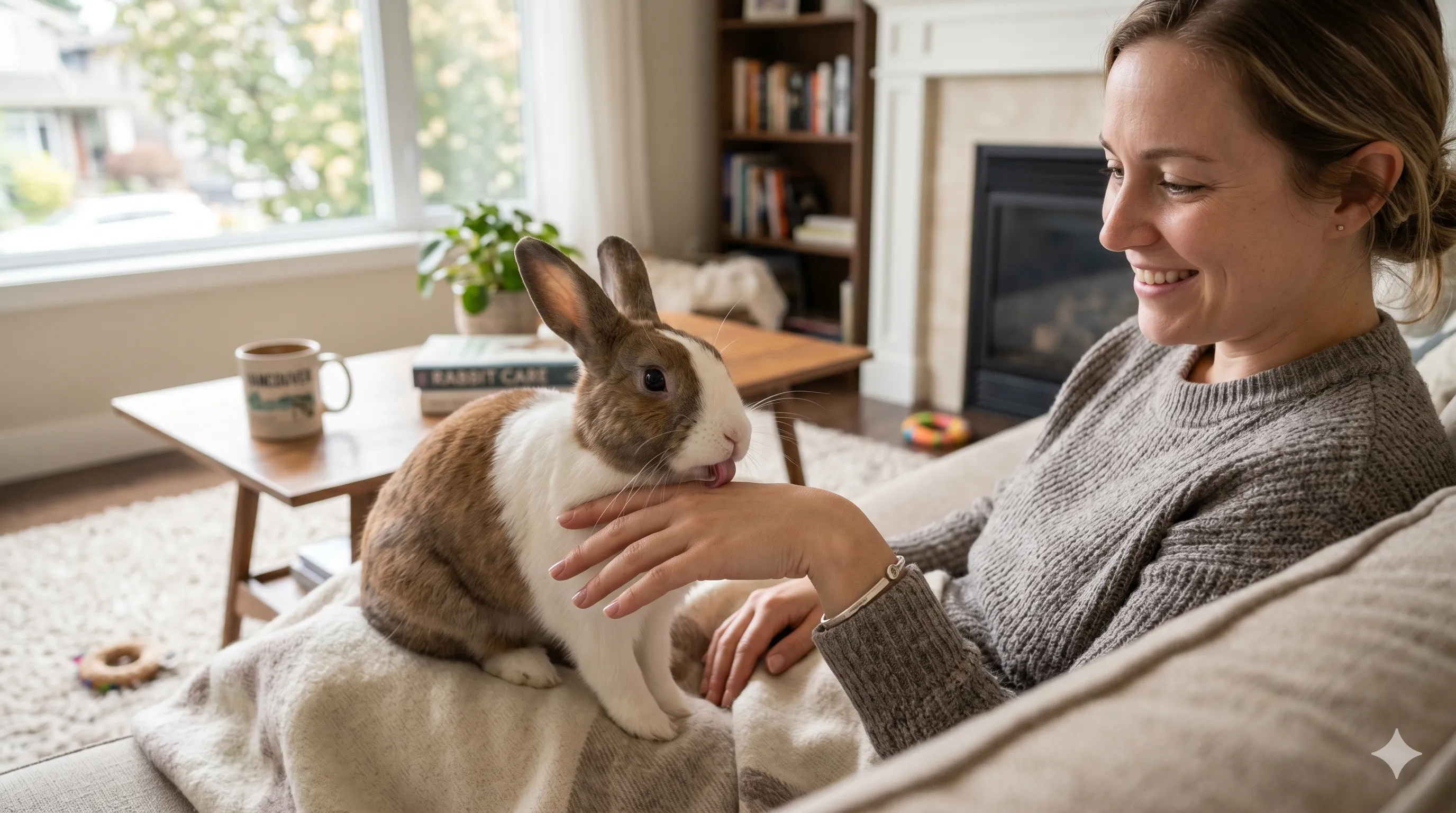
You're petting your rabbit or spending quiet time together when suddenly your bunny gently nibbles or softly bites your hand, fingers, clothes, or arm. The bite usually doesn't hurt much, but it can still leave owners wondering "why does my rabbit bite me softly?"
In many cases, soft rabbit bites are actually normal communication behaviors rather than aggression. Rabbits use gentle nips for grooming, attention, social bonding, mild frustration, or emotional expression.
However, not all biting means the same thing.
A soft grooming nibble is very different from a fearful, territorial, or aggressive bite. Understanding the context, body language, and intensity behind the behavior is the key to figuring out what your rabbit is trying to communicate.
Some rabbits give tiny "love bites" as part of social grooming, while others may nibble gently to ask for attention, encourage movement, or express impatience.
In this guide, you'll learn why rabbits softly bite people, how to tell the difference between affection and aggression, and when biting may signal stress or behavioral problems.
Why Does My Rabbit Bite Me Softly? (Quick Answer)
Rabbits often bite softly as part of grooming behavior, affection, communication, attention-seeking, or mild frustration. Gentle nibbles are commonly called "love bites" and are usually normal social behaviors, especially in rabbits that feel comfortable and bonded with their owners.
However, harder bites paired with lunging, growling, or tense body language may indicate fear, territorial behavior, or stress.
What Soft Rabbit Bites Usually Mean
| Behavior | Likely Meaning |
|---|---|
| Soft bite with licking | Affection and grooming |
| Soft bite during petting | Communication or mild overstimulation |
| Soft bite on clothing | Curiosity or attention-seeking |
| Soft bite with circling | Hormonal behavior |
| Soft bite with digging | Frustration or wanting you to move |
| Hard bite with lunging | Fear or aggression |
What Are Rabbit Love Bites?
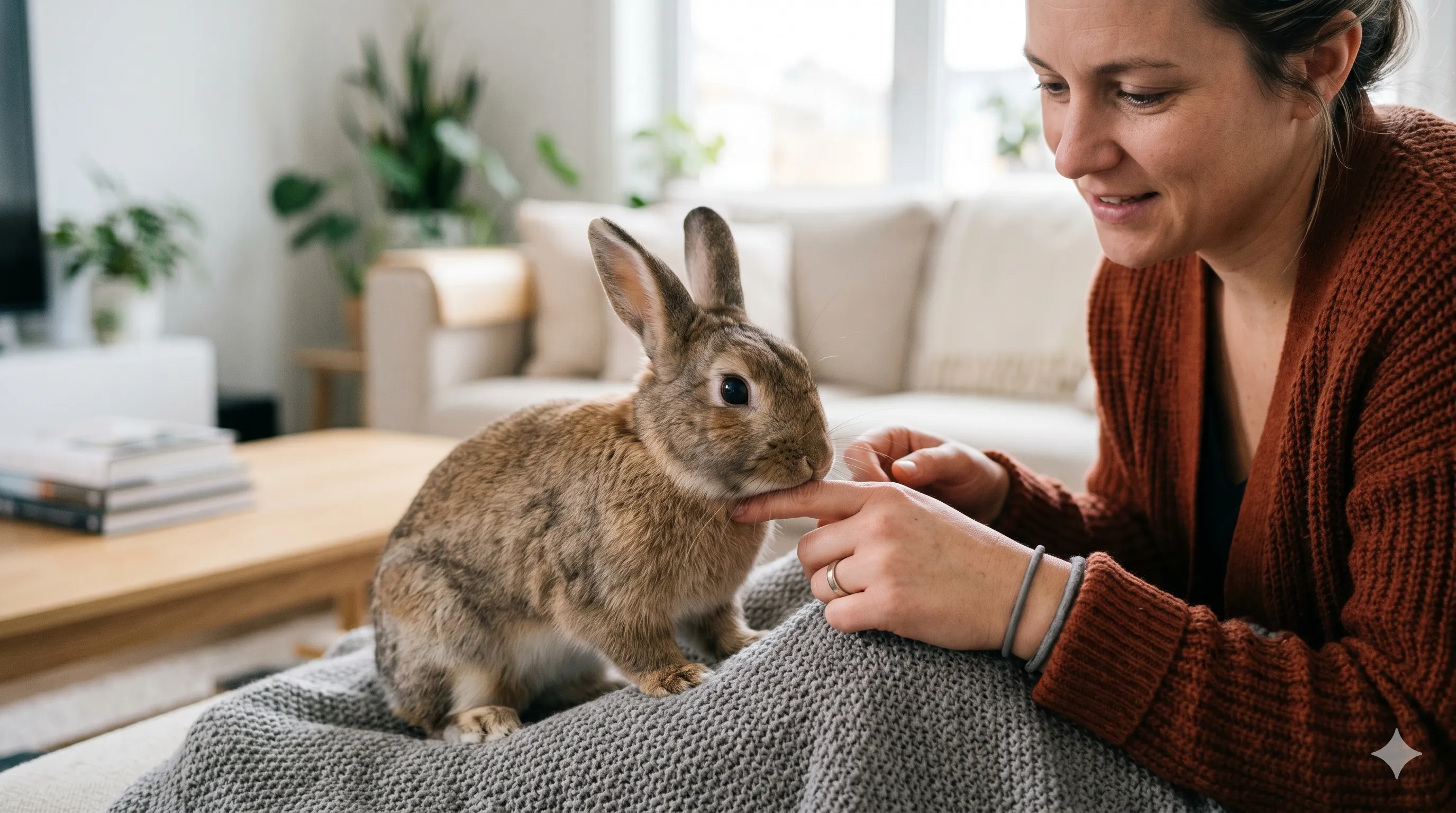
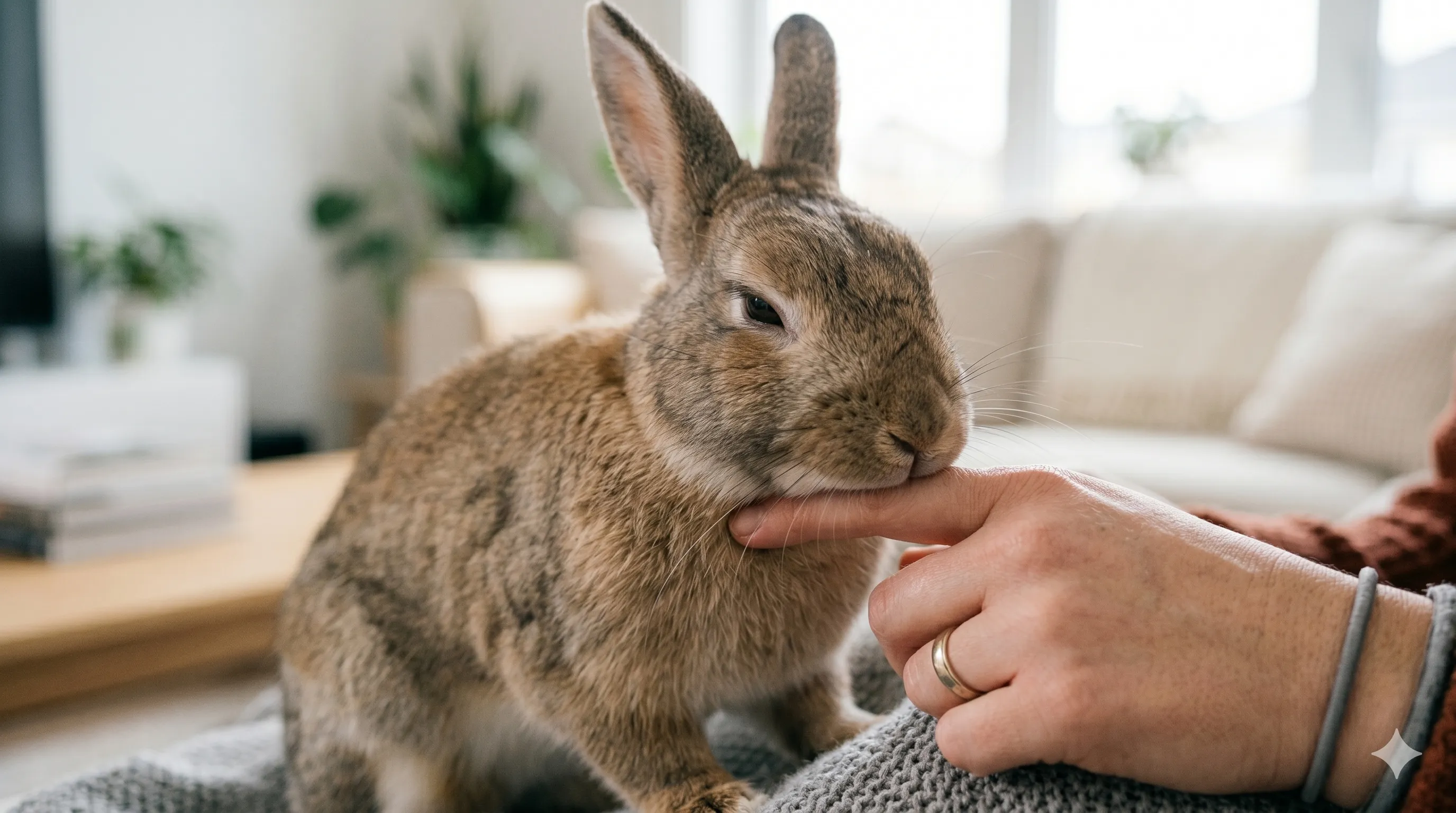
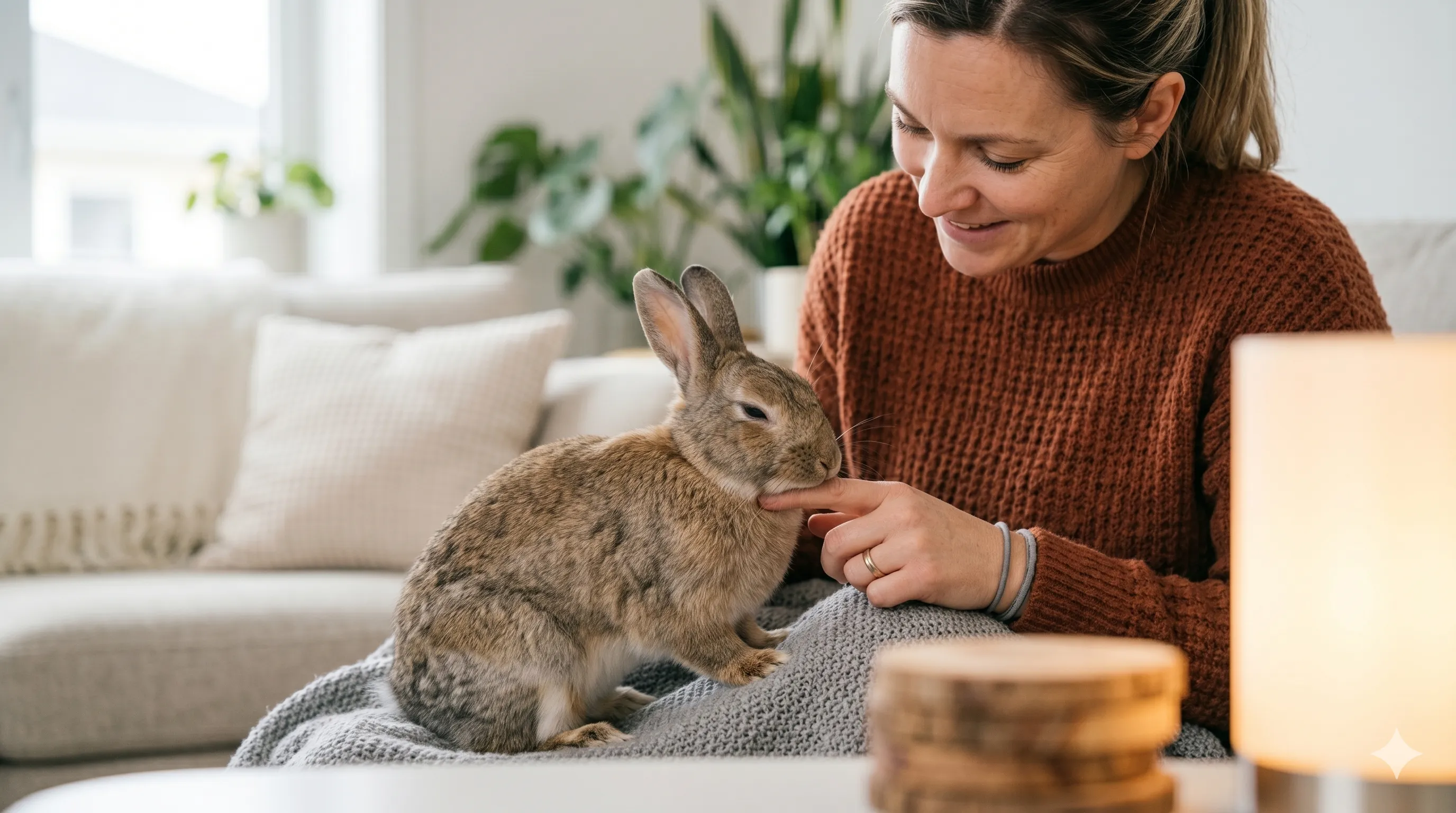
Rabbit love bites are small, gentle nibbles that usually happen during social interaction or grooming behavior.
In bonded rabbit pairs, rabbits naturally groom each other by licking, nibbling, and gently pulling fur during cleaning sessions.
When rabbits softly nibble humans, they are sometimes extending that same grooming behavior toward their owners.
Love bites are usually:
- Light and brief
- Not intended to hurt
- Paired with licking or grooming
- Connected to relaxed body language
- Part of bonding interaction
Many rabbits use gentle nibbling as a form of social communication rather than aggression.
rabbit licking and grooming behavior explainedDoes My Rabbit Biting Me Softly Mean They Love Me?
Sometimes, yes. Gentle nibbles are often part of normal social grooming between bonded rabbits, and some rabbits extend that behavior to trusted owners. If the soft bite is accompanied by licking, relaxed body language, flopping, or staying close to you, it may be one way your rabbit shows comfort and affection.
However, soft biting should always be interpreted alongside your rabbit's overall body language. Looking at the situation before and after the bite usually provides a much clearer understanding of what your rabbit is trying to communicate.
Common Reasons Rabbits Bite Softly
1. Grooming and Affection
The most common reason rabbits gently bite owners is social grooming behavior.
Rabbits naturally groom those they trust and feel bonded with. During grooming sessions, rabbits sometimes use tiny nips to move fur, clean effectively, or communicate socially.
If your rabbit licks you before or after nibbling, this is often a strong sign the behavior is affectionate rather than aggressive.
Many owners notice love bites happen during calm cuddle sessions or relaxed floor interaction.
rabbit nudging and attention-seeking communication2. Attention-Seeking Behavior
Some rabbits softly bite because they want attention.
Your rabbit may nibble gently to communicate:
- "Pet me."
- "Play with me."
- "Don't ignore me."
- "I want treats."
Highly social rabbits often learn that gentle nibbling gets reactions from humans.
Attention-seeking bites are usually brief and not forceful.
3. Mild Frustration or Impatience
Not all soft bites are affectionate.
Sometimes rabbits gently bite because they feel impatient, annoyed, or mildly frustrated.
Examples include:
- Wanting you to move
- Being interrupted
- Waiting for food
- Feeling overstimulated
- Wanting space
In these situations, soft biting often functions more like communication than aggression.
4. Your Rabbit Wants You to Move
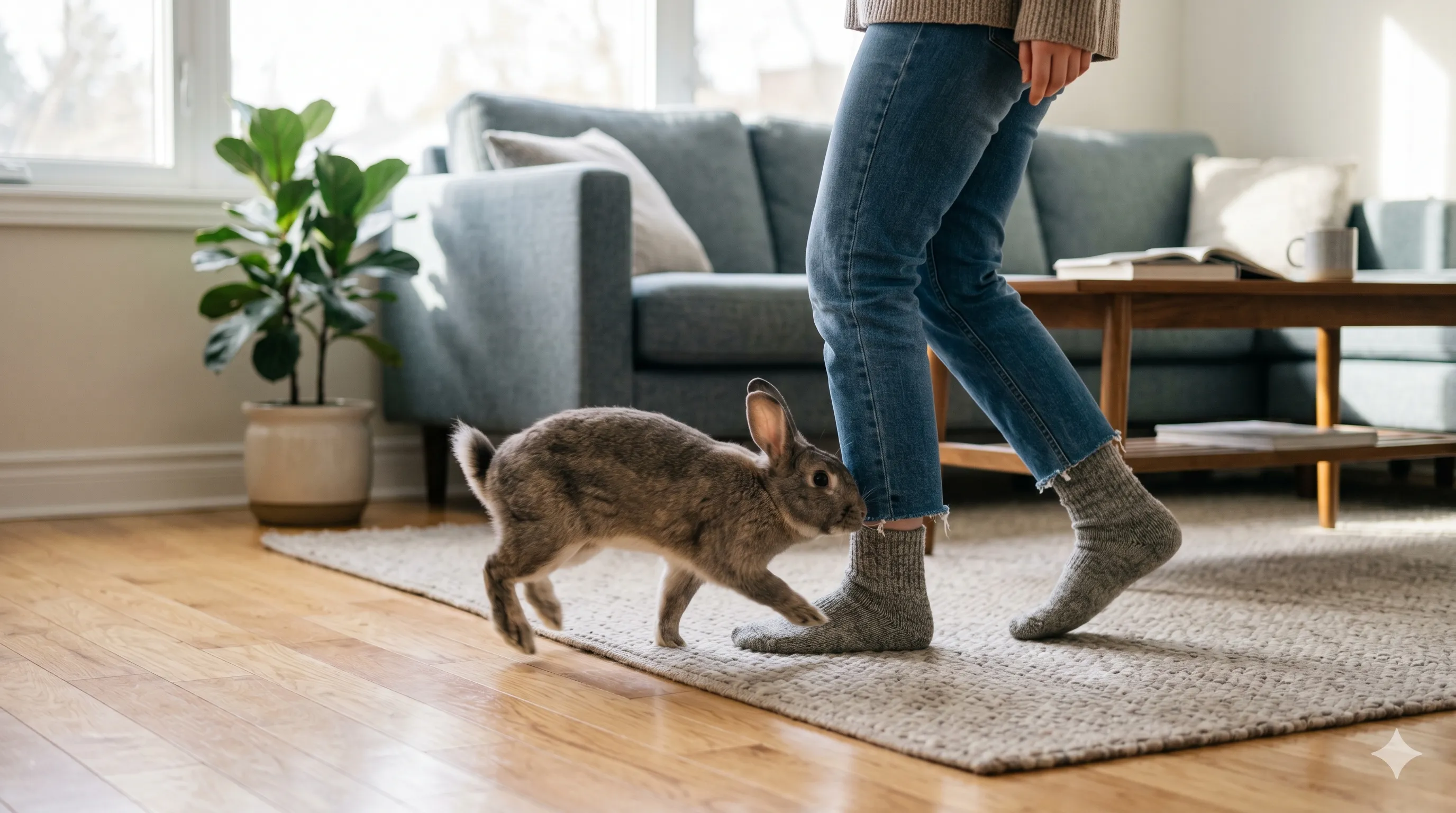
Rabbits sometimes use nudges and gentle nips together when they want access to a space.
Your bunny may softly bite your clothes or legs as a way of saying:
- "You're blocking my path."
- "Move please."
- "That's my spot."
Confident rabbits are especially likely to use this kind of communication.
rabbit digging behavior and frustration signals5. Curiosity and Exploration
Rabbits explore the world using their nose, whiskers, and mouth.
Some rabbits gently nibble simply because they are curious about:
- Fabric textures
- Skin scent
- Movement
- Objects
- New environments
Young rabbits especially tend to investigate by lightly nibbling unfamiliar things.
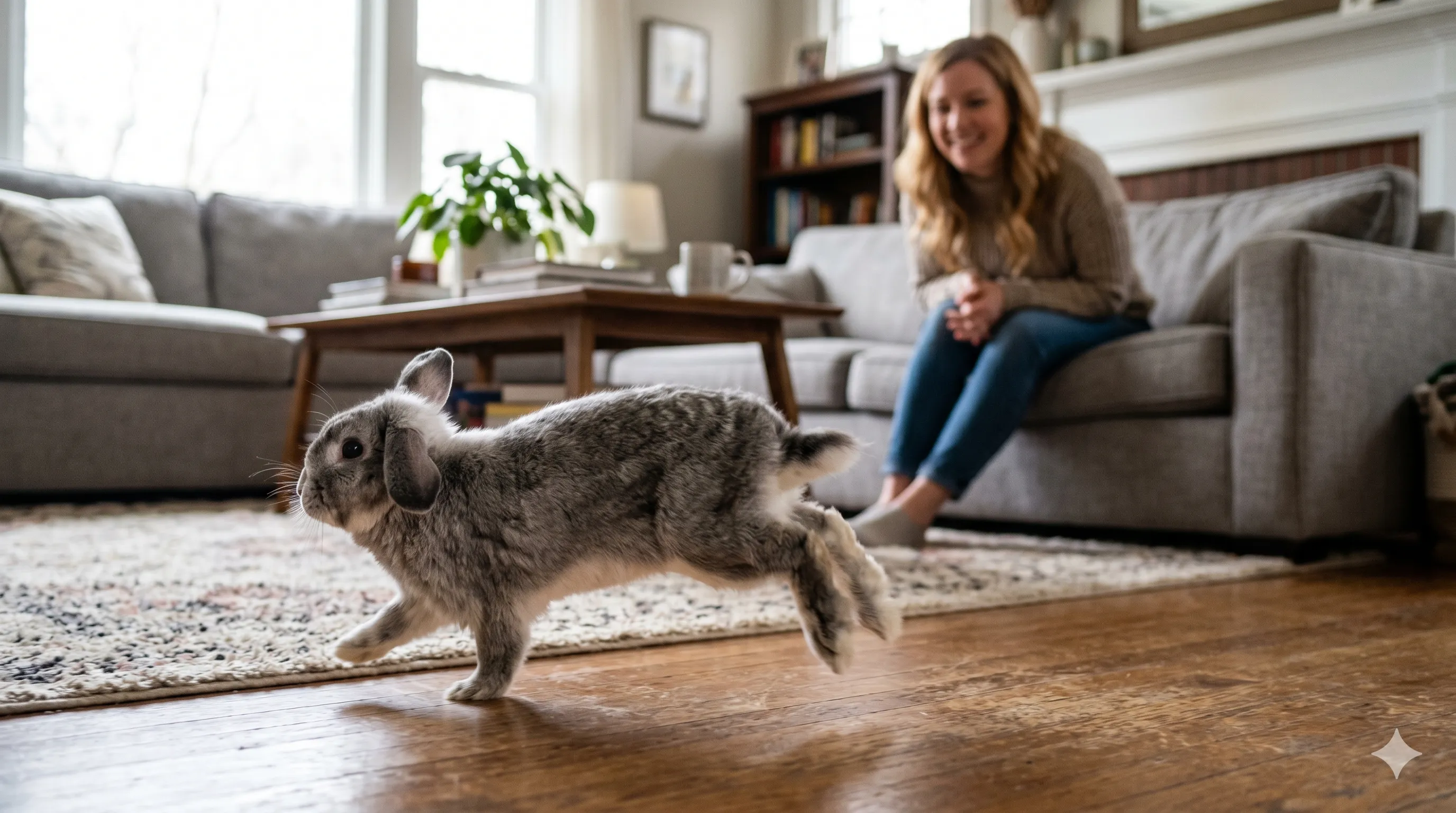
If your rabbit gently bites your clothes, sleeves, blankets, or pant legs, they may simply be exploring unfamiliar textures or responding to your scent. Clothing can also become the focus of gentle nibbling when your rabbit wants attention or is encouraging you to move. As long as the bites remain soft and your rabbit's body language stays relaxed, this behavior is usually considered normal.
6. Hormonal or Territorial Behavior
Unspayed or unneutered rabbits may display more intense social and territorial behaviors.
Hormonal rabbits sometimes combine soft biting with:
- Circling
- Honking
- Digging
- Mounting
- Territorial nudging
In these cases, the behavior may be partially driven by hormones rather than affection alone.
rabbit attachment and following behavior explainedWhy Does My Rabbit Bite Me While I'm Petting Them?
Some rabbits gently nibble during petting because they are communicating rather than showing aggression. Depending on the situation, your rabbit may be grooming you, asking for more attention, becoming slightly overstimulated, or signaling that they have had enough interaction.
Watching your rabbit's ears, posture, and behavior immediately after the nibble can help you decide whether the bite was affectionate, attention-seeking, or a request for personal space.
Rabbit Body Language That Often Appears With Soft Biting
| Behavior | Possible Meaning |
|---|---|
| Soft biting + licking | Affection and grooming |
| Soft biting + nudging | Attention-seeking |
| Soft biting + circling | Hormonal excitement |
| Soft biting + relaxed posture | Comfort and bonding |
| Soft biting + digging | Frustration or impatience |
| Hard biting + lunging | Aggression or fear |
How to Tell the Difference Between Love Bites and Aggression
The easiest way to understand rabbit biting is by observing intensity and body language.
Signs of Love Bites
- Gentle pressure
- Short nibbles
- Relaxed posture
- Licking behavior
- Calm interaction
- No lunging or chasing
Signs of Aggressive Biting
- Hard painful bites
- Lunging
- Flattened ears
- Grunting
- Charging behavior
- Tense posture
- Repeated attacks
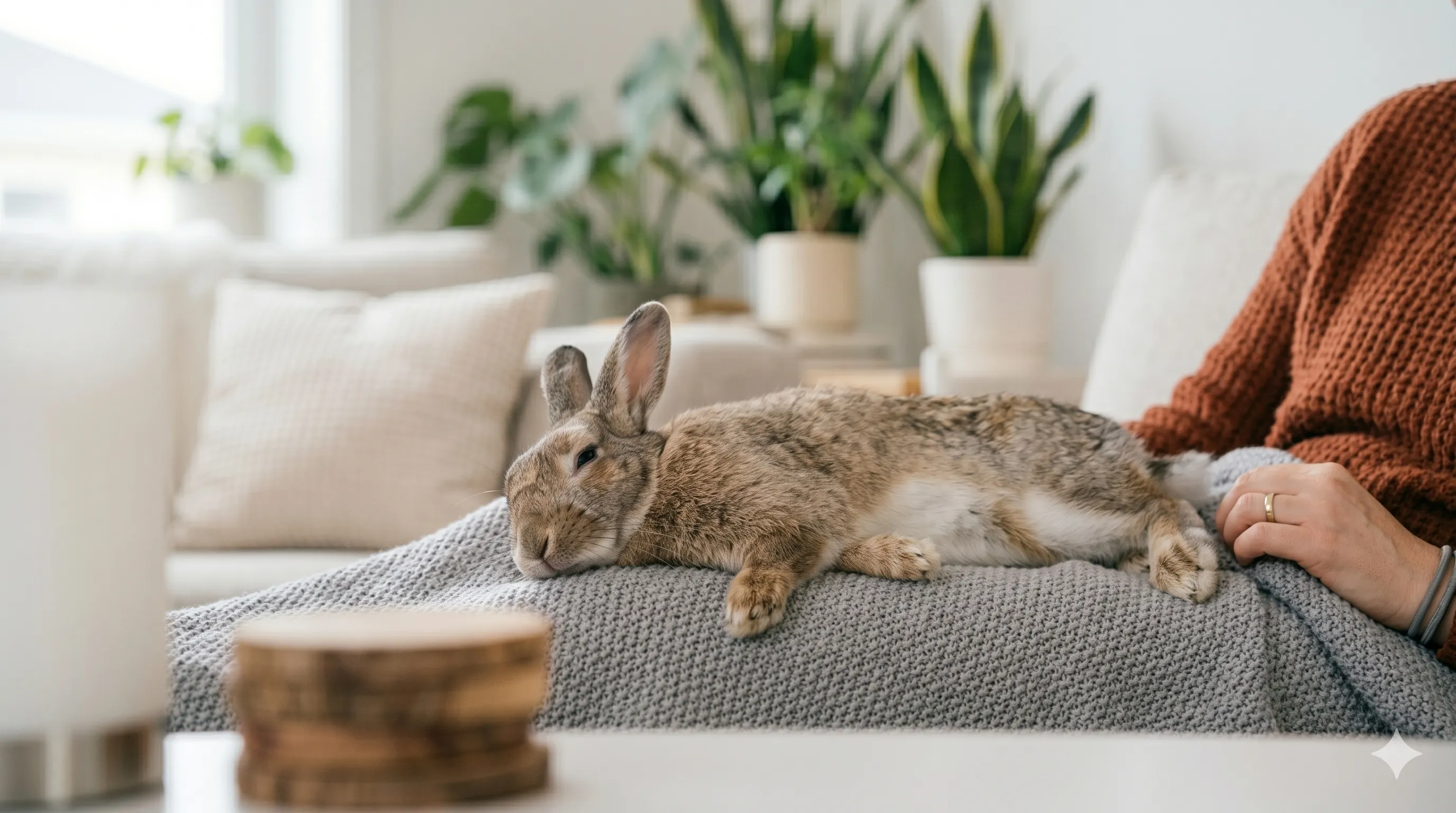
True aggressive bites are usually much more forceful and emotionally intense than grooming nibbles.
How to Respond to Soft Rabbit Biting
In most cases, gentle rabbit nibbles do not require punishment.
Helpful ways to respond include:
- Staying calm
- Redirecting attention if needed
- Avoiding sudden reactions
- Respecting boundaries
- Providing enrichment and playtime
- Learning your rabbit's communication style
If the behavior becomes too rough, calmly ending interaction briefly can help establish boundaries without creating fear.
If your rabbit regularly uses gentle nibbles to communicate, try paying attention to what happens immediately before the behavior. Over time, you may notice patterns such as asking for attention, requesting food, or wanting you to move. Understanding these patterns helps strengthen communication without encouraging rougher biting.
complete indoor rabbit care guide for beginnersWhen Should You Be Concerned?
Soft biting is usually harmless and normal.
However, you should monitor behavior more closely if biting suddenly becomes:
- Hard or painful
- Frequent and aggressive
- Combined with lunging
- Linked to stress signs
- Associated with appetite changes
- Paired with territorial aggression
Sudden personality changes or escalating aggression should always be evaluated carefully.
If a rabbit that has always given gentle grooming nibbles suddenly begins biting much harder, especially alongside changes in appetite, activity, or other unusual behaviors, it is worth observing them closely and consulting a rabbit-experienced veterinarian if the behavior continues.
free roam rabbit enrichment and confidence building guideExample Scenario
The scenario below is an illustrative example of how this situation can play out, not a documented case study.
One rabbit owner noticed their bunny gently nibbled their sleeve during evening petting sessions. Over time, they realized the rabbit often combined nibbling with licking and relaxed flopping nearby, which strongly suggested social grooming behavior.
Another owner initially worried about soft bites around feeding time but later recognized the rabbit only nibbled gently when meals were delayed. Once routines became more consistent, the behavior became less frequent.
Another rabbit regularly gave gentle nibbles while being stroked on the head. After observing the behavior for several weeks, the owner realized the rabbit usually nibbled just before hopping away for a short break, suggesting the bites were a polite way of communicating that the interaction had become slightly overstimulating.
Understanding context usually makes rabbit communication much easier to interpret.
Final Thoughts
If you've been wondering why your rabbit bites you softly, the behavior is often connected to grooming, affection, communication, curiosity, or mild frustration.
In many situations, gentle nibbling is completely normal rabbit behavior and may even be a sign your bunny feels bonded and comfortable around you.
The key is paying attention to body language, emotional context, and the intensity of the behavior.
With time and observation, you'll begin recognizing whether your rabbit's soft bites are playful love nibbles, attention requests, or signals that your bunny wants something specific.
This article is intended for educational purposes and should not replace professional veterinary advice. If your rabbit develops sudden aggression, severe biting behavior, or health concerns, consult an experienced rabbit veterinarian.
Medical Disclaimer
This content is provided for informational and educational purposes only and should not be considered veterinary, medical, behavioral, or training advice. While we strive for accuracy, we make no guarantees regarding completeness or results. Always consult a licensed veterinarian or qualified pet care professional before making decisions about your pet’s health, diet, or behavior.
AI Illustration Notice
Some images in this article may have been generated or enhanced using artificial intelligence for illustrative purposes.
Frequently Asked Questions
Rabbits often gently nibble owners as part of grooming affection communication or attention-seeking behavior
Yes, soft grooming nibbles are usually completely normal rabbit social behavior
This often happens during grooming behavior and usually signals affection or social bonding
Aggressive biting is usually harder more forceful and paired with lunging grunting or tense posture
Yes. Unspayed or unneutered rabbits may show more circling, mounting, nudging, and gentle biting because of hormonal behavior. These actions are often part of normal reproductive instincts rather than aggression.
No, gentle communication bites usually do not require punishment and calm redirection is usually more effective
Rabbits may nibble clothing out of curiosity grooming instincts attention-seeking behavior or mild frustration
Sometimes. Gentle bites combined with licking, relaxed body language, or staying close may be part of normal bonding and social grooming behavior.
Some rabbits gently nibble during petting to communicate affection, request attention, or indicate they are becoming overstimulated. Looking at their body language helps explain the behavior.
Rabbits may gently nibble fingers while grooming, exploring scents, or asking for attention. Gentle nibbles are very different from aggressive bites.
Occasionally. If a rabbit becomes frightened, overstimulated, or frustrated, a gentle nibble may become more forceful. Watching your rabbit's body language helps prevent misunderstandings.
Some rabbits briefly nibble before hopping away because they have finished communicating, become excited, or simply want to continue exploring their environment.
Editorial Note
This article is part of PetNurture's educational library.
Topics draw on publicly available educational resources, recognised veterinary organisations, academic publications and established animal welfare references where appropriate.
The specific sources this article draws on are listed in its References section. If you spot an error, please let us know.
References
The information in this article has been reviewed and supported using the following sources.
House Rabbit Society
Confirms rabbits nip for reasons including grooming, wanting space, and communication rather than true aggression; supports the 'Common Reasons Rabbits Bite Softly' section of this article.
Accessed Aug 6, 2026
House Rabbit Society
Provides broader body language context for interpreting bites alongside licking, nudging, and posture; supports the 'How to Tell the Difference Between Love Bites and Aggression' section of this article.
Accessed Aug 6, 2026
Pet Emergency Guidance
Every pet is unique. If your pet exhibits severe symptoms, sudden behavioral changes, or a medical emergency, do not rely on online guides — contact a licensed veterinarian or emergency clinic immediately.
About PetNurture
PetNurture is an educational library of pet care guides, interactive tools and practical resources for pet parents. We work continuously to keep our content accurate and up to date. Reader feedback helps us maintain content quality.
Related Articles
Popular Rabbit Guides