Why Does My Rabbit Follow Me Everywhere? Bonding & Trust Explained
- Why Does My Rabbit Follow Me Everywhere? (Quick Answer)
- Do Rabbits Get Attached to Their Owners?
- Common Reasons Rabbits Follow People
- 1. Your Rabbit Feels Bonded to You
- 2. Your Rabbit Expects Food or Treats
- 3. Curiosity and Exploration
- 4. Your Rabbit Wants Attention or Interaction
- 5. Your Rabbit Feels Safe Around You
- 6. Habit and Routine
- 7. Mild Loneliness or Boredom
- Rabbit Body Language That Often Appears With Following
- Can Rabbits Become Too Attached?
- How to Strengthen Your Bond With Your Rabbit
- When Should You Be Concerned?
- Expert Tips for Bonding With a Following Rabbit
- Common Mistakes Owners Make
- Example Scenario
- Final Thoughts
Note: This article is for informational purposes only and does not replace professional veterinary advice.
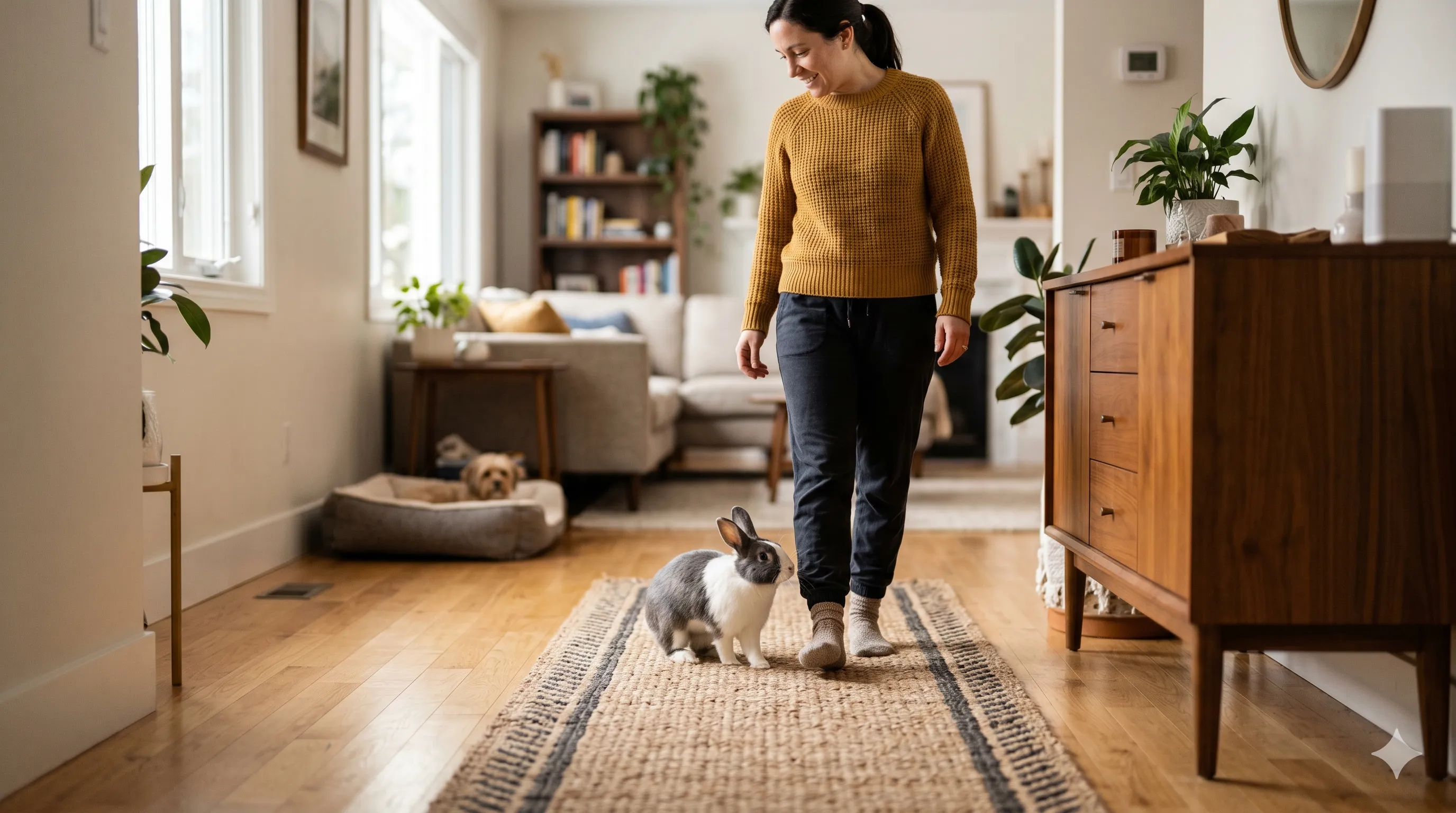
You walk into another room and suddenly hear soft hopping behind you. Whether you're going to the kitchen, sitting on the couch, or moving around the house, your rabbit seems determined to stay close. If you've been wondering "why does my rabbit follow me everywhere?", the answer is often connected to trust, bonding, curiosity, and social attachment.
Rabbits are more social and emotionally aware than many people realize. While some rabbits are independent, others form strong bonds with their owners and enjoy being nearby throughout the day.
Following behavior can mean your rabbit feels safe around you, wants attention, expects food, enjoys interaction, or simply sees you as part of their trusted social group.
However, not all following behavior means exactly the same thing. Some rabbits follow owners out of affection, while others may follow because of routines, curiosity, boredom, or even mild anxiety.
Understanding your rabbit's body language and habits helps explain what your bunny is really trying to communicate.
Why Does My Rabbit Follow Me Everywhere? (Quick Answer)
Rabbits often follow their owners because they feel bonded, curious, comfortable, or socially attached. A rabbit may follow you to seek attention, expect food, request interaction, explore safely, or stay close to someone they trust. In many cases, following behavior is a positive sign of social bonding and emotional comfort.
Occasional following is completely normal and is often considered a sign that your rabbit enjoys your presence.
Do Rabbits Get Attached to Their Owners?
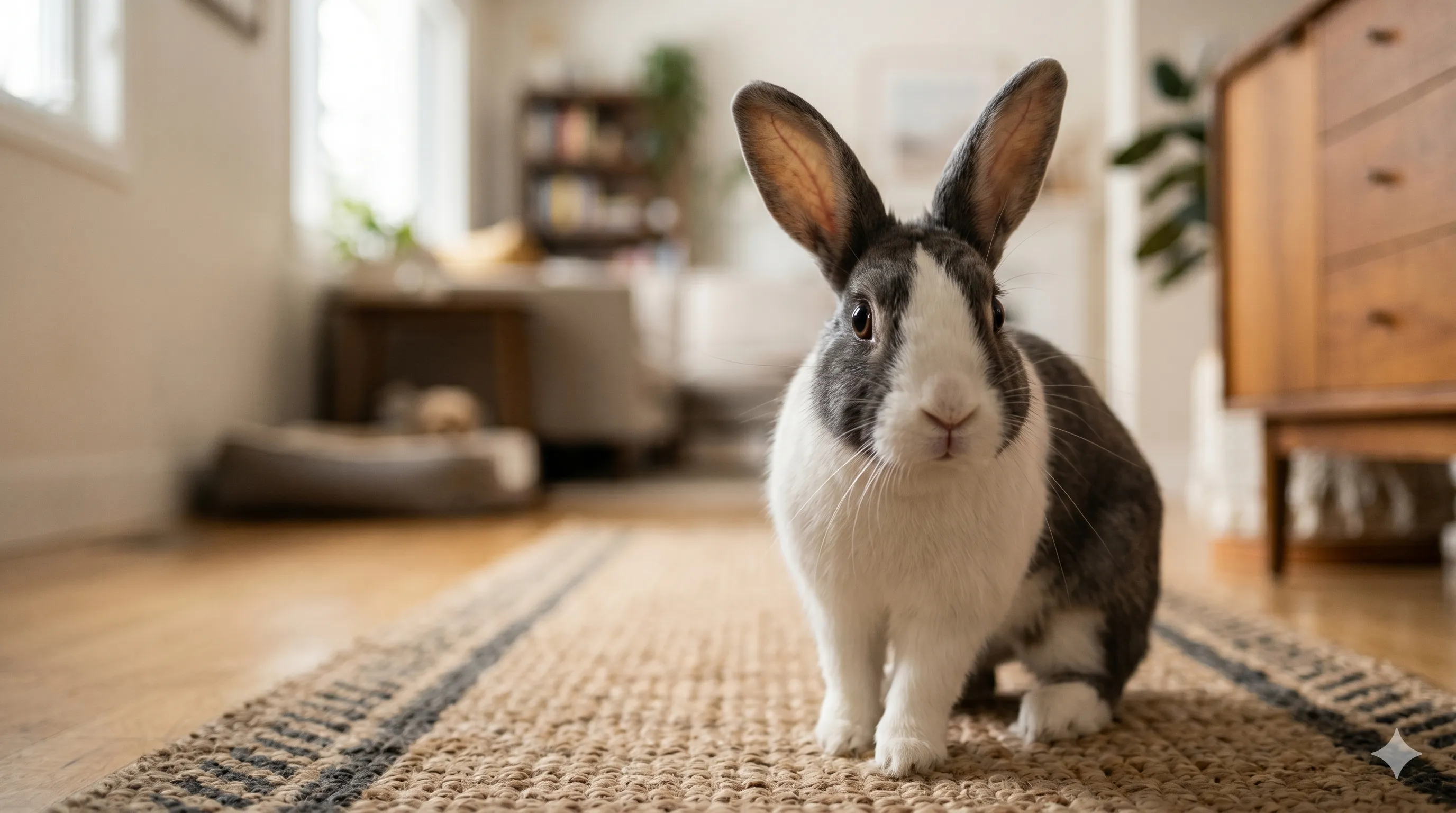
Yes, many rabbits form surprisingly strong emotional attachments to their owners.
Although rabbits communicate differently than dogs or cats, they still recognize familiar people, routines, voices, smells, and social interactions. Over time, rabbits often build trust through daily care, feeding routines, playtime, and calm interaction.
Bonded rabbits may:
- Follow owners around the house
- Relax nearby
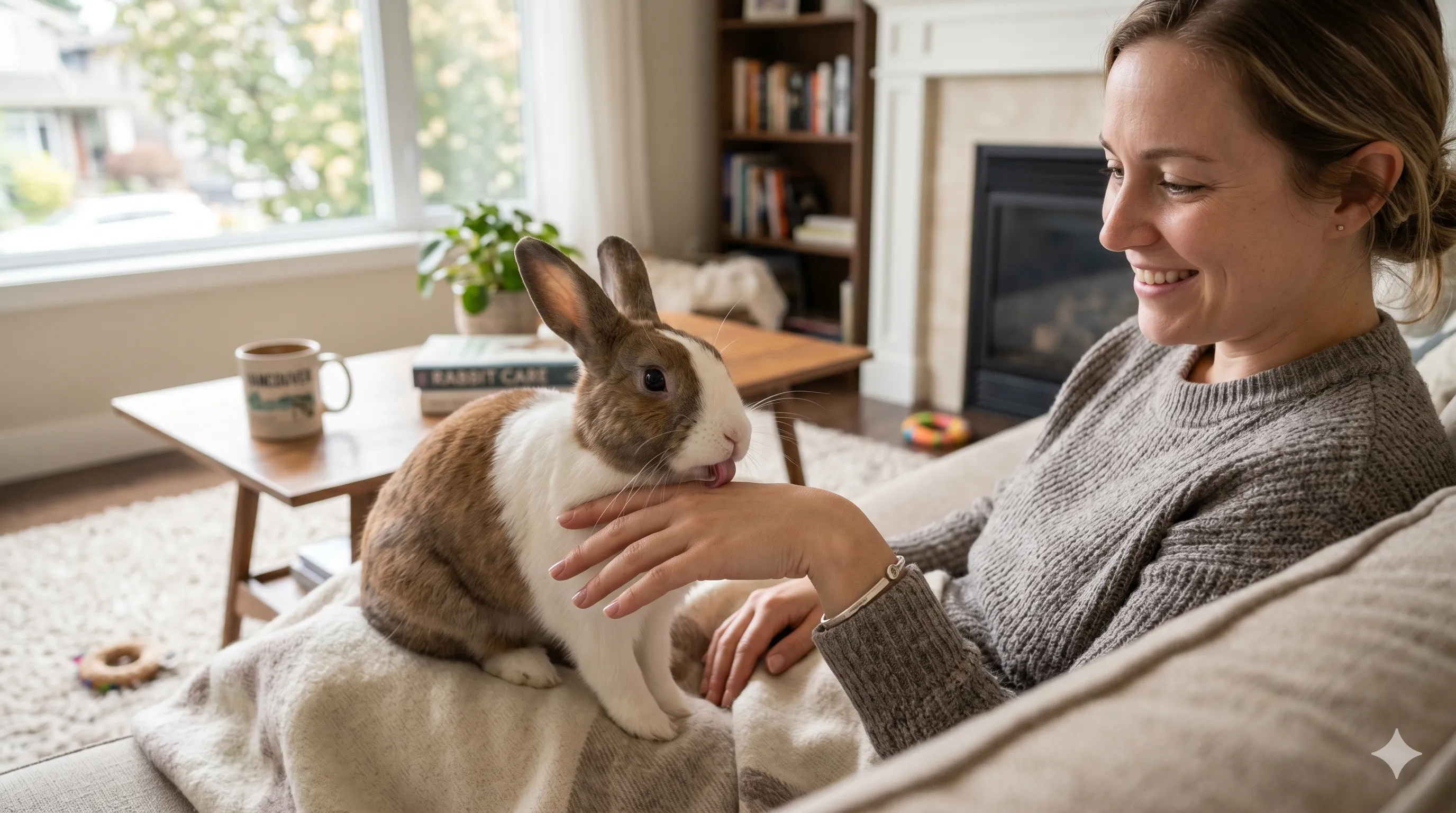
- Lick or groom owners
- Nudge for attention
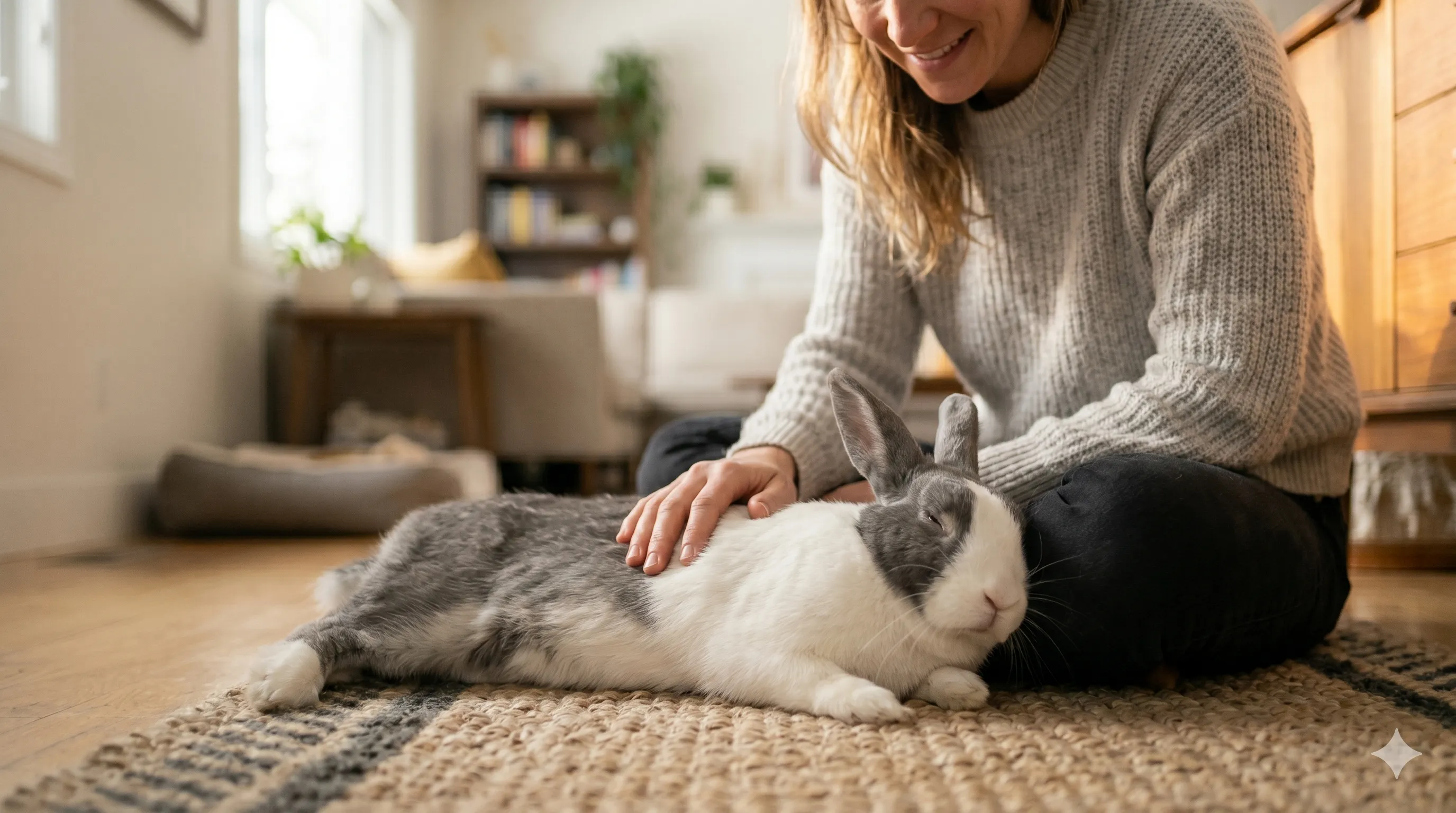
- Flop beside trusted people
- Seek interaction during active hours
Many rabbit owners notice these bonding behaviors increase gradually over weeks or months.
rabbit licking and bonding behavior explainedCommon Reasons Rabbits Follow People
1. Your Rabbit Feels Bonded to You
The most common reason rabbits follow owners is social bonding.
Rabbits are naturally social animals that often prefer companionship over isolation. If your rabbit consistently follows you calmly around the house, this usually means your bunny feels comfortable and emotionally secure around you.
Many rabbits treat trusted owners similarly to bonded rabbit companions.
rabbit nudging and attention-seeking signals2. Your Rabbit Expects Food or Treats
Food routines strongly influence rabbit behavior.
Rabbits quickly learn feeding schedules and often associate owners with treats, vegetables, pellets, or hay refills. Some rabbits become extremely attentive around meal times and may follow owners closely whenever food-related activity happens.
Common triggers include:
- Opening the refrigerator
- Rustling treat bags
- Kitchen movement
- Specific feeding times
- Recognizing food containers
Food-motivated rabbits can become surprisingly persistent once they connect you with snacks.
3. Curiosity and Exploration
Rabbits are naturally curious animals.
Some rabbits follow owners simply because movement attracts their attention or because they want to investigate new areas safely.
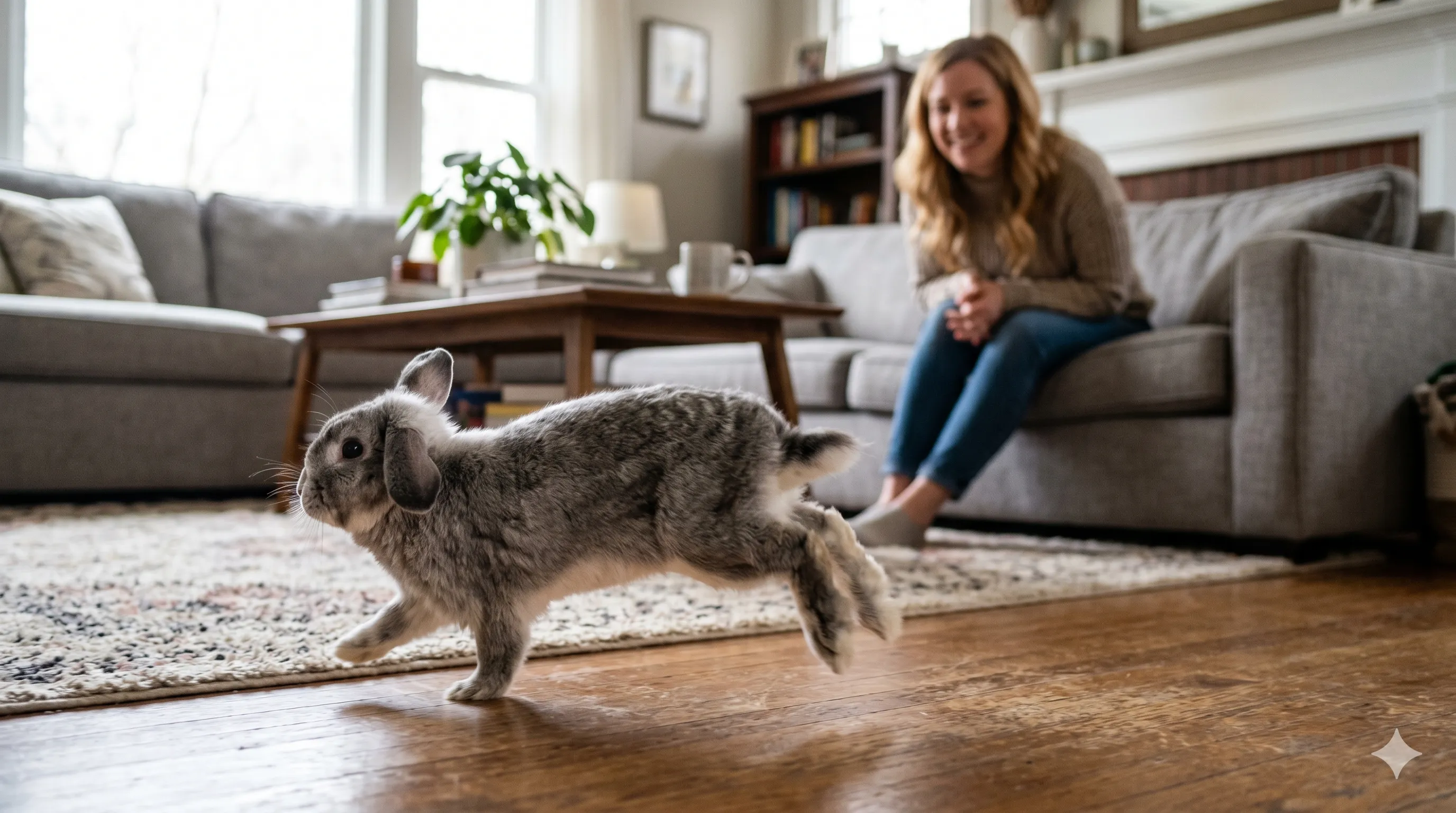
Younger rabbits especially tend to explore constantly and may shadow people during free-roaming time.
Following behavior driven by curiosity is often playful and energetic.

4. Your Rabbit Wants Attention or Interaction
Social rabbits often seek interaction during their active periods, especially in the early morning or evening.
Your rabbit may follow you because they want:
- Petting
- Playtime
- Treats
- Social engagement
- Free-roaming access
- Comfortable companionship
Many rabbits become more interactive once strong trust develops.
rabbit circling behavior and excitement meaning5. Your Rabbit Feels Safe Around You
Rabbits are prey animals and naturally cautious by instinct.
If your rabbit willingly follows you into different rooms, relaxes nearby, or remains close during household activity, this often signals a high level of trust.
Some rabbits feel more confident exploring environments when trusted humans are nearby.
In busy homes, owners sometimes become a "safe anchor" for nervous rabbits.
6. Habit and Routine
Rabbits thrive on predictable routines.
Over time, your bunny may develop habits tied to your daily schedule. If certain activities consistently lead to food, play, attention, or exploration opportunities, your rabbit may naturally begin following you automatically.
Some rabbits even anticipate routines before they happen.
7. Mild Loneliness or Boredom
Occasionally, excessive following behavior may indicate boredom or insufficient stimulation.
Rabbits need:
- Mental enrichment
- Exercise
- Social interaction
- Safe exploration
- Environmental stimulation
A rabbit that lacks enrichment or companionship may become overly dependent on owner interaction for stimulation.
This does not necessarily mean something is wrong, but enrichment improvements may help create healthier balance.
rabbit thumping warning signs and communicationRabbit Body Language That Often Appears With Following
- Following + flopping nearby: trust and relaxation
- Following + nudging: attention-seeking
- Following + circling feet: excitement or affection
- Following + licking: social bonding
- Following + begging posture: food motivation
- Constant anxious following: possible insecurity or boredom
Can Rabbits Become Too Attached?
Strong bonding is normal, but extreme clinginess may sometimes indicate underlying stress or boredom.
If your rabbit becomes distressed whenever you leave, constantly demands attention, or shows anxious behaviors when alone, it may help to evaluate:
- Enrichment levels
- Exercise opportunities
- Social interaction
- Environmental stimulation
- Daily routines
Many rabbits benefit from puzzle toys, tunnels, foraging games, and expanded free-roaming time.
How to Strengthen Your Bond With Your Rabbit
If your rabbit already follows you, you're likely building positive trust successfully.
Helpful ways to strengthen bonding include:
- Spending quiet floor-level time together
- Allowing voluntary interaction
- Avoiding forced handling
- Providing enrichment activities
- Offering healthy treats occasionally
- Using calm body language
- Maintaining consistent routines
Trust-building with rabbits usually happens gradually through repeated positive experiences.
rabbit stress anxiety and shaking behaviorWhen Should You Be Concerned?
Rabbit following behavior is usually positive and harmless.
However, you should pay closer attention if following suddenly becomes:
- Obsessive
- Paired with appetite changes
- Linked to anxiety signs
- Accompanied by lethargy
- Combined with aggressive behavior
- Associated with stress or fear
Sudden major behavioral changes can sometimes indicate environmental stress, illness, or emotional discomfort.
Expert Tips for Bonding With a Following Rabbit
- Let your rabbit choose to approach rather than reaching for them, since following on their own terms builds trust faster than being picked up
- Sit or kneel at floor level during following behavior so your rabbit doesn't have to look up at a much larger, more intimidating shape
- Keep a consistent daily routine since predictable feeding and free-roam times often make following behavior calmer and less anxious
- Offer enrichment even when your rabbit is following well, since following can become a substitute for boredom if it's the only stimulation available
Common Mistakes Owners Make
- Assuming a rabbit that follows constantly always wants to be picked up, which can undo trust that took months to build
- Treating clingy, anxious following the same as calm, curious following instead of looking at the behavior alongside it
- Rewarding following only with food, which can shift a bonding behavior into a purely food-driven one over time
- Ignoring sudden increases in following paired with appetite or energy changes, assuming it's "just personality"
Example Scenario
The scenario below is an illustrative example of how this situation can play out, not a documented case study.
One rabbit owner noticed their bunny followed them every morning into the kitchen before breakfast. Over time, the rabbit began recognizing specific routines and would appear immediately whenever the refrigerator opened.
Another owner realized their rescue rabbit only started following them consistently after several months of patient bonding and floor-level interaction. As trust increased, the rabbit became noticeably more social and confident.
Following behavior often becomes stronger as rabbits feel safer and more emotionally connected.
Final Thoughts
If you've been wondering why your rabbit follows you everywhere, the behavior is usually connected to trust, social bonding, curiosity, attention, or routine-based interaction.
Rabbits may not express affection the same way dogs do, but they often form meaningful emotional connections with trusted humans over time.
The key is observing your rabbit's overall body language, routines, and emotional state rather than focusing on one behavior alone.
In many cases, a rabbit following you around the house is simply a sign that your bunny enjoys being near you and feels safe in your presence.
Following isn't the only behavior that can reveal how your rabbit feels about you — why rabbits stare at owners and what it means covers another common bonding signal worth understanding.
This article is intended for educational purposes and should not replace professional veterinary advice. If your rabbit develops sudden behavioral changes, anxiety symptoms, or health concerns, consult an experienced rabbit veterinarian.
Medical Disclaimer
This content is provided for informational and educational purposes only and should not be considered veterinary, medical, behavioral, or training advice. While we strive for accuracy, we make no guarantees regarding completeness or results. Always consult a licensed veterinarian or qualified pet care professional before making decisions about your pet’s health, diet, or behavior.
AI Illustration Notice
Some images in this article may have been generated or enhanced using artificial intelligence for illustrative purposes.
Frequently Asked Questions
Rabbits often follow owners because they feel bonded curious socially attached or expect interaction and food
Yes, many rabbits form strong emotional bonds with trusted owners over time
Your rabbit likely associates the kitchen with food treats or feeding routines
Following behavior is often a positive sign of trust comfort and social bonding
Some rabbits may become overly dependent on owner interaction if they lack enrichment or stimulation
Many rabbits enjoy companionship but dislike being lifted because it triggers prey instincts
Rabbits commonly show attachment through following licking nudging flopping nearby relaxing around owners and seeking interaction
Editorial Note
This article is part of PetNurture's educational library.
Topics draw on publicly available educational resources, recognised veterinary organisations, academic publications and established animal welfare references where appropriate.
The specific sources this article draws on are listed in its References section. If you spot an error, please let us know.
References
The information in this article has been reviewed and supported using the following sources.
House Rabbit Society
Confirms rabbits communicate bonding and trust through body language and physical closeness; supports the 'Do Rabbits Get Attached to Their Owners' section of this article.
Accessed Aug 6, 2026
House Rabbit Society
Supports monitoring appetite and lethargy changes referenced in the 'When Should You Be Concerned' section of this article.
Accessed Aug 6, 2026
Pet Emergency Guidance
Every pet is unique. If your pet exhibits severe symptoms, sudden behavioral changes, or a medical emergency, do not rely on online guides — contact a licensed veterinarian or emergency clinic immediately.
About PetNurture
PetNurture is an educational library of pet care guides, interactive tools and practical resources for pet parents. We work continuously to keep our content accurate and up to date. Reader feedback helps us maintain content quality.
Related Articles
Popular Rabbit Guides