Bird Ownership Statistics USA
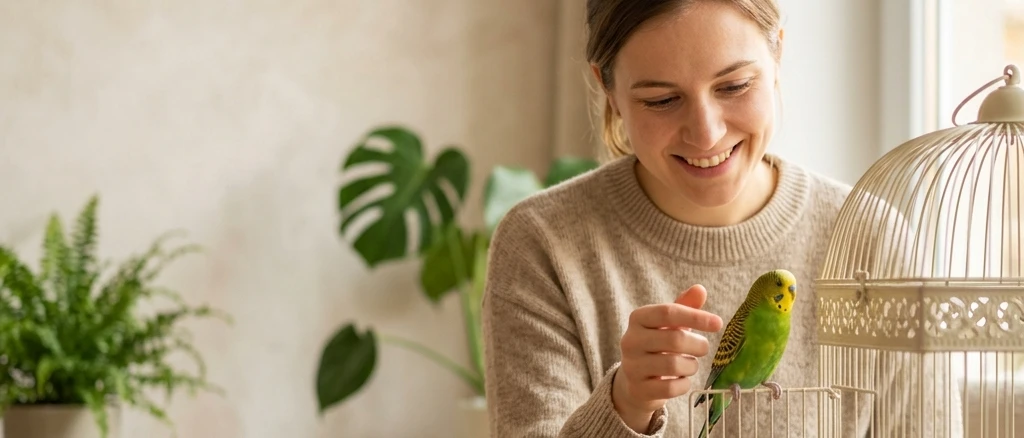
Birds are one of the most overlooked pets in national ownership surveys, yet an estimated 6 million U.S. households currently keep one — from budgies and cockatiels to long-lived parrots that can outlive their owners. Here’s what the data actually shows about who owns pet birds, which species are growing fastest, and what they cost.
Key Statistics
Approximately 6 million U.S. households own a pet bird, per APPA's 2025 survey.
Share of bird-owning households that keep a parakeet (budgerigar), the most common pet bird.
Increase in cockatiel ownership between 2023 and 2025, now 19% of bird-owning households.
Share of bird owners who are Gen Z, up 22% year-over-year from 2023.
Share of bird owners who spent more on their bird in the past 12 months than the year before.
Typical captive lifespan range for African Grey parrots, per Animal Diversity Web (University of Michigan Museum of Zoology) — one of the longest of any common pet.
Statistics Summary
| Statistic | Value |
|---|---|
|
US Households Owning a Bird
Approximately 6 million U.S. households own a pet bird, per APPA's 2025 survey. |
6M |
|
Most Popular Species
Share of bird-owning households that keep a parakeet (budgerigar), the most common pet bird. |
28% |
|
Cockatiel Ownership Growth
Increase in cockatiel ownership between 2023 and 2025, now 19% of bird-owning households. |
58% |
|
Gen Z Bird Owners
Share of bird owners who are Gen Z, up 22% year-over-year from 2023. |
22% |
|
Owners Spending More
Share of bird owners who spent more on their bird in the past 12 months than the year before. |
59% |
|
African Grey Parrot Lifespan
Typical captive lifespan range for African Grey parrots, per Animal Diversity Web (University of Michigan Museum of Zoology) — one of the longest of any common pet. |
40-60yrs |
How Many Pet Birds Are There in the U.S.?
According to the American Pet Products Association's (APPA) 2025 Pet Owners Survey, approximately 6 million U.S. households currently own a pet bird. That figure has been effectively flat year-over-year, following a longer decline: AVMA's Pet Ownership and Demographics Sourcebook found the share of U.S. households owning a bird fell from 3.1% at year-end 2011 to 2.8% at year-end 2016. APPA and AVMA use different survey methodologies and sampling periods, so their figures aren't directly comparable — but both point to bird ownership as a small, historically shrinking share of the U.S. pet population that has since leveled off.
Which Bird Species Are Most Popular?
Parakeets (budgerigars) remain the most commonly kept pet bird, owned by 28% of bird-owning households, per APPA's 2025 report. Cockatiels are the fastest-growing species: ownership rose 58% between 2023 and 2025, now standing at 19% of bird-owning households — growth APPA attributes largely to Gen Z and Baby Boomer owners. Larger, long-lived parrot species such as African Greys and Macaws make up a much smaller share of pet birds by household count, but represent an outsized, decades-long financial and care commitment — African Greys, for example, have a typical captive lifespan of 40 to 60 years, with the longest reliably recorded individual reaching 49 years in peer-reviewed research.
Who Owns Pet Birds? Generational Trends
Bird ownership is shifting younger. Gen Z now accounts for 22% of all bird owners, up 22% year-over-year from 2023, according to APPA. That mirrors a broader trend across small-animal and exotic pet categories, where younger buyers are driving most of the category's growth even as overall bird ownership stays flat.
What Does It Cost to Own a Pet Bird?
Cost varies enormously by species. The ASPCA estimates baseline annual care for a small pet bird (such as a budgie or cockatiel) at roughly $200–$300, covering food, a cage, toys, and routine care — among the lowest ongoing costs of any common pet. Owners are also spending more over time: 59% of bird owners told APPA they spent more on their bird in the past 12 months than the year before. Costs climb sharply for larger parrot species, which need bigger enclosures, specialized diets, and avian-specialist veterinary care over a multi-decade lifespan — a cost factor that's easy to underestimate against a relatively low sticker price for the bird itself.
Detailed Statistics
| Statistic | Value | Description | Source |
|---|---|---|---|
| Bird-owning households (2025) | 6M | Current estimate of U.S. households owning a pet bird. | American Pet Products Association (APPA) |
| Bird-owning households, share of all US households (2011) | 3.1% | Historical AVMA figure — not directly comparable to APPA household-count estimates due to differing methodology. |
AVMA Pet Ownership and Demographics Sourcebook
Jan 15, 2019 |
| Bird-owning households, share of all US households (2016) | 2.8% | Same AVMA sourcebook — shows the decline trend through 2016. |
AVMA Pet Ownership and Demographics Sourcebook
Jan 15, 2019 |
| Parakeet ownership share among bird owners | 28% | Parakeets (budgerigars) are the most commonly owned pet bird species. | American Pet Products Association (APPA) |
| Cockatiel ownership share among bird owners | 19% | Up 58% from 2023, driven largely by Gen Z and Baby Boomer owners. | American Pet Products Association (APPA) |
| Gen Z share of bird owners | 22% | Up 22% year-over-year from 2023 — the fastest-growing generational segment of bird owners. | American Pet Products Association (APPA) |
| Bird owners who spent more in the past 12 months | 59% | Share of bird owners who reported increased year-over-year spending on their bird. | American Pet Products Association (APPA) |
| Estimated annual cost, small pet bird (budgie/cockatiel) | 200-300$ | Baseline estimate covering food, cage, toys, and routine care — does not include larger parrot species. | ASPCA |
| African Grey parrot captive lifespan range | 40-60yrs | Typical range; the mean reported captive lifespan is around 45 years. | Animal Diversity Web (University of Michigan Museum of Zoology) |
| Longest reliably recorded captive lifespan (peer-reviewed) | 49yrs | The longest reliably recorded life expectancy for an African Grey parrot in captivity, documented in a peer-reviewed study. |
Aydinonat et al., "Social Isolation Shortens Telomeres in African Grey Parrots," PLoS ONE (2014)
Apr 9, 2014 |
Sources
- APPA — 2025 Report on Bird, Small Animal & Horse Ownership (2025) — Primary source for current household ownership, species breakdown, and generational trend data.
- AVMA Pet Ownership and Demographics Sourcebook (via JAVMA News) (Jan 15, 2019) — Longer-run household-share trend (2011 vs. 2016); uses a different methodology than APPA household-count estimates, so figures should not be directly compared.
- ASPCA — Cutting Pet Care Costs (Undated, ongoing resource page) — Source for baseline small-bird annual cost estimate.
- Animal Diversity Web (University of Michigan Museum of Zoology) (Ongoing academic species-account reference) — Source for the typical 40-60 year captive lifespan range, replacing the earlier unverifiable "~58 years / AAV" claim that could not be traced to a primary publication.
- Aydinonat, D. et al. — "Social Isolation Shortens Telomeres in African Grey Parrots," PLoS ONE (2014) (Apr 9, 2014) — Peer-reviewed source for the longest reliably recorded captive lifespan (49 years) — directly fetched and quote-verified.
- Pet Food Industry — "Report: Gen Z drives bird, small animal ownership growth" (2025) — Trade-press summary corroborating APPA's Gen Z ownership findings.
The Big Picture
Bird ownership is a small and historically declining share of U.S. pet ownership that has stabilized at around 6 million households — but the mix of who owns birds and which species they choose is changing fast, with Gen Z and cockatiels both posting outsized growth. Unlike dogs and cats, there's no single authoritative national bird census: the figures on this page combine APPA's ownership survey data, AVMA's longer-run demographic trend data, and ASPCA cost estimates. Where sources disagree or use different methodologies, we've noted it rather than picking one number and presenting it as more precise than it is.
Frequently Asked Questions
Data Disclaimer
Information on this page is compiled from publicly available reports, surveys, and industry publications. PetNurture does not conduct original research and cannot guarantee the completeness, accuracy, or timeliness of third-party data. Users should verify statistics directly with the original source before making decisions based on this information.