
How to Introduce a New Cat to Your Home: Step-by-Step Guide + Timeline
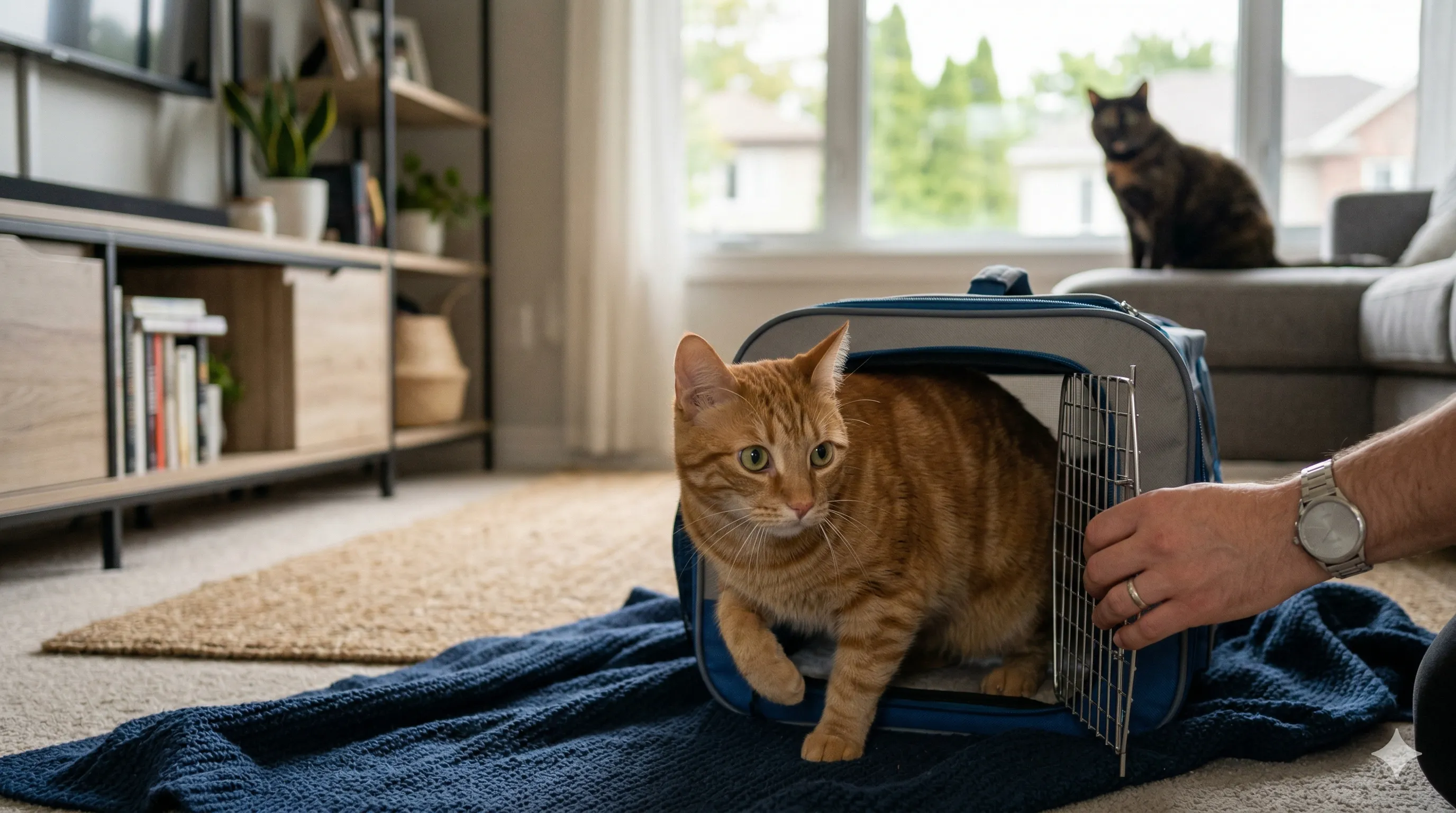
- How to Introduce a New Cat to Your Home (Quick Answer)
- New Cat Introduction Timeline
- Why Proper Cat Introductions Matter
- 1. Prevents Territorial Aggression
- 2. Reduces Fear and Anxiety
- 3. Builds Positive Associations
- Step-by-Step Guide to Introducing a New Cat
- Step 1: Prepare a Separate Safe Room
- Step 2: Allow the New Cat to Adjust
- Step 3: Begin Scent Introduction
- Step 4: Controlled Visual Introduction
- Step 5: Supervised Meetings
- Step 6: Gradual Full Integration
- Common Cat Introduction Problems and Solutions
- Hissing and Growling
- Hiding Behavior
- Refusing to Eat
- Territorial Resource Competition
- Play Fighting vs Real Aggression
- Playful Behavior Usually Includes:
- Concerning Aggression Often Includes:
- How Long Does It Take Cats to Adjust?
- Special Considerations for Kittens vs Adult Cats
- Common Mistakes Owners Should Avoid
- 1. Rushing the Process
- 2. Forcing Interaction
- 3. Punishing Stress Signals
- 4. Not Providing Enough Resources
- Example Scenario
- Final Thoughts
Note: This article is for informational purposes only and does not replace professional veterinary advice.
Bringing a new cat into your home can be exciting, but it can also create stress for both your new pet and any existing cats already living in the household. Many owners hope their cats will instantly become friends, but cats are naturally territorial animals and usually need time to adjust to major changes. understand why cats hide when adjusting to new environments
Introducing cats too quickly is one of the most common reasons owners experience hissing, hiding, territorial behavior, litter box problems, or long-term conflict between pets. A slow and structured introduction process gives cats time to feel safe while gradually building familiarity and trust.
Every cat adjusts differently depending on personality, age, confidence level, socialization history, and previous experiences. Some cats become comfortable within days, while others may need several weeks before fully relaxing around each other.
The good news is that most introductions go much more smoothly when owners understand feline behavior and avoid rushing the process.
In this guide, you'll learn exactly how to introduce a new cat to your home safely, what timeline to expect, common mistakes to avoid, and how to reduce stress for both cats during the transition.
How to Introduce a New Cat to Your Home (Quick Answer)
To introduce a new cat successfully, begin by keeping the new cat in a separate safe room, gradually introduce scents, allow controlled visual exposure, and slowly move toward supervised interactions. Most cats adjust best when introductions happen gradually over days or weeks rather than immediately.
Patience, consistency, and environmental management are the keys to reducing stress and preventing long-term conflict.

New Cat Introduction Timeline
| Introduction Stage | Typical Timeline | Main Goal |
|---|---|---|
| Safe room separation | Days 1-3 | Reduce stress and allow adjustment |
| Scent introduction | Days 2-5 | Build scent familiarity |
| Controlled visual contact | Days 4-7 | Reduce fear and curiosity tension |
| Short supervised meetings | Week 1-2 | Build positive interactions |
| Gradual integration | Week 2+ | Increase comfort and shared space |
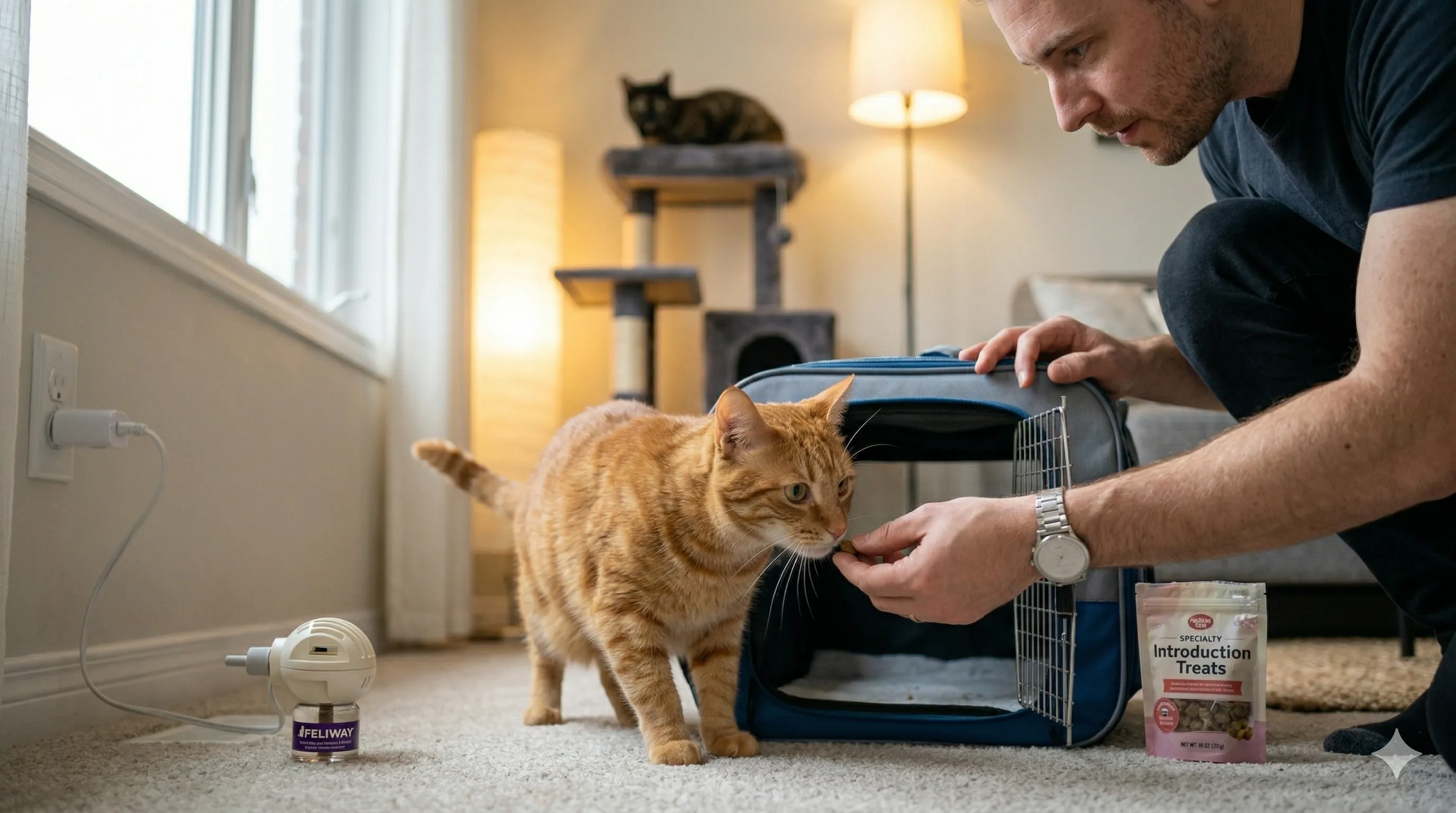
Why Proper Cat Introductions Matter
Many owners underestimate how strongly cats value territory, predictability, and environmental security.
Unlike highly social animals, cats usually do not appreciate sudden forced interactions with unfamiliar animals. Abrupt introductions often trigger stress responses that can damage long-term relationships between cats.
1. Prevents Territorial Aggression
Cats rely heavily on scent and territory to feel safe.
When a new cat suddenly appears in another cat's environment, the resident cat may interpret the newcomer as a threat to:
- Food access
- Sleeping areas
- Litter boxes
- Owner attention
- Personal territory
Gradual introductions reduce this perceived threat.
2. Reduces Fear and Anxiety
New environments are already stressful for many cats.
Adding immediate interaction with unfamiliar animals can overwhelm a cat emotionally and increase defensive behavior.
A slow introduction process allows cats to build confidence gradually.
3. Builds Positive Associations
Successful introductions rely heavily on creating positive emotional associations.
Cats that repeatedly experience calm interactions, treats, play, and safety around each other are more likely to develop peaceful relationships over time.
Step-by-Step Guide to Introducing a New Cat
Step 1: Prepare a Separate Safe Room
Your new cat should initially stay in a quiet separate room away from existing pets.
The room should include:
- Food and water
- Litter box
- Comfortable bedding
- Scratching post
- Hiding spots
- Toys
This safe space allows the new cat to decompress and adjust gradually to unfamiliar smells, sounds, and routines.
Many cats spend the first few days hiding or observing quietly. This is completely normal.
Step 2: Allow the New Cat to Adjust
Before introductions begin, allow your new cat time to feel secure in their safe room.
Some cats adjust quickly, while shy or rescued cats may need more time.
During this stage:
- Maintain calm routines
- Avoid overwhelming handling
- Speak softly
- Allow exploration at the cat's pace
Step 3: Begin Scent Introduction
Cats identify one another primarily through scent.
Scent introduction is often one of the most important parts of the entire process.
You can safely introduce scents by:
- Swapping bedding
- Rotating blankets
- Switching toys between rooms
- Using cloths to transfer facial pheromones
The goal is to create familiarity before direct interaction occurs.
Positive scent exposure helps reduce the feeling that the other cat is a "stranger."
Step 4: Controlled Visual Introduction
Once both cats appear calmer with scent exposure, begin controlled visual contact.
This can be done using:
- Baby gates
- Cracked doors
- Screen barriers
- Large carriers
Keep sessions short and calm initially.
Watch for signs of stress such as:
- Flattened ears
- Growling
- Intense staring
- Puffed fur
- Tail flicking
Mild curiosity or cautious observation is usually normal.
Step 5: Supervised Meetings
Once visual contact becomes calmer, you can begin short supervised interactions.
Keep early sessions:
- Brief
- Positive
- Calm
- Closely monitored
Use:
- Treats
- Interactive toys
- Calm praise
to create positive experiences.
Never force cats to interact physically.
Step 6: Gradual Full Integration
As interactions improve, slowly increase shared time.
Most cats do best when integration happens gradually rather than suddenly removing all separation.
Continue monitoring:
- Eating behavior
- Litter box usage
- Sleeping locations
- Play behavior
- Stress signals

Common Cat Introduction Problems and Solutions
Hissing and Growling
Hissing is extremely common during introductions and does not automatically mean the process is failing.
Hissing is usually a communication signal meaning:
- "I need space"
- "I feel uncertain"
- "Slow down"
Avoid punishing hissing because punishment may increase fear and negative associations.
Hiding Behavior
Many new cats hide extensively during the first several days or weeks.
Hiding helps cats feel safer while adjusting to unfamiliar environments.
regular checkups help ensure your cat stays healthy during stressful life changesProvide safe hiding spots and avoid pulling cats out forcibly.
Refusing to Eat
Stress frequently affects appetite during transitions.
To encourage eating:
- Keep feeding areas quiet
- Maintain consistent schedules
- Avoid placing bowls near litter boxes
- Offer familiar foods
If refusal to eat lasts beyond 24 hours, contact a veterinarian.
Territorial Resource Competition
Many conflicts happen because cats feel forced to compete for resources.
Provide multiple:
- Litter boxes
- Water bowls
- Food stations
- Scratching posts
- Resting spaces
This reduces pressure and improves comfort.
Play Fighting vs Real Aggression
Many owners struggle to tell the difference between playful interaction and true aggression.
Playful Behavior Usually Includes:
- Loose body posture
- Taking turns chasing
- Short pauses during play
- Minimal vocalization
Concerning Aggression Often Includes:
- Prolonged staring
- Loud screaming
- Puffed fur
- Cornering behavior
- Repeated attacking
- Fear-based body language
If severe aggression occurs, separate the cats and slow the process down again.
How Long Does It Take Cats to Adjust?
Adjustment timelines vary widely depending on:
- Personality
- Age
- Past experiences
- Socialization history
- Household environment
Some cats relax within several days.
Others may require several weeks or even months before becoming fully comfortable.
Progress is often gradual rather than immediate.
Special Considerations for Kittens vs Adult Cats
Kittens often adapt more easily than adult cats because they are generally more socially flexible and less territorial.
Adult cats, especially senior cats, may require slower introductions and more environmental support.
Older cats may also become stressed more easily when routines suddenly change.
understand how much sleep is normal for adult and senior cats as routines changeCommon Mistakes Owners Should Avoid
1. Rushing the Process
Fast introductions are one of the biggest causes of long-term tension between cats.
2. Forcing Interaction
Picking cats up and placing them together usually increases fear.
3. Punishing Stress Signals
Hissing, growling, and cautious behavior are normal communication signals.
Punishment often worsens anxiety.
4. Not Providing Enough Resources
Competition for food, litter boxes, or sleeping areas can increase conflict significantly.
Example Scenario
The scenario below is an illustrative example of how this situation can play out, not a documented case study.
One household introduced a rescued adult cat to an existing resident cat by immediately allowing free access to the entire house. Within hours, both cats began hiding, hissing, and avoiding shared spaces.
After restarting the introduction process slowly using scent swapping, safe-room separation, and short supervised meetings, the cats gradually became calmer over several weeks.
Eventually, both cats comfortably shared sleeping areas and peacefully coexisted.
This situation highlights how gradual introductions often prevent long-term territorial stress.
Final Thoughts
Introducing a new cat to your home successfully requires patience, structure, and realistic expectations.
Cats thrive when they feel safe, predictable, and in control of their environment. A slow introduction process gives both cats the opportunity to build familiarity and trust gradually rather than feeling threatened.
Most importantly, remember that adjustment takes time. Temporary hissing, hiding, or cautious behavior is often completely normal during early introductions.
By focusing on scent familiarity, gradual exposure, positive associations, and environmental support, most cats can eventually develop peaceful and comfortable relationships.
This content is written to provide general educational guidance for cat owners. It should not replace professional veterinary or behavioral advice for severe aggression or medical concerns.
Medical Disclaimer
This content is provided for informational and educational purposes only and should not be considered veterinary, medical, behavioral, or training advice. While we strive for accuracy, we make no guarantees regarding completeness or results. Always consult a licensed veterinarian or qualified pet care professional before making decisions about your pet’s health, diet, or behavior.
AI Illustration Notice
Some images in this article may have been generated or enhanced using artificial intelligence for illustrative purposes.
Frequently Asked Questions
Introduce a new cat gradually using separate rooms scent swapping controlled visual contact and supervised interactions over time.
Some cats adjust within days while others may require several weeks depending on personality and previous experiences.
Yes, mild hissing is a normal communication signal during early introductions and often decreases gradually.
No, sudden introductions can increase fear territorial behavior and long term conflict between cats.
Separate the cats calmly and slow the introduction process while focusing on positive gradual exposure again.
Provide separate resources calm routines hiding spaces vertical climbing areas and positive reinforcement to help reduce stress.
Editorial Note
This article is part of PetNurture's educational library.
Topics draw on publicly available educational resources, recognised veterinary organisations, academic publications and established animal welfare references where appropriate.
The specific sources this article draws on are listed in its References section. If you spot an error, please let us know.
References
The information in this article has been reviewed and supported using the following sources.
San Francisco SPCA
How to Introduce Cats Step-by-Step
The San Francisco SPCA recommends giving a new cat its own small, quiet room with a litter box, food, water and a hiding place for the first several days, then swapping bedding or toys so each cat associates the other's scent with comfort before any face-to-face meeting.
Accessed Aug 6, 2026
Cornell Feline Health Center
Choosing and Caring for Your New Cat
The Cornell Feline Health Center advises keeping a new cat separated from resident cats until a veterinarian has examined the newcomer, especially when the new cat's health history is unknown.
Accessed Aug 6, 2026
Pet Emergency Guidance
Every pet is unique. If your pet exhibits severe symptoms, sudden behavioral changes, or a medical emergency, do not rely on online guides — contact a licensed veterinarian or emergency clinic immediately.
About PetNurture
PetNurture is an educational library of pet care guides, interactive tools and practical resources for pet parents. We work continuously to keep our content accurate and up to date. Reader feedback helps us maintain content quality.
Related Articles



Popular Cat Guides


Cat
Cat Pregnancy Calculator
Estimate your cat's due date, pregnancy timeline, and key gestation milestones.
Cat
Cat Feeding Calculator
Calculate how much food your cat needs daily based on weight, age, and activity level.