Why Does My Cat Knead Me? Real Meaning Behind This Comfort Behavior
- Why Does My Cat Knead Me? (Quick Answer)
- What Is Cat Kneading?
- Cat Kneading Meaning (Quick Guide)
- 6 Real Reasons Why Cats Knead Their Owners
- 1. Kneading Comes From Kittenhood Instinct
- 2. Your Cat Feels Relaxed and Emotionally Safe
- 3. Kneading Can Be a Sign of Affection and Bonding
- 4. Cats Use Kneading to Mark Territory
- 5. Kneading Helps Prepare Comfortable Sleeping Areas
- 6. Some Cats Develop Kneading as a Habit
- Why Does Cat Kneading Sometimes Hurt?
- Normal vs Problematic Kneading
- When Should You Be Concerned?
- How to Handle Kneading Comfortably
- 1. Use a Soft Blanket Barrier
- 2. Keep Nails Trimmed
- 3. Redirect Kneading to Soft Surfaces
- 4. Avoid Punishing the Behavior
- Expert Tips for Handling a Kneading Cat
- Common Mistakes Owners Make
- Real-Life Example
- Final Thoughts
Note: This article is for informational purposes only and does not replace professional veterinary advice.
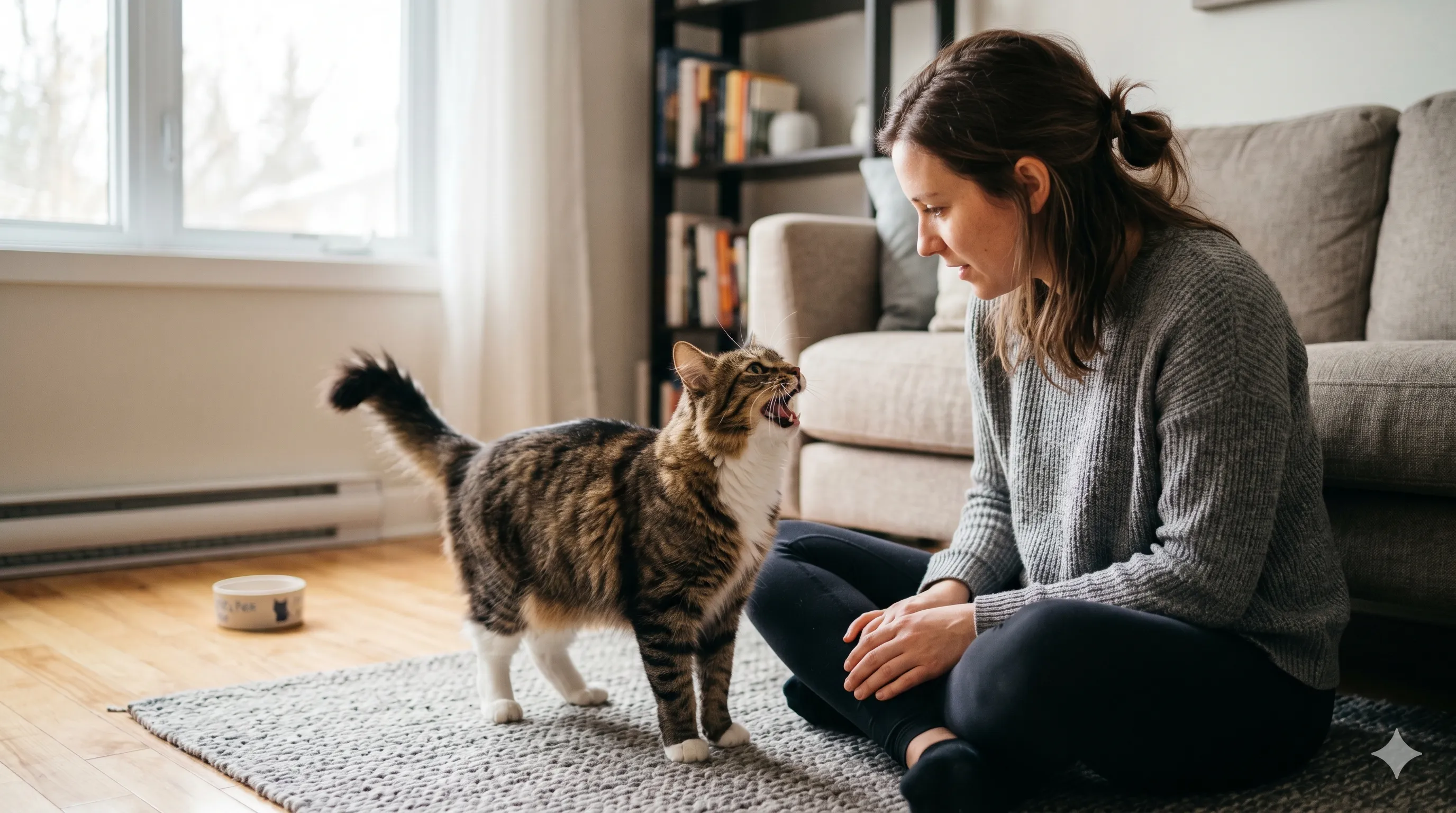
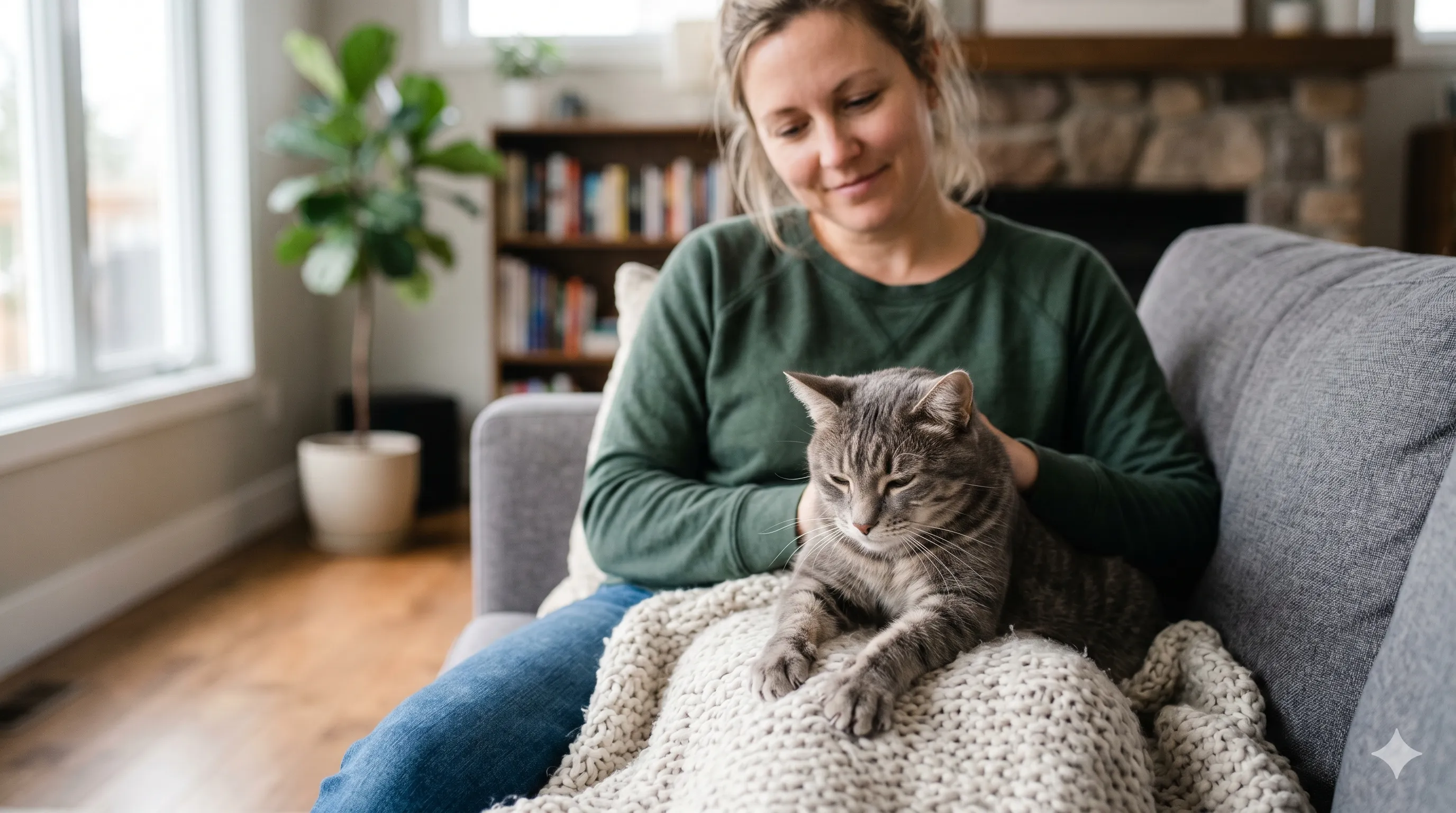
Your cat jumps onto your lap, starts pressing their paws rhythmically against you, begins purring loudly, and suddenly turns into a tiny furry baker making biscuits on your legs.
This strange but adorable behavior is known as kneading, and almost every cat owner experiences it at some point. common cat stress signals explained
If you've been wondering "why does my cat knead me?", the behavior is deeply connected to comfort, trust, instinct, emotional bonding, and early kittenhood memories.
In most situations, kneading is actually one of the strongest signs that your cat feels emotionally safe and relaxed around you.
However, some cats knead so intensely that it becomes uncomfortable or even painful because of sharp claws. In other situations, excessive kneading combined with stress behaviors may occasionally signal emotional insecurity or anxiety.
Understanding why cats knead helps you better interpret your cat's emotional state while also learning how to manage the behavior comfortably.
Why Does My Cat Knead Me? (Quick Answer)
Cats knead because the behavior is connected to comfort, relaxation, bonding, and instinctive kittenhood memories. Most cats knead people, blankets, beds, or soft surfaces when they feel emotionally safe and secure. In most cases, kneading is completely normal and often reflects affection and trust.
The meaning depends on your cat's body language, emotional state, and the situation surrounding the behavior.
What Is Cat Kneading?
Kneading is the rhythmic pushing motion cats make with their front paws against soft surfaces.
Many people also call this behavior:
- Making biscuits
- Biscuit making
- Happy paws
- Cat massaging
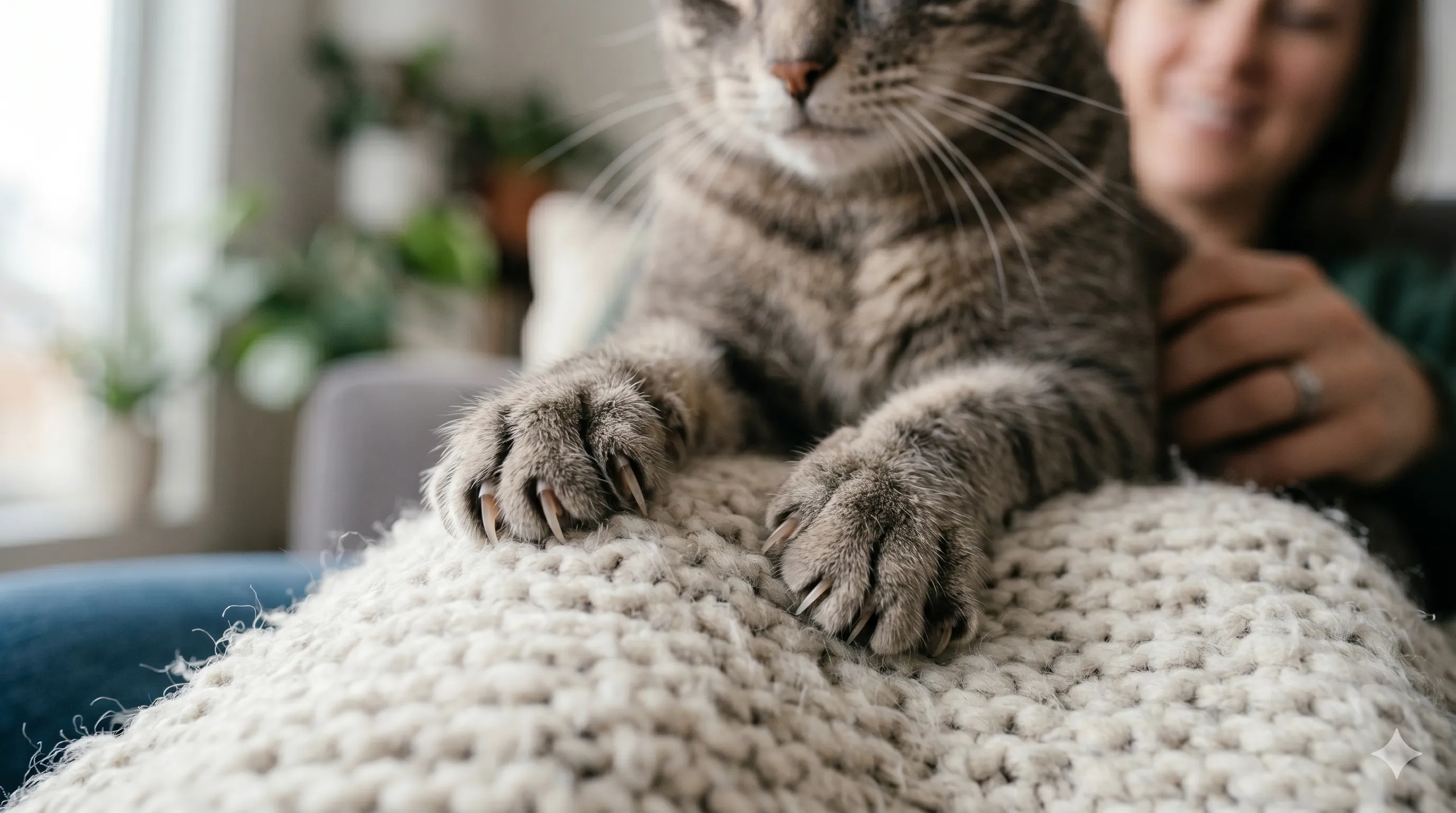
Some cats knead softly with relaxed paws, while others fully extend their claws during the motion.
Kneading commonly happens on:
- Human laps
- Blankets
- Pillows
- Beds
- Couches
- Soft clothing
Many cats also knead soft blankets as part of the same comfort instinct. why cats knead soft blankets
Cat Kneading Meaning (Quick Guide)
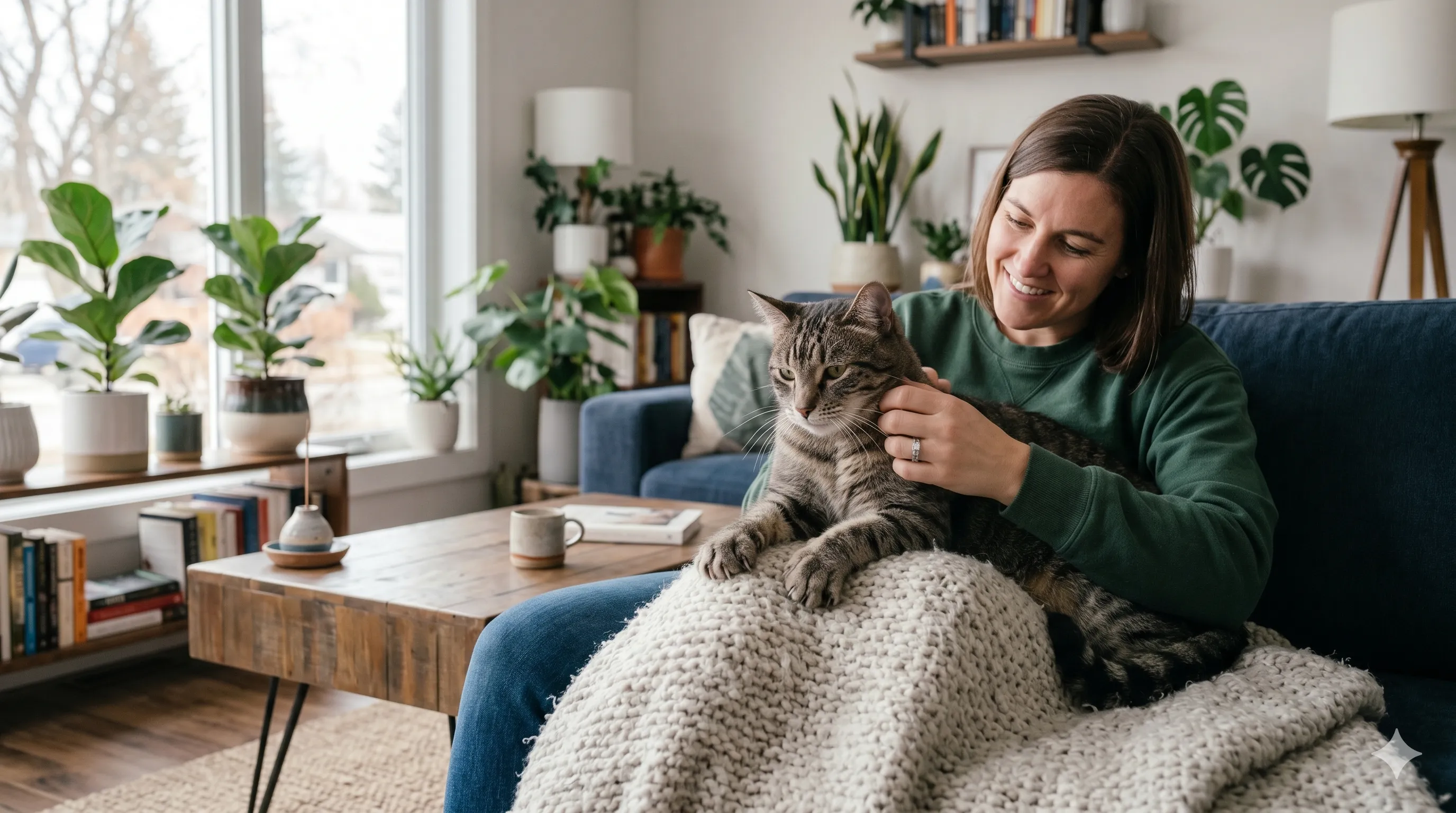
- Kneading while purring: comfort and happiness, usually very positive
- Kneading before sleeping: preparing resting space, a natural instinct
- Kneading you specifically: trust and bonding, a strong emotional connection
- Kneading with claws extended: instinctive paw movement, usually not aggression
- Excessive compulsive kneading: stress or self-soothing, worth monitoring carefully
6 Real Reasons Why Cats Knead Their Owners
1. Kneading Comes From Kittenhood Instinct
Kneading behavior begins very early in life.
When kittens nurse from their mother, they instinctively press their paws against the mother's belly to stimulate milk flow.
Because this experience is strongly connected to warmth, feeding, comfort, and safety, many cats continue kneading throughout adulthood whenever they feel emotionally secure.
This is why kneading is often considered a comfort behavior rooted deeply in positive early-life associations.
2. Your Cat Feels Relaxed and Emotionally Safe
Most adult cats knead when they feel calm, safe, and comfortable.
Kneading commonly appears during:
- Cuddling
- Sleeping
- Purring
- Relaxing on owners
- Quiet bonding moments
Loud purring frequently appears alongside kneading when cats feel deeply relaxed. why cats purr loudly explained
For many cats, kneading is essentially a physical expression of emotional comfort.
3. Kneading Can Be a Sign of Affection and Bonding
When your cat kneads you specifically instead of random surfaces, it often reflects trust and emotional attachment.
Cats that sleep on their owners often display similarly strong bonding behavior throughout the day.
Many highly attached cats combine kneading with:
- Purring
- Slow blinking
- Sleeping nearby
- Head rubbing
- Gentle licking
These behaviors together often signal strong emotional connection and social trust.
4. Cats Use Kneading to Mark Territory
Cats have scent glands located in their paw pads.
When they knead objects, blankets, or people, they may also leave behind scent markers that help create familiarity and emotional security.
In simple terms, kneading can partly act as a way of saying:
- "This is safe"
- "This belongs to me"
- "I feel comfortable here"
This behavior is completely natural and instinctive.
5. Kneading Helps Prepare Comfortable Sleeping Areas
Wild cats historically flattened grass or soft surfaces before resting.
Although domestic cats no longer need to physically prepare sleeping areas for survival, many still retain this instinctive behavior.
This explains why cats often knead:
- Blankets before sleeping
- Pillows before lying down
- Your lap before relaxing
In many situations, kneading simply means your cat is preparing a comfortable resting space.
6. Some Cats Develop Kneading as a Habit
Because kneading feels emotionally comforting, many cats repeat the behavior regularly until it becomes part of their normal routine.
Some cats knead briefly before sleeping, while others may knead every time they cuddle with their owners.
As long as the behavior remains relaxed and balanced, this habit is usually harmless.
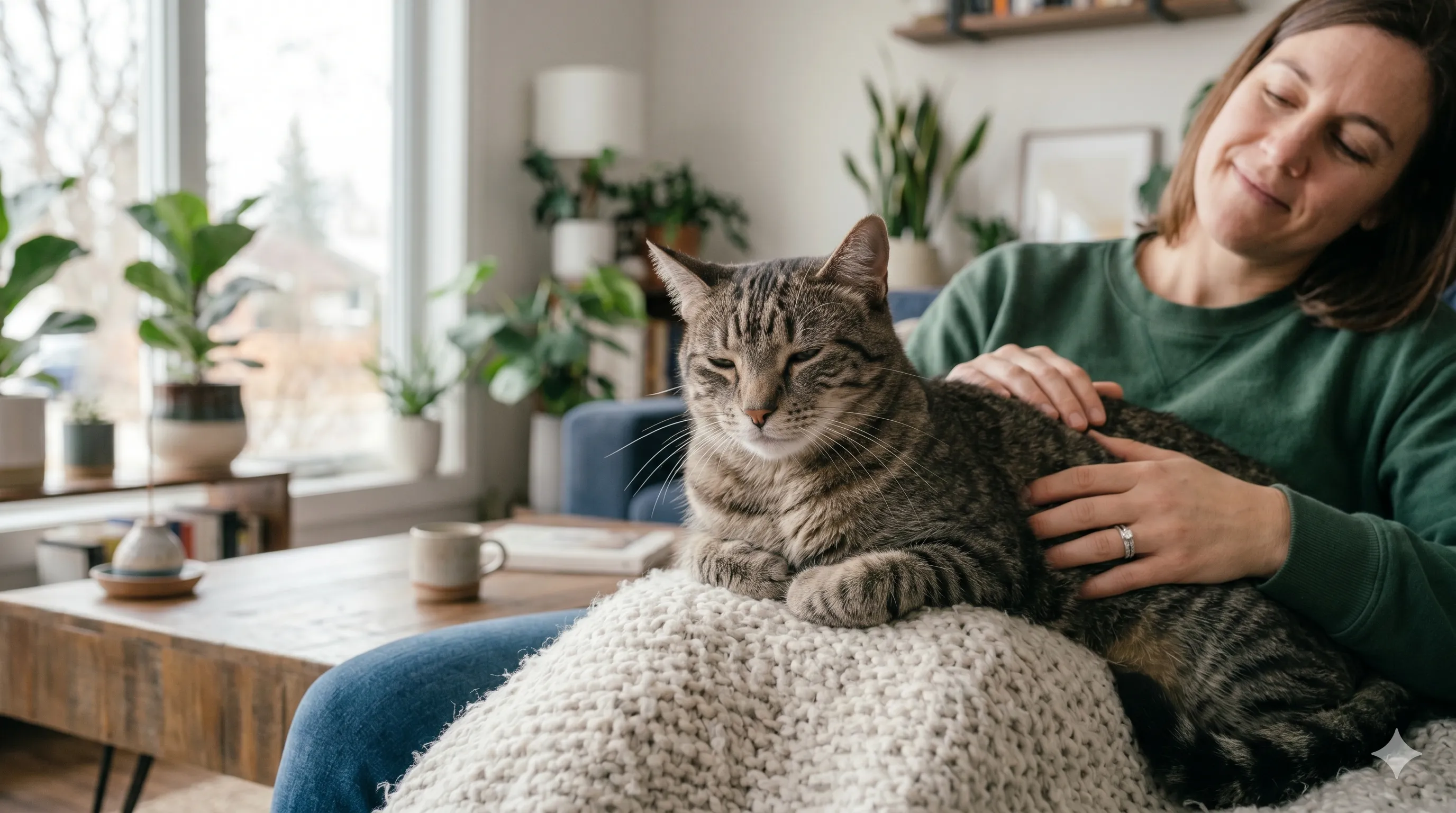
Why Does Cat Kneading Sometimes Hurt?
Many owners love kneading behavior until sharp claws suddenly become involved.
If your cat's kneading feels painful, the discomfort usually comes from natural claw extension rather than intentional aggression.
During kneading:
- Claws may extend automatically
- Cats usually do not realize they are causing discomfort
- The behavior remains instinctive and emotionally driven
Gentle biting and kneading are both common forms of feline communication and emotional expression. gentle cat biting behavior explained
In most cases, painful kneading can be managed without discouraging the bonding behavior completely.
Normal vs Problematic Kneading
Most kneading is completely harmless and emotionally healthy.
- Healthy kneading: Relaxed body language, purring, occasional kneading during comfort moments
- Potential concern: Obsessive repetitive kneading, stress behaviors, anxiety signs, or sudden behavior changes
Occasional kneading alone is rarely a problem.
When Should You Be Concerned?
Kneading becomes more concerning when combined with unusual emotional or physical behavior changes.
Potential warning signs include:
- Compulsive repetitive kneading
- Extreme clinginess
- Sudden behavior changes
- Stress-related behaviors
- Loss of appetite
- Withdrawal or hiding
Sudden changes in behavior patterns should always be monitored carefully. warning signs your cat may be sick
If kneading suddenly becomes excessive while other unusual symptoms appear, emotional stress or medical discomfort could be contributing.
How to Handle Kneading Comfortably
1. Use a Soft Blanket Barrier
If kneading becomes painful, placing a folded blanket between you and your cat helps reduce claw discomfort significantly.
This is one of the easiest and most effective solutions.
2. Keep Nails Trimmed
Regular nail trimming greatly reduces scratching discomfort during kneading sessions.
Even small reductions in nail sharpness make a noticeable difference.
3. Redirect Kneading to Soft Surfaces
Some cats can be gently encouraged to knead:
- Blankets
- Cat beds
- Cushions
- Soft pillows
This helps preserve the comforting behavior while improving comfort for owners.
4. Avoid Punishing the Behavior
Kneading is strongly connected to emotional comfort and security.
Harsh reactions may confuse or stress your cat unnecessarily.
Calm redirection works much better long-term.
Expert Tips for Handling a Kneading Cat
- Keep a small blanket within reach for lap time, since having it ready is easier than reaching for one once claws are already out
- Trim nails on a regular schedule rather than only after a kneading session becomes painful
- Note what triggers kneading, since cats that only knead during specific routines are usually just anticipating something rather than showing stress
- Watch for kneading paired with hiding or appetite changes, since that combination is worth a closer look rather than the kneading alone
Common Mistakes Owners Make
- Misinterpreting kneading as aggression
- Pushing cats away harshly
- Ignoring claw maintenance
- Punishing comfort behaviors
- Overlooking stress-related behavior changes
Real-Life Example
A highly affectionate indoor cat regularly kneaded its owner's lap every evening while watching television. Although the behavior initially became painful because of sharp claws, regular nail trimming and placing a soft blanket on the owner's lap solved the issue quickly.
Over time, the kneading remained a comforting bonding routine without causing discomfort.
Final Thoughts
Kneading is one of the clearest signs that your cat feels emotionally safe, relaxed, and bonded with you.
For most cats, the behavior reflects comfort, instinct, trust, and positive emotional association rooted deeply in kittenhood.
Understanding why cats knead helps owners interpret feline bonding behavior much more accurately. why cats sleep on their owners
As long as kneading remains relaxed and emotionally balanced, it is usually a healthy and reassuring sign of affection and trust.
This content is carefully reviewed and written to provide reliable, experience-focused guidance for cat owners and pet families.
Medical Disclaimer
This content is provided for informational and educational purposes only and should not be considered veterinary, medical, behavioral, or training advice. While we strive for accuracy, we make no guarantees regarding completeness or results. Always consult a licensed veterinarian or qualified pet care professional before making decisions about your pet’s health, diet, or behavior.
AI Illustration Notice
Some images in this article may have been generated or enhanced using artificial intelligence for illustrative purposes.
Frequently Asked Questions
Cats usually knead because the behavior is connected to comfort and trust and emotional security and instinctive kittenhood memories.
Yes. Kneading is often a strong sign your cat feels emotionally bonded and relaxed and comfortable around you.
Kneading may hurt because cats naturally extend their claws during the rhythmic paw movement without realizing they are causing discomfort.
Cats often knead blankets because soft surfaces trigger comfort instincts connected to resting and kittenhood security behaviors.
You usually do not need to stop the behavior unless it becomes uncomfortable since gentle redirection works better than punishment.
Yes. Excessive or compulsive kneading combined with stress behaviors may sometimes indicate emotional insecurity or anxiety.
Cats commonly knead while purring because both behaviors are strongly linked to comfort and bonding and emotional relaxation.
No. Not every cat kneads regularly although the behavior is extremely common in emotionally relaxed and affectionate cats.
Editorial Note
This article is part of PetNurture's educational library.
Topics are researched using publicly available educational resources, recognised veterinary organisations, academic publications and established animal welfare references where appropriate.
Every article is reviewed by the PetNurture editorial team for clarity, structure, readability and consistency before publication.
References
The information in this article has been reviewed and supported using the following sources.
VCA Animal Hospitals
Why Do Cats Knead? (Or, the Art of Biscuit Making!)
Confirms kneading originates from nursing instinct tied to oxytocin bonding, and also serves territorial marking and self-soothing purposes; supports the 'Kneading Comes From Kittenhood Instinct' and 'Cats Use Kneading to Mark Territory' sections of this article.
Accessed Aug 6, 2026
PetMD
Confirms kneading during purring is a residual kittenhood nursing behavior linked to positive emotional states; supports the 'Your Cat Feels Relaxed and Emotionally Safe' section of this article.
Accessed Aug 6, 2026
Pet Emergency Guidance
Every pet is unique. If your pet exhibits severe symptoms, sudden behavioral changes, or a medical emergency, do not rely on online guides — contact a licensed veterinarian or emergency clinic immediately.
About PetNurture
PetNurture is an educational library of pet care guides, interactive tools and practical resources for pet parents. We work continuously to keep our content accurate and up to date. Reader feedback helps us maintain content quality.
Related Articles
Popular Cat Guides

Cat
Cat Feeding Calculator
Calculate how much food your cat needs daily based on weight, age, and activity level.